Understand global substrate compliance. Explore permitted agricultural residues, banned feedstuffs, and traceability for commercial insect rearing.
Understand global substrate compliance. Explore permitted agricultural residues, banned feedstuffs, and traceability for commercial insect rearing.
Published: September 2026 | Fact-checked by: IIR Research Team | Regulatory Analysis: IIR Regulation
The commercial viability of insect bioconversion rests on a simple biological premise: farmed insects transform low-value biomass into high-value functional protein and lipids. However, from a regulatory and food safety perspective, this biological efficiency presents critical responsibilities. Because insect larvae bioaccumulate minerals, chemical elements, and environmental toxins directly from their growing medium, international food safety authorities treat the composition of an insect rearing substrate with the same scrutiny applied to compound feed for dairy cows or poultry.
For commercial buyers purchasing bulk insect ingredients from foreign suppliers, verifying substrate legality is an essential risk management procedure. Utilizing an unauthorized or contaminated growing medium compromises an entire manufacturing batch, triggering border rejections, product recalls, and severe brand damage.
1. The Legal Foundation: Why “Farmed Insects” Follow Standard Livestock Law
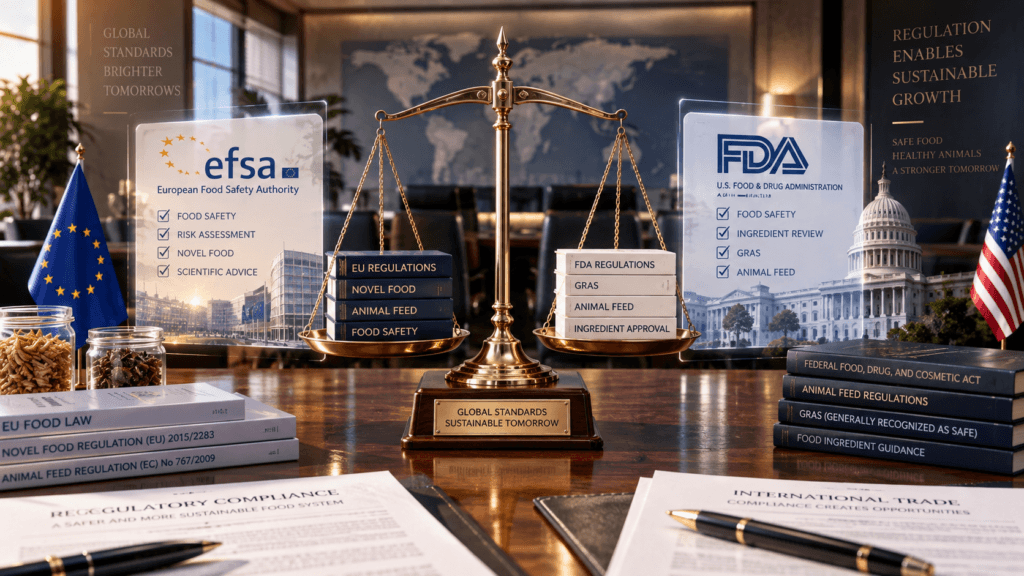
Under European Union law—specifically Regulation (EC) No 1069/2009—insects reared for the production of animal protein are officially classified as “farmed animals.” This single legal definition established modern substrate compliance across global export facilities. Because insects are legally livestock, European feed law dictates that insects cannot be fed anything that is prohibited for conventional farm animals.
This classification effectively eliminated the early theoretical vision of feeding municipal solid waste or restaurant food scraps to insects for animal feed production. Instead, international regulators established strict positive criteria defining permissible feedstocks:
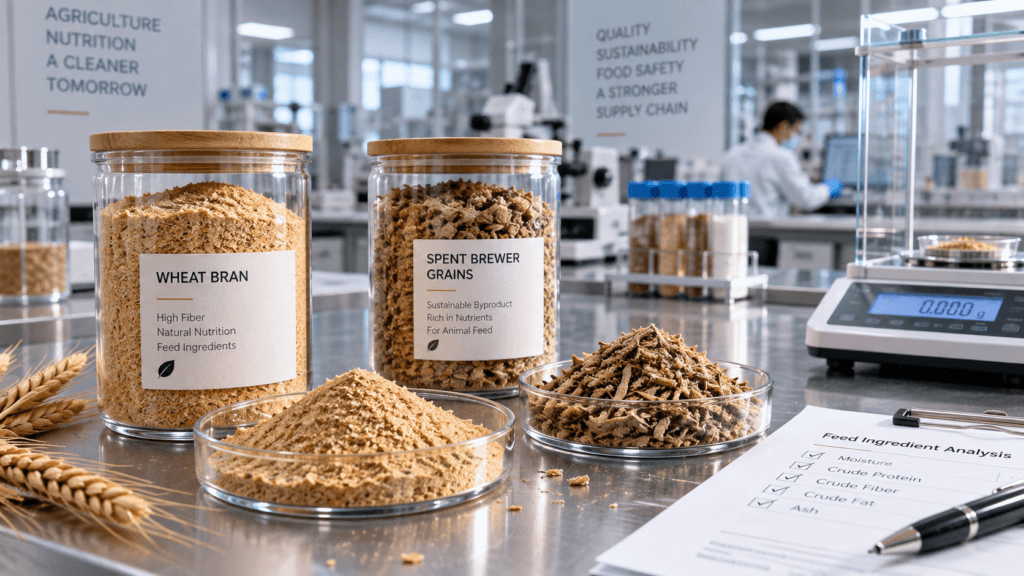
- Permitted Feedstuffs: Only plant-based agricultural residues, former foodstuffs that do not contain meat or fish (such as surplus bakery goods, broken pasta, and vegetable trimmings), and co-products from cereal processing (such as wheat bran, corn gluten, and spent brewers grains) are authorized.
- Prohibited Materials: Post-consumer catering waste, household restaurant slops, animal manure, slaughterhouse offal, and any former foodstuffs containing meat or fish products are prohibited under EU and FDA standards.
Understanding these boundaries is paramount when managing an insect rearing substrate audit for overseas bioconversion platforms.
The primary regulatory rationale behind strict substrate oversight is the bioaccumulation of heavy metals and persistent chemical contaminants. Scientific assessments from EFSA have established that Black Soldier Fly Larvae (BSFL) possess a specific physiological propensity to bioaccumulate cadmium and lead from their diet:
When BSFL consume substrates cultivated on soils with elevated background mineral levels or industrial residues, heavy metals concentrate rapidly within the larval tissue. If unchecked, the resulting defatted insect meal can exceed the statutory maximum residue limits (MRLs) established under Directive 2002/32/EC on undesirable substances in animal feed.
Consequently, professional commercial facilities must implement rigorous batch screening of incoming substrate deliveries. Raw feedstocks must be analyzed for heavy metals (cadmium, lead, mercury, and arsenic), pesticide residues, and mycotoxins (aflatoxins and ochratoxin A) prior to introduction into rearing chambers.
3. Substrate Traceability and Audit Documentation
For international feed millers and pet food formulators, auditing a prospective supplier’s substrate chain of custody is a fundamental quality assurance duty:
First, mandate that your supplier maintains a documented Hazard Analysis Critical Control Point (HACCP) plan covering substrate reception, storage, and blending. Facilities should operate dedicated substrate preparation bays that prevent foreign material contamination and bird intrusion.
Second, verify that all incoming vegetal streams originate from registered, traceable agricultural processing hubs. In practice, evaluating supplier compliance requires examining the analytical parameters documented on commercial quality paperwork. Feed buyers should refer to our detailed operational guide on How to Read a COA for Insect Ingredients to confirm that heavy metal ceilings on finished product certificates match strict EU and FDA import tolerances.
4. Environmental and Economic Sustainability in Substrate Sourcing
Balancing regulatory compliance with commercial scalability represents the next frontier for the global insect sector. The most competitive manufacturing hubs utilize localized industrial ecology frameworks, sourcing standardized wet co-products from starch manufacturing, biofuel ethanol plants, and grain processing mills.
Procurement directors must also account for broader global trends in feed manufacturing to anticipate supply fluctuations in core agricultural co-products like wheat bran. By verifying that overseas manufacturing partners adhere to traceable, legally compliant substrate protocols, feed formulators can confidently deploy scalable insect proteins while ensuring total safety across their finished retail product lines.