Independent intelligence for the global insect industryISSUE 01 · 2026
Global Insect Feed Regulations: A Comprehensive Guide
By IIR Editorial DeskSeptember 13, 2026
Navigate global insect feed regulations. Understand EU, US, and Asian compliance, substrate rules, and AAFCO approvals for safe procurement.
Published: September 13, 2026 | Fact-checked by: IIR Regulatory Affairs Team
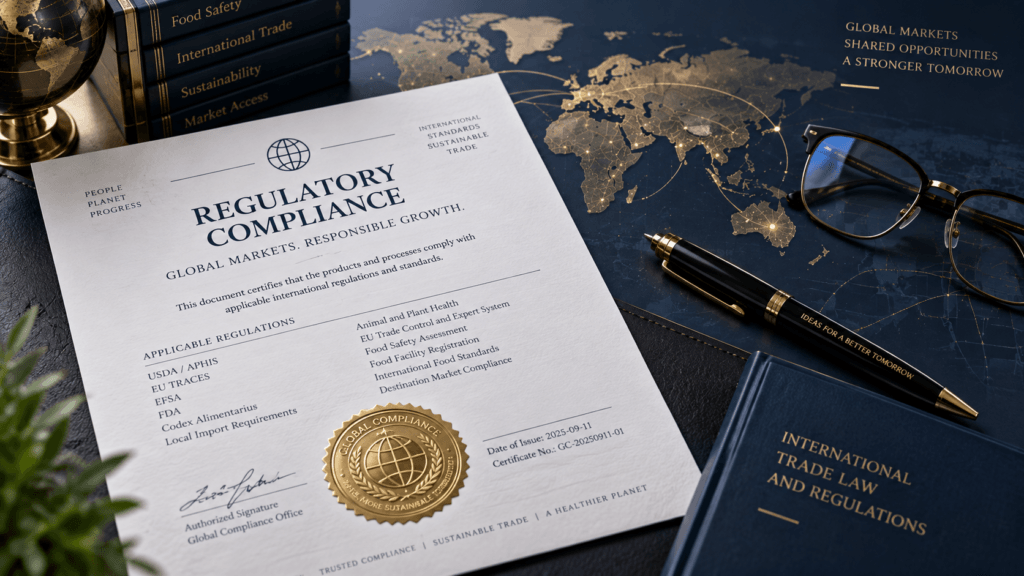
Navigating global insect feed regulations is the most complex hurdle for B2B procurement managers. While sustainability drives the narrative, international trade is strictly governed by safety frameworks dictated by bodies like the EFSA and the FDA. This IIR guide decodes the current regulatory landscape across Europe, North America, and Asia, ensuring your next cross-border shipment is legally compliant and immune to customs rejection.
For feed millers and pet food formulators, purchasing insect ingredients is not just a commercial transaction; it is a regulatory commitment. The legislative frameworks governing insect agriculture are evolving rapidly. However, they are built around two primary pillars: Substrate strictures (what insects are legally allowed to eat) and End-use authorizations (which animals are legally allowed to consume the insects).
Understanding the divergence between these global regulations is essential for avoiding catastrophic supply chain failures at the border.
1. The European Union: The Strict Pioneer
The European Union, guided by the European Food Safety Authority (EFSA), possesses the most comprehensive and stringent insect feed regulations in the world. Their approach focuses heavily on preventing cross-contamination and prion diseases (such as BSE).
The Substrate Rule (What Insects Can Eat): In the EU, insects farmed for feed are legally classified as “farmed animals.” Therefore, they are subject to the same feeding rules as traditional livestock. Currently, insects in the EU may only be fed materials of plant origin (pre-consumer vegetal waste) or specific dairy and egg by-products. They are strictly prohibited from consuming catering waste, municipal solid waste, or manure.
End-Use Authorizations (Who Can Eat Insects): The EU has progressively relaxed its stance on Processed Animal Proteins (PAPs) derived from insects. Currently, insect meal is authorized for use in:
Pet food (dogs and cats)
Aquaculture (since 2017)
Poultry and swine feed (since 2021)
For a supplier to export to the EU, their facility must be registered and approved under EU hygiene regulations, and the product must be accompanied by a rigorous TRACES (Trade Control and Expert System) certificate.
2. North America: The Species-by-Species Approach
In the United States, insect feed regulations are overseen by the FDA and the Association of American Feed Control Officials (AAFCO). Unlike the EU’s broad approvals, the US regulatory system requires ingredient definitions to be approved on a species-by-species basis—a critical detail you must check when evaluating an insect ingredient supplier.
AAFCO Approvals for BSFL: The Black Soldier Fly Larva (BSFL) has paved the way in North America. Currently, BSFL meal and oil have secured AAFCO definitions for inclusion in:
Salmonid aquaculture (e.g., salmon and trout)
Poultry (broilers and layers)
Swine
Adult dog food
The Substrate Constraint in the US: Like the EU, AAFCO currently restricts the substrate used for rearing insects destined for animal feed. The substrate must be AAFCO-defined feed-grade materials. Utilizing post-consumer waste or manure legally disqualifies the resulting insect ingredients from being used in commercial livestock or pet food within the United States.
3. The Asian Landscape: Agile and Export-Driven
While Europe and North America have rigid, centralized frameworks, Asia’s regulatory landscape is highly fragmented but exceptionally agile.
Many Asian countries lack specific, standalone insect feed regulations. Instead, insect meal is often governed under general feed ingredient safety standards. However, because the Asian manufacturing hub is heavily focused on exporting to Western markets, top-tier Asian producers voluntarily align their operations with EU and US standards.
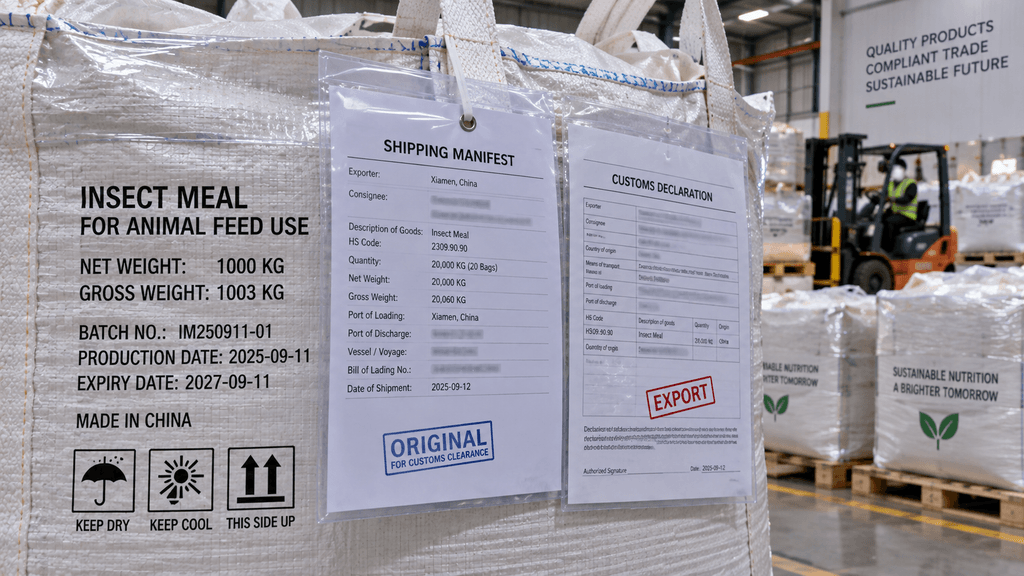
When procuring from Asia, buyers should not rely on local domestic regulations. Instead, they must enforce compliance through rigorous international third-party testing, ensuring the supplier’s Certificate of Analysis explicitly demonstrates adherence to heavy metal limits and microbial standards expected by the EFSA or FDA.
4. Strategic Compliance for Procurement
To safeguard your supply chain, procurement teams must implement a defensive sourcing strategy:
Substrate Traceability: Demand documentation proving that the insects were reared on approved, pre-consumer feedstuffs. If a supplier cannot trace their substrate, you cannot import their product.
Species Verification: Ensure the exact insect species (e.g., Hermetia illucens) is approved for your target livestock in your specific geographic market.
Rigorous COA Auditing: The regulatory burden ultimately falls on the importer. Always demand a third-party validated COA testing for heavy metals (Cadmium, Lead) and pathogens (Salmonella) before the container leaves the port of origin.
Global insect feed regulations are complex, but they provide the necessary guardrails for a safe, industrial-scale market. By mastering these compliance frameworks, buyers can confidently integrate high-performance insect proteins into their global formulations.
Disclaimer: This article is for informational purposes only and does not constitute business, legal or investment advice. Always consult primary sources and qualified professionals.