India's Loopworm is developing a silkworm-based protein platform that combines commercial animal nutrition ingredients with emerging recombinant protein applications in diagnostics, enzymes, and biotechnology.
Indian biotechnology company Loopworm is building on its commercial silkworm protein business to develop a recombinant protein manufacturing platform, connecting established animal nutrition markets with emerging applications in diagnostics and life sciences.
By IIR Editorial Desk · October 29, 2026 · Company Watch
Silkworm protein is becoming part of a broader biotechnology strategy at Loopworm, an Indian insect biotechnology company developing both animal nutrition ingredients and recombinant proteins. The company is using India’s established silk industry as a foundation for commercial ingredient processing while exploring a second business built around silkworms as biological protein-production systems.
Founded in 2019 by Ankit Alok Bagaria and Abhi Gawri, Loopworm operates near Bengaluru, India. Its existing business processes silkworm-derived materials into protein concentrates and oils for aquaculture, pet food, and livestock applications. The company is also developing a proprietary technology platform called LoopBac, intended to produce specialized recombinant proteins for diagnostics, research, and other biotechnology markets.
Recent company profiles published in October 2026 have brought renewed attention to this dual strategy. The developments reflect an ongoing effort to extend an established insect-processing business into higher-value biomanufacturing rather than a newly announced factory opening or funding round.
Silkworm Protein Production Builds on India’s Silk Industry
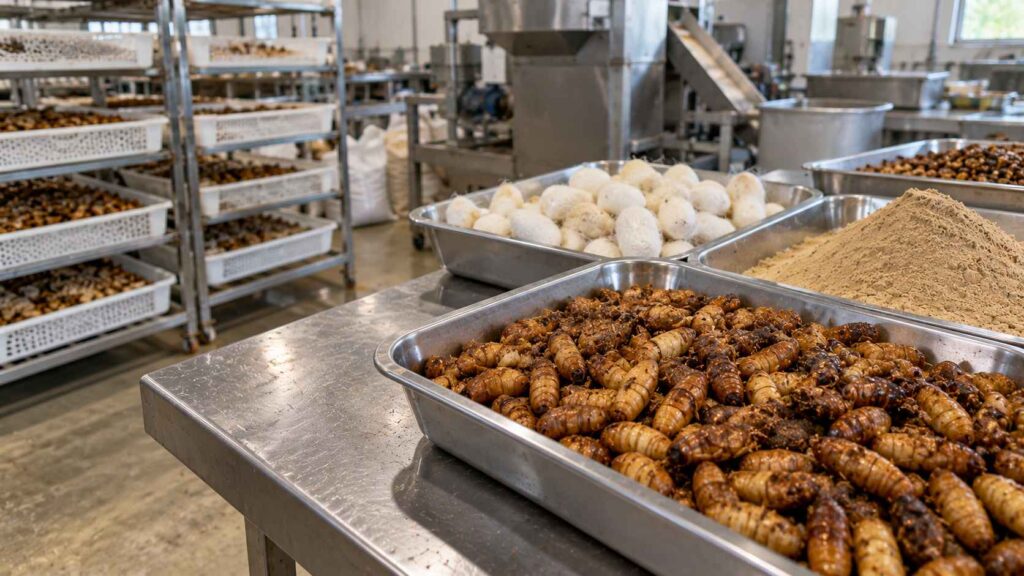
Loopworm’s animal nutrition business uses silkworm pupae associated with India’s established sericulture supply chain. After cocoons are processed for silk, the remaining pupal biomass can be recovered and converted into additional commercial products.
This model differs from insect farming systems established primarily to manufacture protein ingredients. Silkworm production already benefits from an extensive network of mulberry cultivation, insect rearing, cocoon collection, and silk processing.
Loopworm processes silkworm-derived material into products including LoopMeal Pro, a protein concentrate, and LoopOil, a lipid ingredient marketed for aquaculture and animal nutrition.
The company’s products are intended to serve feed manufacturers seeking alternative protein and fat sources, including applications in shrimp, fish, pet food, and livestock diets.
According to Loopworm’s September 2026 company update, its animal nutrition operations have achieved positive cash flow, and its international business extends to more than 10 countries across four continents. These figures are company-reported and should not be treated as independently audited financial or shipment data.
The commercial foundation is important because it gives Loopworm an existing manufacturing operation and customer network while it develops more technically demanding biotechnology applications.
LoopBac Extends Silkworm Protein Into Biotechnology
Beyond conventional feed ingredients, Loopworm is developing silkworms as biological production systems for recombinant proteins.
Its LoopBac platform uses a proprietary gene-delivery approach involving baculovirus-based technology to enable silkworms to express selected proteins.
This is a different manufacturing activity from extracting protein from silkworm pupae for animal feed. Recombinant protein production requires the expression of specific biological molecules, followed by appropriate recovery, purification, and quality assessment.
Potential applications include diagnostic reagents, research proteins, specialty enzymes, and other biotechnology products.
In an October 21 interview with Fortune India, Loopworm CEO Ankit Alok Bagaria said the company had established proof of concept in 2025 through the expression of green fluorescent protein in silkworm pupae. He also reported that the platform had subsequently been tested with more than five proteins at pilot scale.
These developments suggest progress in technical validation, but pilot-scale expression does not establish that the platform can already manufacture every proposed product at commercial scale.
The company’s near-term priorities include diagnostic antigens, virus-like particles, and specialty enzymes, while more complex pharmaceutical and therapeutic applications remain longer-term ambitions.
Commercial success in these markets will require additional evidence concerning protein yield, purity, consistency, production economics, and product-specific regulatory requirements.
Manufacturing Capacity and Funding Position
Loopworm reports operating a silkworm-processing facility near Bengaluru with approximately 6,000 metric tons of annual processing capacity.
The facility, referred to as LoopFactory, forms the manufacturing foundation for its animal nutrition operations. Loopworm also maintains research capabilities supporting the development of its recombinant protein platform.
The reported capacity refers to the company’s industrial processing operations and should not automatically be interpreted as 6,000 metric tons of finished protein ingredients sold annually.
In its September 2026 update, Loopworm reported a team of approximately 60 people, including more than 20 scientists.
The company also reported cumulative funding of $6.25 million as of September 9, 2026. This included a previously announced $3.25 million pre-Series A round led by WaterBridge Ventures and ENRISSION INDIA CAPITAL.
These figures describe the company’s disclosed funding history, not a new investment announced in late October.
Loopworm’s next development phase will depend on translating its research capabilities into consistent, commercially viable recombinant protein production while maintaining the performance of its existing nutrition business.
IIR Analysis: Two Different Commercial Models
Loopworm represents an interesting direction in the insect industry because it combines two business models with very different commercial requirements.
The first is industrial ingredient processing. Silkworm pupae generated by the established silk industry can be recovered, stabilized, processed, and sold as protein or oil ingredients. The main economic considerations include raw material availability, processing efficiency, product specifications, pricing, and customer demand.
The second is biotechnology manufacturing. Here, the commercial value comes from producing selected proteins with particular biological functions, rather than supplying bulk nutritional protein by weight.
These two activities should not be evaluated using the same metrics.
For animal nutrition, buyers may compare insect-derived ingredients with fishmeal, other animal proteins, or plant-based alternatives based on nutritional performance and delivered cost. For diagnostic or research proteins, buyers may place greater emphasis on molecular functionality, purity, reliability, and manufacturing consistency.
Loopworm’s position within India’s existing silkworm industry offers a potential upstream advantage. The established sericulture network already generates pupal biomass, meaning the company can recover value from an existing agricultural production system rather than building every part of its biological supply chain from the beginning.
However, this advantage does not automatically extend to recombinant protein manufacturing. Specialized protein expression and purification involve different equipment, process controls, technical risks, and quality requirements.
From IIR’s perspective, the central question is whether Loopworm can convert its existing commercial infrastructure and technical experience into a competitive advantage in these higher-value markets.
Its feed ingredient operations may provide manufacturing experience and commercial relationships, but the economics of the recombinant protein platform must be demonstrated separately.
The broader lesson is that insect biotechnology does not need to remain limited to producing bulk feed ingredients. Yet moving into specialized biomanufacturing introduces a substantially different set of commercial and technical challenges.
What to Watch Next
The next developments to monitor include pilot-scale recombinant protein production results, independent product validation, purification performance, and the first confirmed commercial customers for the LoopBac platform.
Additional information on production yields, quality specifications, and operating costs would help clarify whether silkworm-based biomanufacturing can compete with established protein expression systems.
Loopworm’s animal nutrition business also remains important. Verified processing volumes, international shipments, product performance, and customer retention would provide stronger evidence of commercial execution.
Future funding announcements or investment in additional manufacturing equipment could indicate how the company intends to scale its biotechnology operations.
For the wider insect industry, Loopworm illustrates how the established silk supply chain could support both conventional ingredient production and more specialized biotechnology applications.
Its long-term significance will depend on whether the company can demonstrate that its silkworm protein platform delivers reliable products, competitive manufacturing economics, and repeatable performance beyond the research and pilot stages.