Independent intelligence for the global insect industryISSUE 01 · 2026
Insect Protein for Specialty Feed: Applications, Economics and Market Adoption
By IIR Editorial DeskNovember 9, 2026
Insect-derived ingredients are finding potential applications in specialized animal feed markets, including ornamental fish, reptiles, and captive birds. This analysis examines insect species, processed ingredient forms, nutritional requirements, fishmeal replacement, commercial formulation economics, regulatory eligibility, and market adoption.
Specialty animal feed markets offer opportunities for insect-derived ingredients beyond conventional livestock and aquaculture nutrition. Their commercial potential depends on species-specific nutritional requirements, ingredient functionality, processing quality, regulatory eligibility, and the economics of specialized feed products.
By IIR Editorial Desk · November 9, 2026 · Market Intelligence
The use of insect protein for specialty feed is attracting interest among manufacturers serving ornamental fish, reptiles, captive birds, and other specialized animal nutrition markets. Unlike large-volume livestock feed, specialty feed products are often formulated for narrower animal groups, particular feeding behaviors, and differentiated product formats. Insect-derived ingredients may provide protein, lipids, and other nutritional components, while whole dried insects can also function as recognizable feed items for selected insect-eating animals.
However, specialty feed is not a single nutritional or regulatory category. An ingredient suitable for ornamental fish pellets may not be appropriate for reptile diets, and a whole dried insect product intended for a supplemental feeding application should not automatically be treated as a nutritionally complete feed. Commercial adoption depends on matching the insect species and processing grade to the intended animal, verifying product safety, and demonstrating that the ingredient provides sufficient nutritional or functional value to justify its cost.
1. Defining Specialty Feed and Its Commercial Segments
Specialty feed generally refers to animal nutrition products developed for specific species, feeding practices, or relatively narrow commercial markets. Within insect-derived ingredients, relevant segments include ornamental fish diets, reptile and amphibian feeds, captive bird products, and selected specialty animal diets. These markets differ substantially in their nutritional requirements, product formats, purchasing channels, and regulatory treatment. Manufacturers should therefore evaluate specialty feed opportunities by animal group rather than assuming that a single insect protein formulation can serve every application.
Commercial specialty feed products may be sold as complete diets, complementary feeds, treats, or individual feed ingredients. Some applications use processed insect meals incorporated into pellets or other manufactured feeds, while others rely on whole dried insects as recognizable food items. This distinction is important because a processed protein ingredient is evaluated primarily through nutrient composition and manufacturing performance, whereas whole dried insects may also be assessed for appearance, size, integrity, and feeding behavior. Both categories require appropriate safety controls and clear intended-use labeling.
2. Major Insect Sources and Commercial Ingredient Forms
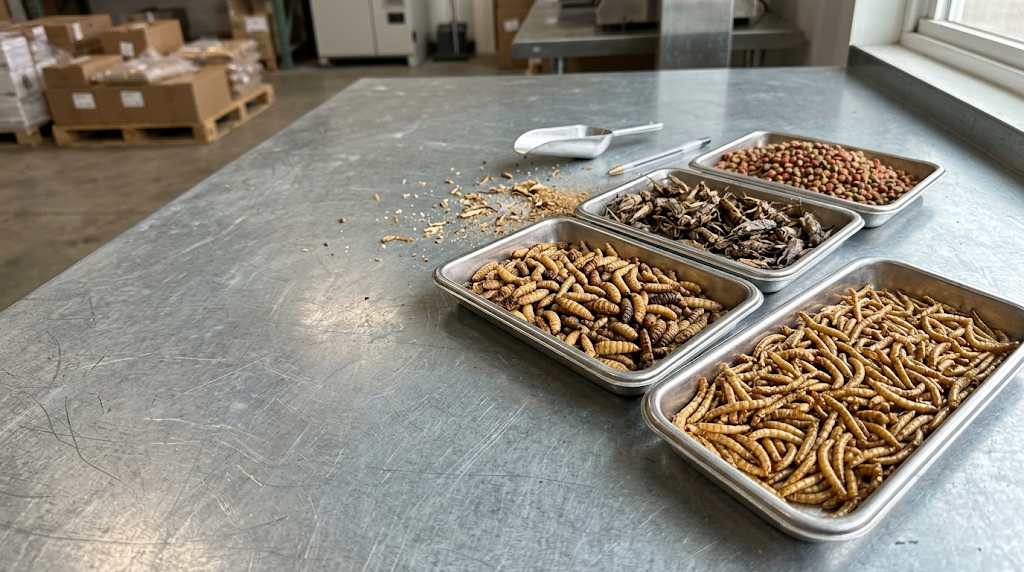
Black soldier fly larvae (BSFL), yellow mealworms, crickets, grasshoppers, and other insects are relevant to different specialty feed applications. Their nutritional characteristics and commercial roles vary with species, developmental stage, rearing conditions, and processing method. BSFL and mealworms may be supplied as whole dried larvae, processed meals, or separated lipid fractions, while crickets and grasshoppers may be used in whole dried or milled forms. The suitability of each product depends on the target animal and whether the ingredient is intended for complete-feed formulation or supplemental feeding.
These examples describe potential ingredient applications rather than universal feeding recommendations or evidence of approval in every market. In particular, the nutritional suitability of whole dried insects depends on the animal species, life stage, dietary context, and feeding frequency. Manufacturers should evaluate actual nutrient specifications and appropriate feeding evidence rather than relying on the general assumption that insect-eating animals can consume all insect products interchangeably.
3. Nutritional Value and Species-Specific Requirements
Insect-derived ingredients can contribute protein, fat, minerals, and other nutrients, but their nutritional value differs across insect species and processing grades. Crude protein is a useful starting point for ingredient comparison, yet it does not fully describe amino acid availability or overall dietary suitability. Chitin-associated and other non-protein nitrogen may influence conventional nitrogen-based protein estimates, while fat extraction and drying conditions can change nutrient concentrations. Specialty feed formulators should evaluate digestible nutrients, energy contribution, mineral balance, and relevant micronutrients according to the requirements of the target animal.
Species-specific requirements are especially important because ornamental fish, reptiles, and captive birds differ in digestive physiology and feeding behavior. Some animals naturally consume insects as part of their diets, but this does not establish that a single insect species can provide complete nutrition. Calcium-to-phosphorus balance, fatty acid composition, vitamin supply, and the role of other ingredients must be considered in the finished product. Manufacturers should distinguish between complete diets and supplemental products and avoid implying nutritional completeness without appropriate formulation evidence.
4. Applications in Ornamental Fish Feed
Ornamental fish feed is a potential application for insect-derived protein meals because many formulated fish diets require concentrated sources of digestible protein and energy. BSFL and mealworm meals may be evaluated as partial substitutes for conventional protein ingredients, including fishmeal, depending on the nutritional requirements of the fish species. However, ornamental fish represent a diverse group with different feeding habits, digestive capabilities, and life-stage requirements. An ingredient that performs adequately in one species or product format may not deliver the same results in another.
Commercial evaluation should consider amino acid balance, digestibility, pellet size, water stability, palatability, and effects on growth or condition. Ingredient color, odor, and processing characteristics may also influence finished-feed performance. Manufacturers should use species-relevant feeding evidence where available and conduct appropriate formulation trials before increasing inclusion levels. The value of insect protein in ornamental fish diets depends on the complete formulation rather than a direct weight-for-weight replacement of fishmeal.
5. Applications in Reptile and Amphibian Feed
Reptile and amphibian nutrition represents a distinct specialty feed segment because feeding practices vary widely between insectivorous, omnivorous, and other dietary groups. Whole dried mealworms, BSFL, crickets, and other insects may be used as supplemental feed items for selected species, while processed insect meals can be incorporated into formulated products. Product form is particularly important in this market because feeding behavior, particle size, texture, and the recognizable appearance of whole insects may influence acceptance.
Nutritional balance remains essential. Insect species differ in calcium, phosphorus, fat, and other nutrient concentrations, and these differences can affect their suitability within a broader diet. Whole dried insects should not automatically be presented as complete nutrition, particularly for animals with specialized mineral or vitamin requirements. Manufacturers and commercial buyers should assess the intended animal species, life stage, feeding frequency, and complementary dietary components before making nutritional claims or developing standardized feeding recommendations.
6. Applications in Captive Bird and Specialty Bird Feed
Selected captive bird species consume insects as part of their natural or managed diets, creating potential demand for whole dried insects and insect-derived ingredients. Products may include dried mealworms, dried BSFL, crickets, or other insect materials intended for supplementary feeding. In these applications, product appearance, size consistency, physical integrity, and ease of handling may be commercially important alongside nutrient composition. Feed manufacturers should distinguish insect-eating birds from species whose diets are primarily based on seeds, fruits, or other feed materials.
For formulated bird feeds, processed insect meals may contribute protein and energy, but suitability depends on the nutritional requirements of the intended species and life stage. For whole dried insect products, commercial buyers may place particular emphasis on breakage, color, moisture, foreign materials, and packaging stability. Feeding claims should remain consistent with the intended use, and manufacturers should avoid presenting supplemental insect products as complete diets without appropriate nutritional evidence.
7. Whole Dried Insects Versus Processed Protein Meals
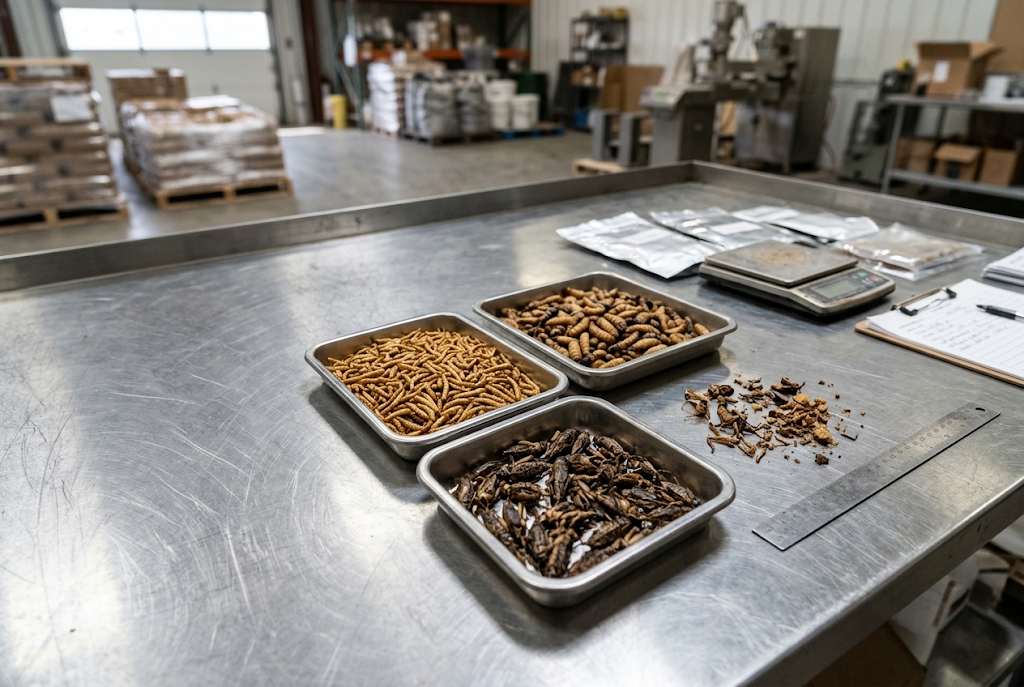
Whole dried insects and processed insect meals serve different commercial functions in specialty feed markets. Whole dried products retain recognizable insect anatomy and may be used in applications where the physical form is relevant to feeding behavior or product presentation. Processed meals are more suitable for incorporation into manufactured feed products where uniform particle size and predictable nutrient contribution are important. These distinctions affect quality specifications, manufacturing requirements, packaging, and pricing.
Evaluation factor
Whole dried insects
Processed insect meals
Physical form
Recognizable insect bodies
Milled or processed ingredient
Typical application
Supplemental feeding and selected specialty products
Cost per usable nutrient and formulation performance
The distinction also affects how buyers evaluate suppliers. A whole dried insect product may meet nutritional expectations but fail commercial acceptance because of excessive breakage or inconsistent size. A processed meal may have acceptable physical characteristics but require further evaluation of amino acid digestibility, lipid stability, or mineral balance. Manufacturers should define the intended product function before selecting the appropriate ingredient form and acceptance specification.
8. Fishmeal Replacement in Specialty Feed Formulations
Fishmeal replacement is a relevant commercial consideration for selected specialty feed products, particularly ornamental fish diets and other formulated feeds that traditionally use marine-derived proteins. Insect meals may provide an alternative source of protein, but their amino acid composition, digestibility, energy value, and mineral profile differ from those of fishmeal. Direct substitution on an equal-weight basis may therefore alter the nutritional balance of the finished diet. Replacement strategies should be evaluated through nutritionally equivalent formulations rather than crude protein concentration alone.
The commercial value of replacement also depends on the price and availability of conventional ingredients. Fishmeal prices vary by grade, region, and market conditions, while insect meal costs depend on production scale, rearing substrates, drying, processing, and logistics. For specialty feed manufacturers, partial replacement may be more practical than complete substitution when the objective is to preserve product performance and control formulation costs. Appropriate feeding trials and manufacturing tests are needed to determine whether the insect ingredient delivers the intended value.
9. Feed Manufacturing, Processing and Product Stability
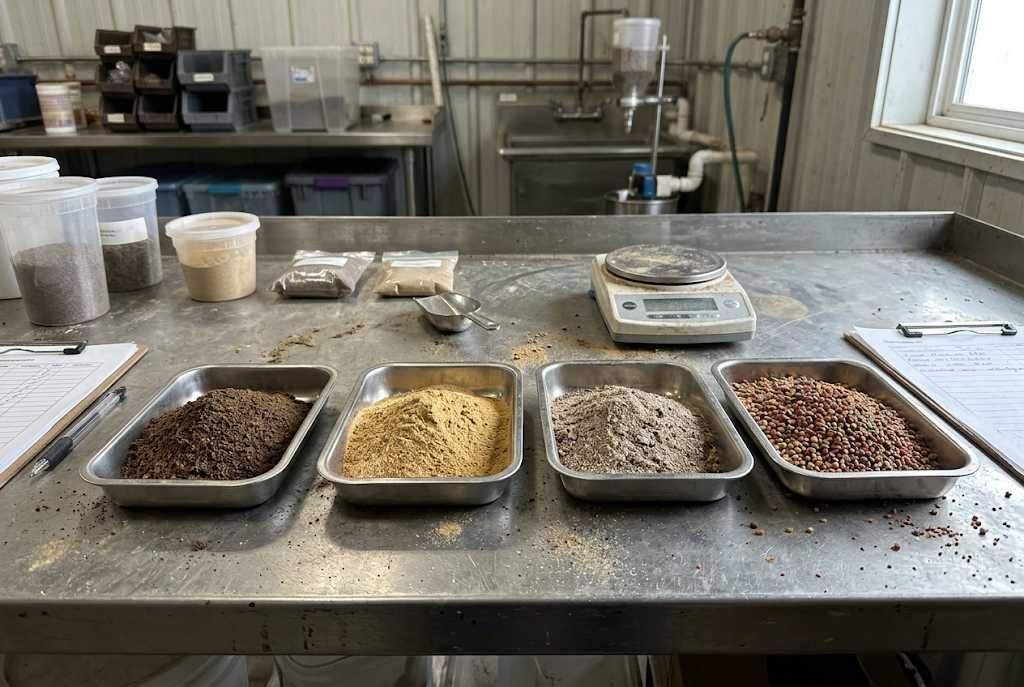
Specialty feed manufacturing involves a range of formats, including pellets, extruded feeds, dried products, and blended feeding mixtures. Insect meal characteristics such as moisture, particle size, bulk density, fat content, and flow behavior can influence mixing, extrusion, pellet formation, and finished-product stability. Full-fat insect meals may behave differently from defatted products because of their lipid content, while whole dried insects require handling methods that preserve physical integrity. Manufacturers should evaluate processing performance in the intended product format rather than assuming that all insect ingredients are interchangeable.
Storage stability is also important because moisture exposure, oxygen, temperature, and packaging conditions can affect ingredient quality. Full-fat meals and whole dried insects may be susceptible to lipid oxidation under unsuitable storage conditions, while excessive moisture can create additional quality and safety risks. Commercial specifications should include appropriate moisture limits, packaging requirements, and shelf-life evidence. Pilot manufacturing and storage trials can help determine whether the ingredient remains suitable throughout the intended distribution period.
10. Feed Safety, Quality Control and Traceability
The safety of insect-derived specialty feed ingredients depends on rearing substrates, production hygiene, harvesting, processing, storage, and transportation. Potential hazards include microbiological contamination, relevant chemical contaminants, foreign materials, and deterioration during storage. The appropriate testing program should reflect the insect species, production pathway, product form, and intended animal use. Buyers should evaluate the supplier’s preventive controls and traceability procedures alongside laboratory results rather than relying solely on a general product specification.
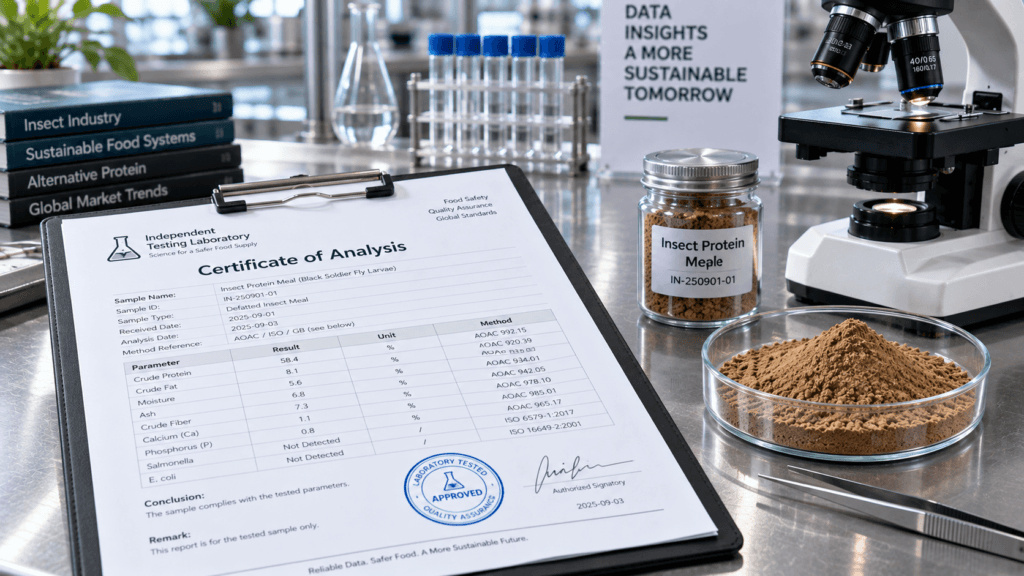
Quality requirements also differ between whole dried and processed products. Whole dried insects may require measurable standards for physical integrity, size consistency, color, moisture, and foreign materials, while processed meals require detailed nutrient specifications and relevant safety testing. Batch-specific certificates of analysis should identify the product, lot, analytical results, reporting units, and laboratory details. Consistent quality across repeated shipments is particularly important for specialty feed brands that depend on recognizable product characteristics and stable customer expectations.
11. Economics of Insect Protein in Specialty Feed
The economics of insect protein in specialty feed differ from those of large-volume livestock feed because specialty products may be sold in smaller packages and differentiated by animal species, feeding function, or ingredient characteristics. This can create opportunities for higher-value ingredients, but it also introduces costs associated with packaging, product grading, inventory management, distribution, and marketing. Manufacturers should evaluate whether the ingredient contributes sufficient nutritional, functional, or product differentiation value to support the finished product’s commercial positioning.
For processed insect meals, a preliminary screening metric is the cost per kilogram of reported crude protein:
Cost per kg of crude protein =Delivered ingredient price per kgCrude protein fraction
Metric
Insect protein meal
Conventional protein ingredient
Illustrative delivered price
$2,400/metric ton
$1,800/metric ton
Reported crude protein
60%
65%
Cost per kg of crude protein
$4.00
$2.77
Hypothetical figures for calculation only. These are not verified market quotations or current ingredient prices.
In this example, the conventional ingredient has a lower calculated cost per kilogram of crude protein, but the comparison does not establish the economic value of the finished specialty feed. Digestible amino acids, energy contribution, product functionality, manufacturing performance, and consumer positioning may affect the final decision. For whole dried insects, buyers may also need to compare usable product yield, breakage, grading losses, and packaging costs rather than relying on protein cost alone. Commercial evaluation should focus on the economics of the intended finished product.
12. Regulatory Eligibility Across Specialty Feed Markets
Regulatory eligibility for insect-derived specialty feed ingredients varies by jurisdiction, insect species, rearing substrates, processing method, product form, and intended animal use. A material permitted in aquaculture or conventional livestock feed is not automatically eligible for every reptile, bird, or ornamental fish product. Manufacturers should review applicable ingredient definitions, feed safety requirements, labeling rules, and import restrictions before introducing a new insect ingredient. This is particularly important when a supplier offers the same product across several animal feed markets.
In the European Union, the use of processed animal proteins derived from farmed insects is governed by specified feed and animal by-product requirements, with conditions that depend on the intended use and production pathway. Other markets may apply different ingredient approval, registration, and labeling frameworks. Buyers should verify the legal status of the exact commercial product rather than relying on broad claims that insect protein is approved for animal feed. Regulatory review should also distinguish between complete feeds, complementary products, and individual feed materials.
13. Commercial Supply and Supplier Qualification
Specialty feed manufacturers require suppliers that can maintain consistent product specifications, reliable delivery schedules, and suitable technical documentation. For processed meals, procurement teams should evaluate protein, fat, moisture, ash, amino acids, and other relevant parameters. For whole dried insects, size grading, color, physical integrity, moisture, and foreign material controls may be equally important. Historical batch analyses and retained samples can help determine whether a supplier can maintain stable quality across changes in production and processing conditions.
Supplier qualification should also address production capacity, traceability, packaging, shelf life, transportation, and corrective-action procedures. Small specialty feed brands may have different order sizes and packaging requirements from industrial feed manufacturers, creating additional considerations for minimum order quantities and inventory planning. A successful initial sample does not establish that a supplier can maintain consistent commercial quality over time. Repeat purchasing requires measurable acceptance criteria, transparent documentation, and reliable communication when production or shipment conditions change.
14. Market Demand and Distribution Channels
Demand for insect-derived specialty feed ingredients is influenced by the structure of individual animal care and feed markets. Relevant distribution channels may include specialty pet retailers, aquarium stores, reptile product distributors, bird feed brands, online marketplaces, and commercial ingredient wholesalers. These channels differ in product formats, packaging sizes, price sensitivity, and the importance of visual product quality. Manufacturers should evaluate demand at the specific product and animal-category level rather than treating specialty feed as one uniform market.
Product differentiation may influence purchasing decisions, particularly where recognizable whole insects or specialized protein formulations are part of the finished product’s positioning. However, consumer interest does not automatically translate into repeat commercial demand. Suppliers and manufacturers should assess sales performance, customer retention, acceptable price points, and distribution costs before expanding production capacity. The strongest evidence of market adoption comes from sustained purchasing and repeat product sales rather than isolated product launches or promotional claims.
15. Barriers to Wider Commercial Adoption
Cost competitiveness, ingredient standardization, and reliable supply remain important barriers to wider insect protein adoption in specialty feed. Although some specialty products may support higher ingredient costs than commodity livestock feeds, manufacturers must still maintain acceptable retail prices and margins. Processing expenses, packaging requirements, regulatory differences, and limited species-specific feeding data can complicate product development. Whole dried insects may also require additional grading and handling to meet visual quality expectations.
Another challenge is the diversity of specialty animal nutrition requirements. An insect ingredient that performs well in an ornamental fish formulation may not be appropriate for a reptile or bird product, while a whole dried insect suitable for supplemental feeding may not provide complete nutrition. Manufacturers should avoid generalizing research findings across animal groups and should validate nutritional suitability for the intended application. Broader adoption will depend on credible feeding evidence, consistent product quality, regulatory compliance, and commercial performance.
16. Market Outlook for Insect Protein in Specialty Feed
Specialty feed markets may provide opportunities for insect-derived ingredients where product functionality, recognizable ingredient identity, and species-specific feeding applications support differentiated products. Whole dried insects may remain relevant in selected reptile and bird feeding segments, while processed insect meals may find additional applications in ornamental fish and other formulated specialty feeds. The pace of adoption will depend on product quality, reliable supply, competitive pricing, and the availability of appropriate nutritional evidence.
Future market development will likely vary by animal category and region rather than follow a single industry-wide adoption pattern. Improvements in insect rearing efficiency, drying, processing, grading, and packaging could strengthen commercial competitiveness, while clearer regulatory frameworks and more species-specific nutritional research may support additional applications. Sustained adoption will ultimately be measured through repeat purchasing, consistent product performance, and profitable distribution rather than generalized expectations for alternative protein growth.
IIR Analysis
The commercial potential of insect protein for specialty feed lies in its ability to serve differentiated animal nutrition markets with specific nutritional and product-form requirements. Unlike commodity livestock feed, specialty feed applications may place substantial value on recognizable whole insects, species-specific ingredient functionality, and consistent product presentation. However, these opportunities should not be interpreted as evidence that insect-derived ingredients are nutritionally interchangeable or universally suitable across animal categories.
For insect producers and ingredient suppliers, success will depend on matching product forms and quality specifications to the intended specialty feed segment. For manufacturers, the priority is to establish nutritional suitability, feed safety, regulatory eligibility, reliable supply, and acceptable finished-product economics. The most sustainable commercial opportunities are likely to emerge where insect ingredients provide a clearly defined function and can be delivered consistently at a price supported by the target market.
Disclaimer: This article is for informational purposes only and does not constitute business, legal or investment advice. Always consult primary sources and qualified professionals.