Independent intelligence for the global insect industryISSUE 01 · 2026
Insect Protein Aquafeed: Applications, Economics, and Market Adoption
By IIR Editorial DeskOctober 29, 2026
Insect-derived proteins are being evaluated as alternative ingredients for aquaculture feeds. This analysis examines nutritional applications, fishmeal replacement, formulation economics, supply constraints, regulation and the factors influencing commercial adoption.
Insect-derived proteins offer an alternative ingredient option for aquaculture feed manufacturers, but their commercial value depends on nutrition, processing, cost and reliable supply. This analysis examines applications, formulation economics, fishmeal replacement and market adoption.
By IIR Editorial Desk · October 29, 2026 · Market Intelligence
The insect protein aquafeed market is developing around the use of insect-derived ingredients in commercial fish and shrimp diets. Insect meals can provide protein, amino acids, lipids, and other nutritional components, making them potential alternatives or complements to conventional feed ingredients. Their commercial relevance is closely linked to the aquaculture industry’s need for dependable raw materials, competitive feed costs, and formulations that support animal performance.
Interest in insect protein does not mean that every insect-derived ingredient can replace fishmeal at the same rate or deliver equivalent nutritional results. Ingredient composition varies with insect species, rearing substrate, processing method, and degree of defatting. Successful adoption requires nutritional evaluation, regulatory compliance, consistent quality, and an economic case that works within commercial feed production.
1. What Is Insect Protein Aquafeed?
Insect protein aquafeed refers to aquaculture feeds containing protein ingredients derived from insects. These ingredients are generally incorporated into compound feed formulations rather than supplied as complete diets on their own.
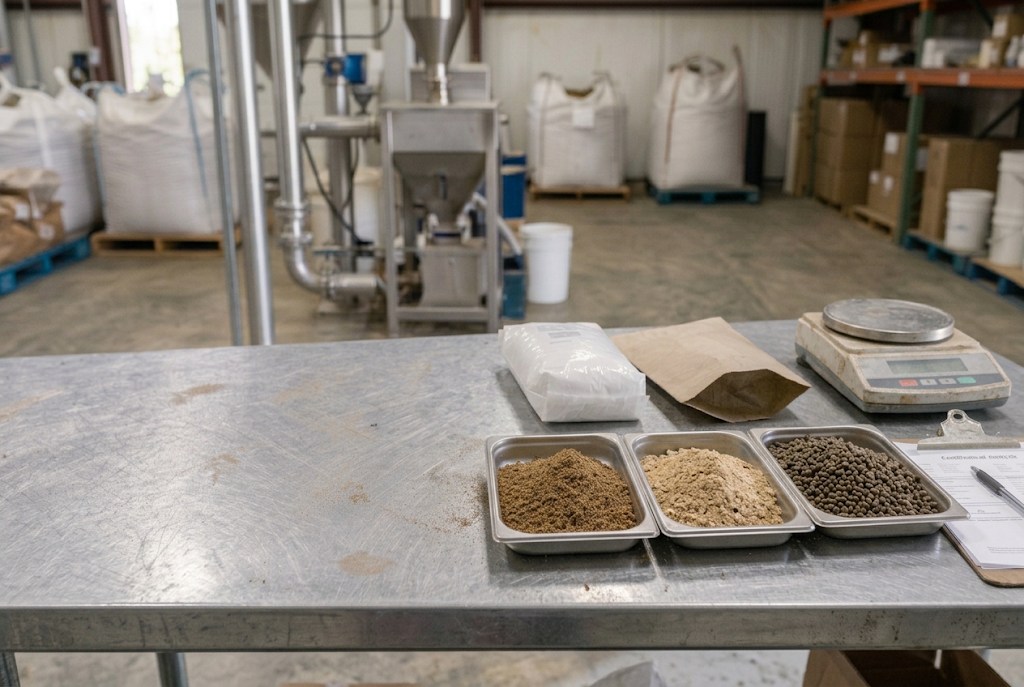
Commonly investigated sources include black soldier fly larvae, mealworms, and crickets. The ingredients may be supplied as full-fat meals, partially defatted meals, or other processed protein products, depending on the production system and intended application.
The term insect protein can be misleading when used without a product specification. A whole-insect meal contains protein alongside fat, ash, chitin-containing material, and other components. Its nutritional characteristics are therefore different from those of a purified protein concentrate.
For aquafeed manufacturers, the relevant purchasing unit is a defined ingredient grade with measurable nutrient composition, digestibility, safety characteristics, and predictable processing behavior.
2. Why Aquaculture Feed Manufacturers Are Evaluating Insect Protein
Aquaculture feeds require balanced sources of digestible protein and essential amino acids. Fishmeal has historically played an important role in many formulations because of its nutritional properties, although its inclusion varies substantially across species and feed types.
Insect-derived ingredients offer another option within a broader strategy of feed ingredient diversification. Their potential advantages include alternative sourcing channels, opportunities to use permitted residual biomass in insect production, and nutritional characteristics that may be useful in specific diets.
However, the commercial case cannot rest on sustainability claims alone. Feed manufacturers need ingredients that satisfy formulation requirements without introducing unacceptable costs or compromising growth, feed conversion, health, or finished-feed quality.
Adoption is therefore more likely to depend on a combination of nutritional performance, price competitiveness, regulatory access, and supply reliability than on any single claimed advantage.
3. Main Insect Protein Sources for Aquafeed
Several insect species have attracted research and commercial interest, but their nutrient profiles and production economics are not identical.
Insect source
Common ingredient form
Main formulation considerations
Black soldier fly larvae
Full-fat or defatted meal
Protein, fat, ash, amino acids, chitin
Mealworms
Full-fat or defatted meal
Protein concentration, lipid profile, digestibility
Crickets
Processed insect meal
Amino acids, fat, chitin, production cost
Other permitted insect species
Species-specific processed meal
Nutrient evidence, safety, regulatory eligibility
Black soldier fly larvae are particularly relevant to industrial insect production because they can be raised using suitable, legally permitted feed substrates and processed into multiple commercial outputs.
Mealworm and cricket ingredients may also be nutritionally useful, but their production systems, costs, and supply availability differ. No species should be considered universally superior without reference to the target animal, ingredient specification, and formulation objectives.
4. Nutritional Value and Digestibility
The nutritional value of insect meal depends on more than its reported crude protein percentage. Aquafeed formulators need information about digestible amino acids, energy, lipid composition, minerals, and factors that may influence nutrient utilization.
Crude protein is commonly estimated from nitrogen content. In insect-derived materials, non-protein nitrogen associated with components such as chitin can complicate interpretation, meaning crude protein values should not automatically be treated as equivalent to digestible true protein.
Essential amino acid balance is another important consideration. An ingredient may contain substantial protein but still require supplementation or combination with other raw materials to meet the nutritional requirements of the target species.
Digestibility studies provide useful evidence, although results can differ between fish species, life stages, processing methods, and inclusion levels. A favorable result in one experimental diet should not be generalized to every commercial aquafeed formulation.
5. Fishmeal Replacement: What the Evidence Means
Fishmeal replacement is a central application area for insect-derived protein ingredients. Research has evaluated partial substitution in diets for salmonids, tilapia, marine fish, and other aquaculture species.
The appropriate replacement level depends on the insect ingredient, target animal, diet composition, and the nutritional role previously supplied by fishmeal. Replacing a percentage of fishmeal by weight is not equivalent to replacing the same percentage of digestible protein or essential amino acids.
Studies may report acceptable growth and feed utilization under specific conditions, but results are not uniform. Differences in insect meal processing, fat content, amino acid supplementation, palatability, and trial design can influence outcomes.
Commercial feed manufacturers should therefore interpret fishmeal replacement evidence in terms of complete diet performance. The relevant question is not simply how much fishmeal can be removed, but whether the revised formulation meets nutritional and economic objectives.
6. Applications Across Aquaculture Species
The suitability of insect protein varies across aquaculture systems.
For salmonids, formulation decisions often emphasize digestible amino acids, lipid characteristics, feed conversion, and the consistency of ingredient supply. Tilapia diets may offer different formulation opportunities because their nutritional requirements and conventional ingredient combinations differ.
Marine fish species can present additional challenges involving protein quality, palatability, and the balance of essential nutrients. Shrimp feeds require particular attention to digestibility, attractability, processing characteristics, and the nutritional role of marine-derived ingredients.
Juvenile feeds and specialty aquaculture products may have different economic and nutritional requirements from high-volume grow-out feeds. As a result, insect protein may be commercially attractive in one application while remaining difficult to justify in another.
7. Full-Fat and Defatted Insect Meals
Processing determines the nutritional role an insect-derived ingredient can play. Full-fat meals retain more of the original insect lipids, while defatted meals generally contain less fat and may have a higher protein concentration on an as-received basis.
Full-fat meals can contribute both protein and energy. Their use requires careful consideration of fatty acid composition, oxidative stability, and the overall lipid balance of the finished diet.
Defatted meals may be more suitable where formulators want greater flexibility in adjusting protein and fat separately. However, extraction methods, residual oil levels, and processing temperatures can influence product quality.
Neither form is inherently better for every aquafeed application. Buyers should compare actual analytical results, digestible nutrient values, processing consistency, and delivered cost.
8. Insect Protein Aquafeed Formulation Considerations
Commercial formulation is a balancing exercise involving nutrition, ingredient availability, manufacturing performance, and price. Research on insect meals in fish nutrition highlights the importance of digestible amino acid data, fatty acid composition, and ingredient-specific nutritional evaluation.
Parameter
Why it matters
Crude protein
Preliminary indication of protein concentration
Digestible amino acids
Nutritional contribution to the target species
Crude fat
Energy contribution and lipid balance
Fatty acid profile
Species-specific nutritional considerations
Ash and minerals
Mineral balance and potential formulation constraints
Chitin-containing material
Interpretation of nitrogen and potential digestibility effects
Moisture
Storage stability and delivered ingredient value
Particle size
Mixing, extrusion, and pellet consistency
Oxidative stability
Shelf life and finished-feed quality
Contaminants and microbiology
Safety and regulatory compliance
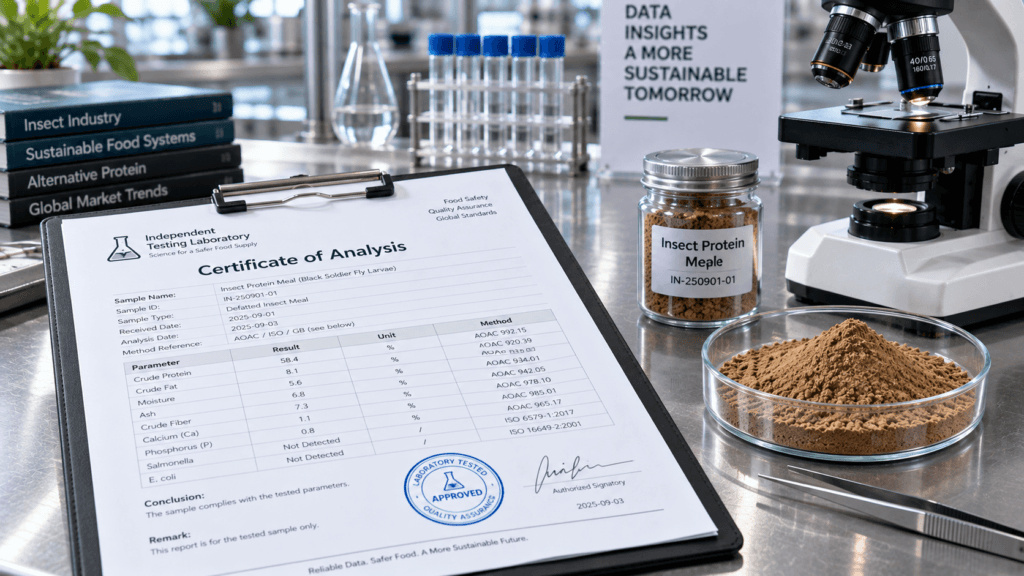
Ingredient evaluation should use analytical methods and reporting conventions that are consistent across suppliers. A product with a higher crude protein figure is not necessarily more valuable if its digestible amino acid contribution or processing performance is inferior.
Pilot formulations and feeding trials can help establish whether an ingredient works under representative commercial conditions.
9. Economics of Insect Protein in Aquafeed
The economics of insect protein depend on the price of the ingredient relative to the nutritional value it contributes. A direct comparison with fishmeal based solely on price per metric ton can be misleading.
A more informative approach considers cost per unit of digestible protein or relevant amino acid, together with energy contribution, mineral composition, and any changes required elsewhere in the formulation.
For illustration, consider two hypothetical protein ingredients:
Parameter
Conventional ingredient
Insect-derived ingredient
Delivered price
$1,600/metric ton
$2,000/metric ton
Crude protein
65%
55%
Assumed protein digestibility
88%
85%
Estimated digestible crude protein
57.2%
46.75%
Cost per kg of estimated digestible crude protein
$2.80
$4.28
These are illustrative assumptions, not observed market prices or universal digestibility coefficients. The calculation is a simplified screening measure and does not capture essential amino acid balance, energy, feed processing, or animal performance.
The example demonstrates why a supplier’s price quotation should be evaluated through formulation economics rather than the nominal cost of the raw material alone.
10. Production Scale and Supply Reliability
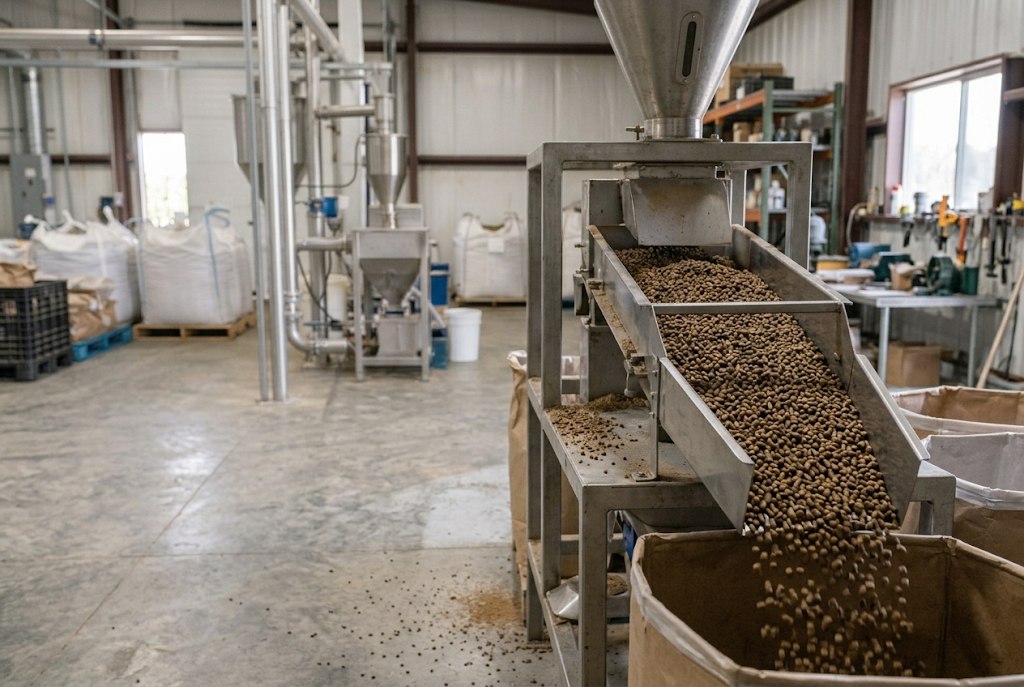
Commercial adoption requires sufficient volume, consistent specifications, and dependable delivery schedules. Feed manufacturers operating large production facilities need confidence that an ingredient can be supplied repeatedly without significant changes in composition or availability.
Insect production facilities face their own operational constraints, including rearing efficiency, substrate availability, energy use, processing capacity, and quality-control costs.
Production scale does not automatically guarantee a competitive ingredient. A facility may increase output while still facing high drying, extraction, labor, or logistics expenses.
For buyers, supply qualification should include production capacity, realistic delivery volumes, batch consistency, documentation, and contingency planning. Reliable long-term supply can be more valuable than an attractive one-time quotation.
11. Regulation and Feed Safety
Regulatory eligibility is essential for insect-derived ingredients used in aquaculture feed. Permitted insect species, substrate requirements, processing conditions, and product categories vary by jurisdiction.
In the European Union, rules have established pathways for certain processed insect proteins in aquaculture feed, subject to applicable conditions. This does not mean that every insect species, rearing substrate, or processed ingredient is automatically authorized.
In other markets, requirements may involve ingredient definitions, feed registrations, safety documentation, labeling, and restrictions on particular materials.
Feed manufacturers and suppliers should confirm the current rules for the destination market before treating an insect meal as an approved aquafeed ingredient. Product testing and traceability must support the relevant safety and compliance obligations.
12. Commercial Market Adoption and Barriers
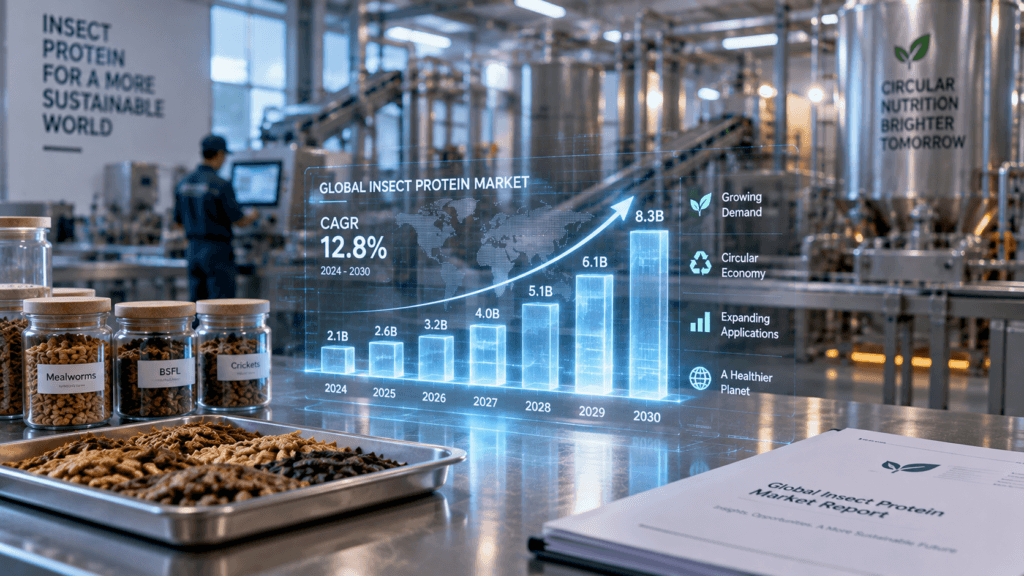
The transition from research interest to recurring commercial purchasing is a critical stage in insect protein market development.
Research trials can demonstrate nutritional potential, but commercial adoption requires competitive economics, consistent ingredient specifications, regulatory certainty, and confidence in manufacturing performance.
Higher ingredient prices may be easier to accommodate in specialty feeds or applications where the material offers a documented functional or commercial advantage. High-volume feed categories are generally more sensitive to cost.
Other barriers include limited supply availability, variation in product grades, insufficient species-specific feeding evidence, and uncertainty about how insect ingredients should be valued relative to established alternatives.
For insect protein producers, long-term offtake agreements and reliable feed-manufacturer relationships may be more important than isolated trial orders. For aquafeed manufacturers, supplier qualification and formulation flexibility remain central considerations.
13. Market Outlook for Insect Protein Aquafeed
Insect protein has potential as part of a diversified aquafeed ingredient portfolio, but the pace of adoption will depend on demonstrated performance and commercial viability.
Improved production efficiency, more consistent processing, and stronger analytical documentation may support broader use. Greater availability of digestibility data and practical formulation experience could also reduce technical uncertainty.
The competitive position of insect protein will continue to depend on conventional ingredient markets, local production costs, regulatory access, and the requirements of individual aquaculture species.
A realistic assessment distinguishes technical feasibility from commercial adoption. An ingredient may work nutritionally without being cost-effective at prevailing prices, while another may be commercially viable only in a defined niche.
IIR Analysis
The long-term significance of insect protein aquafeed lies in its potential to expand the range of protein ingredients available to aquaculture feed manufacturers. However, insect-derived meals should be evaluated as formulation ingredients rather than universal replacements for fishmeal.
Commercial success depends on digestible nutrient value, species-specific performance, consistent processing, regulatory compliance, and delivered cost. Crude protein concentration alone provides an incomplete measure of purchasing value.
Market adoption is also likely to remain uneven across aquaculture species and feed categories. Specialty formulations and differentiated applications may offer opportunities that do not immediately translate into broad use in price-sensitive feeds.
For producers and buyers, the strongest commercial case will be built through transparent specifications, credible feeding evidence, and supply arrangements capable of supporting recurring industrial demand.
Disclaimer: This article is for informational purposes only and does not constitute business, legal or investment advice. Always consult primary sources and qualified professionals.