Independent intelligence for the global insect industryISSUE 01 · 2026
BSFL Aquafeed: Commercial Applications and Formulation
By IIR Editorial DeskOctober 29, 2026
Black soldier fly larvae are an emerging source of processed protein ingredients for aquaculture feeds. This guide examines full-fat and defatted BSFL meals, nutritional composition, formulation requirements, fishmeal replacement, safety, and commercial sourcing considerations.
Black soldier fly larvae can be processed into full-fat and defatted meals for aquaculture feeds. Their commercial suitability depends on amino acid balance, digestibility, lipid composition, processing, safety and the economics of individual feed formulations.
By IIR Editorial Desk · October 29, 2026 · Market Intelligence
BSFL aquafeed applications center on the use of black soldier fly larvae-derived ingredients in formulated diets for fish and shrimp. The larvae of Hermetia illucens can be processed into full-fat or defatted meals that contribute protein, lipids, minerals, and other components to compound aquaculture feeds. Their nutritional value and commercial suitability depend on production conditions, processing methods, ingredient specifications, and the requirements of the target species.
Black soldier fly larvae have attracted attention because their production can be integrated with certain permitted organic residual streams, creating opportunities for alternative feed ingredient supply. However, the ability to produce insect biomass does not automatically establish a competitive aquafeed ingredient. Commercial formulators need reliable nutrient data, acceptable digestibility, consistent quality, and a delivered cost that supports the finished feed’s performance objectives.
1. What Is BSFL Aquafeed?
BSFL aquafeed refers to formulated aquaculture diets containing ingredients derived from black soldier fly larvae. The term commonly covers feeds incorporating dried and processed BSFL meal, although the precise ingredient grade may vary.
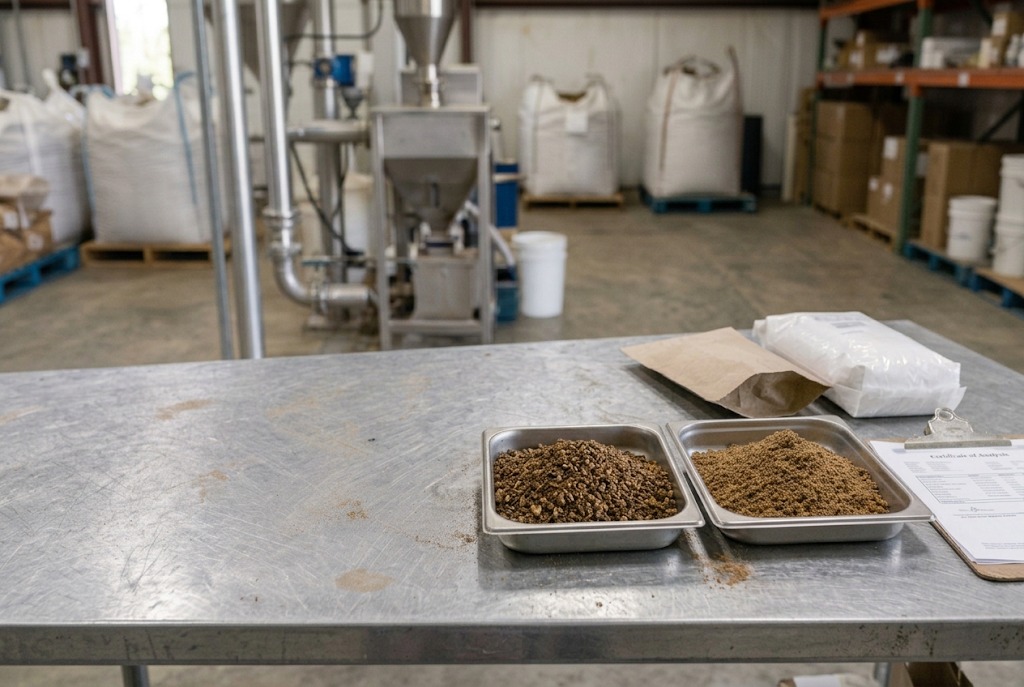
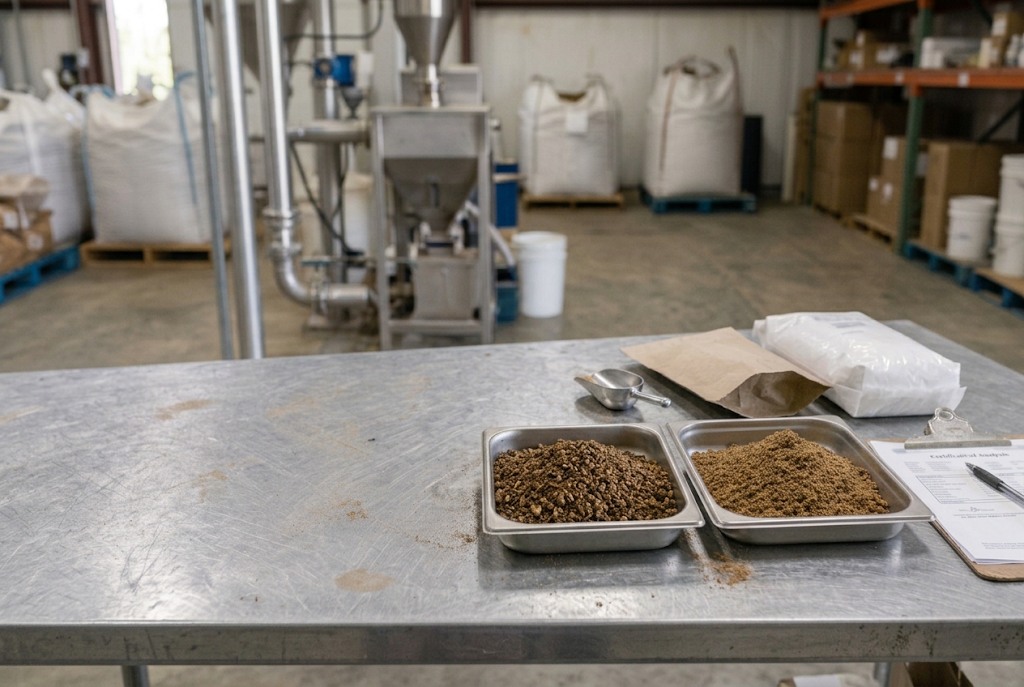
Commercial BSFL ingredients can differ in protein concentration, fat content, ash, moisture, and particle size. Full-fat meals retain more of the larvae’s original lipid fraction, while defatted meals undergo oil removal to produce a lower-fat ingredient. Within the broader insect protein aquafeed market, black soldier fly ingredients represent one of several options for commercial feed formulation.
The distinction matters because aquafeed formulations require specific combinations of protein, energy, amino acids, fatty acids, and minerals. A full-fat BSFL meal cannot be substituted directly for a defatted grade without evaluating its nutritional contribution.
BSFL meal should also be distinguished from whole dried larvae sold for other applications. Commercial aquafeed production generally requires a processed ingredient compatible with industrial mixing, grinding, and pellet or extrusion systems.
2. Why Black Soldier Fly Larvae Are Relevant to Aquafeed
Black soldier fly larvae are one of the insect species investigated extensively for feed ingredient production. Their biological characteristics and the development of industrial rearing systems have encouraged interest in their use as an alternative protein source.
BSFL can convert suitable rearing substrates into insect biomass, although permissible substrates are subject to legal restrictions. The resulting larvae can be harvested, stabilized, dried, and processed into meal or separated into protein-rich and lipid-rich fractions.
For aquafeed manufacturers, the relevant advantage is access to an additional ingredient source with defined nutritional properties. The commercial value of this ingredient depends on how it performs within a complete diet, not simply on the efficiency of the insect-rearing process.
The use of BSFL may also contribute to ingredient diversification. However, sustainability and circularity claims should be supported by production-specific evidence, including the effects of substrate sourcing, energy use, processing, and transportation.
3. Full-Fat BSFL Meal vs. Defatted BSFL Meal
Processing is one of the most important factors affecting the nutritional profile of black soldier fly ingredients.
Parameter
Full-fat BSFL meal
Defatted BSFL meal
Fat content
Generally higher
Reduced through extraction
Protein concentration
Depends on original composition
Often higher after fat removal
Energy contribution
Greater contribution from retained lipids
More dependent on other diet ingredients
Fatty acid balance
Requires evaluation of retained insect oil
Lower contribution from residual oil
Processing
Drying and milling, with relevant controls
Additional extraction or separation
Main formulation consideration
Protein and lipid contribution together
Protein-focused ingredient with separate lipid adjustment
Published research comparing full-fat and defatted BSFL meal demonstrates why processing grade and actual nutrient composition must be considered when evaluating aquafeed ingredients.
Full-fat meal may be useful where its lipid contribution fits the target formulation. However, BSFL oil has a distinctive fatty acid profile, and the retained fat should not be treated as nutritionally interchangeable with fish oil.
Defatted BSFL meal gives formulators greater flexibility to adjust the protein and lipid components separately. Its nutritional properties still depend on the extraction method, residual fat content, and processing conditions.
Neither product category has a universally superior formulation value. Buyers need actual analytical data rather than assumptions based on the product name.
4. Protein Quality and Essential Amino Acids
Crude protein is a useful starting point when evaluating BSFL meal, but it does not fully describe the ingredient’s nutritional value.
Aquaculture species require adequate amounts and proportions of digestible essential amino acids. The amino acid profile of BSFL meal must therefore be assessed against the requirements of the target fish or shrimp species and the other ingredients present in the diet.
Crude protein measurements also require careful interpretation because nitrogen associated with non-protein components can contribute to the reported value. Chitin-containing material is particularly relevant when comparing insect meals with conventional protein sources.
Formulators should prioritize digestible amino acid data where suitable evidence is available. When reliable ingredient-specific digestibility values are lacking, additional testing or conservative formulation assumptions may be necessary.
Protein concentration alone should not determine supplier selection. A product with a higher reported crude protein value may offer less formulation value if its amino acid balance, digestibility, or consistency is inferior.
5. Lipid Composition and Fatty Acid Balance
BSFL lipids differ from conventional marine oils. Black soldier fly larvae commonly contain a substantial proportion of saturated fatty acids, including lauric acid, although the precise composition varies with rearing and processing conditions.
This characteristic affects how full-fat BSFL meal fits into aquafeed formulations. The ingredient may contribute useful energy, but its fatty acid profile does not replace the nutritional functions of long-chain omega-3 fatty acids such as EPA and DHA.
For species and production systems where these fatty acids are important, formulators may need to retain other lipid sources or adjust the diet to maintain the required fatty acid balance.
Oil oxidation and storage stability also deserve attention. Processing, residual moisture, packaging, and storage conditions can influence the quality of fat-containing meals.
A supplier specification should therefore include relevant lipid data, not merely a total crude fat percentage. For full-fat grades, fatty acid composition and appropriate oxidative stability indicators may be important purchasing parameters.
6. Ash, Minerals, and Chitin-Containing Material
BSFL meals contain mineral components, and their ash concentrations may vary with the larvae’s composition and processing method. Mineral content can influence the nutritional balance of a finished feed, especially when an ingredient is used at higher inclusion levels.
Calcium and phosphorus are relevant, but their concentrations and nutritional availability should be evaluated rather than assumed. Total phosphorus, for example, does not independently establish the amount available to a particular aquaculture species.
Chitin-containing material is another distinguishing feature of insect meals. Its presence can affect how crude protein is interpreted and may influence digestive responses under certain conditions.
Research into chitin and insect-derived bioactive components is ongoing, but potential biological effects should not be generalized across all BSFL products. Their significance depends on processing, inclusion level, and the target species.
Commercial evaluation should focus on the measured composition of the supplied grade and its demonstrated performance within the intended diet.
7. BSFL Meal in Salmonid Feeds
Salmon and trout feeds are important areas of research and commercial evaluation for BSFL meal. These diets require careful balancing of digestible amino acids, energy, fatty acids, minerals, and feed-processing characteristics.
Partial replacement of conventional protein ingredients with BSFL meal has been investigated in salmonid diets. Results depend on the ingredient grade, diet formulation, inclusion level, and experimental conditions. Research on fishmeal replacement with defatted black soldier fly larvae meal in rainbow trout illustrates how ingredient processing, dietary inclusion, and species-specific responses influence formulation decisions.
For full-fat BSFL meal, the retained lipid fraction must be considered alongside the other oils in the diet. Defatted meal may offer greater flexibility when the formulation requires tighter control over fatty acid composition.
Commercial adoption also depends on pellet quality, ingredient consistency, cost, and reliable supply. Successful experimental feeding does not eliminate the need for validation under the manufacturer’s own production conditions.
8. BSFL Meal in Tilapia and Other Freshwater Fish
Tilapia and other freshwater aquaculture species may offer different formulation opportunities because their nutrient requirements and conventional ingredient combinations differ from those of salmonids.
BSFL meal has been investigated as a partial replacement for established protein ingredients in freshwater fish diets. The results vary with processing methods, inclusion rates, and the overall nutritional balance of the diet.
For commercial tilapia feeds, price sensitivity can be particularly important. An ingredient may perform satisfactorily in feeding trials but remain difficult to justify if its delivered cost substantially exceeds the value of the nutrients it replaces.
Formulators should compare BSFL meal with available local alternatives, considering digestible amino acids, energy, minerals, manufacturing behavior, and the finished feed’s target price.
9. BSFL Ingredients in Shrimp Aquafeed
Shrimp diets present a distinct set of nutritional and manufacturing considerations. Ingredient digestibility, amino acid balance, attractability, physical feed stability, and interactions with other protein sources can influence formulation outcomes.
BSFL meal has been studied in shrimp feeds, but performance cannot be predicted solely from its crude protein content. The appropriate inclusion level depends on the ingredient grade, shrimp species, life stage, and complete diet.
Processing conditions may affect palatability and nutrient availability. For manufacturers producing water-stable shrimp pellets, particle size and ingredient behavior during feed processing are also relevant.
Commercial use should be supported by feeding evidence appropriate to the intended application, including growth, feed utilization, survival, and any other performance measures relevant to the producer.
10. Formulation Limits and Practical Inclusion Decisions
There is no universal BSFL meal inclusion rate suitable for every aquaculture diet. The appropriate level depends on nutritional requirements, ingredient composition, digestibility, feed-processing constraints, cost, and regulatory eligibility.
Formulation factor
Potential limitation
Evaluation approach
Digestible amino acids
Imbalanced essential amino acid supply
Ingredient analysis and formulation
Fatty acid profile
Insufficient marine omega-3 contribution
Complete dietary lipid assessment
Ash and minerals
Excess or imbalance at higher inclusion
Mineral analysis
Chitin-containing material
Possible effects on nutrient utilization
Species-specific performance evidence
Ingredient variability
Inconsistent finished-feed nutrition
Supplier batch monitoring
Particle size
Mixing or extrusion difficulties
Manufacturing trials
Oxidative stability
Quality deterioration during storage
Appropriate lipid and storage testing
Delivered cost
Poor economic substitution value
Least-cost formulation analysis
Formulation trials should evaluate the finished diet rather than only the ingredient. Growth performance, feed conversion, feed intake, product quality, and manufacturing outcomes may all be relevant.
11. BSFL Processing and Feed Ingredient Quality
Commercial BSFL meal production commonly involves harvesting, stabilization, drying, milling, and, where applicable, fat separation.
Processing conditions can influence moisture, protein characteristics, lipid stability, microbial quality, and particle size. Excessive or poorly controlled thermal exposure may affect nutrient quality, while insufficient stabilization can create storage and safety concerns.
A suitable supplier quality system should address rearing inputs, production traceability, processing controls, laboratory testing, packaging, and shipment handling.
Buyers should request batch-specific documentation for key characteristics, including moisture, crude protein, fat, ash, and relevant microbiological or chemical parameters. Additional tests may be needed depending on the intended market and application.
For defatted grades, residual fat content and extraction consistency deserve particular attention. Two products both labeled defatted BSFL meal may differ substantially in their nutritional characteristics.
12. Commercial Economics and Supplier Evaluation
BSFL meal economics depend on production costs, processing efficiency, ingredient grade, and delivered price. Drying and oil extraction can add substantial processing costs, while the commercial value of the resulting products depends on their composition and market demand.
Aquafeed manufacturers should compare BSFL meal with competing ingredients using the nutritional contribution of each product. Price per metric ton is useful for purchasing administration but insufficient for evaluating formulation value.
Supplier assessment should also consider production capacity, quality consistency, documentation, packaging, and delivery reliability. A technically suitable ingredient may be difficult to adopt if the supplier cannot provide predictable quantities.
Long-term purchasing arrangements may support greater confidence, but they require agreed specifications and clear procedures for managing batch variation or production changes.
13. Regulatory Requirements for BSFL Aquafeed
The legal status of BSFL-derived ingredients depends on the destination market, product category, processing method, and permitted rearing substrates.
Regulatory pathways exist for certain insect-derived feed ingredients in particular jurisdictions, including the European Union. However, authorization is not universal across all species, substrates, or processing methods.
Manufacturers should verify the applicable requirements for the specific ingredient and intended aquaculture species. Documentation may need to address source materials, processing, product identity, labeling, and feed safety.
Commercial buyers should avoid treating a supplier’s general registration or export experience as proof that every BSFL product is eligible for use in a particular market.
14. Commercial Outlook for BSFL Aquafeed
BSFL-derived ingredients have potential to become established components of selected aquafeed formulations, particularly where consistent product quality and competitive economics can be demonstrated.
Future adoption will depend on improvements in production efficiency, ingredient standardization, digestibility evidence, and commercial supply. More extensive formulation experience may help manufacturers identify applications where BSFL meal offers measurable value.
However, market development will remain sensitive to conventional protein prices, feed manufacturing requirements, and differences between aquaculture species.
The most credible growth opportunities are likely to emerge where producers can supply a clearly defined ingredient that solves a specific nutritional or commercial problem.
IIR Analysis
The commercial value of BSFL aquafeed ingredients depends on their performance as components of complete aquaculture diets, not simply on the ability of black soldier fly larvae to generate protein-rich biomass.
For feed manufacturers, the key distinctions are between full-fat and defatted meal, crude and digestible protein, total lipid content and fatty acid balance, and experimental performance versus repeatable commercial results.
BSFL meal may support partial substitution of conventional protein ingredients in selected formulations, but the appropriate inclusion level must be established for the specific ingredient, species, and diet. A successful trial in one aquaculture system does not establish a universal replacement rate.
For commercial suppliers, consistent processing, transparent nutrient specifications, safety documentation, and dependable volume are essential. For buyers, the most useful comparison remains the delivered cost of a nutritionally suitable and legally compliant ingredient.
Disclaimer: This article is for informational purposes only and does not constitute business, legal or investment advice. Always consult primary sources and qualified professionals.