Independent intelligence for the global insect industryISSUE 01 · 2026
How Buyers Evaluate Insect Ingredients for Swine Feed
By IIR Editorial DeskNovember 8, 2026
Commercial swine feed buyers need more than a protein percentage or a supplier quotation. Evaluating insect-derived ingredients requires a structured review of nutritional value, feed safety, regulatory eligibility, supplier reliability,…
Commercial swine feed buyers need more than a protein percentage or a supplier quotation. Evaluating insect-derived ingredients requires a structured review of nutritional value, feed safety, regulatory eligibility, supplier reliability, and complete-feed economics.
By IIR Editorial Desk · November 8, 2026 · Buyer Guides
The evaluation of insect ingredients for swine feed is becoming an important procurement consideration as feed manufacturers investigate alternative sources of protein and energy for pig diets. Black soldier fly larvae (BSFL), yellow mealworms, and other insect-derived materials can be processed into full-fat meals, defatted protein meals, and separated oils. However, their commercial value varies according to insect species, processing methods, nutrient composition, quality consistency, and the requirements of the intended swine production stage.
For commercial buyers, the central question is whether a specific insect ingredient can be incorporated safely, legally, and economically into a nutritionally balanced feed formula. This requires coordination between procurement, swine nutrition, quality assurance, regulatory affairs, and feed manufacturing teams. A successful supplier evaluation should establish not only that the ingredient meets a laboratory specification, but also that it can be delivered consistently and support acceptable animal performance at a competitive total feed cost.
1. Define the Intended Swine Feed Application
The first step in evaluating insect ingredients is to define the intended pig production stage and the nutritional role of the material. Nursery diets for newly weaned piglets may have different requirements from grower-finisher or breeding-herd diets, particularly regarding amino acid digestibility, energy concentration, mineral balance, and ingredient cost. Buyers should determine whether the proposed insect ingredient will partially replace fishmeal, soybean meal, another specialty protein, or a conventional fat source. Without a clearly defined application, suppliers may offer products that appear attractive by crude protein percentage but are unsuitable for the intended formulation.
Procurement teams should also establish the expected inclusion range, manufacturing requirements, target nutrient specifications, and acceptable delivered cost before requesting quotations. A full-fat insect meal contributes both protein and lipids, while a defatted meal generally provides a more concentrated protein fraction. Separated insect oils serve a different nutritional function and should not be evaluated as direct protein replacements. The purchasing specification should therefore be developed with the nutrition team rather than based solely on a general request for insect protein.
2. Confirm Insect Species, Product Form, and Processing Grade
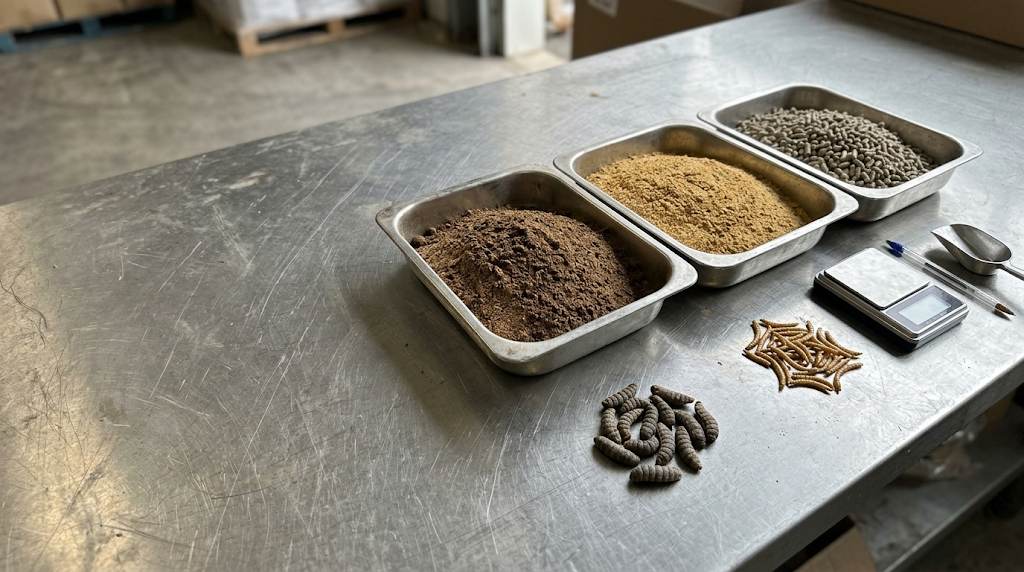
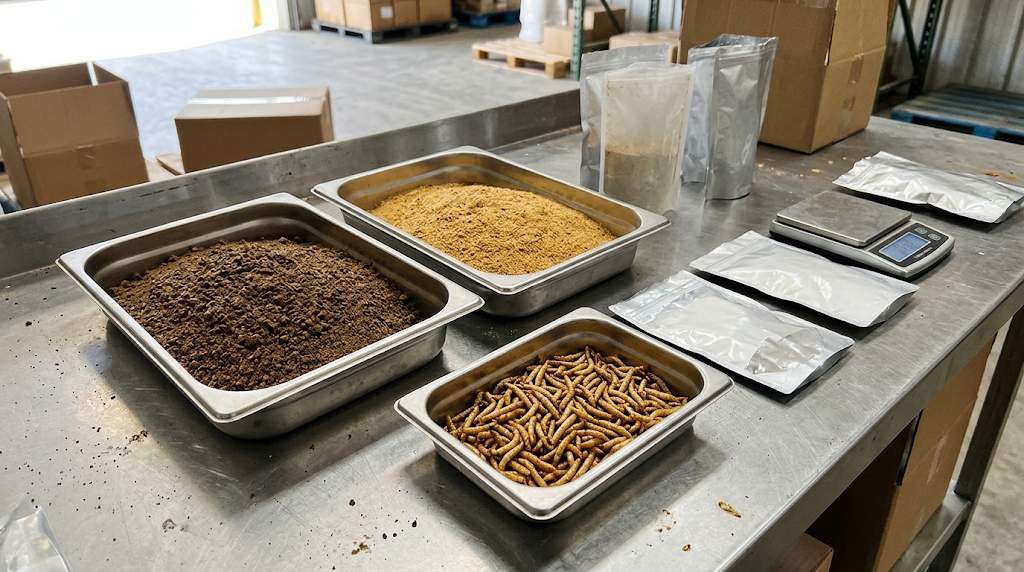
Species identification is a fundamental part of commercial ingredient qualification. Black soldier fly larvae (Hermetia illucens) and yellow mealworms (Tenebrio molitor) are among the insect materials investigated for pig nutrition, but they differ in nutritional composition and processing characteristics. Suppliers should identify the scientific species, developmental stage where relevant, processing method, and commercial ingredient form. Buyers should distinguish between whole dried insects, full-fat meals, partially defatted meals, defatted protein meals, and separated oils because these materials have different formulation roles.
The ingredient identity should remain consistent across the product specification, laboratory reports, quotation, purchase order, labeling documents, and shipment records. A sample described as a BSFL protein meal should not be assumed to represent a different extraction grade or a product blended with other insect species. Where a supplier offers multiple grades, each should have a separate specification and suitable analytical documentation. Clear product identification helps prevent nutritional mismatches and reduces the risk of receiving material that differs from the approved commercial sample.
3. Evaluate Nutritional Specifications Beyond Crude Protein
Crude protein is often the first figure presented in an insect ingredient quotation, but it does not fully describe the nutritional value for pigs. Insect-derived materials contain chitin-associated and other non-protein nitrogen that can influence conventional nitrogen-based protein calculations. Swine diets are generally formulated using standardized ileal-digestible amino acids rather than crude protein alone. Buyers should therefore request complete amino acid profiles, including lysine, methionine, threonine, and tryptophan, together with reliable digestibility data where available.
Energy and mineral composition must also be evaluated. Full-fat insect meals may contribute substantial lipid energy, while defatted meals generally have lower fat concentrations and different energy values. Some BSFL products can contain relatively high calcium and ash concentrations, making mineral balance important when determining suitable inclusion levels. Buyers should request moisture, crude fat, ash, calcium, phosphorus, and relevant energy data for the exact processing grade. Ingredient comparisons should be conducted on a consistent as-fed or dry-matter basis to avoid misleading conclusions.
4. Request and Verify Certificates of Analysis
A certificate of analysis (COA) should provide evidence that a specific production batch meets the agreed purchasing specification. Buyers should verify the ingredient name, insect species, processing grade, batch identification, sampling information, analytical results, reporting units, methods, and laboratory details. The document should distinguish measured batch results from typical values or general product guarantees. A standard product brochure cannot replace batch-specific analytical evidence when shipment acceptance depends on measurable quality parameters.
For insect protein meals, relevant measurements may include moisture, crude protein, crude fat, ash, amino acids, calcium, phosphorus, and risk-based microbiological or chemical tests. Additional parameters may be required depending on the ingredient and destination market. Buyers should confirm whether results are reported on an as-fed or dry-matter basis and whether the analytical methods are appropriate for the material being tested. When results approach contractual limits, the purchasing agreement should establish how retesting, sampling disputes, and measurement uncertainty will be handled. Independent laboratory verification may be appropriate during initial supplier qualification or for selected commercial shipments.
5. Assess Digestible Amino Acids and Energy Value
The usable nutritional value of insect meal depends on amino acid digestibility and energy availability, not merely on the concentrations reported in a general specification. Standardized ileal digestible amino acid values are particularly important for swine formulation because they allow nutritionists to compare protein ingredients according to the nutrients pigs can actually utilize. Buyers should ask whether the supplier has relevant digestibility studies for the exact insect species and processing grade. Values derived from a different product, animal species, or manufacturing process may not accurately represent the ingredient being purchased.
Energy evaluation is equally important when comparing full-fat and defatted insect products. Differences in residual fat, processing conditions, and nutrient composition can influence digestible and metabolizable energy values. Feed formulators should use measured or appropriately estimated values and apply conservative assumptions when reliable ingredient-specific data are unavailable. A product with a higher crude protein percentage may still require additional energy ingredients or amino acid supplementation to maintain a balanced, complete diet. Procurement decisions should therefore be based on the nutrient contribution of the complete formulation.
6. Compare Full-Fat and Defatted Products Separately
Full-fat insect meals retain more of the original lipid fraction, while defatted meals undergo additional fat removal, generally increasing the relative protein concentration. These processing differences affect amino acid concentration, energy contribution, fatty acid composition, mineral concentration, and storage characteristics. Buyers should specify the required product grade before requesting quotations because two products sold under the same insect species name may have substantially different nutritional values and commercial prices.
A higher protein percentage does not automatically make a defatted meal the better purchasing option. The complete diet may require additional fat or other energy sources, while a full-fat meal may contribute useful energy but introduce greater sensitivity to lipid oxidation. Buyers should compare digestible amino acids, metabolizable energy, residual fat, mineral balance, storage stability, and total formulation cost. Product grades should be evaluated according to equivalent nutritional requirements rather than price per metric ton alone.
7. Verify Feed Safety and Contaminant Controls
The safety of insect-derived feed ingredients depends on rearing substrates, production hygiene, harvesting, processing, storage, and transportation. Potential hazards may include microbiological contamination, relevant chemical contaminants, foreign materials, and deterioration during storage. The appropriate testing program should reflect the actual production pathway and destination-market requirements rather than applying a generic checklist to every insect ingredient. Buyers should ask suppliers to explain how rearing substrates are approved, monitored, and traced through the production system.
Suppliers should provide evidence of preventive controls, process monitoring, sanitation, and corrective-action procedures. Laboratory testing helps verify product quality, but a single favorable test result cannot substitute for reliable production controls. Buyers should also consider moisture management, packaging integrity, and oxidation stability, particularly for full-fat insect meals. Safety assessment should combine risk-based testing with an evaluation of how the supplier prevents, detects, and responds to contamination.
8. Check Regulatory Eligibility in the Destination Market
Regulatory eligibility must be confirmed for the exact insect species, processing method, ingredient form, rearing substrates, and intended animal use. An ingredient permitted in aquaculture, poultry, or pet food is not automatically eligible for swine feed. Buyers should review applicable ingredient definitions, permitted uses, production conditions, labeling requirements, and import restrictions before approving commercial orders. Regulatory compliance should be established at the ingredient level rather than inferred from general claims that insect protein is approved for animal feed.
In the European Union, certain processed animal proteins derived from farmed insects may be used in pig and poultry feed under specified conditions. These rules include requirements relating to eligible species, production inputs, processing, and handling. Buyers should verify that the actual commercial product and its production pathway meet the applicable framework. In the United States and other markets, feed manufacturers should confirm the relevant ingredient status and permitted use before incorporating insect meal into pig diets. Documentation should be retained to support product identity, traceability, and destination-market compliance.
9. Review Supplier Traceability and Production Controls
Supplier qualification should establish whether the producer can consistently manufacture the approved ingredient and trace it through the supply chain. Buyers should review rearing substrates, harvesting procedures, drying conditions, milling, fat extraction where applicable, packaging, and batch identification systems. Traceability records should allow the supplier to identify affected lots and investigate deviations if a quality or safety concern arises. Where a trader or distributor is involved, buyers should clarify which company manufactures the ingredient and which party is responsible for technical documentation and corrective actions.
Quality management evidence may include documented operating procedures, sanitation controls, equipment maintenance, staff training, testing programs, internal audits, and records of nonconforming material. Third-party certifications may provide useful assurance, but buyers should verify their validity and scope rather than assuming that a certificate covers every product or destination-market requirement. The most important question is whether the supplier’s actual controls are appropriate for the specific insect ingredient and consistently implemented.
10. Assess Batch Consistency and Specification Tolerances
Consistent nutrient composition is essential for repeat swine feed production. Variations in protein, fat, moisture, ash, calcium, phosphorus, and amino acid concentrations can affect formulation accuracy and the nutritional balance of the finished diet. Buyers should request historical COAs from multiple production batches to understand normal variation rather than relying on a single favorable sample. Particular attention should be paid to changes associated with substrate sourcing, production scale, drying conditions, and fat extraction because these factors can alter the characteristics of insect-derived ingredients.
Commercial purchasing specifications should define acceptable ranges, analytical methods, sampling procedures, and the handling of nonconforming batches. Buyers should avoid vague descriptions such as “premium insect protein” unless supported by measurable parameters. For repeat contracts, the parties should establish procedures for retained samples, independent verification, rejection, replacement, and corrective actions. A supplier that consistently meets an agreed specification may offer greater practical value than one advertising a higher protein concentration with unpredictable batch variation.
11. Evaluate Storage, Packaging, and Transportation
Commercial insect ingredients must remain stable during storage and transportation before they are incorporated into feed. Moisture exposure, unsuitable temperatures, oxygen, packaging damage, and extended storage can affect ingredient quality. Full-fat insect meals may require particular attention to lipid oxidation, while all products should be evaluated for moisture control, packaging integrity, and suitable shelf life. Buyers should ask suppliers to provide storage recommendations and evidence supporting the claimed shelf life of the exact product grade.
Packaging should be appropriate for the intended shipment size, transport conditions, and feed mill handling systems. Bulk bags, smaller industrial bags, and other packaging formats may have different requirements for moisture protection, palletization, and contamination prevention. Buyers should clarify loading conditions, warehouse storage practices, transport responsibilities, and procedures for damaged or compromised shipments. A product that meets specifications at the factory may still become unsuitable if packaging and logistics are not properly controlled.
12. Compare Suppliers on Delivered Nutrient Cost
A supplier quotation should be evaluated according to the nutritional value delivered, not simply the price per metric ton. Insect meals with different protein concentrations, fat contents, digestibility values, and processing grades cannot be compared fairly on unit price alone. Buyers should calculate the landed cost of each product, including freight, insurance, duties, testing, handling, storage, and expected losses. The nutrition team can then determine whether the ingredient provides a competitive contribution to the finished swine diet.
A preliminary screening metric is the cost per kilogram of reported crude protein:
Cost per kg of crude protein =Delivered ingredient price per kgCrude protein fraction
Metric
Full-fat insect meal
Defatted insect meal
Illustrative delivered price
$1,800/metric ton
$2,200/metric ton
Reported crude protein
45%
60%
Cost per kg of reported crude protein
$4.00
$3.67
Hypothetical figures for calculation only. These are not verified market quotations or supplier prices.
Although the defatted meal has a lower calculated cost per kilogram of reported crude protein in this example, that does not establish a lower total feed cost. Digestible amino acids, metabolizable energy, mineral contribution, additional ingredient requirements, and animal performance must also be considered. Commercial buyers should compare nutritionally equivalent complete-feed formulations and evaluate the resulting cost per unit of animal production rather than selecting an insect ingredient based on a single price or protein metric.
13. Conduct Sample Evaluation and Feed Trials
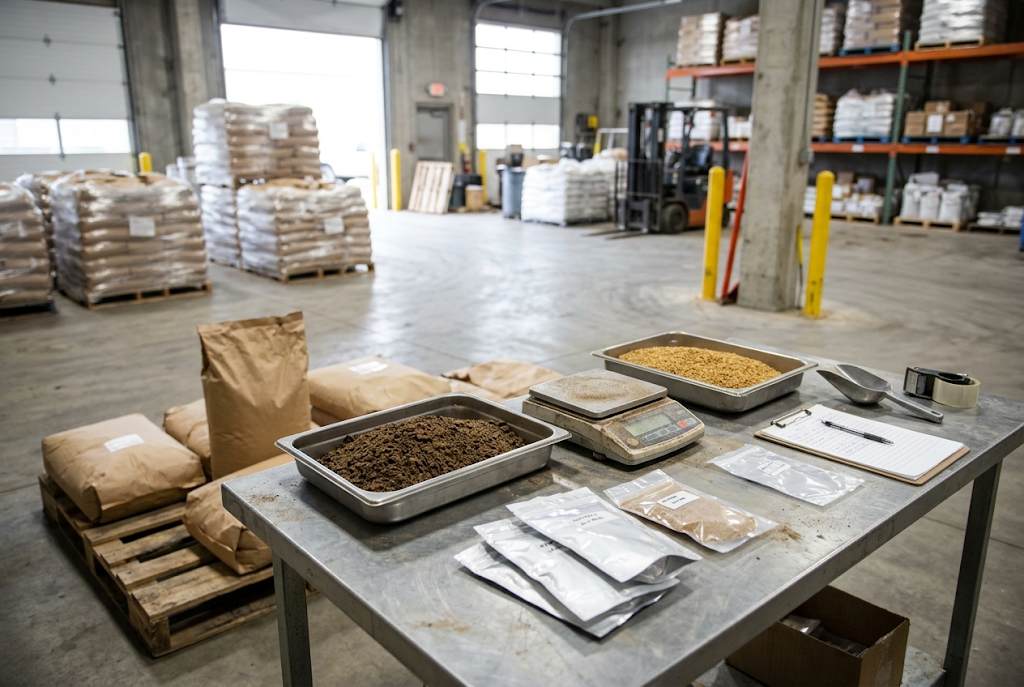
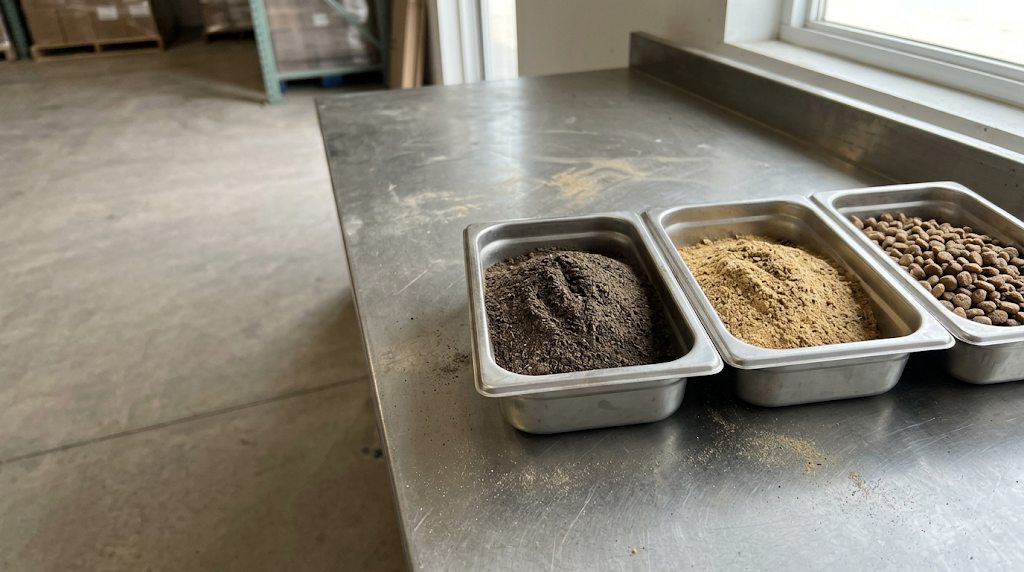
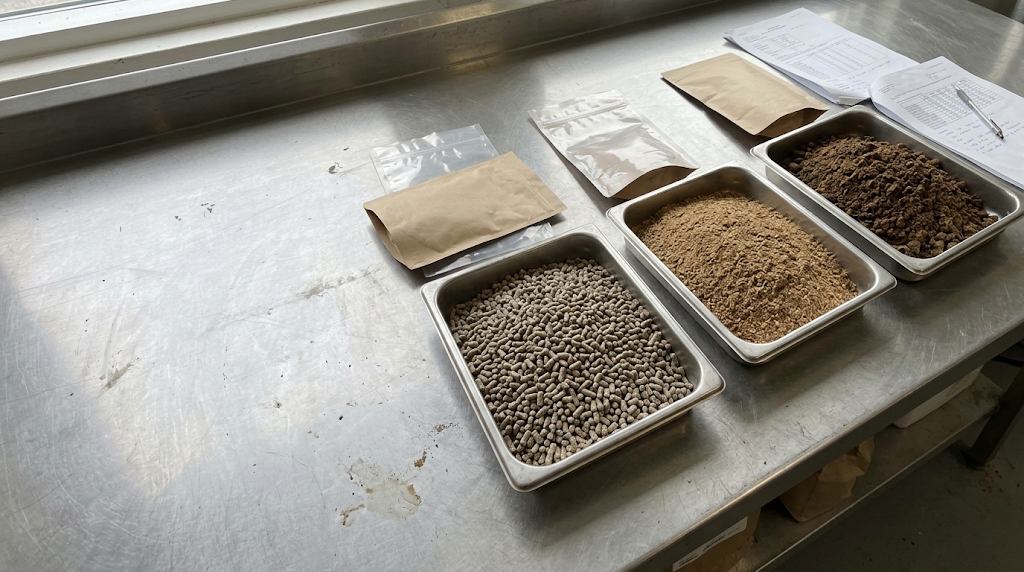
Sample evaluation should begin with confirmation that the supplied material represents the same insect species, processing grade, and production system as the proposed commercial product. Buyers should examine appearance, odor, particle size, packaging condition, and relevant laboratory results before proceeding to manufacturing or feeding trials. A specially selected sample may not accurately represent normal production, so supplier qualification should include evidence of consistency across multiple batches where practical.
Pilot manufacturing trials can help determine whether the ingredient performs as expected during mixing, pelleting, storage, and handling. Where insect meal will be used at a meaningful inclusion level, controlled feeding evaluations may also be appropriate. Depending on the intended swine production stage, these trials may monitor feed intake, average daily gain, feed conversion, nutrient digestibility, and relevant health or carcass outcomes. Results should be interpreted by qualified nutrition and production personnel using nutritionally balanced diets and appropriate experimental methods.
14. Establish Clear Purchasing and Contract Specifications
A commercial purchasing agreement should clearly identify the insect species, processing grade, nutritional specification, safety requirements, packaging, shelf life, and documentation obligations. The contract should define acceptable tolerances, analytical methods, sampling procedures, inspection rights, and the process for resolving nonconforming deliveries. Buyers should ensure that the product described in the quotation matches the specification, COA, invoice, packing list, and any regulatory documents required for the destination market.
Commercial terms should address quantity, delivery schedules, Incoterms, payment conditions, insurance responsibilities, and procedures for claims or replacement. For repeat procurement, supplier performance should be monitored through batch conformity, documentation accuracy, on-time delivery, responsiveness, and corrective-action records. These controls help transform a successful initial evaluation into a dependable supply relationship.
15. Practical Buyer Evaluation Checklist
Before approving insect ingredients for commercial swine feed, procurement teams should confirm that the product is correctly identified, nutritionally appropriate, safe, legally eligible, and commercially reliable. The following checklist can support initial supplier screening, sample approval, and purchasing decisions.
Evaluation area
Buyer verification question
Ingredient identity
Are the scientific species and processing grade clearly identified?
Intended use
Is the product appropriate for the target swine production stage?
Nutritional composition
Are protein, fat, moisture, ash, amino acids, and minerals reported?
Digestibility
Are relevant standardized ileal digestibility data available?
COA
Are results batch-specific, traceable, and supported by suitable methods?
Safety
Are substrate controls, contaminant testing, and preventive measures documented?
Regulatory eligibility
Is the exact ingredient permitted for the intended market and animal use?
Batch consistency
Can the supplier demonstrate stable results across multiple lots?
Manufacturing
Has the ingredient passed relevant mixing, pelleting, and storage evaluations?
Economics
Is the delivered nutrient and complete-feed cost commercially acceptable?
Supply reliability
Can the supplier maintain approved specifications and delivery volumes?
Contract
Are acceptance criteria and nonconforming-batch procedures documented?
The final approval decision should combine nutritional analysis, regulatory review, quality documentation, supplier assessment, manufacturing performance, and commercial evaluation. No single laboratory report, certification, or quotation is sufficient to establish long-term suitability. Buyers should retain the approval record and review supplier performance as additional commercial batches are delivered.
IIR Analysis
The procurement of insect ingredients for swine feed should follow the same evidence-based standards applied to established commercial feed materials, while accounting for differences in insect species, rearing conditions, and processing grades. Buyers must distinguish crude protein from usable nutritional value, verify ingredient eligibility for the target market, and evaluate whether the supplier can maintain consistent quality across repeated deliveries. These considerations are especially important when comparing BSFL and mealworm products, whose lipid composition, mineral characteristics, and processing requirements can differ substantially.
The strongest suppliers will be those able to provide clearly defined commercial grades, reliable analytical documentation, transparent production controls, and consistent delivery. For swine feed manufacturers, the purchasing decision should be based on digestible nutrients, animal performance, feed safety, regulatory compliance, and complete-feed economics rather than the ingredient’s headline protein percentage alone. Long-term adoption will depend on repeatable quality and demonstrated commercial value.
Disclaimer: This article is for informational purposes only and does not constitute business, legal or investment advice. Always consult primary sources and qualified professionals.