Independent intelligence for the global insect industryISSUE 01 · 2026
How Buyers Evaluate Insect Ingredients for Pet Food
By IIR Editorial DeskNovember 3, 2026
Pet food manufacturers must evaluate insect ingredients beyond crude protein and price. This buyer's guide explains how to compare black soldier fly and mealworm products, verify certificates of analysis, assess nutritional suitability, check regulatory eligibility, and qualify suppliers for commercial dog and cat food production.
Commercial pet food buyers need verified nutritional data, reliable laboratory documentation, and consistent supplier performance. This guide explains how to assess insect-derived ingredients for dog and cat food without relying on crude protein claims or price quotations alone.
By IIR Editorial Desk · November 3, 2026 · Buyer Guides
Buyers should evaluate insect ingredients for pet food by confirming the intended dog or cat application, identifying the insect species and processing grade, and reviewing digestible amino acids, fat, minerals, and relevant safety specifications. Certificates of analysis should be traceable to the actual product and batch, with appropriate laboratory methods and reporting units. Buyers must also verify regulatory eligibility, finished-product nutritional adequacy, supplier consistency, and total formulation costs. Commercial approval should follow documented sample evaluation and, where appropriate, manufacturing and feeding trials.
This framework applies to pet food manufacturers, ingredient importers, distributors, private-label brands, and procurement teams sourcing insect-derived materials for dry kibble, wet food, treats, or specialized products.
1. Define the Intended Pet Food Application
The first step in evaluating insect ingredients is to define what the ingredient must accomplish in the finished product. A manufacturer developing complete adult dog food has different requirements from a company producing complete kitten food, a complementary treat, or a specialty diet. Each product category has its own nutritional, manufacturing, labeling, and commercial considerations. The buyer should therefore establish the target animal species, life stage, finished-product format, intended nutritional function, and destination market before comparing supplier quotations.
For example, a manufacturer sourcing a protein ingredient for extruded dog kibble may require a finely milled insect meal with consistent amino acid and fat specifications, while a treat manufacturer may place greater emphasis on appearance, texture, flavor, and consumer positioning. These products cannot be evaluated using the same acceptance criteria simply because they are derived from insects. A clear purchasing specification helps prevent suppliers from quoting technically different products as though they were interchangeable.
2. Compare Insect Species and Processing Grades
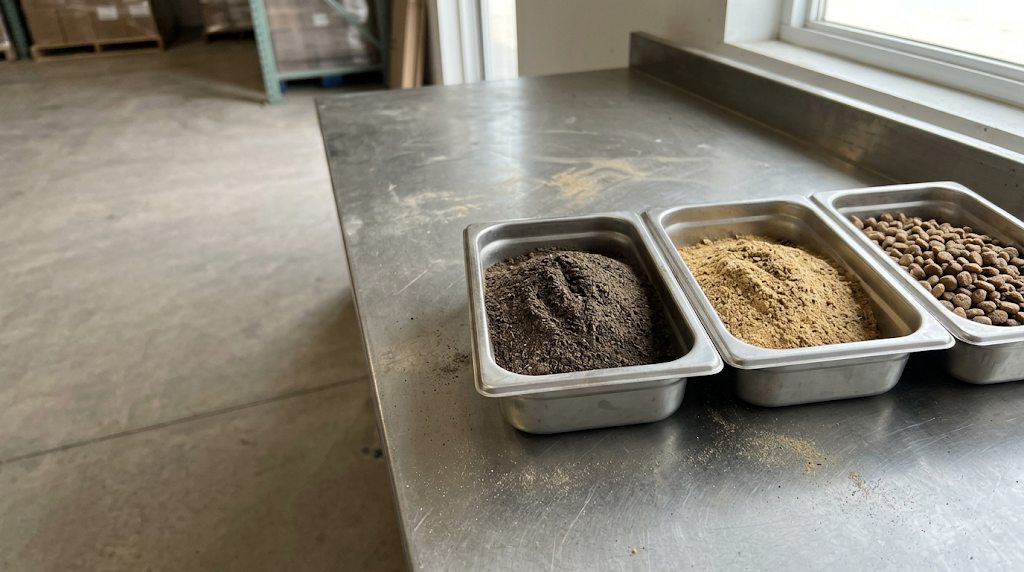
Black soldier fly larvae, yellow mealworms, and crickets are among the insect sources investigated for pet food applications. However, each species has different nutritional characteristics, processing options, and commercial considerations. Buyers should identify both the insect species and the precise processing grade before making comparisons, because differences between full-fat and defatted products can be as important as differences between species.
Insect source
Common ingredient forms
Key evaluation factors
Black soldier fly larvae (Hermetia illucens)
Full-fat meal, defatted meal, oil
Residual fat, calcium, ash, fatty acid profile
Yellow mealworms (Tenebrio molitor)
Full-fat meal, defatted meal, whole dried larvae
Protein quality, unsaturated lipids, oxidation stability
Crickets
Whole-insect meal, processed protein ingredients
Species identity, amino acid composition, processing consistency
The table provides general evaluation priorities rather than fixed nutrient specifications. Actual composition depends on rearing inputs, developmental stage, processing methods, and analytical procedures. Full-fat meals contribute both protein and lipids, while defatted meals generally provide a more concentrated protein fraction. Separated insect oils serve a different nutritional function and should not be evaluated as protein ingredients. Buyers should request specifications for the exact ingredient grade offered rather than relying on generic values associated with an insect species.
3. Evaluate Digestible Protein and Amino Acids
Crude protein is commonly used in ingredient quotations, but it provides an incomplete measure of nutritional value. Protein is generally estimated from measured nitrogen using a conversion factor, and insect-derived materials contain chitin-associated and other non-protein nitrogen that can affect the interpretation of conventional crude protein values. For pet food formulation, digestible amino acids provide a more useful basis for evaluating protein quality. Essential amino acid requirements differ between dogs and cats, and the finished diet must provide an appropriate nutrient balance for the intended species and life stage.
Lysine, methionine, threonine, and other amino acids should be considered alongside ingredient digestibility and processing effects. For cats, taurine adequacy requires particular attention because a high-protein insect meal should not be assumed to supply sufficient taurine or every other nutrient required in a complete feline diet. Buyers should request an amino acid profile and relevant digestibility evidence whenever available. Where data are limited, independent analysis and controlled formulation trials may be necessary before commercial approval.
4. Review Fat, Energy, and Mineral Composition
Insect ingredients can contribute substantial fat and energy, depending on the species and processing grade. Full-fat meals retain more of the original lipid fraction, while defatted meals generally contain less fat and allow formulators to adjust dietary oils separately. Fatty acid composition also differs between insect species: black soldier fly larvae commonly contain more saturated fatty acids, including lauric acid, while yellow mealworms often contain substantial proportions of unsaturated fatty acids. These characteristics affect formulation but should not be treated as automatic nutritional advantages.
Manufacturers must evaluate the complete dietary fatty acid profile, including any requirement for long-chain omega-3 fatty acids. Mineral composition is another important purchasing variable, particularly because some black soldier fly meals contain relatively high calcium concentrations, making calcium, phosphorus, and ash relevant formulation parameters. Buyers should compare nutrient values using consistent reporting units and moisture bases. A result reported on a dry-matter basis cannot be compared directly with an as-received result without conversion.
5. Establish a Commercial Ingredient Specification
A commercial specification should define the ingredient’s identity, nutritional characteristics, physical properties, safety requirements, and documentation. There is no single universal specification suitable for every insect-derived pet food ingredient, because acceptance criteria depend on the target animal, product category, regulatory market, and intended formulation. Buyers should distinguish mandatory acceptance limits from informational parameters used in formulation and ensure that the specification reflects the actual commercial product rather than a generic insect species description.
Specification
Why buyers need it
Recommended evidence
Insect species
Identity and regulatory eligibility
Species declaration and traceability
Product form
Nutritional and manufacturing function
Processing description
Moisture
Storage stability
Batch laboratory analysis
Crude protein
Preliminary nutrient screening
Analytical result and reporting basis
Amino acid profile
Nutritional adequacy
Laboratory analysis and digestibility evidence
Crude fat
Energy contribution
Batch laboratory result
Fatty acid profile
Dietary lipid balance
Relevant fatty acid analysis
Calcium, phosphorus, and ash
Mineral formulation
Mineral analysis
Particle size
Manufacturing consistency
Product specification
Microbiological criteria
Ingredient safety
Risk-based laboratory testing
Chemical contaminants
Safety and compliance
Relevant test reports
Batch identification
Traceability
Batch records and documentation
For example, moisture and certain safety criteria may be contractual acceptance requirements, while amino acid and energy values may also be monitored to determine whether a batch remains suitable for the approved formulation. A written specification reduces ambiguity, helps buyers compare offers consistently, and provides a practical basis for acceptance testing and supplier performance reviews.
6. How to Verify a Certificate of Analysis
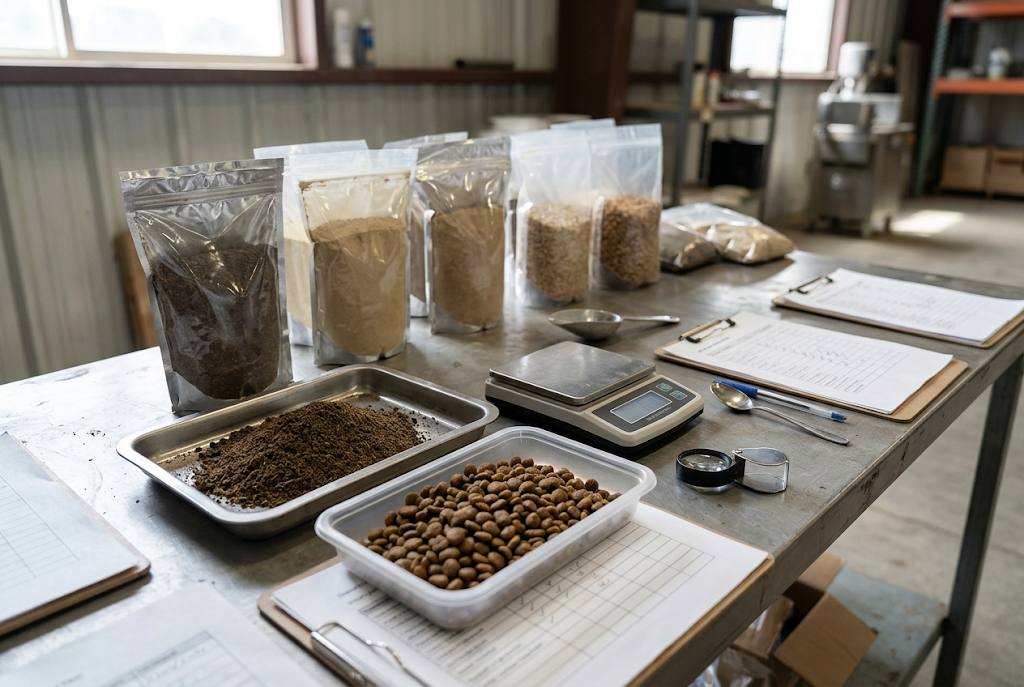
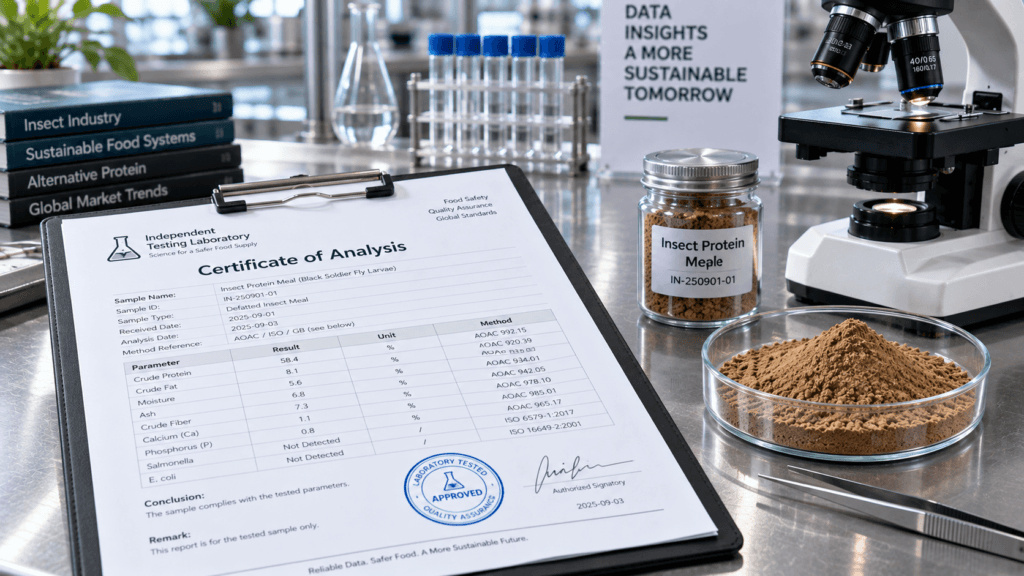
A certificate of analysis (COA) is an important document in ingredient purchasing, but the existence of a COA does not automatically establish product quality. The report should identify the tested material and, where applicable, the production batch. Buyers should review sample identification, testing date, laboratory information, analytical methods, reporting units, and measured results. A generic specification sheet, a historical representative COA, and a batch-specific COA serve different purposes and should not be treated as interchangeable.
A practical COA review should answer five questions:
Does the report identify the actual ingredient? Species, product form, and batch details should match the offered material.
Are the methods suitable? Analytical procedures should be appropriate for the nutrient or contaminant being measured.
Are units and reporting bases clear? Results should distinguish between as-received and dry-matter values.
Do the results meet the agreed specification? Material deviations require investigation before acceptance.
Is the testing evidence reliable? Laboratory competence, relevant accreditation scope, and sampling arrangements should be considered.
Independent laboratory testing can provide additional assurance, but it does not replace appropriate sampling, supplier process controls, or traceability. Buyers should evaluate laboratory results in the context of the supplier’s production system and historical batch performance rather than treating a single report as conclusive evidence of long-term consistency.
7. Evaluate Feed Safety and Contaminant Risks
Insect ingredient safety depends on the insect species, rearing substrates, production environment, processing methods, storage, and transportation. Potential hazards may include microbiological contamination, relevant chemical contaminants, foreign materials, and quality deterioration during storage. The appropriate testing program should be risk-based rather than copied from an unrelated ingredient category, with buyers evaluating the supplier’s production process alongside the regulatory requirements of the destination market.
For full-fat ingredients, oxidation and storage stability may require particular attention, while defatted meals introduce additional considerations involving processing consistency and residual fat. Safety documentation should be supported by traceability and suitable process controls, since a favorable laboratory result from one sample does not establish that all future batches will meet the same requirements.
8. Verify Regulatory Eligibility and Labeling
Regulatory eligibility is separate from nutritional suitability. An insect ingredient may have a favorable nutrient profile but still be unsuitable for commercial pet food use in a particular market. Requirements vary by jurisdiction, insect species, ingredient definition, processing method, rearing substrates, and intended use. In the European Union, insect-derived materials used in pet food must comply with applicable feed and animal by-product rules, and authorization for one species or processing pathway should not be assumed to cover every insect-derived ingredient.
In the United States, pet food ingredient acceptability depends on the applicable regulatory framework, the identity of the ingredient, and its intended use. Manufacturers should verify the relevant requirements before purchasing or introducing a new formulation. Labeling also requires attention: ingredient descriptions and claims relating to nutrition, sustainability, food sensitivities, or other benefits should be accurate and appropriately substantiated. Commercial buyers should obtain confirmation of destination-market requirements before issuing purchase orders.
9. Assess Manufacturing Performance and Palatability
An insect ingredient can meet laboratory specifications yet perform poorly in the finished pet food. For dry kibble, manufacturers should evaluate particle size, mixing behavior, extrusion performance, finished-product texture, and nutrient retention. Wet food and treat applications may require different processing and stability assessments. Where appropriate, ingredient approval should include pilot manufacturing trials to determine whether the material performs consistently under commercial production conditions.
Palatability is equally important because a nutritionally adequate product may still be commercially unsuccessful if dogs or cats do not consume it consistently. Manufacturers may use controlled feeding studies, preference testing, intake measurements, and repeat-consumption assessments to evaluate product acceptance. Results from one ingredient grade or finished-product format should not automatically be applied to another, making species-specific feeding and palatability evaluations important when introducing new formulations.
10. Compare Full-Fat and Defatted Insect Meals
Full-fat and defatted insect meals should be evaluated as different commercial ingredient grades because fat extraction changes both nutritional composition and formulation flexibility. Full-fat meals contribute protein and lipid energy together, while defatted products generally provide a more concentrated protein fraction and allow dietary oils to be managed separately. The appropriate choice depends on the finished product’s nutrient targets, processing requirements, and cost structure.
Evaluation factor
Full-fat insect meal
Defatted insect meal
Protein concentration
Often lower because of retained fat
Generally more concentrated
Fat concentration
Higher
Lower
Energy contribution
Protein and lipid energy
More protein-focused
Formulation flexibility
Protein and fat are supplied together
Dietary oils managed separately
Quality priorities
Lipid stability and moisture
Extraction consistency and residual fat
Cost assessment
Combined protein and energy value
Digestible protein value and processing cost
Neither grade is universally superior. A full-fat ingredient may provide useful energy, while a defatted ingredient may allow more precise control over dietary lipids. Buyers should also consider the extraction method, residual fat, amino acid availability, and manufacturing behavior. The correct comparison is based on complete-diet nutritional requirements and production performance rather than crude protein concentration alone.
11. Calculate the Real Commercial Cost
Purchase price per metric ton is an important commercial metric, but it does not establish the nutritional or economic value of an insect ingredient. A preliminary calculation can estimate the cost per kilogram of reported crude protein:
Cost per kg of crude protein =Ingredient price per kgCrude protein fraction
Consider two hypothetical ingredient offers:
Metric
Supplier A
Supplier B
Ingredient grade
Full-fat insect meal
Defatted insect meal
Price per metric ton
$2,000
$2,400
Reported crude protein
50%
65%
Cost per kg of reported crude protein
$4.00
$3.69
Illustrative figures only. These are not verified market quotations or current supplier prices.
Supplier B has a higher purchase price but a lower calculated cost per kilogram of reported crude protein. However, this does not prove that Supplier B offers better overall value because the calculation excludes digestibility, essential amino acid balance, energy, fatty acid composition, mineral contribution, processing performance, and other ingredients required to complete the formulation.
Commercial buyers should therefore compare the cost of finished diets that meet equivalent nutritional and performance targets. Additional costs may include freight, testing, packaging, import compliance, inventory, and losses during handling or storage. A higher-priced ingredient may still be economically attractive if it improves the overall formulation, but that advantage must be demonstrated rather than assumed.
12. Evaluate Supplier Reliability and Production Capacity
Commercial pet food manufacturers need suppliers capable of delivering consistent ingredient specifications and predictable volumes. Supplier qualification should examine production capacity, rearing inputs, processing controls, quality management, batch consistency, traceability, and delivery performance. Buyers should request historical batch data where available, especially for parameters such as protein, fat, moisture, ash, and relevant safety indicators. Significant variation may require changes to formulations or manufacturing conditions, increasing operational complexity.
Production capacity claims should be assessed against realistic output, inventory arrangements, and delivery schedules rather than accepted at face value. A single approved sample does not establish long-term reliability, particularly when ingredient composition can change with rearing inputs or processing conditions. Supplier performance should therefore be monitored after commercial approval through defined specifications, periodic documentation reviews, and appropriate incoming-material checks.
13. Common Procurement Red Flags
Certain warning signs should trigger additional investigation before an insect ingredient is approved. These issues do not automatically establish that a supplier is unsuitable, but they indicate that the buyer needs clearer documentation, more reliable analytical evidence, or additional testing. The objective is to identify uncertainties before they affect manufacturing, regulatory compliance, or finished-product performance.
Red flag
Why it matters
Buyer response
Unclear insect species
Nutritional and regulatory uncertainty
Request species identification
No processing description
Unknown ingredient grade
Confirm the manufacturing process
Crude protein without amino acid data
Incomplete nutritional assessment
Request additional analysis
Generic COA without batch details
Weak traceability
Request batch-specific evidence
Inconsistent reporting units
Misleading comparisons
Standardize analytical results
Missing safety documentation
Potential quality or compliance risk
Apply risk-based testing
Unsupported allergy claims
Potentially misleading marketing
Require appropriate evidence
Unverified production capacity
Supply interruption risk
Review capacity and delivery records
Unusually low price without explanation
Possible specification differences
Investigate the complete offer
Buyers should evaluate these findings in relation to the intended product and commercial risk. A missing data point may be resolved through independent analysis, while unclear species identity or unresolved regulatory eligibility may prevent the ingredient from being approved. Procurement decisions should be based on documented evidence rather than unsupported claims or unusually attractive prices.
14. A Practical Supplier Qualification Process
A structured qualification process helps pet food manufacturers evaluate insect ingredients consistently and prevents commercial purchasing from proceeding before essential technical questions have been resolved. The process should connect nutritional evaluation, regulatory review, supplier verification, and finished-product performance rather than treating them as separate administrative tasks.
Define the application. Confirm dog or cat use, life stage, finished-product format, nutritional function, and destination market.
Screen regulatory eligibility. Verify species identity, ingredient status, permitted production inputs, and intended use.
Assess manufacturing and palatability. Conduct appropriate pilot trials and finished-product evaluations.
Compare commercial economics. Evaluate the cost of nutritionally adequate finished products, not ingredient price alone.
Approve and monitor the supplier. Establish contractual specifications, acceptance criteria, delivery requirements, and ongoing batch monitoring.
Supplier approval should be reviewed periodically because ingredient characteristics and production conditions can change over time. The depth of evaluation should reflect the intended application, purchasing volume, and consequences of ingredient failure.
15. Build a Clear Commercial Acceptance Specification
Before issuing a purchase order, buyers should translate technical requirements into a written acceptance specification. The specification should identify the approved insect species, processing grade, nutrient parameters, safety criteria, testing methods, reporting units, sampling arrangements, packaging requirements, and traceability information. Mandatory acceptance limits should be distinguished from informational parameters used for formulation so that both parties understand which deviations may result in rejection.
The agreement should also define how nonconforming material will be handled, including additional testing, rejection, replacement, or other contractual remedies. Clear specifications reduce disputes, support repeatable purchasing decisions, and provide a documented basis for long-term supplier management.
Buyer FAQs
Are insect ingredients suitable for both dog and cat food?
Potentially, but suitability depends on the ingredient, processing grade, applicable regulations, and complete-diet formulation. Dogs and cats have different nutritional requirements, so evidence for one species should not automatically be applied to the other.
Is black soldier fly meal better than mealworm meal for pet food?
Neither is universally superior. Black soldier fly and mealworm ingredients differ in fatty acid composition, minerals, processing options, and commercial availability. Buyers should compare verified specifications and finished-product performance.
Does a higher crude protein percentage mean better quality?
Not necessarily. Digestible amino acids, energy, minerals, ingredient safety, processing consistency, and formulation cost may be more important than crude protein percentage alone.
Can insect protein be marketed as hypoallergenic?
Not automatically. Insect proteins can still cause allergic reactions. Claims about managing adverse food reactions require appropriate evidence, ingredient controls, and compliance with applicable regulations.
What documents should buyers request before ordering?
At minimum, buyers should seek a defined product specification, suitable analytical results, relevant safety documentation, processing information, species identification, and batch traceability. Additional documents depend on the market and intended use.
Key Takeaways
The commercial evaluation of insect ingredients for pet food requires more than a comparison of crude protein percentages and supplier quotations. Buyers should assess ingredient identity, processing grade, digestible nutrients, fatty acids, minerals, safety, regulatory eligibility, manufacturing performance, palatability, and supplier consistency.
A reliable COA must be interpreted alongside sampling, analytical methods, traceability, and the agreed product specification. The strongest procurement decisions compare complete, nutritionally adequate pet food formulations and establish clear contractual acceptance criteria.
IIR Analysis
The commercial development of insect-derived pet food ingredients will increasingly depend on standardization and verifiable purchasing evidence. Pet food manufacturers need reliable nutritional data, consistent ingredient grades, appropriate safety controls, and predictable supply. They must also evaluate factors that are less prominent in conventional livestock feed procurement, including palatability, consumer acceptance, brand positioning, and product claims.
For suppliers, this creates a clear commercial requirement: insect-derived materials must be presented as defined ingredients with documented nutritional and quality characteristics rather than generic alternative protein products. For buyers, the strongest strategy is to combine species-specific nutritional assessment, laboratory verification, regulatory review, supplier qualification, manufacturing trials, and finished-product economic analysis. This provides a practical foundation for incorporating insect ingredients into commercial dog and cat food production.
Disclaimer: This article is for informational purposes only and does not constitute business, legal or investment advice. Always consult primary sources and qualified professionals.