Independent intelligence for the global insect industryISSUE 01 · 2026
Dried Crickets Wholesale: B2B Procurement Guide for Specialty Feeds
By IIR Editorial DeskSeptember 17, 2026
Master specialty feed procurement. Discover how bulk dried crickets and grasshoppers drive margins in premium reptile and avian nutrition.
Master specialty feed procurement. Discover how bulk dried crickets and grasshoppers drive margins in premium reptile and avian nutrition.
Published: September 2026 | Fact-checked by: IIR Research Team | Buyer Guides: IIR Procurement
The specialty pet food sector has evolved far beyond traditional extruded kibble. As the global market for exotic companion animals—particularly reptiles, amphibians, and insectivorous birds—continues rapid growth, commercial feed formulators and retail distributors face rising demand for natural, biologically appropriate diets. Within this premium tier, securing reliable sources of dried crickets wholesale and bulk dried grasshoppers has transitioned from a niche purchasing task to a core strategic procurement mandate.
For purchasing directors and feed millers, navigating the supply chain for Orthoptera (crickets and grasshoppers) presents distinct operational challenges compared to sourcing standard Black Soldier Fly Larvae (BSFL) or yellow mealworms. Crickets and grasshoppers possess unique exoskeletal structures, specialized lipid profiles, and rigorous drying requirements. Achieving consistent quality across multi-container shipments requires a deep understanding of Asian manufacturing hubs, thermodynamic processing techniques, and international sanitary compliance.
1. The Expanding Market for Dried Crickets Wholesale
To understand the procurement urgency associated with these selected insects, buyers must first analyze the downstream retail dynamics. The demand for dried crickets wholesale is driven by three highly lucrative commercial channels:
The Herpetoculture and Exotic Pet Sector Reptile keepers have historically relied on live feeder insects, which create significant logistical headaches, high mortality rates, and short shelf lives. Dehydrated insects mitigate the logistical friction of live shipping while retaining over 90% of the original nutritional integrity. Premium dried crickets serve as the foundational ingredient in omnivorous lizard diets (such as Bearded Dragons and Blue-tongued Skinks) and aquatic turtle formulations.
Ornamental Avian and Wild Bird Nutrition Aviculturists managing insectivorous bird species—drawn from captive breeding programs for exotic finches to premium backyard wild bird blends—consume dried grasshoppers and crickets as primary protein isolates. During critical molting and breeding seasons, certain amino acid profiles found in these insects directly correlate with feather vibrance and reproductive success.
Boutique Mammalian Diets Sugars gliders, hedgehogs, and specialized small omnivores require diets high in chitin and natural taurine. Defatted cricket meals and whole dried grasshoppers have become standard inclusions in ultra-premium small animal extrusion lines, allowing brands to market their products as biologically ancestral and entirely natural.
2. Nutritional Profiling: Crickets vs. Grasshoppers
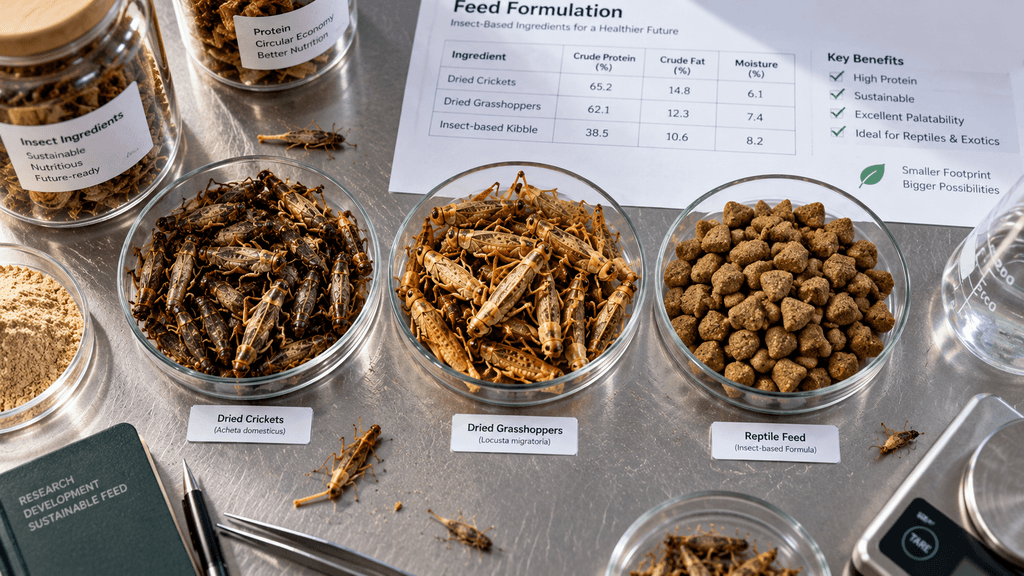
While often grouped together by procurement teams, crickets and grasshoppers offer distinct nutritional matrices that feed formulators must balance. Sourcing dried crickets wholesale ensures access to one of the most balanced macronutrient profiles in the invertebrate kingdom.
Whole dried house crickets (Acheta domesticus or Gryllus bimaculatus) typically yield a crude protein content ranging between 60% and 68% on a dry matter basis. More importantly, crickets provide a highly bioavailable spectrum of essential amino acids, particularly valine, leucine, and lysine. Their lipid profile is equally compelling, hovering around 15% to 20% crude fat, which is noticeably leaner than standard yellow mealworms or BSFL. This lean profile makes crickets the ideal protein base for adult companion animals prone to captive obesity.
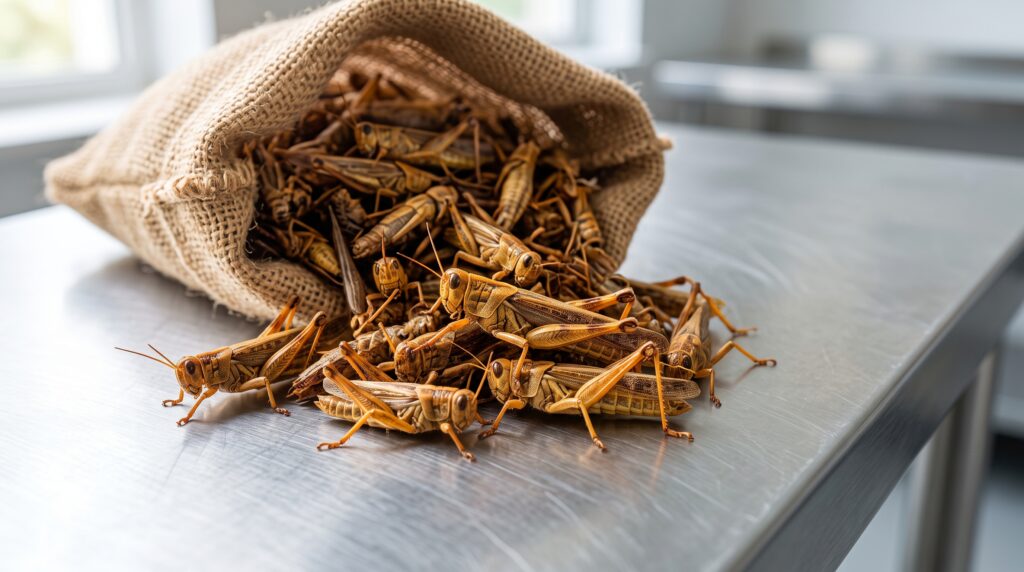
Grasshoppers (Acrididae family), on the other hand, are prized for their sheer physical scale and exceptional chitin matrix. Grasshoppers generally offer a slightly higher protein yield (often exceeding 70% in premium Asian export grades) and an extremely low fat content (often under 10%). The robust exoskeleton of a grasshopper provides a dense source of natural chitin, which acts as a powerful prebiotic fiber in the hindgut of insectivorous reptiles, promoting healthy microbial fermentation and firm stool formation.
3. Advanced Processing: Preserving Physical and Nutritional Integrity
When evaluating prospective Asian manufacturing partners for dried crickets wholesale contracts, the primary audit focus must be the facility’s dehydration technology. Unlike BSFL, which are routinely ground into homogeneous meals, crickets and grasshoppers are predominantly sold as whole, intact insects. The physical appearance—including intact legs, antennae, and a natural golden-brown coloration—directly dictates retail shelf appeal.
Continuous Microwave Desiccation The industry gold standard for processing whole Orthoptera is continuous industrial microwave drying. This technology rapidly increases the core temperature of insect, instantaneously halting enzymatic degradation and locking in the natural color. Crucially, microwave drying rapidly expands internal moisture, resulting in a slightly “puffed,” voluminous, and highly buoyant finished product. This low-density crunch is highly palatable to reptiles and birds.
Rotary Oven and Hot Air Drying Facilities utilizing traditional hot air drum dryers often struggle to maintain physical integrity. The tumbling action frequently snaps the fragile legs and antennae of grasshoppers and crickets, resulting in shipments burdened by excessive “dust” or fragmented particulate matter. Furthermore, prolonged exposure to standard hot air can trigger lipid oxidation (rancidity) and darken the exoskeleton, significantly reducing the visual grade of the bulk product. Procurement directors should always specify microwave-processed batches when negotiating supply agreements.
4. Quality Control and Microbiological Safety Standards
Because dried insects are frequently incorporated into raw companion animal treats or fed directly without further thermal processing by the end consumer, rigorous microbiological control is non-negotiable.
Before committing to a dried crickets wholesale supplier, international buyers must mandate a comprehensive pre-shipment Certificate of Analysis (COA). Standard export parameters require moisture levels to be strictly maintained below 8%. Any moisture reading above 10% introduces a severe risk of aflatoxin development during trans-oceanic container shipping.
Additionally, the COA must verify the absolute absence of Salmonella across five independent 25-gram samples. Total Enterobacteriaceae counts must align with strict European EFSA or American FDA tolerances. Because wild-harvesting remains prevalent in some less-regulated Asian markets, professional B2B buyers must ensure their suppliers utilize closed-loop, environmentally controlled agricultural rearing facilities to prevent heavy metal bioaccumulation (such as cadmium and lead) and agricultural pesticide contamination. For a detailed breakdown of facility auditing, buyers should review our structured framework on evaluating an insect ingredient supplier before issuing purchase orders.
5. Navigating Import Compliance and International Logistics
Successfully moving bulk containers of dried grasshoppers and crickets across international borders requires meticulous trade documentation. Customs authorities scrutinize invertebrate imports heavily to prevent the introduction of agricultural pests and livestock pathogens.
Importers must ensure their Asian manufacturing partner is officially registered with their national export authority and capable of issuing a certified Veterinary Health Certificate. This document proves that the insects underwent validated thermal sterilization and were reared exclusively on approved, plant-based agricultural substrates.
For buyers importing into the United States or the European Union, proper Harmonized System (HS) tariff classification is vital. While defatted insect meals are frequently classified under HS 2301.20, whole dried crickets and grasshoppers intended for specialty animal feeding are often classified under HS 0511.99 (Animal products not elsewhere specified). Maintaining active awareness of global herpetoculture market trends and evolving sanitary import protocols guarantees that your supply chain remains resilient, legally compliant, and highly profitable.
By partnering with certified, technologically advanced Asian processors, specialty feed brands can secure a reliable, high-volume pipeline of premium dried insects, effectively differentiating their product lines in an increasingly competitive global pet care market.
Disclaimer: This article is for informational purposes only and does not constitute business, legal or investment advice. Always consult primary sources and qualified professionals.