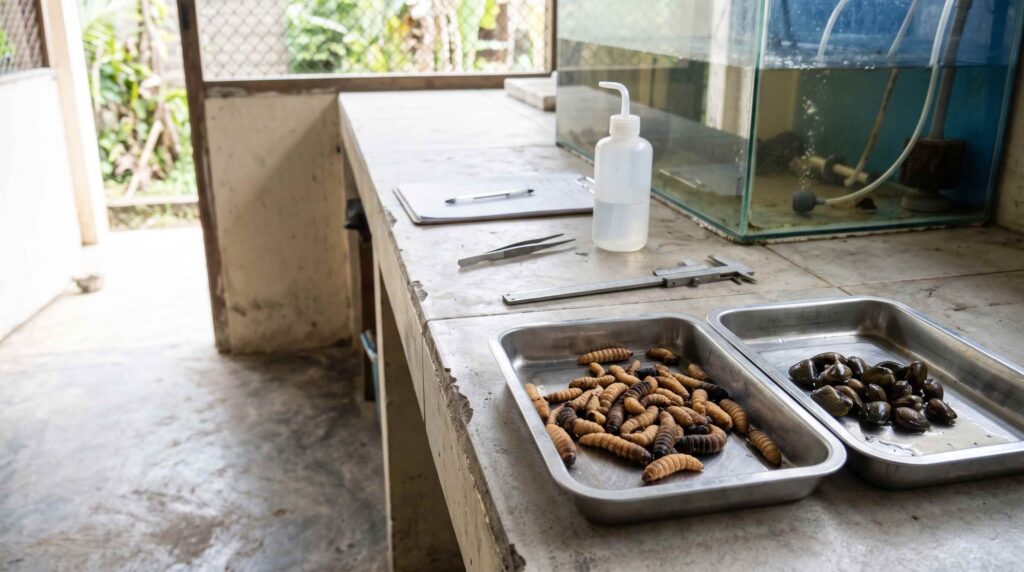
An Australia–Indonesia research partnership is developing lobster feed using black soldier fly larvae and locally available mussels, as officials highlight marine bioeconomy innovation and sustainable aquaculture in North Lombok.
An Australia–Indonesia marine bioeconomy partnership is developing lobster feed using black soldier fly larvae and locally available mussels, highlighting research into alternative feed ingredients and more resource-efficient aquaculture systems.
By IIR Editorial Desk · November 6, 2026 · Latest Coverage
BSF lobster feed research in Indonesia is receiving renewed attention as Australian and Indonesian research institutions collaborate on alternative aquaculture ingredients derived from black soldier fly larvae and locally available mussels. The initiative forms part of a broader bilateral effort to support sustainable marine production, food security, and coastal economic development. Researchers are examining how locally available biological resources may contribute to more reliable lobster feed supply while exploring digital technologies to improve aquaculture management.
The collaboration was highlighted on November 4, 2026, when Australian Ambassador to Indonesia Rod Brazier visited the Marine Aquaculture Research Center of Indonesia’s National Research and Innovation Agency (BRIN) in North Lombok. According to the Australian Embassy’s November 4 announcement, the visit showcased two projects supported through the BRIN-KONEKSI Joint Funding Scheme on Marine Bioeconomy, including the lobster feed initiative. The announcement represents renewed public attention to an existing research partnership rather than the launch of a newly established commercial feed business.
Australia and Indonesia Expand Aquaculture Research Cooperation
The lobster feed project is led by BRIN researcher Sunarti Sinaga in collaboration with Universitas Brawijaya, Indonesia’s Ministry of Marine Affairs and Fisheries, and Australia’s Griffith University. The partnership aims to investigate sustainable feed ingredients while developing practical knowledge relevant to the country’s lobster aquaculture sector. It is one of two projects highlighted during the Australian ambassador’s visit, with a separate research initiative examining the conversion of shrimp shell waste into astaxanthin. Both projects reflect an effort to connect marine resources, biological processing, and economic development through applied research.
According to Griffith University’s project information, the lobster feed initiative began on May 28, 2025, under a research collaboration scheduled for 2025–2027. Its stated objective is to investigate feed development using black soldier fly larvae and Mytilopsis adamsi, a mussel species found in Lombok that the university identifies as invasive. The research also includes capacity building and knowledge exchange involving scientific institutions, government agencies, and aquaculture stakeholders. The November 2026 announcement therefore provides an opportunity to examine the project’s ongoing direction rather than treating previously established research activities as newly completed outcomes.
Why BSF Lobster Feed Research Uses Local Ingredients
Black soldier fly larvae (Hermetia illucens) can convert suitable organic materials into protein- and lipid-containing biomass. This ability has attracted interest from aquaculture researchers evaluating alternatives or complements to conventional feed ingredients. In the Indonesian project, organic waste is being investigated as a substrate for larval production, potentially creating a connection between waste recovery and aquaculture feed supply. The resulting insect biomass may provide useful nutrients, but its suitability depends on processing, composition, digestibility, feed safety, and the requirements of the target animal.
The addition of locally available mussels introduces a second potential ingredient source. Griffith University identifies Mytilopsis adamsi as a candidate for the research, suggesting an opportunity to investigate the use of a biological resource already present in the surrounding environment. However, local availability alone does not establish feed suitability, sustainable harvesting potential, or a viable processing cost. Researchers must evaluate nutrient characteristics, food and feed safety considerations, and the effects of using the material in formulated lobster diets. The public announcement does not provide a validated ingredient inclusion rate or establish that the proposed combination has already achieved commercial production performance.
Lobster feed development presents different technical questions from conventional finfish feed research. Feed ingredients must be evaluated in complete diets that meet the nutritional and behavioral requirements of the target lobster species and production stage. In addition to protein concentration, researchers may need to assess amino acid balance, lipid composition, mineral content, feed stability in water, palatability, and nutrient utilization. The performance of a formulation cannot be established from the nutritional value of an individual ingredient alone, particularly when biological materials undergo different harvesting and processing methods.
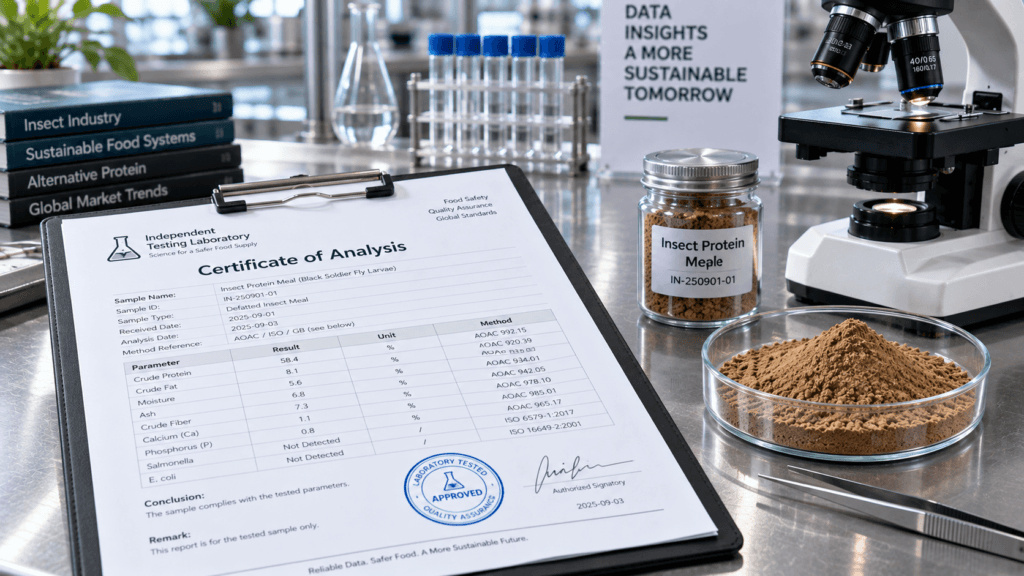
For black soldier fly ingredients, commercial suitability can vary according to whether larvae are used whole, dried, milled, or further processed. The same applies to mussel-derived materials, whose composition and handling requirements must be clearly defined before reliable feed comparisons can be made. The Australian and Indonesian authorities have not released verified commercial-scale feeding results or final product specifications for this lobster feed project. Future experimental findings will therefore be essential for determining whether the ingredient combination can maintain animal performance, meet safety requirements, and offer a practical alternative to existing feed inputs.
Artificial Intelligence and Research Capacity Building
The November 4 announcement also identifies artificial intelligence as part of the broader lobster farming research effort. Although the official statement does not specify the algorithms or management systems being tested, digital tools may eventually support more systematic monitoring and analysis of aquaculture operations. Potential applications in the wider industry include environmental monitoring, feeding management, and production forecasting. These should be treated as possible areas of application rather than verified results from the present project, because the public announcement does not disclose measured improvements attributable to an AI system.
Research capacity building is another element of the collaboration. Griffith University’s project description outlines training programs and workshops intended to strengthen technical knowledge among researchers, government representatives, aquaculture operators, and coastal communities. Such activities may support eventual technology adoption by helping local stakeholders assess biological feed production, resource recovery, and practical aquaculture management. However, successful knowledge exchange is not equivalent to commercial deployment. The next stage will require evidence that proposed feed formulations and management methods perform reliably under relevant local farming conditions.
IIR Analysis: From Local Feedstocks to Commercial Aquaculture
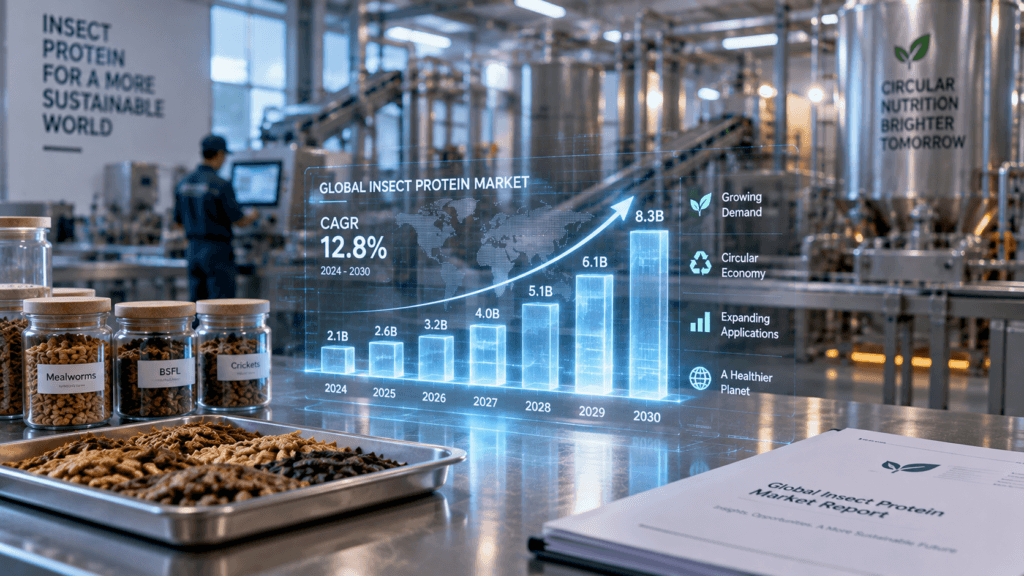
The project’s industry significance lies in its attempt to connect localized ingredient sourcing with the specific demands of lobster farming. Insect-derived proteins have been investigated extensively for fish and shrimp diets, but successful use in one aquaculture species does not establish nutritional equivalence for another. As explained in IIR’s analysis of BSFL aquafeed applications, ingredient processing, nutrient digestibility, amino acid balance, and complete-feed economics are central to evaluating black soldier fly products. These considerations become especially important when an insect ingredient is combined with a second unconventional raw material.
The proposed combination of black soldier fly larvae and mussels also introduces a supply chain question. Both materials may be available locally, but their commercial value depends on reliable collection or production, consistent composition, processing capacity, and regulatory eligibility. Organic waste used for insect rearing must be suitable for the intended production system, while mussel-derived materials require appropriate safety and quality evaluation. A locally sourced feed ingredient is not necessarily cheaper or more sustainable once drying, transportation, testing, storage, and manufacturing costs are considered. Those costs must be assessed alongside animal performance in an economically meaningful formulation.
From IIR’s perspective, the Australia–Indonesia project is best viewed as an applied research opportunity rather than evidence that black soldier fly-based lobster feed has already achieved commercial readiness. Its eventual significance will depend on documented feeding trials, ingredient specifications, environmental performance, and practical cost comparisons with existing aquaculture feeds. If the researchers can establish these results, the project may offer useful lessons for developing regional feed supply chains based on locally available biological resources. Until then, the strongest verified development is the continuation of institutional research cooperation and the public presentation of its objectives.
What to Watch Next
The most important future milestone will be the publication of controlled feeding results showing how diets containing black soldier fly and mussel-derived ingredients affect lobster growth, survival, feed utilization, and relevant health indicators. Information about the target lobster species, ingredient inclusion levels, processing methods, and feed stability would help feed manufacturers assess whether the research can support practical formulation decisions. Product safety and the cost of producing consistent ingredients will also be important as the project progresses.
Further announcements from BRIN, Griffith University, and the participating institutions may clarify the project’s experimental progress and the role of artificial intelligence in production management. The research collaboration is scheduled to continue through 2027, but a commercial launch date has not been established in the available official information. For the wider insect industry, the project provides another example of how black soldier fly production may be investigated as part of regionally adapted aquaculture systems, with commercialization dependent on successful technical and economic validation.