A study of 139 rural households in Zambia highlights the potential contribution of traditional edible insects to food security and livelihoods, while examining declining consumption practices and barriers to wider adoption.
Research involving 139 rural households in Zambia highlights the contribution traditional insect consumption could make to food security, while raising questions about changing dietary habits, local livelihoods, and the future of community-based insect farming.
By IIR Editorial Desk · October 31, 2026 · Latest Coverage
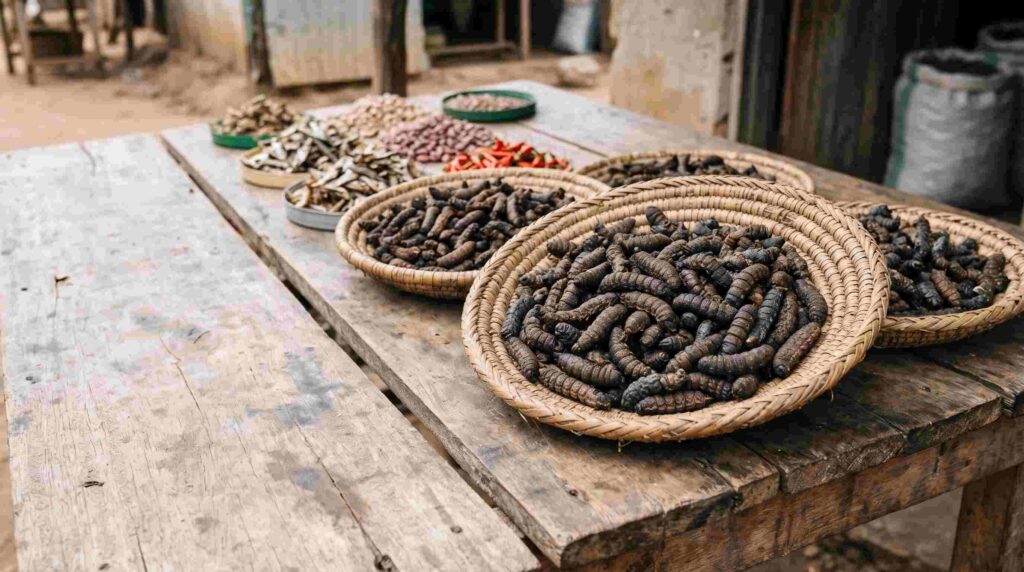
Edible insects in Zambia could play a greater role in supporting rural food security and livelihoods, according to research examining traditional insect consumption in the country’s Central Province. The findings suggest that insects remain an important part of local food knowledge, but changing dietary habits and limited integration into mainstream markets are restricting their wider potential.
The study was conducted by John Nyawali and Jasper Knight of the University of the Witwatersrand in South Africa. It examined how rural households use edible insects, how these practices relate to cultural traditions, and what challenges may affect their contribution to sustainable food systems.
According to the study published in Frontiers in Sustainable Food Systems, researchers collected information from 139 rural household heads and conducted six focus group discussions. The research was published in September 2026 and received renewed attention following an October 29 report by Mongabay, which included interviews with researchers and an independent insect-food specialist.
What the Study Found About Edible Insects in Zambia
The researchers used household questionnaires and community discussions to explore the relationship between insect consumption, local food practices, and socioeconomic conditions.
The study found that traditional insect consumption has the potential to contribute to household food security because it draws on locally available biological resources and established cultural knowledge.
In rural communities, edible insects can provide an additional dietary option alongside conventional agricultural foods. Their availability may also create opportunities for harvesting, local trading, and supplementary household income.
However, the researchers identified a gap between the existing cultural knowledge surrounding edible insects and their integration into wider food and economic systems.
This gap limits the ability of traditional insect resources to contribute more consistently to livelihoods and household well-being.
The findings are based on a particular rural study area in Zambia’s Central Province. They should not be interpreted as a nationally representative estimate of insect consumption or as proof that expanded insect farming would automatically reduce food insecurity across the country.
Traditional Insect Consumption Faces Changing Attitudes
The research also highlights how dietary habits can change across generations.
According to Mongabay’s October 29 reporting, the researchers observed that traditional insect consumption has declined in recent years, particularly among younger people.
In some settings, edible insects may be associated with poverty or regarded as less desirable than conventional foods. These perceptions can discourage consumption even where insects have an established place in local food culture.
An interesting finding reported by Mongabay was that households with higher levels of education consumed more insects than those with lower educational attainment.
This challenges the assumption that insect consumption necessarily declines as education increases.
The researchers suggested that community education and existing public health outreach could provide opportunities to explain the nutritional and cultural importance of locally consumed insects.
Such approaches could support greater awareness without requiring communities to abandon established food traditions or adopt unfamiliar industrial food products.
However, consumer acceptance remains a context-specific issue. The social meaning of eating insects varies across communities, and education alone may not resolve concerns involving availability, preparation, taste, price, and changing preferences.
Food Security and Community Livelihood Opportunities
Edible insects may contribute to rural food systems through both household consumption and small-scale economic activity.
Seasonally available insects can supplement other foods, while harvesting and selling suitable species may provide income opportunities for participating households.
These activities are particularly relevant to communities where access to diverse foods and stable livelihood opportunities can be constrained.
However, increasing the economic contribution of edible insects requires attention to supply reliability, seasonal availability, processing, storage, and market access.
Wild harvesting also depends on ecological conditions. Changes in rainfall, habitat availability, or harvesting pressure may affect the resources available to communities.
The study therefore raises questions about how traditional food resources can be supported without creating unsustainable extraction pressures or weakening local control over established practices.
Community-based approaches may help connect food security objectives with small-scale production and local markets, but their effectiveness would need to be demonstrated through practical implementation.
Should Edible Insect Farming Become More Commercial?
The recent Mongabay report also highlighted differing views about the future development of edible insect production.
Study co-author Jasper Knight emphasized the importance of small-scale farming approaches that support sustainable community incomes. His concern was that development dominated by large agribusinesses might not deliver meaningful benefits to the rural households whose traditional food practices are being studied.
Arnold van Huis, an insect-food specialist at Wageningen University & Research who was not involved in the research, offered a different emphasis.
He argued that greater commercialization, including the development of insect farming, may be necessary if traditional insect consumption is to remain economically viable and more widely accepted.
However, he also identified technical barriers. Established farming methods exist for certain insects, including crickets, while economically viable systems for many caterpillar species require further research. Termites present particularly difficult production challenges.
These perspectives are not necessarily incompatible. Local producers may benefit from improved distribution, processing, and market access without adopting the same production model as a large industrial insect protein facility.
The important question is which commercial arrangements create reliable demand while preserving meaningful economic opportunities for local communities.
The research raises an important distinction for the global insect industry: the development of traditional edible insect markets should not be evaluated using exactly the same commercial model as industrial insect protein manufacturing.
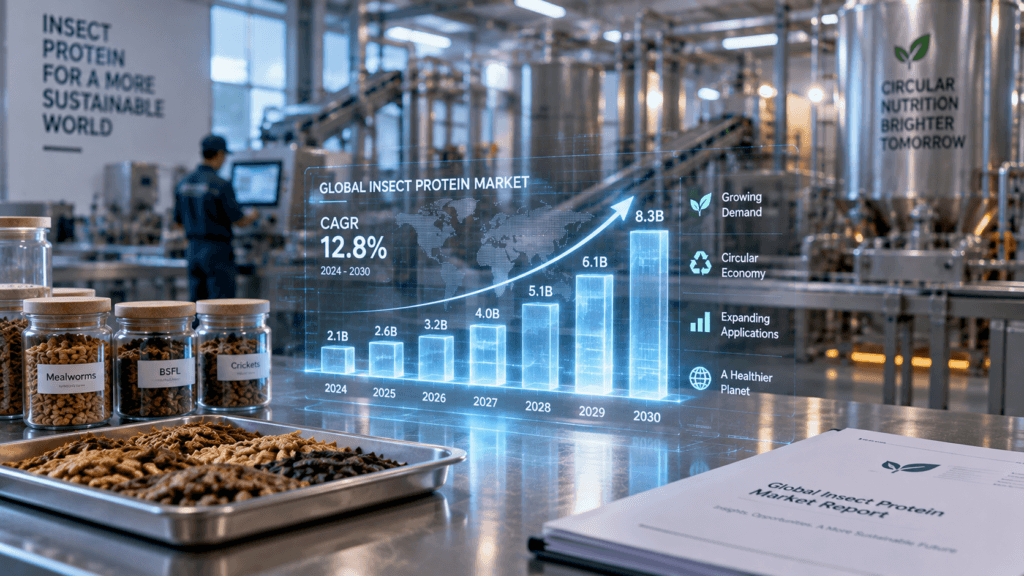
Large insect protein facilities typically focus on standardized production, processing efficiency, ingredient specifications, and recurring sales to commercial buyers. Their economic performance depends heavily on production volumes, operating costs, and supply chain coordination.
Traditional edible insect systems can operate differently. They may involve seasonal harvesting, household preparation, informal trading, and cultural preferences tied to particular insect species.
A previous IIR report on edible beetle species in India highlighted a related challenge: identifying traditionally consumed insects does not automatically establish that they can be farmed economically or supplied through regulated commercial food markets.
For Zambia, the opportunity may lie in improving existing community-based systems rather than immediately replacing them with centralized industrial production.
Better preservation methods, hygienic processing, local aggregation, transparent pricing, and access to regional buyers could potentially increase the value generated from traditional insect foods.
However, commercial development also introduces risks. Greater demand could encourage excessive harvesting, create dependence on intermediaries, or shift economic benefits away from communities that maintain the underlying knowledge and supply practices.
From IIR’s perspective, a useful development model would need to evaluate both commercial efficiency and the distribution of economic benefits.
Practical questions include whether households receive better prices, whether supply can remain sustainable, and whether local producers can participate in processing and distribution rather than supplying only low-value raw materials.
Food safety must also remain a separate consideration. A history of consumption provides valuable cultural evidence, but broader commercial distribution requires appropriate attention to species identification, handling hygiene, contaminants, processing, and applicable food regulations.
The study does not establish that a particular insect farming model is commercially superior. Instead, it highlights why economic development, cultural acceptance, and ecological sustainability need to be considered together.
What to Watch Next
Further research could examine how household insect consumption changes across seasons, income groups, and generations, and whether different community development approaches lead to measurable improvements in food security.
Pilot projects involving local processing, storage, and distribution could also help determine which interventions improve income opportunities without placing excessive pressure on wild insect populations.
For commercial insect producers, species-specific farming trials would be particularly valuable. Not every traditionally harvested insect can be raised efficiently under controlled conditions.
Future assessments should consider production costs, reliable food safety controls, consumer demand, and the share of value retained by rural communities.
For the wider insect industry, the Zambia study demonstrates that alternative protein development is not limited to large factories or newly introduced products.
Traditional edible insects already form part of existing food cultures. The longer-term opportunity may depend on strengthening those systems in ways that support both local livelihoods and sustainable market development.