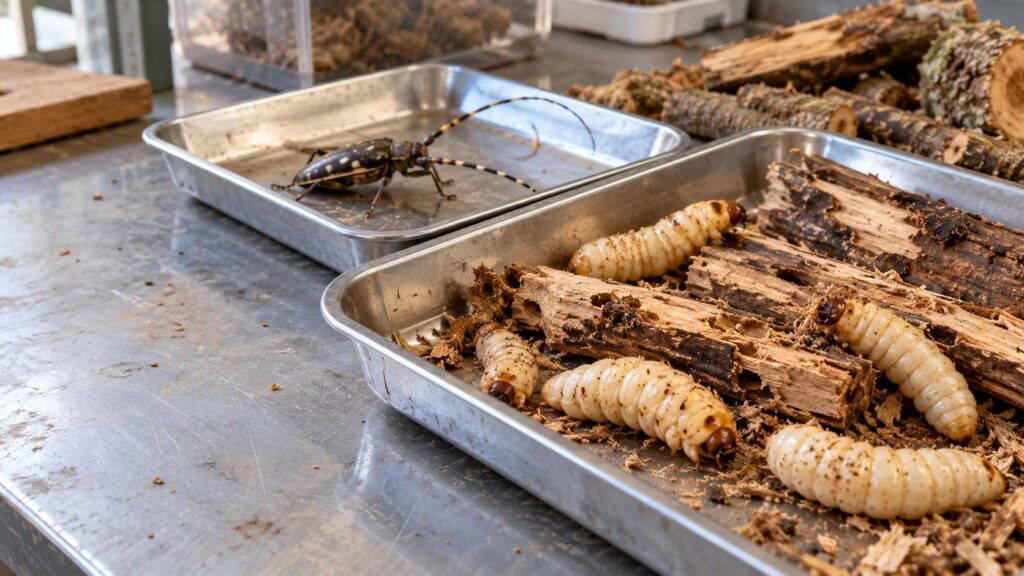
Researchers have documented 75 edible beetle species in Northeast India, including 24 new global records of beetles used as food, highlighting indigenous knowledge, nutritional diversity, and conservation challenges.
Researchers have documented 75 edible beetle species across Northeast India, including 24 newly reported global food-use records, highlighting the nutritional potential of insects alongside the importance of indigenous knowledge and habitat conservation.
By IIR Editorial Desk · October 26, 2026 · Latest Coverage
A new study has documented 75 edible beetle species in Northeast India, including 24 species whose use as human food had not previously been recorded in global scientific literature. The findings highlight the diversity of traditional insect consumption and raise important questions about nutritional research, biodiversity conservation, and the potential development of alternative protein resources.
Published on October 12, 2026, in npj Entomology, the research was conducted by scientists associated with the Ashoka Trust for Research in Ecology and the Environment (ATREE) and Central Agricultural University in India. The researchers combined indigenous knowledge, field observations, species identification, and nutritional analysis to examine the role of beetles in local food systems.
According to the research published in npj Entomology, 46 of the recorded species had already been documented as edible, while 24 represented first global records of food use and another five were newly recorded as edible in India.
These findings concern new records of human consumption, not the discovery of previously unknown beetle species.
What the Edible Beetle Species Study Found
The researchers conducted semi-structured interviews with 162 participants and collected field observations across indigenous communities in Northeast India. The research documented traditional harvesting practices, local species names, preparation methods, and cultural beliefs associated with beetle consumption.
The 75 recorded species belonged to nine beetle families and included both larvae and adults. Longhorn beetles, scarab beetles, aquatic beetles, and other groups contributed to the diversity of insects consumed in the region.
Consumption patterns differed considerably among communities. Some groups preferred particular larvae, while others consumed adult beetles or both developmental stages. Preparation methods included boiling, roasting, frying, and cooking with local herbs or bamboo shoots.
The researchers also found differences in species availability and seasonal harvesting practices. Some beetles were collected from decaying wood or forest habitats, while aquatic species were gathered from ponds and agricultural environments.
These practices reflect knowledge developed through generations of interaction with local ecosystems. The study emphasizes that documenting this knowledge is important for understanding regional food traditions as well as the ecological conditions supporting them.
Nutritional Differences Among Edible Beetles
To investigate nutritional potential, researchers analyzed the composition of four selected beetle species.
The analysis found that protein was a major macronutrient across the species examined, although concentrations varied considerably. The terrestrial beetles analyzed generally showed higher protein levels than the aquatic beetles included in the comparison.
Protein content in selected terrestrial samples ranged from approximately 46% to 61% of dry weight, while the aquatic beetles examined contained approximately 22% to 23%.
The researchers also identified differences in lipid content, energy value, moisture, and minerals including calcium, magnesium, iron, and zinc.
These variations demonstrate why edible insects cannot be treated as a nutritionally uniform category. Species identity, developmental stage, habitat, and food sources may influence the composition of harvested insects.
Importantly, nutritional measurements were conducted on four selected species rather than all 75 documented species. The results should not be interpreted as evidence that every recorded beetle has the same nutritional value or commercial food potential.
Traditional Consumption and Conservation Challenges
The study also identified concerns about the availability of certain wild-harvested beetles.
Approximately 79% of surveyed harvesters reported declines in wood-boring beetles over the period examined. Among those reporting declines, many identified deforestation and habitat loss as important causes, while others pointed to harvesting pressure.
These findings are based on local observations and should not be interpreted as a comprehensive population assessment covering every edible beetle species.
The issue is particularly relevant because some traditionally consumed larvae depend on decaying wood, forest vegetation, and specific ecological conditions for development.
Expanding harvesting without adequate conservation measures could increase pressure on already vulnerable habitats.
Traditional knowledge may help identify seasonal patterns and harvesting practices, but long-term resource management will require continued ecological research and participation from the communities involved.
IIR Analysis: From Traditional Food Knowledge to Commercial Potential
The significance of this research extends beyond the number of edible beetle species documented. It highlights a distinction that is often overlooked in discussions about alternative proteins: traditional human consumption does not automatically establish commercial production readiness.
For a wild-harvested insect to become a reliable food ingredient, producers would need to demonstrate that it can be bred or sourced consistently, processed safely, and supplied at predictable quality and cost.
Many commercial insect operations focus on a limited number of species with relatively well-developed rearing methods. The 75 beetle species documented in this study represent a much broader biological and cultural resource, but their suitability for controlled farming remains largely unestablished.
The distinction matters in the wider insect protein market, where commercial development depends on repeatable production, product specifications, regulatory approval, and customer demand.
From IIR’s analysis, three issues deserve particular attention.
First, nutritional potential must be assessed alongside food safety. Traditional consumption records provide valuable evidence of established food practices, but they do not replace species-specific evaluations of allergens, contaminants, processing requirements, and regulatory eligibility.
Second, production feasibility must be demonstrated. Beetles associated with forests, decaying wood, or highly specific habitats may be more difficult to farm economically than species already adapted to controlled production systems.
Third, commercialization must not undermine the communities and ecosystems that preserve these resources. Indigenous knowledge is central to the research, and any future development should consider local participation, appropriate benefit sharing, and conservation needs.
The commercial opportunity therefore lies in carefully evaluating suitable species rather than treating all newly documented food-use records as immediate candidates for mass production.
What to Watch Next
Further research could expand nutritional testing beyond the four species analyzed and examine how composition varies by developmental stage, season, and habitat.
Controlled rearing trials would also be valuable for selected species, particularly those with promising nutritional characteristics and practical potential for farming.
Food safety assessments, standardized processing methods, and regulatory evaluations would be necessary before any newly investigated species could be developed for broader commercial food markets.
Conservation research will be equally important. Monitoring wild populations and identifying sustainable harvesting approaches could help protect both edible insect resources and the indigenous knowledge associated with them.
For the insect industry, the study broadens the scientific record of traditionally consumed beetles without establishing a new commercial supply chain.
Its longer-term importance may lie in connecting biodiversity research, indigenous knowledge, food science, and responsible insect farming development.