The European insect protein sector has long been symbolized by two French industrial heavyweights: Innovafeed and Ÿnsect. Between 2018 and 2024, these two pioneer enterprises captured the lion’s share of…
The European insect protein sector has long been symbolized by two French industrial heavyweights: Innovafeed and Ÿnsect. Between 2018 and 2024, these two pioneer enterprises captured the lion’s share of global agtech venture capital, collectively raising over one billion dollars in private equity, corporate backing, sovereign debt, and European innovation subsidies. Their joint mission was ambitious: transform insect farming from dispersed, labor-intensive husbandry into automated, hyper-scaled industrial bio-manufacturing.
Despite sharing a common geographic origin and overlapping investor circles, an operational comparison of Innovafeed vs Ynsect illustrates two fundamentally divergent industrial philosophies. From species selection to thermodynamic facility integration, automation intensity, and commercial monetization pathways, their contrasting paths provide invaluable market intelligence for animal feed millers, pet food formulators, and supply chain directors worldwide.
1. Innovafeed vs Ynsect: Species Specialization
Every commercial insect production platform is built on the underlying biology of the selected species. Here, the two European leaders took polar opposite bets:
Innovafeed built its entire processing architecture on the Black Soldier Fly Larva (Hermetia illucens, or BSFL). From a raw throughput perspective, BSFL offers remarkable biological advantages. The larval rearing cycle is exceptionally rapid, taking only twelve to fourteen days to reach optimal harvest weight. Furthermore, BSFL larvae feature robust digestive enzymes that consume high-moisture agricultural by-products, distillery grains, and starch processing slurries. This biological throughput aligns with low-cost mass production targeting high-volume feed markets like salmonid aquafeed and piglet early-stage nutrition.
Conversely, Ÿnsect chose the Yellow Mealworm (Tenebrio molitor). Mealworms are biologically distinct from fly larvae; they require a dry substrate (primarily wheat bran) and exhibit a significantly longer rearing cycle of eight to twelve weeks. However, the resulting mealworm biomass delivers superior biochemical characteristics: a native protein concentration exceeding 65% in defatted dry matter, an exceptionally balanced amino acid profile, low ash content, and minimal distinctive odor. This premium nutritional profile allowed Ÿnsect to bypass bulk commodity feed markets and pursue ultra-premium sectors, including hypoallergenic pet treats, specialized veterinary formulations, premium human sports nutrition, and high-value organic soil health products derived from frass.
2. Facility Architecture: Industrial Symbiosis vs. High-Rise Vertical Automation
The engineering design of their production plants highlights another key aspect of the Innovafeed vs Ynsect rivalry, demonstrating differing CapEx and operational expenditure (OpEx) priorities:
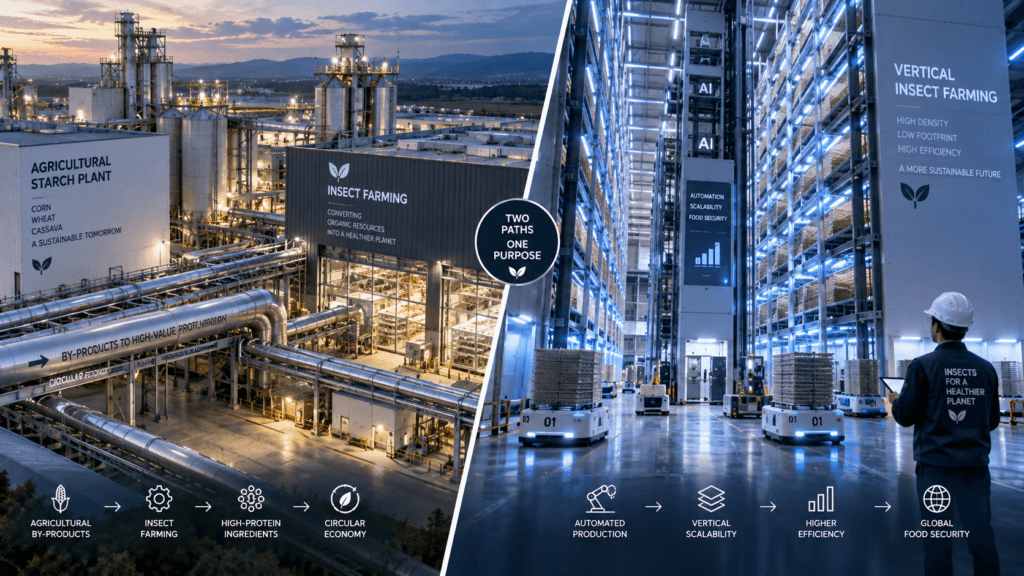
Ÿnsect committed early to maximum vertical density. At its flagship facility in Poulainville near Amiens, France, the company engineered what was recognized as one of the tallest automated indoor insect farms globally. The facility relies on a fully automated robotic crane system servicing vertical racks soaring tens of meters into the air. While this footprint maximizes space utilization, automated vertical farming at such towering heights introduces complex thermodynamic challenges. Regulating microclimates, continuous air exchange, and metabolic heat dissipation evenly across thousands of vertically stacked crates requires massive energy inputs and sophisticated computational control systems.
In contrast, Innovafeed adopted a decentralized industrial symbiosis model at its primary production hub in Nesle, France. Rather than building stand-alone high-rises, Innovafeed positioned its facility adjacent to existing wet-milling starch plants (Tereos) and renewable biomass cogeneration plants. This physical colocation allows Innovafeed to pipe wet industrial co-products directly into automated feed preparation lines without long-distance road haulage. More importantly, Innovafeed captures waste industrial thermal energy directly from its neighbor to maintain precise ambient temperatures across its rearing units, sharply curbing ongoing heating OpEx and significantly lowering the net carbon footprint per metric ton of processed insect meal.
3. Commercial Target Markets and Revenue Models
These architectural and biological differences inevitably shaped the commercial market entry strategies for both companies:
Innovafeed positioned itself as an ingredient supplier to global agribusiness conglomerates, securing strategic commercial partnerships with animal nutrition giants such as Cargill and Archer Daniels Midland (ADM). Its core revenue drivers are bulk defatted insect meal for commercial salmon and trout farming, combined with high-lauric insect oil for swine gut health and poultry feeds. This strategy demands rigorous production discipline to compete on price with premium Peruvian fishmeal and high-tier vegetable proteins.
Ÿnsect pursued a higher-margin, brand-centric monetization model. By marketing proprietary branded ingredients such as “YnMeal” and “YnOil,” the company positioned mealworm protein as a boutique functional ingredient. Its primary commercial focus targeted ultra-premium companion animal nutrition, focusing on hypoallergenic dry kibble, veterinary pet formulations, and direct retail organic frass fertilizers under consumer brands. While unit revenues per kilogram in these categories are substantially higher than bulk aquafeed contracts, the total addressable market volume is inherently more constrained.
4. Supply Chain Lessons for B2B Procurement Teams
Tracking the ongoing scaling trajectories of Innovafeed and Ÿnsect offers vital strategic guidance for industrial buyers navigating alternative proteins:
First, acknowledge the pricing realities of Western gigafactories. Large-scale European facilities carry substantial capital depreciation burdens and high technical overhead. Consequently, finished European insect meal regularly commands prices ranging between $3,500 and $5,500 per metric ton. While justifiable for high-margin specialized pet treats, these figures remain challenging for standard livestock formulations.
Second, avoid single-source geographical dependencies. Building single-site megaprojects involves complex engineering timelines where commissioning delays can instantly choke buyer supply lines. Global feed millers must cultivate resilient, diversified procurement channels that combine Western technical partnerships with vetted, cost-effective Asian manufacturing volume. When establishing a robust vendor network, using a structured audit checklist when evaluating an insect ingredient supplier will help verify whether prospective producers can maintain batch consistency, heavy metal compliance, and price stability over long-term purchasing cycles.
Summary Outlook
Analyzing Innovafeed vs Ynsect demonstrates that both companies have made lasting contributions to proving insect bioconversion to global regulators such as the European Commission and the US FDA. As the sector moves toward 2027, long-term commercial dominance will not depend on robotic facility height or total venture funding secured, but on disciplined unit economics, predictable yields, and reliable fulfillment for industrial feed formulators.