Independent intelligence for the global insect industryISSUE 01 · 2026
Whole Dried Insects vs Insect Meal vs Insect Oil: A Comparative Guide for Feed and Pet Food Buyers
By IIR Editorial DeskSeptember 13, 2026
When evaluating Whole Dried Insects vs Insect Meal, feed millers and pet food formulators must understand that purchasing insect ingredients is not just a commercial transaction; it is a regulatory…
When evaluating Whole Dried Insects vs Insect Meal, feed millers and pet food formulators must understand that purchasing insect ingredients is not just a commercial transaction; it is a regulatory commitment. As insect agriculture transitions from a novel concept to a commercial-scale reality, buyers face an increasingly diversified catalog of insect-based ingredients. For formulators, pet food manufacturers, and aquafeed producers, evaluating a supplier is only the first step. The subsequent, and often more complex, decision is selecting the optimal ingredient form for their specific production lines.
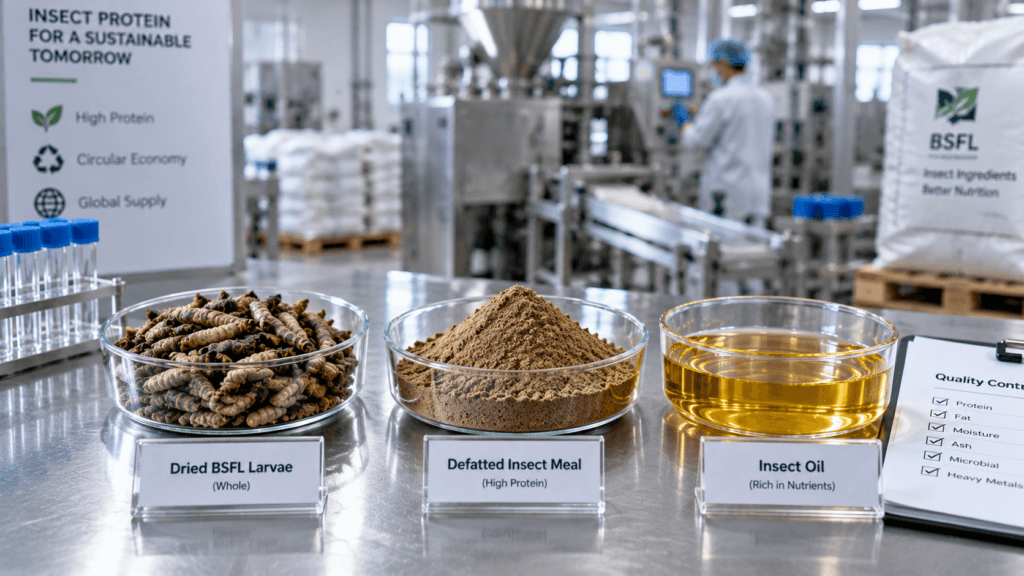
Insect ingredients are predominantly commercially available in three distinct forms: whole dried insects, insect meal, and insect oil. Each format undergoes different processing pathways, resulting in unique physical, nutritional, and handling characteristics. Understanding these distinctions is essential to optimize extrusion processes, meet target nutritional profiles, and prevent costly supply chain or shelf-life failures.
1. Processing Pathways: From Live Larvae to Finished Ingredients
The journey from live larvae to a stabilized commercial ingredient dictates the final product’s composition. Buyers must understand how processing intensity affects the raw material.
Whole Dried Insects (Minimal Processing): This is the most basic commercial form. Following a sanitation step (often blanching) to reduce microbial loads, the whole insects are dehydrated. Drying technologies vary, primarily including microwave drying, hot air convective drying, and freeze-drying. Freeze-drying yields a structurally intact, highly rehydratable product but carries a significant cost premium. Microwave drying offers a more cost-effective, rapid stabilization that retains structural integrity for the pet treat market. Crucially, whole dried insects retain their entire original fat content. For premium applications like hypoallergenic pet food and avian diets, you can explore our dedicated guide on dried yellow mealworms.
Insect Meal (Full-Fat vs. Mechanically Defatted): Insect meal is created by grinding the dried insects into a powder. However, the most critical distinction in the market is between full-fat and defatted meal. Full-fat meal involves milling the whole dried insects. Mechanically defatted meal is produced by passing the dried larvae through a mechanical screw press (expeller) to squeeze out the majority of the lipids. While some advanced facilities use solvent extraction to achieve extremely low residual fat levels, mechanical pressing remains the industry standard, typically leaving a residual fat content of 8% to 18% depending on the equipment and process parameters. When sourcing defatted meal in bulk, it is essential to know how to read an insect ingredient COA to avoid high moisture or heavy metal contamination.
Insect Oil (Lipid Extraction): Insect oil is the direct co-product of the defatting process described above. The crude oil extracted via mechanical pressing undergoes filtration and refining steps (such as centrifugation or degumming) to remove solid impurities, moisture, and free fatty acids, resulting in a clarified lipid product.
2. Whole Dried Insects vs Insect Meal: Key Nutritional Differences
The processing pathway fundamentally alters the macronutrient density and functional properties.
Protein Content and Digestibility: Whole dried insects and full-fat meals generally present a crude protein content ranging from 35% to 45%, inversely proportional to their high fat levels. Conversely, the mechanical defatting process concentrates the protein. High-quality defatted insect meal (particularly from Black Soldier Fly or Yellow Mealworm) can achieve crude protein levels of 55% to 65%. The amino acid profile remains highly digestible closely mimicking that of premium fishmeal, making defatted meal a potent protein substitute in demanding formulations.
Lipid Profiles and the Value of Lauric Acid: The fat profile varies significantly with the insect species. Black Soldier Fly Larvae (BSFL) oil is particularly notable in the animal feed industry because it is exceptionally rich in medium-chain triglycerides (MCTs), specifically lauric acid (C12:0), which can comprise up to 40% of its total lipid profile. Lauric acid is highly valued for its natural antimicrobial properties against certain Gram-positive bacteria and its ability to provide rapid, easily absorbable energy via the portal vein.
Ash and Chitin Considerations: All forms of insect ingredients contain chitin, a structural polysaccharide found in the exoskeleton. While historically viewed as an anti-nutritional factor that might reduce overall protein digestibility in some monogastric animals, emerging research suggests chitin may possess beneficial prebiotic properties, modulating gut microbiota and stimulating immune responses. Ash content fluctuates with the feedstock and the harvesting stage, requiring careful monitoring on the Certificate of Analysis (COA) to prevent mineral imbalances in the final feed.
3. Industrial Application Scenarios
The physical format and nutritional density dictate where each ingredient works best in an industrial manufacturing setting.
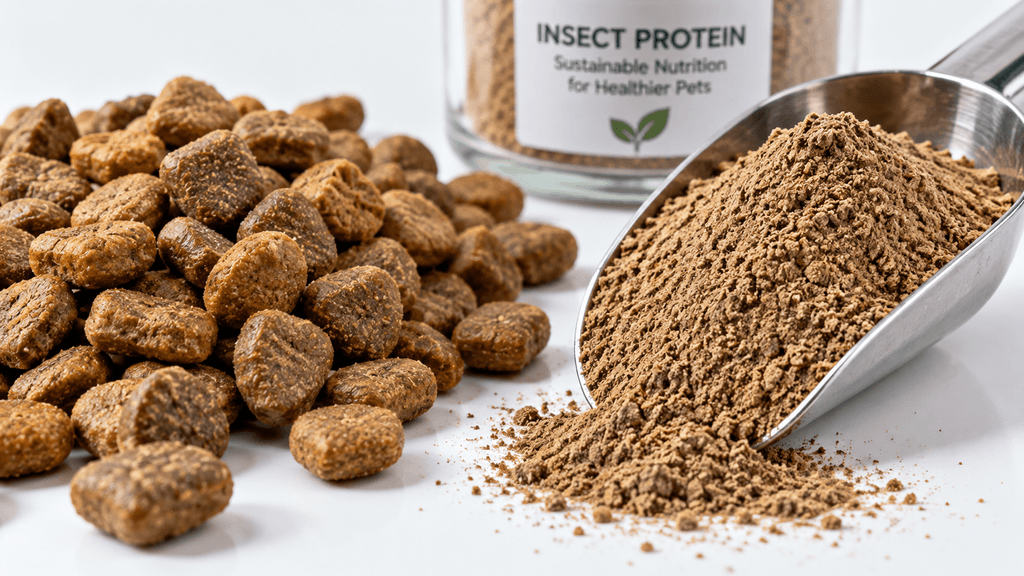
Pet Food (Dry Kibble, Wet Formulations, and Treats): In extruded dry kibble manufacturing, defatted insect meal is the undisputed preferred choice. High fat levels (as found in full-fat meal or whole insects) act as a lubricant in the extruder barrel, reducing the mechanical shear required to cook the starches and expand the kibble, leading to poor pellet integrity and slippage. Defatted meal ensures optimal extrusion. Whole dried insects are almost exclusively utilized as premium standalone treats for wild birds, poultry, reptiles, and increasingly, as inclusions in artisanal baked pet treats. Insect oil is frequently utilized in pet food as a highly palatable topical coating (enrobing) applied post-extrusion.
Aquafeed Applications: The aquaculture sector, driven by the need to replace volatile fishmeal, demands highly concentrated protein sources. Defatted insect meal is widely incorporated into diets for carnivorous species like salmon and trout. Insect oil is also utilized in aquafeed to partially replace fish oil or poultry fat, contributing necessary energy and specific fatty acids to the pellet.
Livestock and Poultry Nutrition: In commercial poultry and swine operations, unit cost is the primary driver. While whole insects can encourage natural foraging behaviors in laying hens, commercial integration usually relies on insect meal and oil in early-stage nutrition (e.g., creep feed for piglets or starter diets for broilers). The inclusion of BSFL oil in piglet diets is actively explored by formulators specifically to leverage the antimicrobial properties of lauric acid during the stressful post-weaning phase.
4. Storage Stability, Handling, and Packaging
The logistical realities of handling bulk insect ingredients depend heavily on their fat content and surface area.
Oxidation Risks and Shelf-Life Management: The primary enemy of insect ingredient shelf life is lipid oxidation (rancidity). Whole dried insects and full-fat meals, due to their high lipid content and large exposed surface area (in the case of meal), are highly susceptible to oxidation if exposed to oxygen, heat, and UV light. Defatted meal offers significantly better ambient shelf stability. For insect oil, buyers must rigorously monitor the Peroxide Value (PV) and Free Fatty Acids (FFA) on the COA to ensure the oil has not degraded prior to delivery. The addition of natural or synthetic antioxidants (like tocopherols or BHA/BHT) is standard industry practice to extend shelf life.
Bulk Packaging and Logistics Constraints: Whole dried insects have a very low bulk density, meaning they take up significant volumetric space during shipping (shipping “air”), drastically increasing logistics costs per metric ton. Insect meal provides a much denser, more cost-effective shipping profile and is typically transported in standard 1-ton FIBC bulk bags. Insect oil requires specialized liquid logistics, such as IBC totes, and may require heating equipment for discharge, as high-lauric BSFL oil solidifies at room temperature, similar to coconut oil.
5. Procurement Selection Matrix: How to Choose
Ultimately, the choice comes down to the manufacturing process and the formulation goal. If the objective is to maximize protein inclusion in an extruded pellet, mechanically defatted insect meal is the only viable technical option. If the goal is functional energy delivery, antimicrobial gut support, or kibble coating, insect oil provides the highest value. Whole dried insects remain a specialized, premium-priced ingredient best suited for the direct-to-consumer treat market rather than large-scale feed milling. to understand how these three product formats drive current industry trends and supply chain dynamics, review our global insect protein market overview.
Disclaimer: This article is for informational purposes only and does not constitute business, legal or investment advice. Always consult primary sources and qualified professionals.