Independent intelligence for the global insect industryISSUE 01 · 2026
Whole Dried Insects: Production, Specifications and Commercial Applications
By IIR Editorial DeskOctober 26, 2026
Whole dried insects are commercially processed insect products supplied in intact form for selected feed, pet food and specialty applications. This analysis examines species selection, drying technologies, product specifications, quality controls, packaging, international trade and commercial market demand.
Whole dried insects occupy a distinct segment of the insect ingredient market. This analysis examines how intact dried insect products are manufactured, which specifications matter to commercial buyers, and where they fit into animal nutrition and specialty supply chains.
By IIR Editorial Desk · October 26, 2026 · Market Intelligence
Whole dried insects are commercially processed insect products that retain their recognizable body form after moisture reduction and stabilization. Unlike insect meal, protein concentrates, or extracted insect oils, these products are supplied as intact or predominantly intact dried insects. They may be used in selected animal feed, bird food, reptile diets, aquaculture products, and specialty pet food applications, subject to the nutritional requirements and regulatory conditions of each market.
The commercial value of whole dried insects depends on species identity, drying technology, physical integrity, moisture control, nutritional characteristics, microbiological safety, and supply consistency. However, there is no single specification that applies to every insect species or end use. For manufacturers, distributors, and international buyers, understanding these differences is essential when evaluating products, comparing quotations, and establishing reliable supply arrangements.
1. What Are Whole Dried Insects?
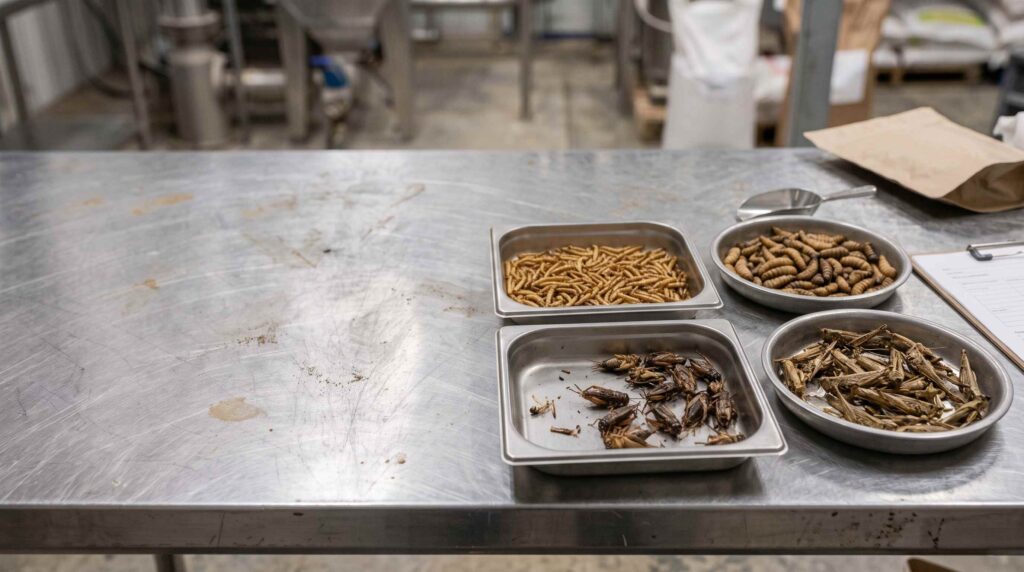
Whole dried insects are insects or insect larvae processed through drying and stabilization while retaining their original recognizable form. The category includes several commercially relevant products, such as dried mealworms, black soldier fly larvae, crickets, grasshoppers, and other insect species supplied in intact form.
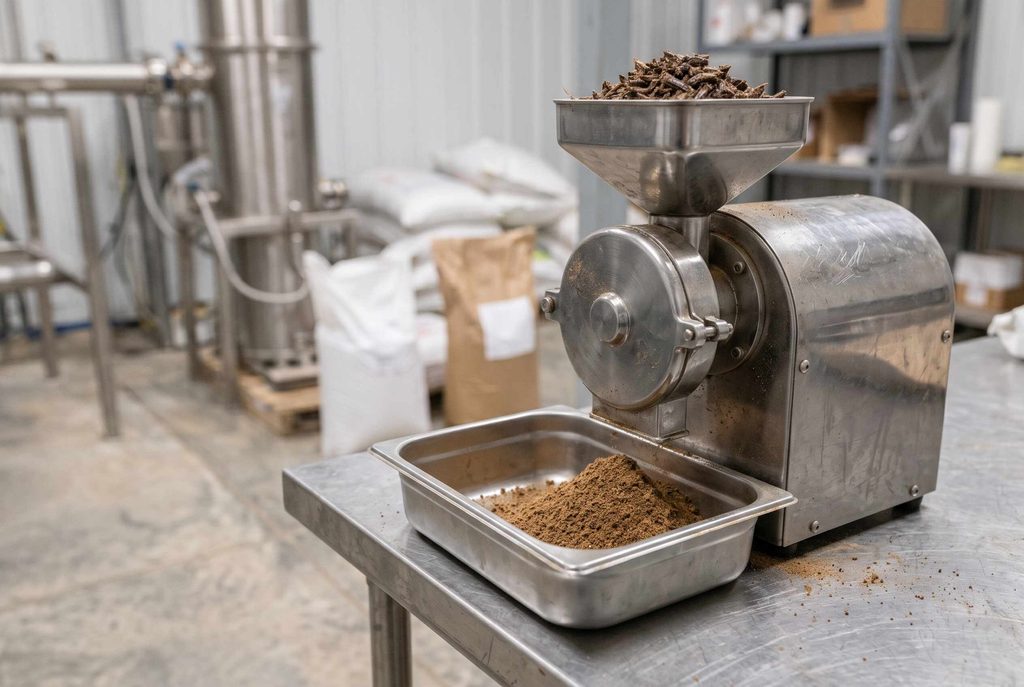
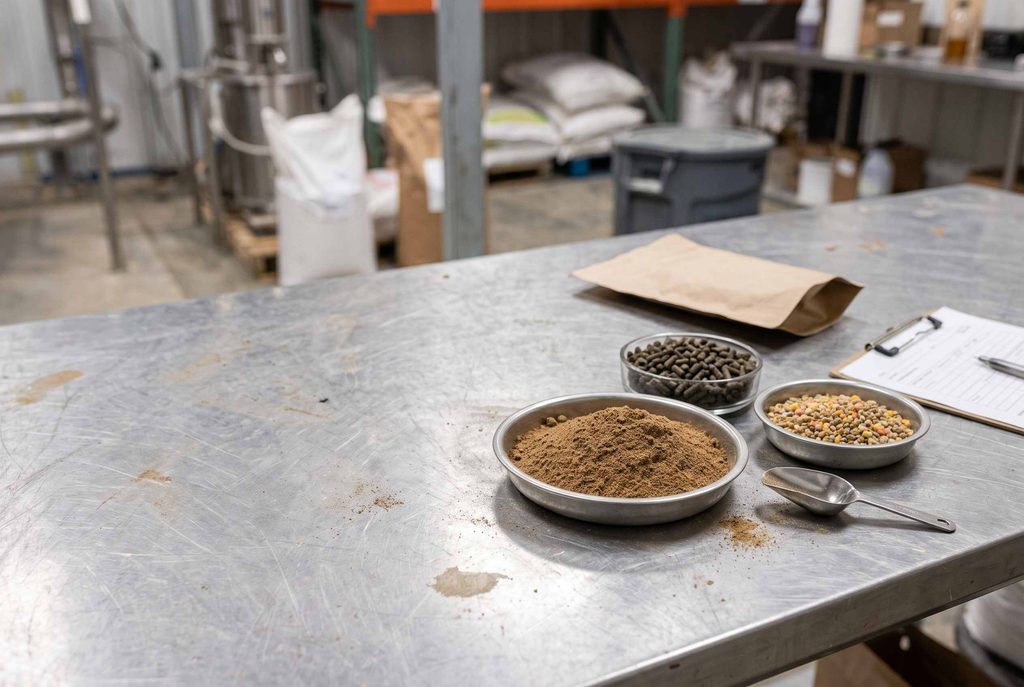
The distinction between whole dried insects and insect-derived powders is commercially significant. Milling transforms the material into a particulate ingredient, while oil extraction and protein separation create different product categories. Although these materials may originate from the same species, they have different handling characteristics, applications, quality requirements, and purchasing considerations.
The term whole should also be interpreted carefully. Commercial products may contain some broken pieces as a result of drying, handling, and transportation. Therefore, buyers should define acceptable breakage levels rather than assume that every individual insect will remain completely undamaged.
Species identification is equally important. A product described simply as dried insects does not provide sufficient information for nutritional evaluation, regulatory verification, or commercial purchasing. Buyers should confirm the scientific species, processing condition, intended application, and available documentation before comparing offers.
2. How Whole Dried Insects Are Produced
Whole dried insect production begins with obtaining suitable raw insects through controlled farming or another legally permitted and traceable supply system. Commercial production then involves harvesting, separation, cleaning where appropriate, stabilization, drying, grading, inspection, and packaging.
A simplified production sequence is:
Rearing or Sourcing → Harvesting → Separation and Cleaning → Stabilization → Drying → Cooling → Sorting and Grading → Quality Testing → Packaging
The exact process varies by species and product grade. Larvae may require different separation and cleaning procedures from adult crickets or grasshoppers, while insect size and body structure can influence drying behavior.
Stabilization before or during drying is particularly important. Manufacturers need to control deterioration and relevant biological hazards while preserving the physical characteristics required by the market. However, drying alone should not automatically be treated as a validated microbial reduction step. Where safety depends on a specific thermal or other treatment, that process should be appropriately established and verified.
After drying, products may be screened to remove excessive fragments, foreign materials, and unsuitable pieces. Finished material is then inspected and packed according to the required grade and shipment conditions.
For commercial buyers, production consistency matters as much as the equipment used. A reliable process should produce repeatable results across batches and maintain traceability from incoming material to finished product.
3. Commercial Drying Technologies
Drying technology influences the physical condition, residual moisture, color, appearance, energy consumption, and processing economics of whole dried insects. Commonly discussed methods include hot-air drying, microwave-assisted drying, freeze-drying, and controlled sun drying.
Each method presents different operational advantages and limitations.
Drying method
Processing characteristics
Commercial considerations
Hot-air drying
Uses heated airflow to remove moisture
Temperature control, throughput, energy use, and product integrity
Microwave-assisted drying
Uses microwave energy, sometimes combined with other heating systems
Heating uniformity, equipment configuration, and process validation
Freeze-drying
Removes frozen water under reduced pressure
Equipment cost, processing time, structure, and final product characteristics
Sun drying
Uses environmental solar heat and airflow
Weather dependence, contamination protection, process control, and consistency
Hot-air drying is relevant to many industrial processing systems because it can be integrated into controlled production lines. Nevertheless, inappropriate temperatures or residence times may cause excessive darkening, breakage, or uneven moisture removal.
Microwave-assisted drying can provide another processing option, but equipment design and product loading affect heating uniformity. Consequently, claims about speed or superior quality should be supported by actual operating data.
Freeze-drying may help preserve certain structural characteristics under suitable conditions. However, its commercial suitability depends on product value, throughput, energy requirements, and the intended market.
Sun drying can be used in some production contexts, but environmental exposure introduces additional concerns regarding weather, hygiene, and process consistency. Buyers should evaluate the actual controls rather than assume that a traditional drying method is automatically acceptable.
Ultimately, the appropriate drying method depends on the species, required grade, safety objectives, and total production cost.
4. Major Commercial Species and Product Categories
Whole dried insects represent a product category rather than one uniform ingredient. Different species serve different commercial markets and may require distinct processing and quality controls.
Selected aquaculture and specialty feed applications
Dried housefly larvae or maggots
Species identity, substrate traceability, hygienic separation
Selected animal feed applications
These examples describe possible commercial categories, not universal legal authorizations. A product may be technically suitable for an application while remaining restricted or unauthorized in a particular destination market.
Furthermore, common names can cover multiple biological species. Commercial buyers should verify scientific identity, especially when product documentation, import requirements, or nutritional studies refer to a particular species.
Product selection should therefore begin with the intended use and the applicable market rather than price alone.
5. Key Whole Dried Insect Specifications
Whole dried insect specifications should describe the characteristics required for a particular species and commercial application. Because the product retains its physical form, visual and dimensional requirements may be more important than they are for milled insect ingredients.
Specification
Why it matters
Buyer verification
Species identity
Nutritional and regulatory relevance
Scientific name and product records
Moisture
Storage stability and deterioration risk
Laboratory results and agreed limit
Water activity
Availability of water for microbial growth and reactions
Testing where relevant
Crude protein
Nutritional composition
Analytical method and reporting basis
Crude fat
Energy contribution and oxidation considerations
Batch composition
Ash
Mineral residue and possible cleaning concerns
Species-specific interpretation
Size distribution
Product grading and application compatibility
Defined size categories
Whole-body integrity
Appearance and product usability
Agreed percentage or grading method
Broken pieces and fines
Physical quality and handling losses
Defined acceptance criteria
Foreign material
Cleanliness and contamination control
Inspection and testing
Microbiological results
Relevant safety and hygiene indicators
Applicable tests and limits
Packaging
Protection during storage and transportation
Materials, weight, and sealing
The importance of each parameter depends on the end use. For example, bird food distributors may place greater emphasis on recognizable appearance and breakage, while feed formulators may prioritize nutritional composition and safety.
Buyers should also distinguish typical values from guaranteed limits. A supplier’s average protein percentage or moisture estimate does not necessarily establish the condition of a specific shipment.
A complete purchasing specification should therefore define the product grade, applicable analytical methods, acceptance criteria, and documentation required for batch release.
6. Quality Control, Moisture, and Product Stability
Whole dried insect quality depends on appropriate raw-material handling, controlled drying, hygienic processing, storage conditions, and reliable inspection procedures.
Moisture is one of the principal parameters because excessive residual water can contribute to deterioration during storage. However, moisture percentage and water activity are different measurements. Water activity describes the availability of water for microbial growth and other processes, while total moisture describes the amount of water present in the product.
Consequently, two products with similar moisture percentages may not behave identically during storage. The relevance of water activity testing depends on the species, product grade, and risk assessment.
Microbiological controls should address hazards identified through the production system and intended application. Depending on the market and product, testing may include relevant pathogens or hygiene indicators. Nevertheless, a negative laboratory result from a limited sample does not independently establish that an entire production lot is free of contamination.
Physical inspection is also important. Excessive fragments, abnormal odors, visible foreign materials, unexpected discoloration, or inconsistent drying may indicate problems requiring further investigation.
For commercial shipments, quality control should extend to packaging integrity and storage stability. A batch that meets the specification immediately after processing may deteriorate if exposed to unsuitable conditions during transportation.
7. Poultry and Livestock Feed Applications
Whole dried insects for animal feed may provide protein, fat, and other nutrients in applications where the product is nutritionally appropriate and legally permitted.
In poultry-related markets, dried insects may be used in certain specialty feeding systems, enrichment products, or formulated feeds, depending on the species and regulatory framework. However, feeding whole insects is not nutritionally equivalent to incorporating a standardized insect protein meal into a compound feed.
Particle size, feeding behavior, nutrient variability, and inclusion level may affect practical suitability. In addition, the nutritional value of a particular dried insect species should not be generalized to all other species.
For larger commercial feed operations, the economics of whole dried insects can differ from those of insect meal. Whole products may require additional consideration of bulk density, handling, and physical uniformity.
Buyers should therefore evaluate the intended feeding system and the delivered nutritional contribution rather than assume that all dried insects can replace conventional protein ingredients directly.
8. Aquaculture and Specialty Aquatic Feed
Aquaculture represents another area of potential interest for whole dried insect products, although the appropriate format depends on the aquatic species, feeding system, and commercial application.
Some specialty aquaculture operations may evaluate intact dried insects as feed items or ingredients. However, industrial aquafeed manufacturing often relies on milled and formulated materials because extrusion, pellet production, and nutrient balancing require controlled ingredient characteristics.
Whole dried insects may therefore serve different functions from insect meal in aquaculture supply chains. Their physical form can be relevant to certain feeding behaviors, but it may also limit compatibility with conventional feed processing equipment.
Nutritional evaluation should consider protein, fat, amino acids, digestibility, and any species-specific requirements. Moreover, the legal status of the insect species and product form must be confirmed for the target market.
Commercial buyers should distinguish specialty feeding opportunities from large-scale aquafeed substitution claims. Research interest alone does not establish recurring industrial demand.
9. Bird Food, Reptile Diets, and Specialty Pet Products
Bird food, reptile diets, and specialty pet products are particularly relevant markets for whole dried insects because the recognizable insect form can be an important part of the product’s intended use.
Dried mealworms, crickets, and other insects may be offered as individual feed items, components of mixed products, or packaged specialty foods. In these markets, physical integrity, appearance, size, cleanliness, and packaging can influence commercial acceptance.
However, product suitability varies by animal species. A dried insect product should not automatically be described as a complete or balanced diet. Nutrient composition, calcium-to-phosphorus balance, fat content, and feeding frequency may require consideration within the overall diet.
For brand owners and distributors, consistent grading is commercially important. Buyers may require defined size ranges, acceptable breakage levels, and predictable product appearance across shipments.
In addition, packaging and storage instructions affect shelf presentation and product stability. These requirements can create different cost structures from those associated with bulk industrial feed ingredients.
10. Packaging, Bulk Density, and International Logistics
Packaging is a major commercial consideration because whole dried insects can be relatively bulky and physically fragile compared with many conventional feed ingredients.
Bulk dried insects may be supplied in cartons, bags, or other suitable packaging formats depending on product type, buyer requirements, and shipping conditions. Packaging must protect the material from moisture exposure, contamination, excessive compression, and avoidable breakage.
Bulk density varies by species, insect size, drying method, and packing configuration. Consequently, the amount of product that can fit into a container cannot be calculated accurately from gross weight alone.
For international shipments, buyers and suppliers should consider carton dimensions, pallet requirements, stacking limits, container loading, and destination handling conditions. Palletization can improve handling and reduce certain operational risks, but it also affects usable container space.
Freight cost per kilogram may be especially important when the shipment is volume-limited rather than weight-limited. Therefore, a lower factory price does not necessarily produce a lower delivered cost.
Commercial quotations should identify packaging weight, net weight, pallet configuration where relevant, and the agreed delivery basis.
11. Supply Chain, Pricing, and Market Demand
The market for whole dried insects includes producers, processors, traders, ingredient distributors, pet food brands, specialty feed companies, and other commercial buyers.
Supply chains vary by species and region. Some manufacturers operate integrated rearing and processing facilities, while others specialize in drying, grading, distribution, or export coordination. Each model presents different considerations for traceability, available capacity, and quality assurance.
Market demand is also segmented. A premium, visually uniform product intended for specialty pet food may command different commercial terms from a product purchased primarily for nutritional contribution. Accordingly, price comparisons must account for species, grade, processing method, order volume, packaging, and delivery conditions.
Publicly available quotations may not provide a reliable market benchmark because they often omit relevant specifications or transaction details. In addition, the difference between factory-gate prices and delivered import costs can be substantial.
For recurring buyers, supply consistency is critical. Seasonal conditions, production cycles, processing capacity, and inventory management can affect lead times and availability.
The most useful market assessment therefore examines verified transactions, supplier capacity, quality requirements, and demand by application rather than treating all whole dried insect products as one commodity.
12. Procurement and Supplier Evaluation
Commercial procurement should begin with a clear product definition. Buyers need to specify the insect species, product form, processing method where relevant, required quantity, intended use, and destination market.
A supplier evaluation should then cover nutritional specifications, physical grading, microbiological controls, relevant contaminants, traceability, packaging, and delivery capability.
Evaluation area
Key buyer question
Species
Is the scientific identity documented?
Processing
What stabilization and drying methods are used?
Physical grade
Are size and breakage limits defined?
Nutritional composition
Are relevant batch or representative results available?
Safety
Are applicable hazards and legal requirements addressed?
COA
Is documentation connected to an identifiable lot?
Packaging
Is it suitable for shipment and storage?
Capacity
Can the supplier support repeat orders?
Logistics
Are palletization and container-loading assumptions realistic?
Pricing
Are quotations based on comparable Incoterms and specifications?
Sample approval should not automatically be treated as full supplier qualification. Buyers may need to confirm that commercial production lots match the approved sample and that the supplier can maintain quality over repeated orders.
For international procurement, documentation requirements should be agreed before shipment. The appropriate documents may depend on the insect species, intended use, origin, and importing jurisdiction.
13. Regulation and International Market Access
Regulatory eligibility is a fundamental requirement for the international trade of whole dried insects. Legal requirements may vary by species, product form, intended animal category, origin, and destination market.
The rules applicable to whole dried insects should not automatically be treated as identical to those governing processed insect protein, insect oil, or human food ingredients. A product permitted for one application may remain restricted for another.
In the European Union, insect-derived feed materials may fall under several relevant animal by-product, feed hygiene, and feed-use provisions. The precise requirements depend on the product and intended use, and buyers should verify current rules before placing orders.
In the United States, applicable requirements may involve animal food ingredient eligibility and, depending on the product and import pathway, additional federal or state considerations. General statements about insect protein acceptance are not sufficient to establish authorization for every whole dried insect product.
Rearing inputs, animal health controls, contaminants, processing records, and shipment documentation may also affect market access. Importers and exporters should therefore confirm the applicable requirements with the responsible authorities and qualified compliance advisers.
14. Commercial Outlook and Industry Development
Whole dried insects occupy a distinct position within the broader insect ingredient industry. Their value is not limited to protein concentration; physical form, species identity, processing consistency, and suitability for specific feeding applications also influence commercial demand.
However, the market should not be viewed as uniform. Specialty pet food, bird food, reptile products, and industrial animal feed may have different purchasing requirements, price sensitivities, and regulatory conditions.
Manufacturers seeking to expand production must balance drying capacity, energy costs, grading requirements, packaging efficiency, and available demand. Meanwhile, international distributors need reliable documentation and predictable product quality to support recurring orders.
Future development may involve improved drying technologies, more consistent product grading, better storage controls, and greater transparency in commercial specifications. Nevertheless, claims about rapid market growth should be supported by reliable evidence rather than extrapolated from individual suppliers or research projects.
The commercial prospects of whole dried insects will ultimately depend on whether suppliers can deliver application-appropriate products with dependable quality and economically viable logistics.
IIR Analysis
The defining characteristic of whole dried insects is their retained physical form. This creates commercial opportunities that differ from those of insect meal, oil, and extracted protein ingredients, particularly in markets where appearance, size, and feeding behavior matter.
For commercial buyers, the most important evaluation factors are species identity, drying consistency, physical integrity, moisture control, safety documentation, and delivered cost. Nutritional composition remains relevant, but it should be assessed alongside product form and application requirements.
International logistics deserve particular attention. Whole dried insects may face volume constraints, breakage risks, and packaging requirements that materially influence shipment economics. Consequently, comparisons based only on factory price per kilogram can be misleading.
As the insect industry develops, clearer product grading and more consistent batch documentation may improve purchasing efficiency and supplier comparability. However, sustained market expansion will depend on verified demand, regulatory eligibility, reliable production capacity, and competitive delivery economics.
Ultimately, whole dried insects should be evaluated as a distinct commercial product category, not simply as an alternative presentation of insect protein meal.
Disclaimer: This article is for informational purposes only and does not constitute business, legal or investment advice. Always consult primary sources and qualified professionals.