Independent intelligence for the global insect industryISSUE 01 · 2026
Whole Dried Insects Quality: Key Parameters, Testing, and Buyer Red Flags
By IIR Editorial DeskOctober 26, 2026
Whole dried insects quality depends on controlled drying, moisture stability, physical integrity, contamination prevention and reliable batch documentation. This guide explains essential testing parameters, common defects, COA verification and supplier warning signs for commercial procurement.
Commercial quality assurance for whole dried insects extends beyond appearance and nutritional composition. This guide examines moisture-related deterioration, physical defects, microbial and chemical hazards, laboratory evidence, and the warning signs that matter when qualifying suppliers.
By IIR Editorial Desk · October 27, 2026 · Buyer Guides
Whole dried insects quality is a critical factor in commercial procurement, particularly when products are intended for bird food, reptile diets, specialty pet products, aquaculture, or other legally permitted animal feed applications. Unlike milled insect ingredients, whole dried insects retain their recognizable physical structure. Their commercial suitability therefore depends not only on nutritional composition and safety but also on body integrity, moisture stability, cleanliness, and resistance to damage during storage and transportation.
Quality problems can emerge at several stages of the supply chain. Inadequate drying may leave moisture unevenly distributed, while unsuitable storage conditions can increase the risk of deterioration. Poor handling may cause excessive breakage, and insufficient separation or cleaning can introduce unwanted residues. For importers, distributors, and feed manufacturers, the challenge is to distinguish normal product variation from defects that justify additional testing, shipment rejection, or supplier corrective action.
1. What Defines Whole Dried Insects Quality?
Commercial quality has three interconnected dimensions: product integrity, safety, and consistency. Product integrity concerns whether the insects retain the physical characteristics required by the buyer, including recognizable body form, acceptable breakage, and appropriate size distribution. Safety involves controlling relevant biological, chemical, and physical hazards. Consistency reflects the supplier’s ability to reproduce the agreed product grade across multiple production lots.
These dimensions cannot be assessed through a single measurement. A batch may have an acceptable crude protein level but contain excessive fragments, while visually attractive insects may still require verification of moisture stability or microbiological controls. A satisfactory sample is therefore not sufficient evidence of reliable commercial production.
An effective whole dried insect quality control program connects raw-material qualification, processing records, laboratory testing, packaging inspection, and batch traceability. The appropriate controls depend on insect species, intended application, and destination-market requirements.
For purchasing decisions, the objective is not to find a product described as universally premium. It is to establish whether the supplier can consistently deliver material that meets defined, application-specific acceptance criteria.
2. Raw-Material Quality and Species Verification
Quality assurance begins before drying. Insect species, developmental stage, rearing inputs, harvesting conditions, and handling practices can influence the characteristics of the finished product.
Dried mealworms, black soldier fly larvae, crickets, grasshoppers, and other insect products differ in body structure and processing requirements. The same visual or nutritional acceptance criteria cannot automatically be applied across all species. Scientific identification is particularly important when a common name refers to more than one species or when regulatory permissions are species-specific.
Rearing inputs deserve similar attention. Suppliers need appropriate controls over feed substrates, environmental conditions, and materials that could introduce contaminants. The fact that an insect can grow on a particular substrate does not establish that the substrate is suitable for commercial feed production.
Harvesting and pre-drying handling also affect quality. Delays, contamination, or unsuitable holding conditions can compromise the material before it reaches the drying equipment. Traceability records should connect finished batches with relevant raw-material and processing information.
Commercial buyers may not need access to proprietary production formulas, but they do need credible evidence that species identity, rearing inputs, and upstream quality risks are managed.
3. Drying Uniformity and Processing Controls
Drying is a defining stage in whole dried insect production. It reduces moisture and helps create a product suitable for storage and distribution, but an inadequate process can leave quality problems that are difficult to detect through visual inspection alone.
Different technologies, including hot-air drying, microwave-assisted drying, and freeze-drying, may produce different physical characteristics. Equipment loading, temperature distribution, residence time, and product size can affect processing uniformity. Consequently, the name of the drying method provides less useful assurance than evidence of controlled and repeatable results.
Uneven drying is a particular concern. Insects from the same batch may differ in residual moisture because of variations in body size, tray loading, airflow, or heating conditions. A single composite test may not fully reveal localized problems if sampling is poorly designed.
Processing should also address relevant biological hazards. Moisture removal is not automatically equivalent to a validated microbial reduction step. Where the safety plan relies on thermal treatment or another intervention, the supplier needs evidence that the required process conditions are consistently achieved.
A reliable manufacturer monitors critical processing conditions, identifies deviations, and prevents unsuitable material from entering finished-product inventory.
4. Moisture Testing, Water Activity, and Rehydration Risks
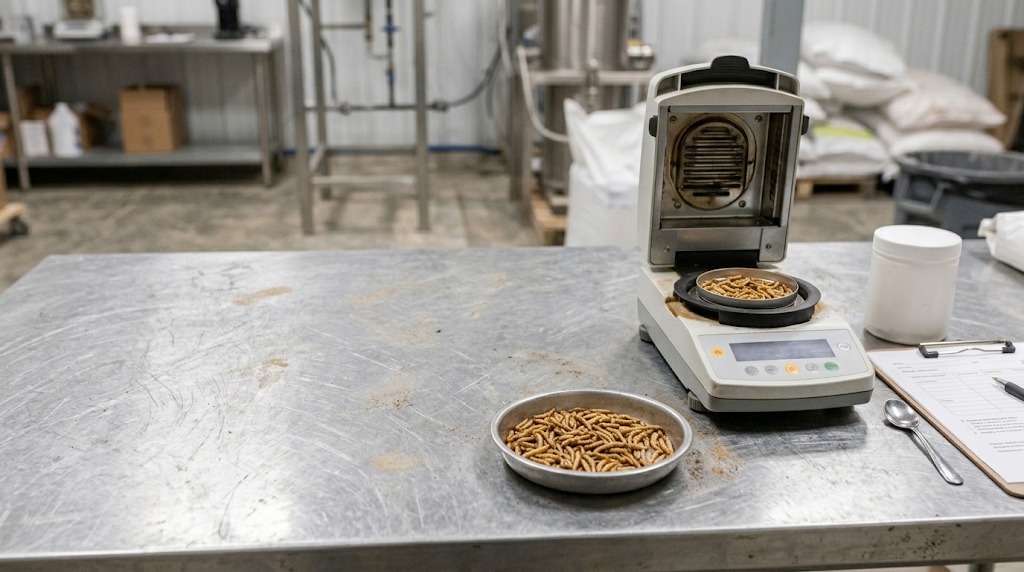
Dried insect moisture testing is central to evaluating storage stability. Excess residual moisture may increase the likelihood of deterioration, particularly when material is packed before it has been adequately dried or cooled.
Total moisture and water activity measure different characteristics. Moisture content indicates how much water is present, whereas water activity describes how available that water is for microbial growth and certain chemical reactions. The two measurements are related, but they are not interchangeable.
Moisture can also change after production. Exposure to humid air, damaged packaging, condensation, or unsuitable storage conditions may allow dried insects to absorb water. In international trade, these risks become more relevant when products experience changing temperatures and extended transit periods.
Signs of possible moisture problems include unexpected clumping, softened texture, abnormal odor, condensation inside packaging, or visible fungal growth. None of these observations should be used as a substitute for appropriate testing, and suspicious material may require immediate segregation.
Acceptance limits must be appropriate to the species, product grade, intended application, and storage conditions. Rather than relying on a universal moisture percentage, procurement teams should establish a validated or otherwise justified limit and specify the testing method.
5. Physical Integrity, Breakage, and Abnormal Appearance
Physical integrity is an important commercial quality characteristic because many whole dried insect products are purchased specifically for their recognizable form.
Normal variation differs by species. Dried larvae may show natural differences in curvature and size, while adult crickets and grasshoppers have fragile legs, wings, and antennae that can detach during processing or transport. Some fragmentation is therefore expected, but excessive breakage can reduce product value and indicate unsuitable handling.
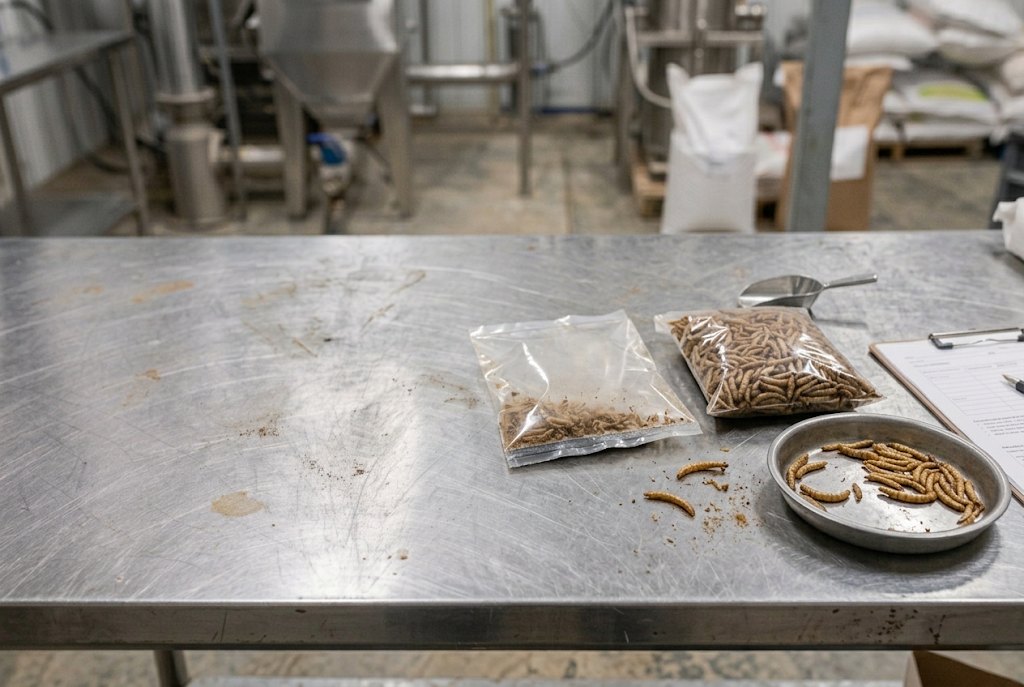
Buyers need an agreed definition of intact material, broken pieces, and fines. These categories should be assessed using a consistent sampling and measurement procedure. Without a defined method, two suppliers may report different integrity percentages even when their products have similar physical characteristics.
Color and odor also require context. Natural differences in species, maturity, and processing can influence appearance, so a darker product is not automatically defective. Unexpected discoloration, a persistent off-odor, visible foreign material, or substantial deviation from an approved reference sample warrants investigation.
Physical inspection is most useful when combined with batch records and laboratory evidence. Appearance alone cannot establish microbial safety, nutritional suitability, or the cause of a suspected defect.
6. Microbial Hazards and Laboratory Testing
Dried insect microbial testing helps assess relevant biological hazards, but it must be interpreted within the supplier’s overall food or feed safety system.
Depending on the intended application and applicable regulations, testing may include Salmonella, selected hygiene indicators, or other microorganisms identified through a documented hazard assessment. The appropriate test panel cannot be determined from insect species alone; rearing conditions, processing methods, handling, and the destination market also matter.
A negative laboratory result provides information about the tested sample under the method used. It does not guarantee that every insect in a large production lot is free of contamination. Representative sampling, validated controls, hygienic handling, and suitable corrective-action procedures remain essential.
Drying and storage conditions also affect microbial risks. Low water activity can restrict the growth of many microorganisms, but it does not necessarily eliminate organisms already present. Therefore, a product described as dry should not automatically be regarded as microbiologically safe.
Laboratory reports should identify the tested organisms, analytical methods, reporting units, results, and relevant acceptance criteria. Where a pathogen is detected, or a binding safety limit is exceeded, the affected material requires appropriate control and investigation before any release decision.
7. Foreign Materials, Chemical Contaminants, and Cleaning Defects
Whole dried insect contamination can involve physical, chemical, or biological hazards. The relevant risks depend on the species, rearing inputs, processing environment, and intended use.
Physical contamination may arise from unwanted rearing residues, packaging fragments, equipment wear, or inadequate separation. Naturally detached insect body parts should be distinguished from unrelated foreign materials, although the former may still count toward contractual breakage or fines limits.
Cleaning requirements also vary by product. Dried earthworms may require attention to soil-related residue and ash content, while larval products need appropriate separation from their rearing substrate. Adult insects present different handling and sorting challenges.
Chemical hazards may include relevant heavy metals, pesticide residues, or other substances associated with upstream inputs and processing. Testing should follow a risk-based approach that identifies credible hazards and applies appropriate analytical methods and limits.
A broad claim that a product is free from contaminants is not sufficient evidence of safety. More useful documentation identifies the substances tested, reporting limits, measured results, and applicable acceptance criteria.
When contamination is suspected, affected material should be isolated while the supplier investigates the source, scope, and necessary corrective actions.
8. Nutritional Consistency and Oxidative Stability
Nutritional composition remains part of quality assurance even when the product is purchased primarily for its physical form. Protein, fat, ash, and mineral content may vary with species, life stage, rearing conditions, and processing.
Crude protein results require careful interpretation because nitrogen-based calculations may include contributions from nonprotein nitrogen. Insect-derived materials also contain chitin-associated components, making the analytical basis relevant when comparing products.
Fat content deserves attention because insect lipids can undergo oxidation during processing and storage. The rate and significance of deterioration depend on fatty acid composition, oxygen exposure, temperature, packaging, and other conditions.
Unexpected rancid odors or changes in lipid-related test results may indicate a need for further investigation. However, sensory characteristics alone cannot establish oxidative condition, and a single analytical indicator may not describe the full deterioration process.
For recurring procurement, historical results are valuable. Comparing multiple lots can reveal changes in nutritional composition or processing consistency that might not be apparent from one approved sample.
9. How to Verify a Whole Dried Insects COA
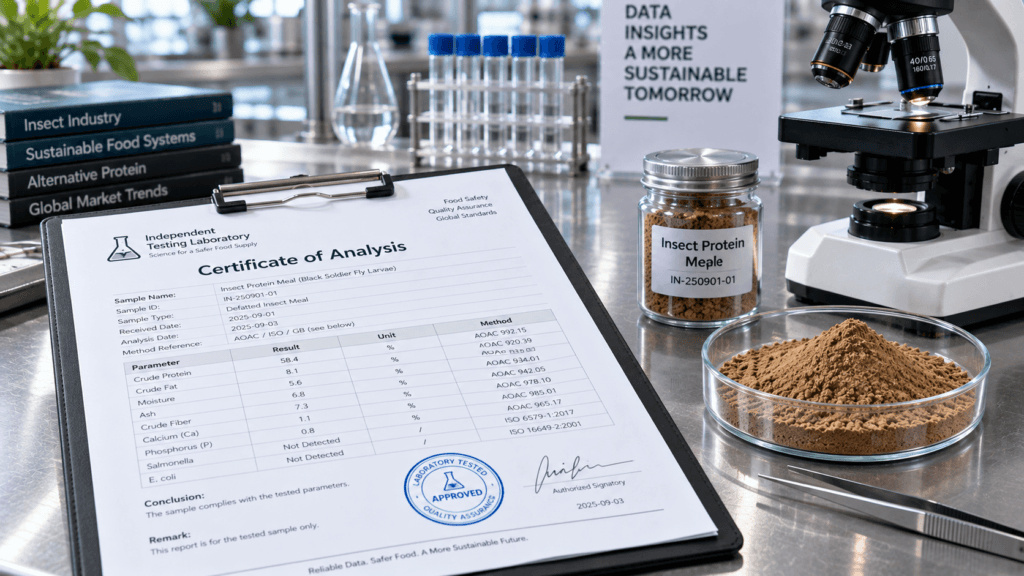
A whole dried insects COA should provide traceable, batch-specific evidence that relevant quality parameters have been assessed. It should not be confused with a generic product specification or an unrelated historical laboratory report.
A useful Certificate of Analysis identifies the product, scientific species where relevant, production lot, testing dates, analytical parameters, methods, reporting units, and actual results. Contractual acceptance limits may also be included or referenced.
COA element
What commercial buyers should verify
Product identity
Correct species, life stage, and product form
Lot identification
Clear connection to the supplied shipment
Sampling information
Representative sample and relevant date
Moisture
Actual result, method, and agreed limit
Water activity
Result where required by the quality plan
Crude protein and fat
Analytical method and reporting basis
Microbiological results
Relevant organisms, methods, and limits
Chemical contaminants
Tested substances and reporting limits
Laboratory details
Testing responsibility and traceability
Release decision
Evidence of assessment against requirements
Some important quality characteristics may be documented outside the COA. Size distribution, intact-body percentage, breakage, and packaging condition may require separate inspection reports or shipment records.
Missing lot numbers, inconsistent reporting units, unexplained revisions, or reports unrelated to the supplied material justify clarification. Nevertheless, documentation irregularities should be investigated rather than automatically treated as proof of deliberate misconduct.
The strongest evidence comes from combining reliable laboratory reports with traceable production records and consistent quality performance.
10. Packaging, Storage, and Shipment-Related Quality Risks
Whole dried insects can experience quality deterioration after leaving the processing facility. Packaging and logistics therefore form an important part of the commercial quality system.
Moisture exposure is a primary concern, especially during extended storage or transportation through changing environmental conditions. Inadequate seals, damaged liners, and condensation may compromise material that originally met its release specification.
Physical damage is another consideration. Excessive stacking pressure, unsuitable carton strength, repeated handling, or poorly secured pallets can increase breakage. These problems may be particularly significant for fragile adult insects and visually graded products.
Packaging requirements should reflect the insect species, product grade, expected shipment duration, and storage environment. Buyers may also need to define the acceptable condition of cartons, liners, and pallets upon arrival.
A documented receiving inspection can help distinguish manufacturing defects from damage occurring during transportation. For high-value or sensitive shipments, retained samples and relevant shipment records may support a more reliable investigation.
Quality responsibilities should be clearly defined in the purchasing agreement, including the inspection point, notification period, sampling method, and procedure for disputed results.
11. Buyer Red Flags That Require Investigation
Supplier warning signs vary in severity. Some indicate a documentation gap, while others may justify immediate product segregation, additional testing, or rejection under the purchasing agreement.
Red flag
Potential concern
Recommended buyer response
Unexpected dampness or clumping
Moisture exposure or incomplete drying
Hold affected material and assess moisture
Visible mold-like growth
Possible fungal contamination
Segregate material and investigate
Persistent abnormal odor
Possible deterioration or contamination
Review batch condition and testing
Excessive broken pieces
Processing or transport damage
Apply agreed integrity inspection
Unexpected foreign material
Inadequate separation or contamination
Identify material and investigate source
Inconsistent size grading
Weak sorting or process control
Compare against approved grade
Missing lot number on COA
Insufficient traceability
Request batch-specific records
Generic report presented as batch evidence
Shipment quality not demonstrated
Request relevant batch testing
Unexplained test result changes
Process variation or documentation issue
Review methods and production records
No credible rearing-input controls
Potential upstream contamination risks
Review supplier hazard controls
Damaged packaging or condensation
Exposure during storage or transit
Document condition and evaluate affected goods
Unsupported shelf-life claims
Stability not adequately demonstrated
Request relevant evidence
A warning sign is not automatically proof of noncompliance. Its significance depends on the hazard, product specification, available evidence, and intended application. Nevertheless, material presenting a credible safety concern should remain under appropriate control until the issue is resolved.
12. A Practical Quality Approval and Rejection Workflow
A structured approval process reduces the risk of accepting unsuitable products and helps suppliers understand the buyer’s expectations.
Step 1 — Confirm product identity. Verify the insect species, life stage, product form, processing grade, and intended use.
Step 3 — Review production controls. Assess rearing-input management, drying conditions, cleaning, traceability, and storage procedures.
Step 4 — Examine batch documentation. Confirm that COAs and inspection records relate to the actual material being supplied.
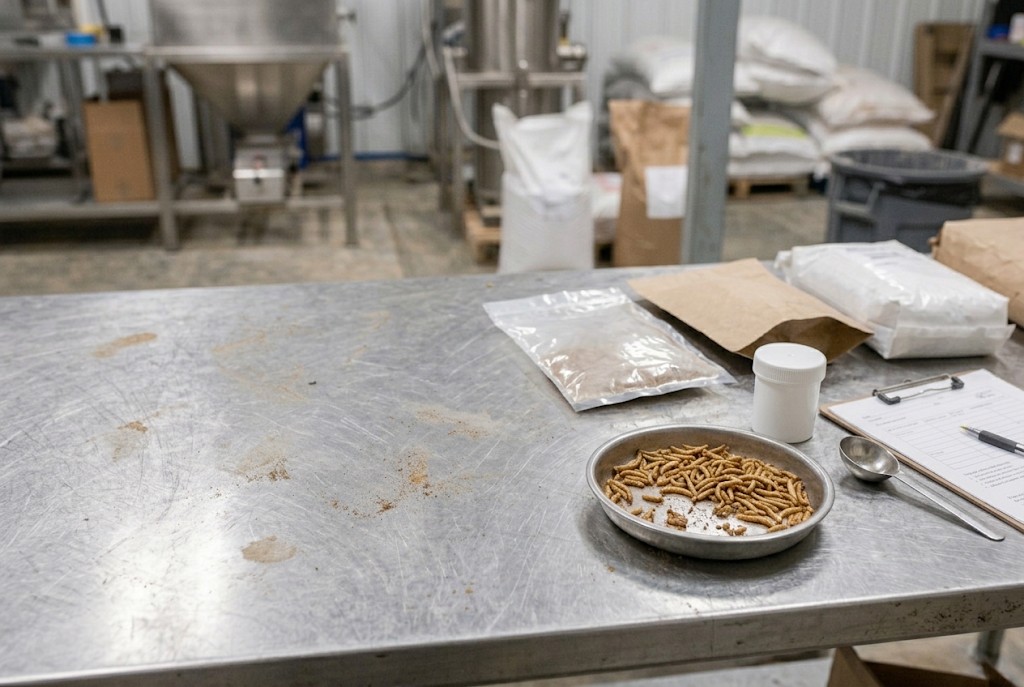
Step 5 — Inspect representative samples. Evaluate physical condition, packaging, and required analytical results using agreed procedures.
Step 6 — Determine shipment status. Approve conforming material, hold questionable material for investigation, or reject products that fail applicable requirements.
Step 7 — Document deviations. Record findings, affected lots, test evidence, and corrective actions. Supplier explanations should be supported by relevant records.
Step 8 — Monitor recurring deliveries. Track trends in moisture, breakage, test results, complaints, and shipment performance.
Where the concern involves a safety hazard, contractual concessions or price discounts should not replace the required compliance assessment. Commercial negotiations and product safety decisions must remain separate.
IIR Analysis
The central challenge in evaluating whole dried insects quality is that commercial suitability depends on both measurable laboratory characteristics and the physical condition of the finished product. A batch may satisfy nutritional requirements but fail an integrity specification, while visually acceptable insects may still require investigation of moisture stability or contamination risks.
For commercial buyers, the most reliable approach combines controlled drying, representative testing, defined physical grades, batch traceability, and documented supplier performance. Each element addresses a different source of uncertainty, making isolated quality claims less useful than a consistent body of evidence.
Storage and transportation deserve particular attention because whole dried insects can experience moisture exposure and breakage after processing. Acceptance procedures should therefore establish when and how product condition is evaluated, with clear responsibilities for documenting and resolving discrepancies.
As the market develops, standardized inspection practices and more transparent batch documentation could improve comparability between suppliers. However, species-specific differences and varying end-use requirements mean that one universal quality standard is unlikely to address every commercial purchasing situation.
Ultimately, dependable procurement requires safe, traceable, physically suitable whole dried insects delivered consistently across commercial shipments, rather than reliance on a single favorable sample or laboratory report.
Disclaimer: This article is for informational purposes only and does not constitute business, legal or investment advice. Always consult primary sources and qualified professionals.