Independent intelligence for the global insect industryISSUE 01 · 2026
Mealworm Meal: Production, Specifications and Commercial Applications
By IIR Editorial DeskOctober 13, 2026
Mealworm meal is an insect-derived ingredient produced from processed mealworm larvae. This analysis examines production methods, full-fat and defatted grades, nutritional specifications, quality controls, commercial feed applications and procurement economics.
This analysis examines how mealworm meal is produced, how full-fat and defatted grades differ, which specifications matter to commercial buyers and where the ingredient fits into animal-feed and pet-food markets.
By IIR Editorial Desk · October 13, 2026 · Market Intelligence
Mealworm meal is a processed insect-derived ingredient produced primarily from the larvae of the yellow mealworm beetle (Tenebrio molitor). It is being evaluated as a protein and lipid source for aquafeed, poultry feed, pet food, and other permitted animal nutrition applications. Unlike whole dried mealworms, which retain their recognizable physical form, mealworm meal is processed into a particulate ingredient suitable for incorporation into commercial formulations.
The commercial value of mealworm protein meal depends on its nutritional composition, processing method, quality consistency, regulatory eligibility, and delivered cost. Full-fat and defatted products can serve different formulation requirements, while variations in moisture, protein measurement, amino acid composition, and residual fat complicate comparisons between suppliers. For manufacturers and procurement teams, understanding these differences is essential before evaluating mealworm meal as a recurring industrial ingredient.
1. What Is Mealworm Meal?
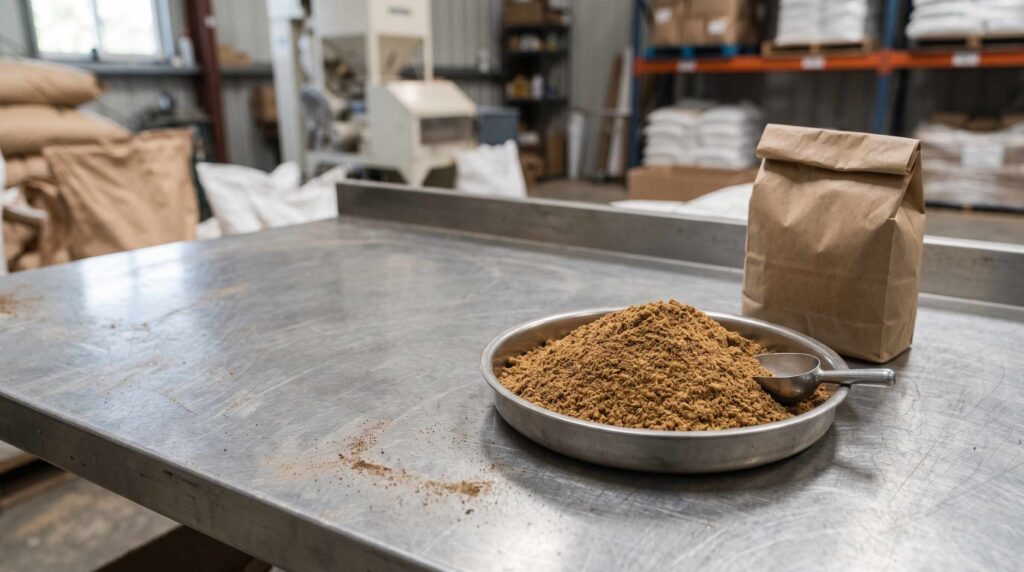
Mealworm meal is produced by processing mealworm larvae into a dried, milled ingredient. Commercial products may retain much of the original lipid fraction or undergo oil extraction to produce a lower-fat, more protein-concentrated meal. As a result, the term mealworm meal describes a product category rather than one standardized nutritional grade.
The most widely discussed species is Tenebrio molitor, although commercial insect ingredient terminology can sometimes be used imprecisely. Buyers should confirm the scientific species name instead of relying solely on labels such as insect meal, worm meal, or mealworm protein.
Mealworm meal also differs from purified protein isolates, hydrolysates, and extracted insect oils. Conventional meal retains multiple components of the original biomass, including protein, fat, minerals, and chitin. Its nutritional performance therefore depends on the combined characteristics of these fractions rather than crude protein percentage alone.
For commercial procurement, the first distinction is between whole dried mealworms, full-fat mealworm meal, and defatted mealworm meal. Each has different physical characteristics, processing requirements, and potential applications.
2. How Commercial Mealworm Meal Is Produced
Commercial mealworm meal production begins with controlled larval rearing. Feed materials, environmental conditions, harvesting practices, and larval development stage can influence the composition and consistency of the biomass entering processing.
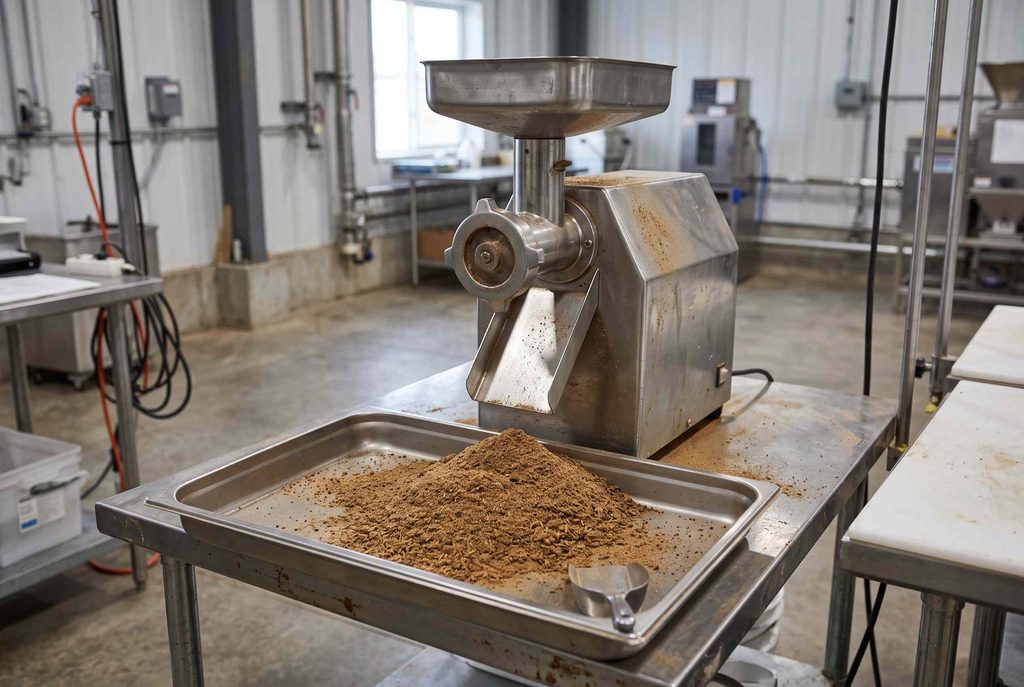
After harvesting, larvae are separated from residual rearing materials and prepared for stabilization. Depending on the manufacturing system, processing may include cleaning, thermal treatment, drying, milling, oil extraction, screening, and packaging. The order of these operations varies according to the product grade and equipment used.
A simplified production sequence is:
Larval Rearing → Harvesting and Separation → Stabilization → Drying or Oil Extraction → Milling → Quality Testing → Packaging
For full-fat meal, drying and milling are central operations because much of the original lipid fraction remains in the finished product. Defatted meal requires an additional separation step to recover part of the oil. Consequently, the two products can differ in manufacturing cost, nutrient concentration, and storage behavior.
Production efficiency depends on more than larval growth. Drying energy, equipment utilization, processing yield, sanitation, and finished-product losses all contribute to commercial operating costs. Buyers should therefore evaluate a supplier’s ability to control the complete manufacturing process rather than focus only on its stated rearing capacity.
3. Full-Fat and Defatted Mealworm Meal
The distinction between full-fat and defatted mealworm meal is one of the most important considerations in commercial ingredient selection. Full-fat meal generally retains a larger proportion of the larvae’s original lipids, while defatted meal has undergone partial or more extensive oil removal.
Full-fat meal can contribute both protein and energy to animal diets. However, its higher lipid concentration may affect storage stability and require careful management of oxidation. Defatted meal, by contrast, often has a higher crude protein percentage because removing oil reduces the total mass of the ingredient.
Defatting does not automatically improve protein digestibility or eliminate all residual fat. Processing conditions, extraction efficiency, and the original biomass determine the final composition. Furthermore, the relative percentages of ash, chitin, and other nonfat components may increase after lipid removal.
Characteristic
Full-Fat Mealworm Meal
Defatted Mealworm Meal
Lipid content
Generally higher
Generally lower
Crude protein percentage
Often lower
Often higher
Energy contribution
Greater contribution from fat
Reduced lipid contribution
Processing
Drying and milling, with appropriate stabilization
Additional oil-extraction operations
Oxidation considerations
Higher lipid fraction requires attention
Residual lipids still require monitoring
Commercial positioning
Combined protein and energy ingredient
More protein-focused ingredient
Main buyer question
Does the protein-to-energy balance fit the formulation?
Does the added processing deliver sufficient nutritional value?
These differences are directional rather than universal specifications. In practice, buyers should request actual laboratory results for the grade offered.
4. Processing Methods and Their Commercial Implications
Processing conditions influence the nutritional, physical, and microbiological characteristics of mealworm meal. Drying is particularly important because the larvae contain substantial moisture before processing, and finished meal must be suitable for storage and transportation.
Hot-air drying, freeze-drying, and other dehydration technologies may be used depending on the production system. Their commercial suitability depends on energy requirements, throughput, product characteristics, and the intended market. Freeze-drying can preserve certain product attributes under suitable conditions, but its higher processing costs may make it less attractive for some bulk feed applications.
Thermal treatment can contribute to microbiological risk reduction when properly validated. Nevertheless, excessive heat exposure may affect protein quality, including the availability of heat-sensitive amino acids. Manufacturers therefore need to balance process safety, product stability, and nutritional performance.
Milling and screening determine the physical characteristics of the finished meal. Particle size influences mixing, conveying, dust management, and compatibility with feed manufacturing equipment. For industrial buyers, a consistent particle-size distribution may be as important operationally as a favorable nutritional specification.
In addition, defatting technologies can introduce different quality considerations. Mechanical pressing and solvent-based extraction involve distinct processing requirements, and buyers should verify the method used when it affects ingredient suitability or applicable residue controls.
5. Key Nutritional Specifications
Commercial mealworm meal specifications should describe the ingredient’s nutritional composition and establish measurable requirements for recurring supply. Crude protein, crude fat, moisture, ash, and amino acids are common starting points, but their interpretation requires attention to analytical methods and reporting units.
Crude protein is frequently calculated from measured nitrogen. However, insect materials contain nonprotein nitrogen, including nitrogen associated with chitin. Consequently, the reported crude protein percentage may not equal the amount of true protein or digestible amino acids available to the target animal.
Moisture also affects comparisons. A supplier reporting protein on a dry-matter basis cannot be compared directly with another reporting an as-fed result. For example, a meal containing 55% crude protein and 8% moisture on an as-fed basis has approximately 59.8% crude protein on a dry-matter basis.
Parameter
Commercial significance
Crude protein
Indicates nitrogen-based protein concentration
Crude fat
Helps establish energy contribution and product grade
Moisture
Affects nutrient concentration and storage management
Ash
Represents total mineral residue
Amino acid profile
Supports formulation and protein-quality assessment
Calcium and phosphorus
Relevant to mineral balance
Chitin or fiber-related measurements
Helps interpret composition and nutritional performance
Particle size
Influences processing and mixing compatibility
Microbiological parameters
Supports feed-safety evaluation
Chemical contaminants
Helps verify compliance with applicable requirements
Batch identification
Connects analytical results to supplied material
Buyers should avoid selecting mealworm meal solely on the basis of the highest advertised protein percentage. A more useful evaluation considers nutritional availability, processing consistency, and the requirements of the complete feed formulation.
6. Amino Acids, Chitin and Digestibility
Amino acid composition is central to the nutritional evaluation of mealworm meal. Depending on the target animal, lysine, methionine, threonine, and other essential amino acids may influence the ingredient’s value relative to conventional protein sources.
However, amino acid concentration and digestibility are separate considerations. An ingredient may contain substantial amounts of an amino acid without delivering the same available quantity after digestion. Processing conditions, product grade, and the target species can influence measured digestibility.
Chitin is another component that requires careful interpretation. It contributes to the insect exoskeleton and remains in conventional mealworm meal unless additional processing removes or modifies it. Because chitin contains nitrogen, it can affect conventional crude protein calculations. Its nutritional effects also vary by animal species, inclusion level, and processing conditions.
For commercial formulators, product-specific amino acid analysis and relevant digestibility evidence provide a stronger basis for purchasing decisions than generalized statements about insect protein quality. Results from one mealworm meal grade should not automatically be applied to another.
7. Quality Control and Feed Safety
Mealworm meal quality begins with controlled rearing inputs and continues through harvesting, processing, storage, and shipment. The biological suitability of a rearing substrate does not necessarily mean that the substrate is permitted under the regulations governing feed ingredients in a particular market.
Potential hazards include relevant microbiological contaminants, undesirable chemical substances, and physical foreign material. Their significance depends on the production system, source materials, processing conditions, and intended application. Therefore, manufacturers should use a risk-based control program rather than rely on a single standardized testing panel.
Microbiological controls may involve validated thermal treatment, hygienic handling, equipment sanitation, and protection against post-processing contamination. Finished-product testing can support verification, but a satisfactory result from one sample cannot demonstrate that every part of the manufacturing process is adequately controlled.
Chemical safety assessments may address relevant heavy metals, pesticide residues, or other contaminants where justified by the substrate and production process. In addition, full-fat meal requires attention to lipid oxidation, while both full-fat and defatted grades require appropriate moisture management and storage conditions.
Commercial buyers should request batch-specific Certificates of Analysis, relevant process-control information, and evidence of traceability. Supplier quality systems should also include procedures for investigating deviations and managing nonconforming products.
8. Aquafeed Applications
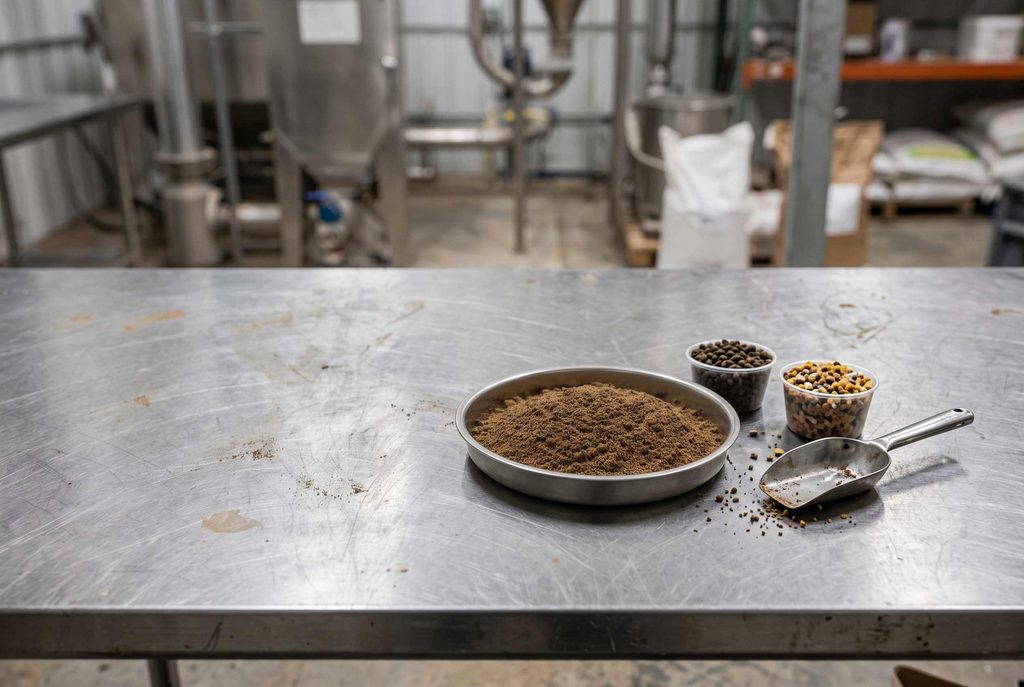
Aquafeed is an important area of research and commercial interest for mealworm meal. Fish and shrimp feed manufacturers continue to evaluate alternative protein sources that can complement conventional ingredients while meeting nutritional and manufacturing requirements.
Mealworm meal can contribute protein and, depending on its grade, lipid-derived energy. However, its suitability depends on the target species, life stage, inclusion level, digestibility, amino acid balance, and composition of the complete diet.
Research on mealworm meal in aquaculture has produced species- and formulation-dependent outcomes. Consequently, there is no single replacement percentage that can be applied across all aquafeed products. Findings from one feeding trial should be interpreted according to the meal grade, processing method, and experimental conditions.
For commercial adoption, buyers must also consider pellet manufacturing, ingredient consistency, regulatory eligibility, and delivered price. A nutritionally promising ingredient may still face procurement barriers if production volumes are insufficient or batch characteristics vary substantially.
9. Poultry and Livestock Feed Applications
Mealworm meal is also being investigated as an ingredient for poultry and certain livestock feeds. Its commercial role depends on the nutritional requirements of the target species and whether the particular insect-derived ingredient is authorized for that use in the destination market.
In poultry diets, amino acid supply, energy contribution, digestibility, and inclusion level are important formulation variables. Full-fat meal and defatted meal may require different adjustments because they provide different protein-to-lipid balances.
Research findings can help identify potential uses, but controlled feeding trials do not automatically establish broad commercial suitability. Differences in animal age, complete diet composition, processing method, and meal inclusion rate can influence the observed results.
For feed manufacturers, dependable product specifications and repeatable supply are essential. An ingredient that performs acceptably in a small trial must still be qualified for industrial-scale purchasing and manufacturing.
10. Pet Food and Specialty Nutrition
Pet food represents another potential market for mealworm meal. Manufacturers may evaluate insect-derived protein ingredients for use in products intended for dogs, cats, and other permitted companion animals.
Mealworm meal offers a combination of protein, fat, and other nutrients, although the balance differs between full-fat and defatted grades. Formulators should assess amino acid adequacy, digestibility, palatability, mineral composition, and processing behavior within the complete diet.
In addition, product positioning requires care. Claims about hypoallergenic properties, digestive benefits, or other health outcomes should be supported by evidence appropriate to the product and claim. The use of an insect-derived ingredient does not automatically establish a particular health benefit.
Commercial buyers should also consider the relationship between mealworm meal and other insect ingredients, including whole dried mealworms, insect oils, and protein concentrates. These products may serve different formulation and marketing purposes and should not be treated as interchangeable.
11. Production Economics and Market Demand
The economics of mealworm meal depend on both biological production and downstream processing. Rearing efficiency, feed inputs, labor, energy, harvesting systems, drying, milling, and quality assurance all contribute to manufacturing costs.
For full-fat meal, drying and stabilization can represent significant processing requirements. Defatted meal adds oil extraction and related handling, but it may also create a separate commercial oil stream. The combined value of the meal and recovered oil can influence overall production economics.
Commercial market demand is driven by several factors, including feed-ingredient diversification, interest in insect-derived proteins, formulation performance, and regulatory developments. However, technical interest should not be confused with confirmed purchasing volumes. Research activity and pilot projects do not necessarily indicate mature, large-scale demand.
Pricing also requires careful interpretation. Products may differ by species, processing grade, moisture, nutritional composition, packaging, order volume, and delivery terms. Therefore, a single quoted price per metric ton does not provide a reliable basis for comparing the entire market.
For commercial buyers, the relevant economic question is whether mealworm meal can deliver the required nutritional function at a dependable total procurement cost.
12. Procurement and Supplier Evaluation
Commercial procurement begins with a clear definition of the ingredient required. Buyers should confirm the species, full-fat or defatted grade, intended application, nutritional specifications, particle size, packaging, and destination market before requesting comparable quotations.
Supplier documentation should include an identifiable product specification and batch-specific analytical results. Where relevant, buyers should also request amino acid data, microbiological testing, contaminant assessments, shelf-life information, and details of the processing method.
A supplier’s ability to deliver consistent batches is particularly important. Nutritional values can vary because of biological and processing factors, but a functioning quality system should identify deviations and maintain products within agreed acceptance limits.
Commercial terms should be evaluated on an equivalent basis. Minimum order quantities, lead times, packaging, testing requirements, Incoterms, shipping arrangements, and payment conditions can materially affect the delivered cost.
Finally, buyers should distinguish between a favorable sample and an established commercial supply program. Supplier qualification should consider actual production capacity, traceability, historical batch results, and the ability to manage recurring orders.
13. Regulation and International Market Access
Regulatory eligibility is a fundamental consideration for mealworm meal because insect-derived feed ingredients are subject to jurisdiction-specific rules. Permitted insect species, rearing substrates, manufacturing methods, animal applications, and establishment requirements may all affect market access.
In the European Union, processed animal protein from specified farmed insects can be used in certain animal feeds under defined conditions. The regulatory framework includes restrictions on production inputs, animal by-product handling, processing, and other applicable requirements. Authorization of an insect species does not eliminate the need to comply with these conditions.
The United States and other markets use different regulatory approaches. Commercial buyers should verify the applicable ingredient definition, intended animal species, and legal status of the specific product before relying on a supplier’s general statement that mealworm meal is approved for animal feed.
International trade also involves documentation and import requirements that may differ according to origin and destination. Exporters and importers should establish product classification, applicable certificates, facility requirements, and relevant testing obligations before shipment.
Consequently, commercial availability in one market should not be interpreted as evidence of unrestricted access to another.
IIR Analysis
The commercial potential of mealworm meal lies in its ability to provide a processed insect-derived ingredient with distinct protein and lipid characteristics. Full-fat and defatted grades offer different formulation options, while production technology determines much of the finished product’s consistency and cost structure.
However, the development of mealworm meal as a commercial feed ingredient depends on more than favorable nutritional analysis. Processing efficiency, credible specifications, regulatory eligibility, and repeatable supply are equally important to long-term adoption.
For buyers, the strongest evaluation framework combines nutritional performance with quality assurance and delivered economics. Suppliers that can document species identity, product grade, batch composition, manufacturing controls, and commercial capacity will be better positioned to support recurring procurement.
As the insect ingredient sector develops, mealworm meal should be assessed as a distinct industrial product rather than treated as interchangeable with whole dried mealworms or other insect meals. Its commercial competitiveness will ultimately depend on how reliably it meets the requirements of specific feed and pet-food applications.
Disclaimer: This article is for informational purposes only and does not constitute business, legal or investment advice. Always consult primary sources and qualified professionals.