Independent intelligence for the global insect industryISSUE 01 · 2026
Defatted BSFL Meal: Production, Specifications, and Commercial Applications
By IIR Editorial DeskOctober 12, 2026
Defatted BSFL meal is a processed black soldier fly larvae ingredient produced through oil removal. This analysis examines production methods, nutritional specifications, quality requirements and commercial applications in aquafeed, poultry feed and pet food.
This analysis examines how defatted BSFL meal is produced, how oil extraction changes its nutritional profile, which specifications matter to commercial buyers and where the ingredient fits into animal-feed and pet-food markets.
By IIR Editorial Desk · October 13, 2026 · Market Intelligence
Defatted BSFL meal is a processed feed ingredient produced from black soldier fly larvae (Hermetia illucens) after a substantial portion of their oil has been removed. It is increasingly relevant to the development of insect-derived feed ingredients because oil extraction creates a protein-rich solid fraction that can be evaluated separately from full-fat larvae meal and the recovered BSFL oil.
For commercial buyers, the value of defatted BSFL meal depends on more than its crude protein concentration. The degree of oil removal, extraction method, amino acid profile, digestibility, mineral composition and quality controls all influence its suitability for aquafeed, poultry feed, pet food and other permitted applications. Understanding these factors is essential when comparing supplier specifications and assessing whether a product can support recurring industrial use.
1. What Is Defatted BSFL Meal?
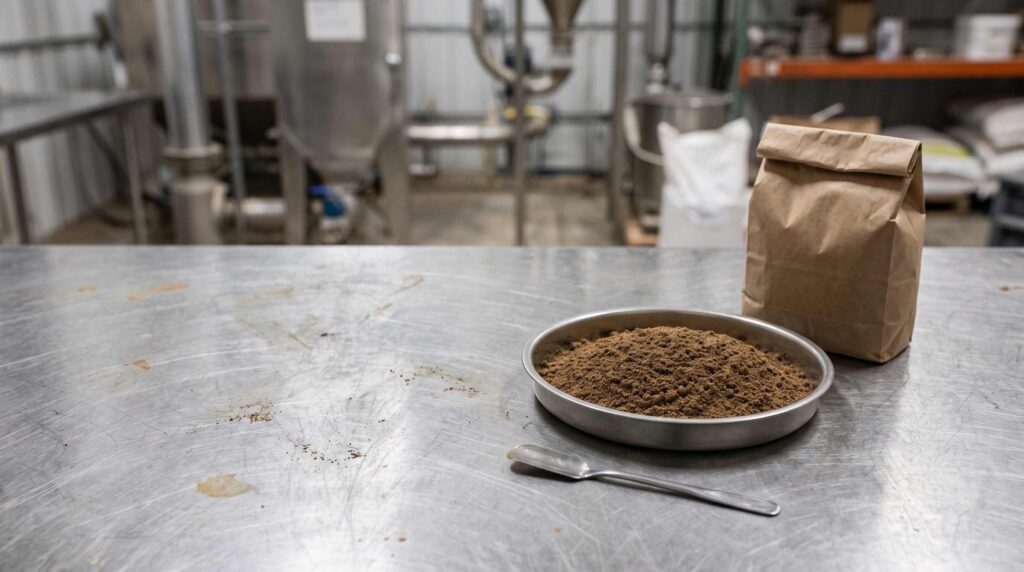
Defatted BSFL meal is produced by removing part of the lipid fraction from processed black soldier fly larvae biomass. The resulting solid material is typically dried and milled into a meal that contains a lower proportion of fat than the corresponding full-fat material. Because oil removal reduces the relative share of lipids, the remaining protein, minerals and other nonfat components often represent a larger percentage of the finished product.
The term defatted does not indicate that the ingredient contains no fat. Commercial products retain varying amounts of residual lipid depending on the extraction method, processing efficiency and original larval composition. Buyers should therefore distinguish between partially defatted and more extensively defatted products rather than assume that all defatted BSFL meal has an identical nutritional profile.
Defatted meal also differs from a purified insect protein concentrate. Although oil extraction can increase the relative protein concentration, it does not automatically remove chitin, ash or other nonprotein components. The finished ingredient remains a complex biological material whose composition must be evaluated through appropriate laboratory testing.
2. How Defatted BSFL Meal Is Produced
Commercial production begins with black soldier fly larvae raised under controlled conditions and harvested at an appropriate development stage. The larvae are separated from residual rearing material and prepared for processing through operations that may include washing, stabilization, heat treatment, drying or size reduction.
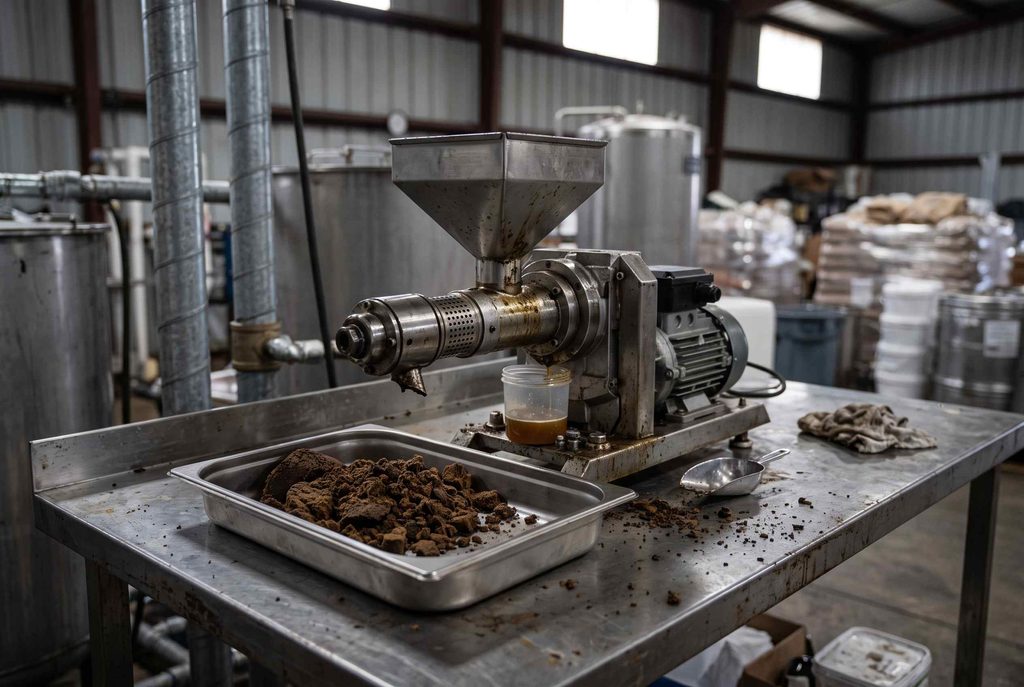
Oil extraction is the defining step in defatted BSFL meal production. Depending on the manufacturing system, the biomass may be processed through mechanical pressing or another extraction technology. The recovered oil becomes a separate product stream, while the remaining solid fraction is prepared for further drying, milling and quality control.
The order of individual operations varies between manufacturers. Some systems extract oil from dried material, while others process wet or partially dried biomass. These differences affect energy consumption, extraction efficiency, microbial control and the characteristics of the final meal.
For commercial buyers, the important issue is whether the supplier can describe and control its actual process. A general statement that a product is mechanically defatted or produced using advanced technology provides limited information without supporting specifications and quality records.
3. Mechanical Pressing and Other Defatting Methods
Mechanical pressing is one approach used to recover oil from black soldier fly larvae. It separates a portion of the lipid fraction through physical pressure, producing oil and a solid press cake that can undergo further processing into meal. The residual fat content depends on the equipment, feed material, and operating conditions.
Solvent-based extraction and other methods may achieve different levels of lipid recovery. Technologies under investigation or commercial development include aqueous extraction, enzyme-assisted processing, and supercritical fluid extraction. Each approach involves different technical requirements, operating costs, and downstream treatment needs.
Extraction efficiency should not be evaluated independently from finished-product quality. A process that removes more oil may produce a meal with a higher relative protein concentration, but it may also require additional energy, equipment, or processing steps. Excessive heat or unsuitable processing conditions can affect protein functionality and nutritional characteristics.
Buyers should request information about the extraction route, residual fat specification, and relevant processing controls. Where solvents or processing aids are used, their suitability and any applicable residue requirements should also be established.
4. How Oil Removal Changes Nutritional Composition
Oil removal changes the relative composition of BSFL meal. When lipid mass is reduced, protein and other nonfat components generally account for a larger proportion of the remaining dry material. This concentration effect is one reason defatted BSFL meal is evaluated as an alternative protein ingredient.
However, a higher crude protein percentage does not necessarily indicate that more protein has been recovered from the original larvae. The percentage can increase because the total product mass decreases after oil extraction. Buyers should distinguish changes in nutrient concentration from changes in total nutrient recovery.
The effect of defatting also extends beyond protein. Ash, calcium, phosphorus and chitin may become more concentrated on a percentage basis, while energy density can decrease as fat is removed. These changes influence the ingredient’s role in feed formulations.
Characteristic
Full-fat BSFL meal
Defatted BSFL meal
Crude fat
Generally higher
Generally lower
Crude protein percentage
Often lower on a comparable basis
Often higher after oil removal
Energy contribution
Greater lipid contribution
Reduced lipid contribution
Ash and mineral percentage
Depends on original material
May increase proportionally
Chitin fraction
Present
Remains unless separately processed
Processing requirements
No dedicated oil-removal step required
Additional extraction and handling
Commercial evaluation
Protein and energy ingredient
More protein-focused ingredient
These are directional differences, not guaranteed specifications. The actual composition depends on larval biomass, extraction efficiency, analytical methods and moisture content. Buyers should compare measured results rather than rely on broad product descriptions.
5. Key Commercial Specifications and Testing
Commercial specifications for defatted BSFL meal should establish its nutritional identity, physical condition, and safety requirements. Crude protein and crude fat are important, but they should be evaluated alongside moisture, ash, amino acids, minerals, and relevant contaminants.
Protein results require particular attention because insect-derived materials contain nonprotein nitrogen, including nitrogen associated with chitin. Conventional crude protein calculations may therefore overestimate the amount of true protein when a generic nitrogen-to-protein conversion factor is used. Buyers should verify the analytical method and reporting basis.
Moisture is also relevant because it affects product stability, shipping weight, and the concentration of nutrients on an as-fed basis. A supplier reporting crude protein on a dry-matter basis should not be compared directly with another supplier reporting an as-fed value.
Parameter
Why commercial buyers compare it
Crude protein
Indicates nitrogen-based protein concentration
Crude fat
Confirms the extent of residual lipid
Moisture
Affects storage stability and nutrient concentration
Ash
Reflects total mineral residue
Calcium and phosphorus
Important for formulation and mineral balance
Amino acid profile
Supports evaluation of nutritional suitability
Chitin or related fiber fractions
Relevant to analytical interpretation and digestibility
Particle size
Influences mixing and feed-processing performance
Microbiological results
Supports safety and hygiene evaluation
Chemical contaminants
Helps establish compliance with applicable requirements
Batch identification
Connects results to the actual supplied material
No single universal specification defines all commercial defatted BSFL meal. Acceptance limits should be established according to product grade, intended animal species, customer requirements and applicable regulations.
6. Amino Acids, Chitin, and Digestibility
The nutritional value of defatted BSFL meal cannot be determined from crude protein percentage alone. Essential amino acid composition, digestibility, and processing-related changes are important when evaluating the ingredient for commercial feed formulations.
Amino acids such as lysine, methionine, and threonine may be particularly relevant depending on the target animal. Buyers should request product-specific amino acid results where the ingredient will contribute significantly to dietary protein supply. Values taken from published studies may not accurately represent a particular supplier’s product.
Chitin is another consideration. It is a structural component of the insect exoskeleton and contributes nitrogen that may influence conventional crude protein measurements. Its nutritional effects depend on the animal species, inclusion level and processing conditions, so it should not be characterized as universally beneficial or harmful.
Digestibility also varies. Oil extraction, drying temperature, and subsequent processing may influence protein availability and the physical characteristics of the meal. Feeding trials using one defatted BSFL meal should not automatically be treated as evidence that every commercially available grade will perform identically.
7. Quality Control and Feed Safety
Quality control begins with the production substrate and continues through larval rearing, harvesting, extraction, drying and storage. Black soldier fly larvae can be raised on different organic materials, but not every biologically suitable substrate is permitted for the production of animal-feed ingredients.
Controlled substrate sourcing is important because potential contaminants can enter the production system before the larvae are harvested. Manufacturers should identify relevant hazards and apply appropriate preventive controls rather than depend entirely on finished-product testing.
Microbiological safety is another priority. Thermal processing and drying can contribute to risk reduction, but the effectiveness of these operations depends on validated conditions. Low moisture alone does not guarantee the absence of pathogens, and contamination may also occur after processing.
Chemical safety assessments may include relevant heavy metals, pesticide residues or other undesirable substances, depending on substrate history and destination requirements. Buyers should request risk-based evidence rather than assume that one standard testing panel applies to every market.
A Certificate of Analysis should report actual results for an identifiable batch. Commercial buyers should distinguish batch-specific laboratory findings from typical nutritional values and general product specifications.
8. Aquafeed Applications
Aquafeed is an important application area for defatted BSFL meal because fish and shrimp feed manufacturers are evaluating alternative protein ingredients to complement conventional feed materials. The lower residual fat content can make defatted meal useful in formulations where protein contribution is prioritized and dietary lipid levels are managed separately.
Research has examined defatted black soldier fly larvae meal in diets for different aquaculture species. Results vary by species, life stage, ingredient inclusion level, amino acid balance, and complete diet composition. Consequently, there is no universal replacement rate applicable to all aquafeed formulations.
The ingredient’s amino acid profile and digestibility are central to formulation decisions. Mineral composition, chitin content, and processing history may also affect its suitability. Buyers should assess whether a supplier’s product provides sufficient analytical information to support formulation and performance evaluation.
Commercial adoption depends on more than technical feasibility. Consistent quality, regulatory eligibility, delivered price, and reliable supply are necessary before defatted BSFL meal can become a dependable ingredient in large-scale aquafeed production.
9. Poultry and Livestock Feed Applications
Defatted BSFL meal is also being evaluated as a protein ingredient in poultry and certain livestock diets. Its potential role depends on the nutritional requirements of the target species and the regulatory status of insect-derived ingredients in the relevant market.
For poultry, amino acid availability, energy balance, and inclusion level are important considerations. Removing oil changes the relationship between protein and energy, so formulations using defatted meal may require different adjustments from those using full-fat BSFL meal.
Research findings should be interpreted within the conditions of the individual feeding trial. Differences in insect meal processing, animal age, and complete diet composition can influence growth performance and other measured outcomes.
Commercial feed manufacturers should also assess ingredient consistency and supply volume. A product that performs well in a controlled experiment may still require additional qualification before it can support recurring industrial procurement.
10. Pet Food and Specialty Nutrition
Pet food represents another potential application for defatted BSFL meal. Manufacturers evaluating insect-derived ingredients may consider the meal as a protein source in formulations for dogs, cats, or other permitted companion-animal products.
The reduced fat content can be useful when formulators want greater control over dietary lipid composition. However, the ingredient’s amino acid profile, digestibility, mineral content, palatability, and processing behavior must still be assessed in the context of the complete diet.
Defatted BSFL meal may also be combined with separately added fats or oils, allowing manufacturers to adjust protein and energy contributions independently. This flexibility can be commercially relevant, but it does not establish that defatted meal is nutritionally superior to full-fat meal in every application.
Claims concerning hypoallergenic properties, digestive benefits or other health outcomes require appropriate supporting evidence. The use of an insect-derived protein source does not automatically establish a particular health benefit or regulatory authorization for such claims.
11. Production Economics and Procurement
The economics of defatted BSFL meal are closely connected to the value of the recovered oil. Oil extraction produces two commercial streams: a lipid fraction and a protein-rich solid fraction. Their combined value can influence the viability of the processing operation.
Production costs depend on larval biomass cost, drying energy, extraction technology, labor, equipment utilization, quality testing, and packaging. More extensive oil removal may increase the relative protein concentration, but it can also add processing costs or reduce the mass of finished meal available for sale.
For buyers, price per metric ton is only one part of the comparison. A higher-protein product may provide greater formulation value, but this depends on amino acid availability, residual fat, ash content, and the requirements of the complete diet.
Quotations should be compared on an equivalent basis, including moisture, product grade, packaging, minimum order quantity, and delivery terms. Buyers may also evaluate the delivered cost of usable protein or digestible amino acids rather than relying solely on the advertised crude protein percentage.
Supplier qualification should include evidence of repeatable production. A favorable laboratory sample does not demonstrate that the manufacturer can maintain the same specifications across multiple commercial shipments.
12. Regulation and International Market Access
Regulatory eligibility is a major consideration for defatted BSFL meal because the product is an insect-derived feed ingredient. Rules vary according to jurisdiction, animal species, manufacturing process, and intended use.
In the European Union, processed animal protein from specified farmed insect species may be used under defined conditions in feed for aquaculture animals, poultry, and pigs. These permissions operate within a broader regulatory framework that includes animal by-product controls, approved substrates, processing requirements, and other applicable restrictions.
Defatted BSFL meal should not be assumed to qualify automatically simply because it is derived from an authorized insect species. The manufacturing process, product classification, and establishment status must also satisfy the relevant requirements.
Other markets may use different ingredient definitions and approval pathways. In the United States, for example, buyers should verify the applicable ingredient status and intended animal use rather than assume that a general approval exists for all black soldier fly-derived products.
International suppliers and importers should confirm eligibility before shipment, including required documentation, establishment approvals where applicable, testing obligations, and destination-specific import procedures.
IIR Analysis
The commercial significance of defatted BSFL meal lies in its position between insect biomass production and specialized feed-ingredient formulation. Oil extraction creates a product with a different protein-to-fat balance from a full-fat BSFL meal, allowing manufacturers to evaluate the two ingredients for distinct nutritional and commercial purposes.
However, defatting should not be treated as a guarantee of superior ingredient quality. Higher crude protein concentration can reflect the removal of lipid mass, while amino acid availability, ash, chitin, safety, and processing consistency remain essential to nutritional performance.
Three factors will shape the product’s commercial development: efficient oil-and-meal co-production, reliable ingredient specifications, and demonstrated formulation value. Producers that can control both product streams while maintaining traceability and repeatable quality are better positioned to support commercial feed customers.
For buyers, the most useful comparison is not simply full-fat versus defatted meal. It is whether the actual ingredient delivers the required nutritional function, meets regulatory and safety expectations, and can be purchased consistently at a commercially viable delivered cost.
Disclaimer: This article is for informational purposes only and does not constitute business, legal or investment advice. Always consult primary sources and qualified professionals.