Independent intelligence for the global insect industryISSUE 01 · 2026
Cricket Meal: Production, Specifications, and Commercial Applications
By IIR Editorial DeskOctober 24, 2026
Cricket meal is an insect-derived protein ingredient produced from farmed crickets. This analysis examines production methods, nutritional specifications, processing options, feed and pet food applications, quality requirements, regulatory considerations and commercial supply economics.
This analysis examines how commercial cricket meal is produced, which nutritional and quality characteristics matter to industrial buyers, and how the ingredient is being evaluated across animal feed, pet food and specialty protein markets.
By IIR Editorial Desk · October 24, 2026 · Market Intelligence
Cricket meal is an insect-derived protein ingredient produced by processing farmed crickets into a dried, milled material suitable for further formulation or manufacturing. Depending on the species, production method, and intended market, cricket meal may be evaluated for use in aquafeed, poultry feed, pet food, and other animal nutrition applications. Its commercial value is associated with protein concentration, amino acid composition, lipid content, digestibility, and the ability to deliver consistent quality at an acceptable cost.
However, cricket meal is not a single standardized ingredient. Products may differ in cricket species, rearing inputs, drying conditions, particle size, fat content, and laboratory reporting methods. In addition, commercial adoption depends on regulatory eligibility, production capacity, and price competitiveness. For industrial buyers, understanding these differences is essential before comparing cricket meal with fishmeal, soybean meal, or other protein ingredients.
1. What Is Cricket Meal?
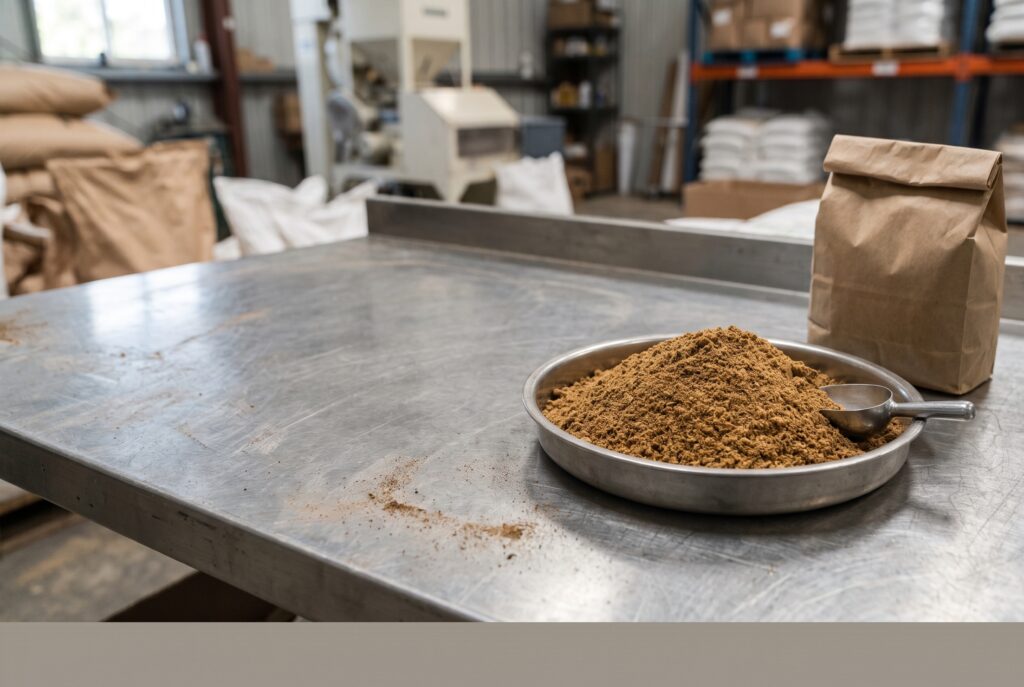
Cricket meal is generally produced by harvesting crickets, applying appropriate stabilization and drying processes, and milling the resulting biomass into a protein-rich ingredient. Unlike purified protein isolates, conventional whole-cricket meal retains multiple components of the original insect, including protein, lipids, minerals, and chitin-containing material.
Commercial cricket production commonly involves species such as the house cricket (Acheta domesticus) and the tropical house cricket (Gryllodes sigillatus), although other species may be used depending on the production system and market. These species should not automatically be treated as interchangeable because their composition, production characteristics, and regulatory status can differ.
The term cricket meal also requires clarification because it may describe different grades. Full-fat cricket meal retains much of the original lipid fraction, whereas defatted cricket meal has undergone an additional oil-removal process. As a result, the two products may differ in protein concentration, energy value, storage stability, and manufacturing cost.
For commercial purchasing, the scientific species, processing method, product grade, and intended application should be identified before any nutritional or price comparison.
2. How Commercial Cricket Meal Is Produced
Cricket meal production begins with controlled insect rearing. Manufacturers manage breeding, feeding, environmental conditions, harvesting, and processing to obtain biomass suitable for the intended ingredient.
The actual process may vary between facilities. Some manufacturers use integrated production systems in which rearing and processing occur at the same location, while others obtain cricket biomass from contracted producers.
Rearing conditions influence both production efficiency and the composition of harvested insects. Feed inputs, temperature, stocking density, growth stage, and harvesting practices can affect the final biomass. Consequently, consistent cricket meal production requires more than reliable drying equipment; it also depends on upstream biological and operational controls.
After harvesting, crickets are separated from residual rearing materials and prepared for stabilization. Processing must then address moisture reduction, microbial hazards, physical contamination, and the preservation of relevant nutritional characteristics.
Manufacturers should establish suitable process controls and maintain traceability between incoming biomass and finished meal. For buyers, these records provide important context when investigating batch variation or reviewing supplier quality systems.
3. Drying, Milling, and Processing Methods
Drying is one of the most influential steps in commercial cricket meal manufacturing. It reduces moisture and helps produce a material that can be stored, transported, and incorporated into downstream formulations.
Different drying technologies may be used, including hot-air drying, freeze-drying, and other thermal or assisted drying systems. Each method involves trade-offs related to energy consumption, processing time, equipment investment, and the characteristics of the finished product.
Hot-air drying may be commercially attractive because it can be integrated into industrial processing operations. However, drying temperature and exposure time must be controlled to avoid unnecessary deterioration. Freeze-drying may preserve certain product characteristics under suitable conditions, but its operating economics can differ substantially from conventional thermal drying.
Drying alone should not be assumed to provide a validated microbial reduction step. Where microbial safety depends on thermal treatment, the relevant process conditions should be established and verified.
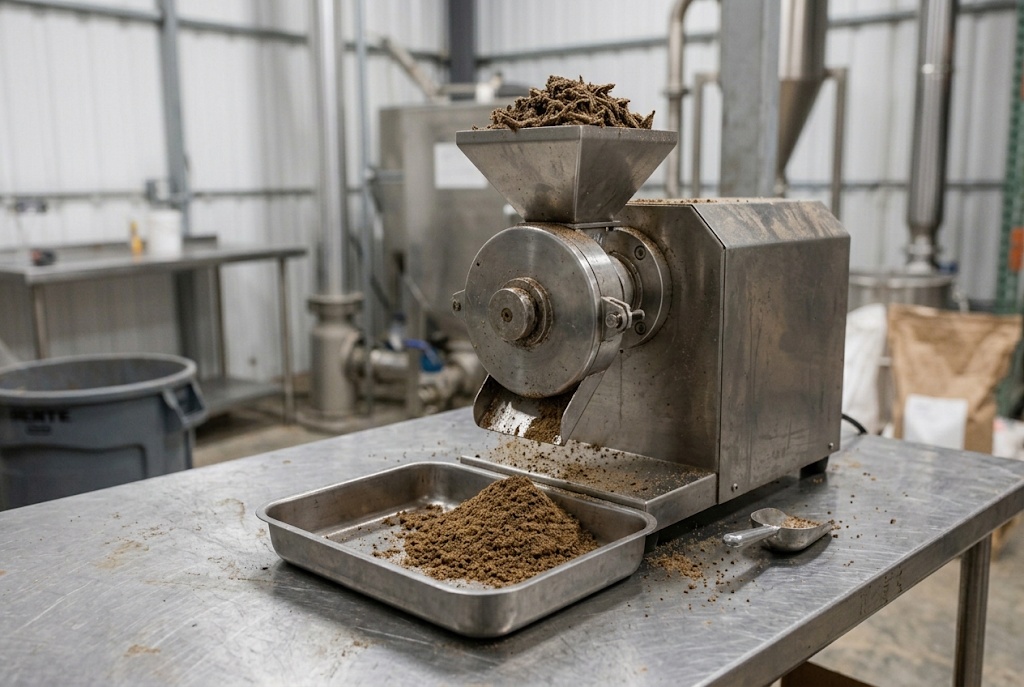
After drying, the material is milled to achieve the required particle size. Screening may remove oversized particles and improve consistency. Nevertheless, particle size distribution can vary with equipment configuration and product grade.
Commercial buyers should evaluate processing methods according to measurable outcomes rather than assume that one drying technology is universally superior. The relevant questions are whether the process delivers suitable safety controls, nutritional performance, consistency, and commercial cost.
4. Full-Fat and Defatted Cricket Meal
Full-fat and defatted cricket meal represent two distinct commercial product categories.
Full-fat cricket meal retains a substantial portion of the insect’s original lipids. Consequently, it may provide both protein and dietary energy, depending on the formulation. However, the retained fat also introduces oxidation and storage-stability considerations.
Defatted cricket meal undergoes additional processing to remove part of the lipid fraction. This can increase the relative concentration of protein and other nonlipid components on an as-sold basis. Nevertheless, the final composition depends on the original biomass, extraction efficiency, and subsequent processing.
Comparison
Full-Fat Cricket Meal
Defatted Cricket Meal
Lipid fraction
Higher residual fat
Reduced residual fat
Protein concentration
Depends on original composition
Often higher proportionally
Energy contribution
Includes more retained lipid energy
Different energy profile
Processing
Drying and milling, with appropriate stabilization
Additional oil-removal step
Storage considerations
Lipid oxidation deserves particular attention
Residual lipid stability still matters
Commercial cost
Depends on rearing and processing
Includes additional extraction costs
Typical evaluation
Protein and energy contribution
Protein concentration and formulation fit
Defatting does not automatically establish superior ingredient quality. For example, a full-fat product may be suitable where its energy contribution is valuable, while a defatted grade may better meet a protein-focused formulation target.
Buyers should therefore compare products according to their actual nutrient contribution, intended application, and delivered cost rather than protein percentage alone.
5. Cricket Meal Protein Content and Amino Acid Composition
Cricket meal protein content is a major factor in commercial ingredient evaluation. However, reported protein values can vary with species, growth stage, rearing conditions, processing, fat removal, and analytical methods.
Crude protein is commonly estimated from measured nitrogen using a conversion factor. This creates an important limitation for insect-derived ingredients because not all nitrogen necessarily originates from nutritionally available protein. Chitin and other nitrogen-containing components may contribute to the measured nitrogen pool.
Consequently, buyers should not assume that two cricket meals with identical crude protein percentages provide identical amounts of digestible protein or essential amino acids.
Amino acid composition is particularly important for aquafeed and other formulation-sensitive applications. Relevant amino acids may include lysine, methionine, threonine, and others required by the target animal. The nutritional value of these amino acids depends not only on their measured concentration but also on their availability and digestibility.
The analytical basis must also be consistent. Protein reported on a dry-matter basis should not be compared directly with an as-fed result without accounting for moisture.
For example, a meal containing 60% crude protein and 8% moisture on an as-fed basis would contain approximately 65.2% crude protein on a dry-matter basis. This is a mathematical illustration, not a standard cricket meal specification.
For commercial purchasing, a complete amino acid profile and relevant digestibility evidence may provide greater formulation value than a high crude protein figure alone.
6. Key Nutritional Specifications
Cricket meal specifications should reflect the intended use, product grade, and applicable commercial requirements. Although crude protein is frequently emphasized, a reliable specification should cover a broader set of parameters.
Parameter
Commercial significance
Buyer consideration
Crude protein
Overall nitrogen-based protein estimate
Method, conversion factor, reporting basis
Amino acid profile
Essential amino acid contribution
Formulation requirements
Crude fat
Lipid and energy contribution
Full-fat versus defatted grade
Moisture
Storage and handling characteristics
Agreed acceptance limit
Ash
Total mineral residue
Consistency and mineral composition
Chitin or fiber-related measures
Structural components of insect biomass
Analytical method and digestibility implications
Calcium and phosphorus
Mineral contribution
Nutritional balance and availability
Particle size
Mixing and processing compatibility
Required distribution and uniformity
Microbiological results
Relevant biological hazards and indicators
Applicable limits and methods
Chemical contaminants
Ingredient safety
Risk-based testing and market requirements
These parameters do not have one universal acceptable range. Commercial specifications should be established according to the intended animal species, product grade, destination market, and purchasing agreement.
Buyers should also distinguish a supplier’s typical values from guaranteed contractual limits and actual batch test results. A product brochure may describe expected composition, but shipment acceptance requires appropriate evidence relating to the material being supplied.
7. Chitin, Digestibility, and Nutritional Availability
Cricket meal contains chitin-associated material because the insect’s exoskeleton remains part of conventional whole-insect meal. Chitin is a structural polysaccharide, and its presence introduces additional considerations when interpreting crude protein and digestibility.
The nutritional effects of chitin depend on the animal species, diet composition, inclusion level, and processing conditions. Therefore, it should not be described as universally beneficial or harmful across all feed applications.
Processing may influence protein accessibility and other characteristics relevant to digestion. However, laboratory nutrient composition alone does not establish how efficiently an animal can use the ingredient.
Digestibility studies can provide valuable information, particularly when a manufacturer is considering replacing part of an established protein source. Nevertheless, results from one species or experimental diet should not automatically be generalized to other animals.
For commercial formulators, the appropriate evaluation combines amino acid composition, relevant digestibility data, and practical performance testing under conditions representative of the intended application.
8. Quality Control and Feed Safety
Commercial cricket meal quality depends on controls throughout rearing, processing, storage, and distribution. A satisfactory nutritional profile does not independently establish ingredient safety.
Upstream controls should address the suitability and traceability of rearing inputs. Processing controls should manage relevant microbial hazards, physical contamination, and the potential for deterioration. Finished-product testing can then provide evidence that identified acceptance criteria have been met.
Microbiological testing may include Salmonella and other organisms or indicators identified through applicable regulations and hazard assessment. However, a negative result from one sample cannot establish the absence of contamination throughout an entire production lot.
Chemical safety considerations may include relevant heavy metals, pesticide residues, or other contaminants depending on the production environment and inputs. The testing program should reflect actual hazards rather than apply an arbitrary list of substances without considering their relevance.
For full-fat cricket meal, lipid oxidation is another important quality consideration. Appropriate packaging, storage conditions, and shelf-life evidence can help buyers assess whether the ingredient will remain suitable through transportation and use.
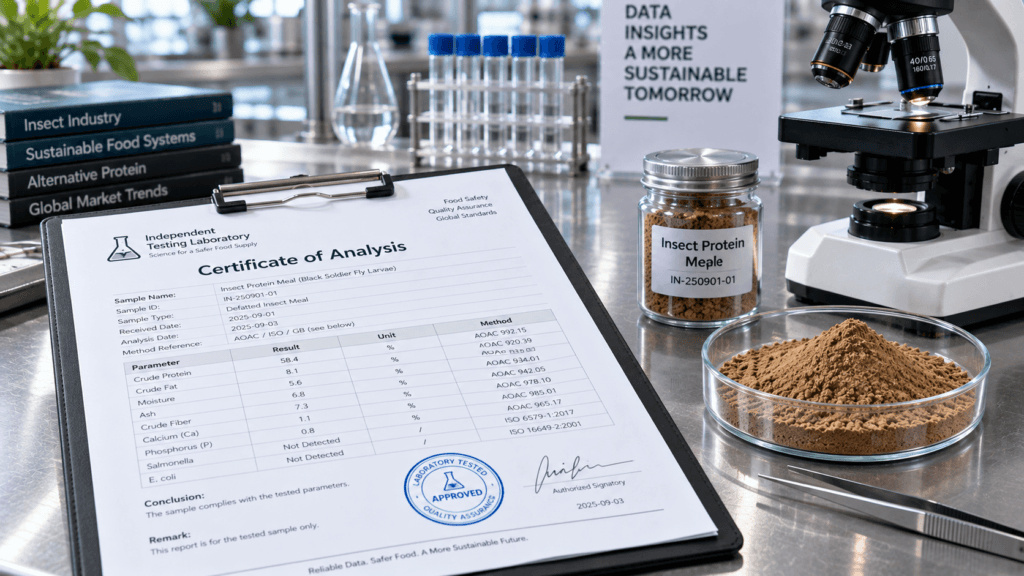
A batch-specific Certificate of Analysis should identify the product, lot, testing parameters, methods, reporting units, and measured results. However, the COA should support—not replace—the supplier’s broader manufacturing and quality-management systems.
9. Aquafeed Applications
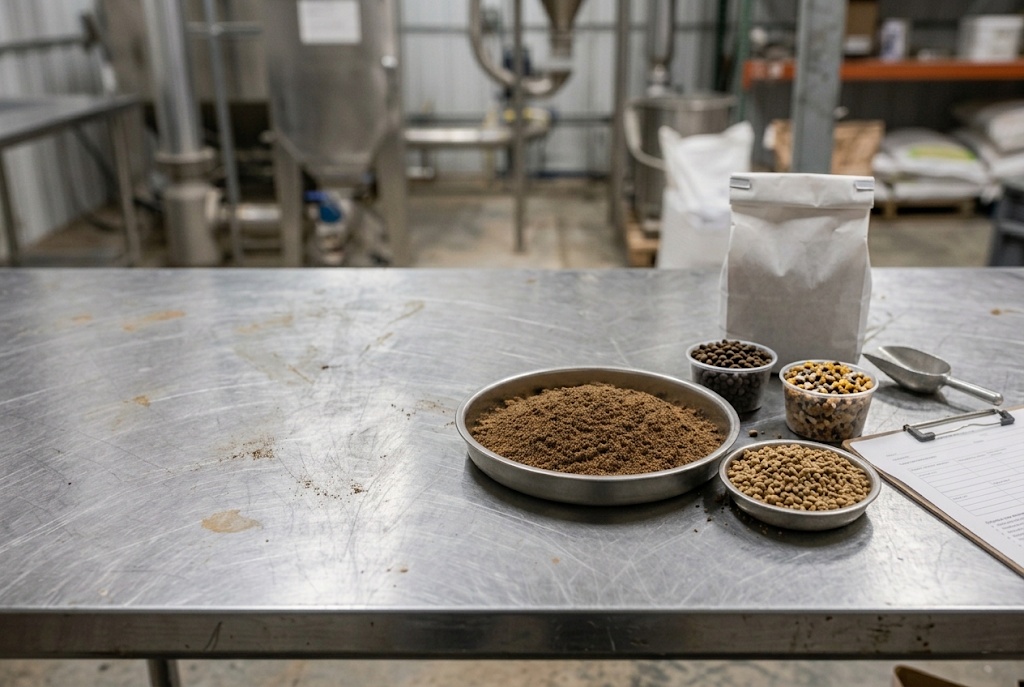
Aquafeed is one of the principal research and commercial evaluation areas for insect-derived protein meals. Fish and shrimp diets require ingredients that provide suitable amino acids, energy, minerals, and other nutrients at an acceptable cost.
Cricket meal may be evaluated as a partial replacement for conventional protein ingredients in selected formulations. Nevertheless, suitability depends on the aquatic species, life stage, dietary inclusion level, ingredient composition, and processing characteristics.
A high protein percentage alone does not establish equivalence with fishmeal. Buyers must consider digestible amino acids, palatability, fat content, ash, and the complete formulation.
In addition, commercial adoption depends on reliable supply. Feed manufacturers require consistent ingredient quality and predictable availability, particularly when production operates on fixed schedules and standardized recipes.
Research demonstrating satisfactory performance under specific experimental conditions is useful, but it does not prove that cricket meal can replace fishmeal at every inclusion level or in every aquaculture species.
10. Poultry and Livestock Feed Applications
Cricket meal for animal feed may also be evaluated in poultry and certain livestock diets where the specific ingredient is legally permitted.
Cricket meal can contribute protein, amino acids, and, depending on the grade, dietary fat. However, the appropriate inclusion level depends on the target species, growth stage, overall diet, and relevant nutritional requirements.
For poultry formulations, buyers may be interested in protein contribution and amino acid balance. Nevertheless, practical evaluation should also consider digestibility, processing consistency, and the effect of replacing existing ingredients.
For other livestock categories, available research and regulatory permissions may be more limited. Results from poultry or aquaculture studies should not automatically be applied to unrelated animal species.
Commercial feed manufacturers should therefore evaluate cricket meal as a specific ingredient within a complete formulation rather than as a universal protein substitute.
11. Pet Food and Specialty Nutrition
Pet food represents another potential market for cricket-derived ingredients. Manufacturers may evaluate cricket meal for its protein contribution, ingredient differentiation, and suitability for particular product concepts.
However, nutritional and marketing claims require careful substantiation. Cricket meal should not automatically be described as hypoallergenic, more digestible, or environmentally superior in every context. Such claims depend on appropriate evidence and the specific product being evaluated.
Ingredient consistency is particularly important in commercial pet food production. Manufacturers need reliable nutritional information, microbiological controls, traceability, and compatibility with their processing methods.
In addition, the regulatory status of cricket-derived ingredients may vary by jurisdiction, animal species, and ingredient definition. Buyers should confirm the applicable requirements before assuming that an ingredient used in one market is permitted in another.
For specialty applications, smaller initial purchase volumes may support formulation development. Nevertheless, successful commercialization still depends on quality consistency, ingredient economics, and consumer product performance.
12. Production Economics and Cricket Meal Market Demand
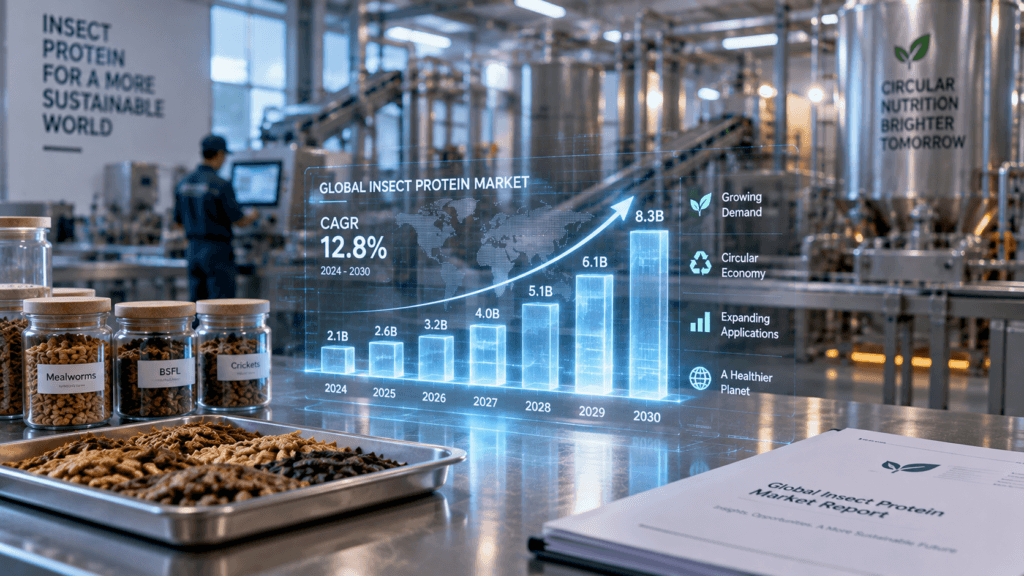
Cricket meal market demand is influenced by the relationship between nutritional value, production cost, competing protein sources, regulatory access, and the ability to supply industrial quantities.
Cricket farming requires inputs for breeding, feeding, environmental management, labor, harvesting, and processing. Drying and milling introduce additional costs, while quality testing, packaging, and distribution contribute to the finished ingredient’s delivered price.
Production efficiency depends on several interacting factors. These may include feed conversion, survival rates, growth duration, facility utilization, automation, and processing yield. Consequently, a favorable result in one production metric does not necessarily establish overall cost competitiveness.
Market demand should also be distinguished from research interest. Scientific studies and pilot projects can demonstrate potential applications, but they do not independently establish large-scale recurring purchases.
For commercial feed manufacturers, ingredient substitution decisions often depend on the cost per unit of usable nutrition rather than the nominal price per kilogram. A more expensive ingredient may be commercially justified in certain applications, but its value must be demonstrated within the target formulation.
Suppliers seeking industrial customers therefore need to address both technical performance and procurement reliability.
13. Supply Chain and Commercial Procurement
Cricket meal supply chains may involve integrated insect producers, specialized processors, ingredient distributors, and international traders. Each business model creates different considerations for product traceability, documentation, and delivery reliability.
Commercial buyers should begin by confirming the species, product grade, available production capacity, and intended application. They should then request relevant specifications, batch testing information, packaging options, and commercial terms.
Supplier evaluation should extend beyond the initial sample. Buyers may need evidence of consistent production, documented quality procedures, and the ability to manage deviations or customer complaints.
International quotations should also be compared on an equivalent basis. EXW, FOB, CIF, and delivered prices represent different cost responsibilities, and packaging or testing obligations may vary between offers.
In addition, minimum order quantities, lead times, payment conditions, and shelf-life requirements can affect the true cost of procurement.
For long-term purchasing, the most suitable supplier is not necessarily the one offering the highest reported protein percentage or the lowest quoted price. Consistency, regulatory suitability, and dependable fulfillment are equally important.
14. Regulation and International Market Access
Regulatory eligibility is a fundamental requirement for commercial cricket meal purchasing. The legal treatment of insect-derived ingredients varies between markets and may depend on species, processing method, intended animal category, and manufacturing conditions.
In the European Union, specific insect species and processed animal protein applications are addressed under the relevant animal by-product and feed regulations. However, the authorization of a species for one use does not automatically establish permission for every product grade or animal category.
In the United States, ingredient eligibility and labeling obligations require evaluation under the applicable animal food regulatory framework. Buyers should verify the specific ingredient definition and intended use rather than rely on general statements that crickets are edible or commercially farmed.
Rearing inputs, processing controls, contaminants, traceability, and import documentation may introduce additional requirements. Furthermore, requirements for animal feed should not be assumed to be identical to those for human food.
Before entering commercial supply agreements, buyers and suppliers should establish which regulations apply to the exact product and destination market.
IIR Analysis
The commercial opportunity for cricket meal depends on its ability to move beyond promising nutritional composition toward reliable, repeatable ingredient supply. Protein concentration and amino acid composition are important, but they represent only part of the purchasing decision.
For industrial buyers, the strongest evaluation framework combines nutritional availability, manufacturing controls, regulatory eligibility, and delivered cost. These factors help distinguish a technically interesting ingredient from one that can be incorporated into recurring commercial production.
The distinction between full-fat and defatted cricket meal is also significant. Each grade presents different formulation and processing considerations, and neither should be treated as universally superior. Similarly, results from one cricket species or research trial should not be generalized to every commercial product.
As insect ingredient markets develop, cricket meal may find opportunities in applications where its nutritional characteristics and product positioning justify the cost. Nevertheless, sustained market growth will depend on production efficiency, credible quality documentation, consistent supply, and regulatory access.
Ultimately, the commercial success of cricket meal will be determined less by isolated claims about protein content and more by the industry’s ability to deliver safe, consistent, application-appropriate ingredients at economically viable prices.
Disclaimer: This article is for informational purposes only and does not constitute business, legal or investment advice. Always consult primary sources and qualified professionals.