Independent intelligence for the global insect industryISSUE 01 · 2026
BSFL Oil: Production, Specifications, and Commercial Applications
By IIR Editorial DeskOctober 10, 2026
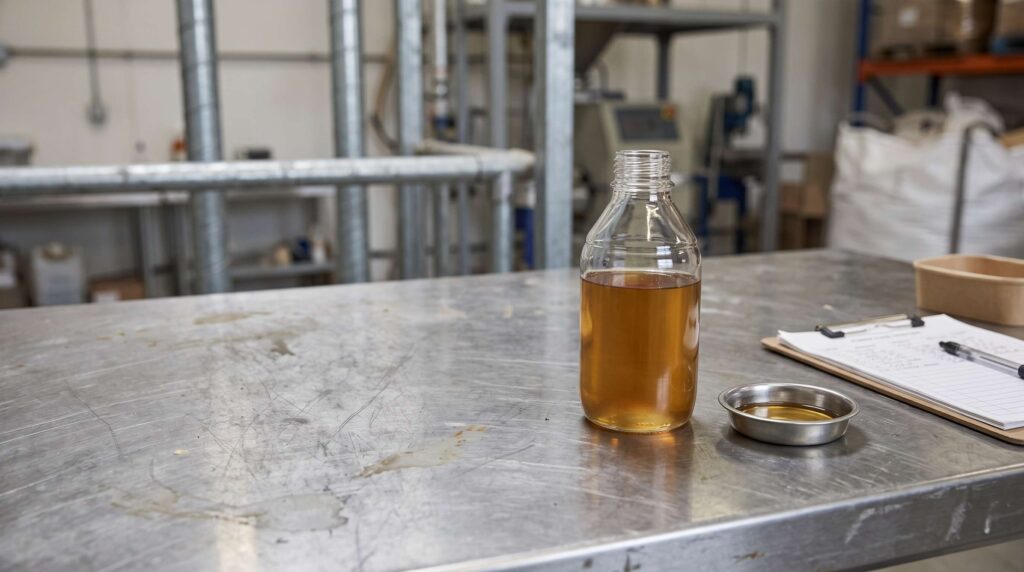
BSFL oil is a lipid ingredient extracted from black soldier fly larvae. This analysis examines extraction, refining, fatty acid composition, quality specifications and commercial applications in aquafeed, poultry feed and pet food.
This analysis examines how BSFL oil is extracted and processed, which fatty acid and quality specifications matter to commercial buyers, and where black soldier fly lipids may serve animal-feed and pet-food markets.
By IIR Editorial Desk · October 10, 2026 · Market Intelligence
BSFL oil is a lipid ingredient extracted from black soldier fly larvae (Hermetia illucens). It is commonly produced as a co-product of BSFL meal manufacturing, where separating the oil fraction creates both an insect-derived lipid stream and a protein-rich solid ingredient. Its commercial characteristics depend on larval composition, extraction technology, downstream treatment, and quality control.
Interest in BSFL oil is driven partly by its fatty acid composition, particularly the presence of lauric acid, and its potential use as an energy source in animal nutrition. However, the oil is not a standardized commodity with one universal fatty acid profile. Buyers must distinguish crude and refined products, assess batch-specific specifications, and determine whether the ingredient is suitable for the intended feed or pet-food application.
1. What BSFL Oil Is and How It Differs From Other Oils
BSFL oil is obtained from the lipid fraction of black soldier fly larvae. It differs from the BSFL meal, which consists primarily of processed larval solids, and from more specialized lipid fractions produced through additional separation or modification.
The oil is often compared with coconut oil and palm kernel oil because all three can contain substantial amounts of lauric acid. Nevertheless, their fatty acid distributions, minor components, processing histories, and commercial specifications are not identical. A similarity in one major fatty acid does not make the oils interchangeable in every formulation.
For feed manufacturers, the relevant comparison is the nutritional and functional contribution of the complete oil. Energy value, fatty acid balance, oxidation stability, handling characteristics, and price all influence purchasing decisions.
2. Larval Production Determines Oil Characteristics
The composition of BSFL oil begins with the rearing system. Larval diet, substrate composition, development stage, and harvesting conditions can influence the amount and characteristics of lipids accumulated in the biomass.
Black soldier fly larvae can synthesize certain fatty acids while also incorporating fatty acids from their diet. Research on substrate composition has demonstrated that changes in larval feeding materials can modify the resulting fatty acid profile. This creates opportunities for tailored production, but it also introduces variability that commercial buyers need to understand.
Substrate selection must also satisfy applicable feed-safety and regulatory requirements. A biologically effective rearing material is not necessarily permitted for producing ingredients intended for animal feed. Controlled inputs and traceability are therefore relevant to oil quality as well as to the associated meal product.
3. Commercial BSFL Oil Extraction and Processing
Commercial BSFL oil production begins with harvested larvae that are separated from residual rearing material and prepared for processing. The larvae may undergo stabilization, drying, size reduction, and mechanical or other extraction operations, depending on the manufacturing system.
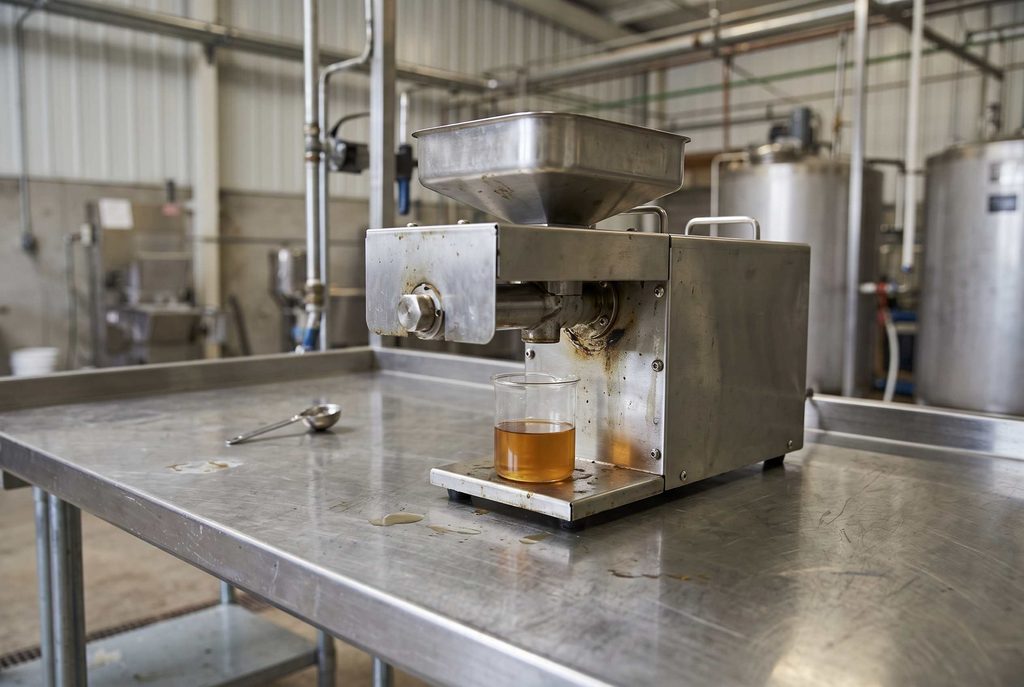
Mechanical pressing is one route for separating oil from larval solids. Other approaches include solvent extraction, aqueous processing, enzyme-assisted methods, and supercritical carbon dioxide extraction. These technologies differ in extraction yield, equipment requirements, processing time, and downstream purification needs.
After extraction, the crude oil may be subjected to settling, centrifugation, filtration, or additional treatment to remove suspended solids and other unwanted components. More extensive refining can be used where the target application requires tighter quality or sensory characteristics.
The actual process sequence varies by manufacturer. Buyers should therefore request a processing description rather than assuming that every product sold as BSFL oil has undergone the same treatment.
4. Crude, Filtered, and Refined BSFL Oil
Commercial BSFL oil can be supplied at different processing levels. Crude oil is the material recovered after primary extraction and may contain suspended solids, moisture, or other components requiring further treatment. Filtered oil has undergone additional clarification, while refined oil may receive more extensive processing to meet defined specifications.
These descriptions are useful commercially, but they are not universal grades with identical acceptance limits across all suppliers. One producer’s filtered oil may differ from another’s in free fatty acid content, peroxide value, color, or residual impurities.
Additional treatment can improve certain characteristics, but it also introduces costs and potential changes in the oil’s composition. A more extensively refined product is not automatically necessary for every application. Buyers should match the processing level to the intended use and verify the actual analytical results.
5. Fatty Acid Composition and Lauric Acid
The fatty acid profile is one of the most distinctive characteristics of BSFL oil. Lauric acid (C12:0), a 12-carbon saturated fatty acid, is frequently a major component. Other relevant fatty acids include myristic acid, palmitic acid, oleic acid, and linoleic acid.
Published studies demonstrate substantial variation. One investigation comparing extraction methods reported lauric acid concentrations of approximately 28%–37% across the tested oil extracts. Other research has identified different proportions, reflecting the influence of substrate, larval development, and analytical or extraction conditions.
Lauric acid is commercially interesting because it contributes to the oil’s nutritional and physicochemical characteristics. However, buyers should not treat a high lauric acid percentage as proof of superior performance in every animal-feed formulation. The complete fatty acid profile, digestibility, inclusion level, and intended animal species remain important.
BSFL oil also differs from marine oils in its essential fatty acid composition. It should not be assumed to supply the same amounts of long-chain omega-3 fatty acids as fish oil. Replacing marine lipids, therefore, requires formulation-level evaluation rather than a simple weight-for-weight substitution.
6. Key Commercial Specifications and Testing
Commercial BSFL oil specifications should identify both the oil’s composition and its condition at the time of sale. Fatty acid analysis helps establish nutritional identity, while quality measurements provide information about hydrolysis, oxidation, moisture and impurities.
Parameter
Commercial significance
Fatty acid profile
Identifies the relative proportions of major fatty acids
Lauric acid (C12:0)
Important compositional characteristic of BSFL oil
Free fatty acids/acid value
Indicators related to hydrolytic deterioration and processing
Peroxide value
Measures primary lipid oxidation products
Secondary oxidation indicators
Can provide additional information where relevant
Moisture and volatile matter
Relevant to stability and processing
Insoluble impurities
Indicates residual suspended or foreign material
Color and odor
Useful for sensory and batch-consistency assessment
Melting behavior
Affects pumping, storage and handling
Relevant contaminants
Supports safety and regulatory evaluation
Buyers should distinguish a supplier’s typical values from contractual specifications and actual batch results. The appropriate limits depend on product grade, intended use, and applicable requirements. No single set of values should be presented as a universal standard for all BSFL oil.
7. Oxidation, Storage Stability, and Quality Control
Lipid stability is a central quality consideration because oils can deteriorate during processing, storage, and transportation. Exposure to oxygen, heat, light, and moisture can contribute to quality changes, although the rate and nature of deterioration depend on fatty acid composition and other product characteristics.
BSFL oil’s relatively high saturated fatty acid content can influence its oxidation behavior, but this does not eliminate the need for appropriate storage and quality controls. Peroxide value and acid value can provide useful information, while additional testing may be needed to understand more advanced deterioration.
Packaging should minimize avoidable exposure to moisture, contaminants, and unsuitable environmental conditions. Storage temperature and melting behavior also deserve attention, particularly where the oil can become partially solid under ordinary handling conditions.
For recurring commercial supply, buyers should request validated shelf-life information and confirm that the reported quality characteristics apply to the actual product grade and packaging system.
8. Aquafeed Applications and Nutritional Considerations
Aquaculture is an important research area for BSFL oil because feed manufacturers are evaluating alternative lipid sources alongside conventional fish and vegetable oils. BSFL oil can contribute dietary energy and fatty acids, but its suitability depends on the nutritional requirements of the target species.
Research has investigated replacing portions of conventional dietary oils with black soldier fly-derived lipids. Results vary with fish species, inclusion level, and the composition of the complete diet. The balance between saturated, monounsaturated, and polyunsaturated fatty acids is particularly relevant.
BSFL oil should not be treated as a direct nutritional equivalent to fish oil. Marine species may require specific long-chain omega-3 fatty acids that ordinary BSFL oil does not supply in comparable quantities. Feed formulators must therefore assess essential fatty acid requirements and the effects on fish performance and final product composition.
Commercial demand will depend on delivered price, consistent specifications, regulatory eligibility, and demonstrated formulation value rather than on sustainability positioning alone.
9. Poultry Feed and Livestock Applications
BSFL oil has also been investigated as an alternative lipid source in poultry and livestock diets. Its fatty acid composition makes it relevant to research on dietary energy supply and the replacement of conventional feed fats.
Feeding outcomes depend on animal species, growth stage, inclusion level, and the composition of the complete diet. Research findings should therefore be interpreted within the conditions of the individual trial rather than generalized into universal inclusion recommendations.
The use of BSFL oil can also influence the fatty acid composition of animal-derived products. This may matter to manufacturers evaluating meat quality, consumer nutrition, or other downstream characteristics.
For commercial feed producers, ingredient qualification requires an appropriate balance of nutritional performance, oil quality, price, supply reliability, and applicable regulatory permissions.
10. Pet Food and Specialty Nutrition
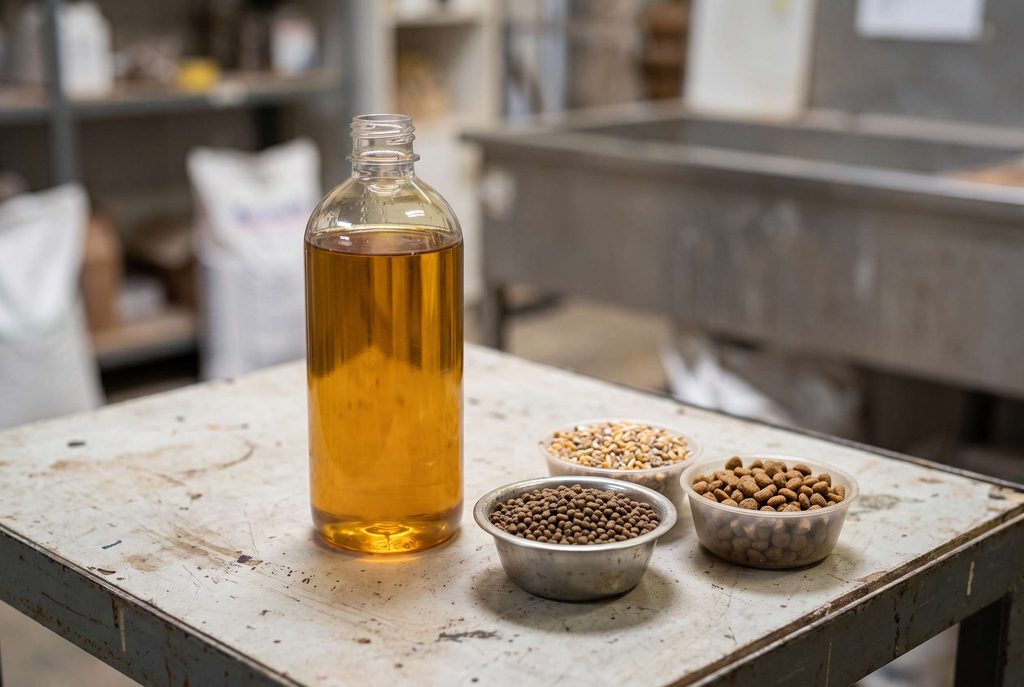
Pet food offers another potential market for BSFL oil, particularly where manufacturers are evaluating alternative lipid ingredients or developing formulations based on insect-derived materials.
In pet-food manufacturing, oil selection involves more than energy contribution. Palatability, fatty acid composition, processing compatibility, oxidation stability, and the nutritional requirements of the target animal all influence suitability.
BSFL oil may also be evaluated alongside BSFL meal in formulations that use multiple ingredients from the same production system. However, the oil and meal serve different nutritional functions and should be specified separately.
Claims relating to antimicrobial activity, digestive health, or other functional benefits require product-specific evidence. Laboratory findings involving lauric acid should not automatically be translated into health claims for commercial pet-food formulations.
11. Pricing, Procurement, and Supply Economics
BSFL oil economics are closely connected to the broader processing system. Oil extraction creates a lipid product while leaving a solid fraction that can be processed into partially defatted or defatted BSFL meal.
The relationship between these products affects manufacturing economics. Extraction yield, processing energy, equipment utilization, refining requirements, and the value of the remaining meal can all influence the commercial cost of the oil.
Buyers should compare quotations on a consistent basis, including product grade, fatty acid composition, quality parameters, packaging, quantity, and delivery terms. A lower-priced crude oil may require additional treatment before use, while a more extensively processed oil may offer advantages for applications with tighter specifications.
Supply reliability is also important. A producer may demonstrate successful extraction at pilot scale without having sufficient capacity to deliver consistent commercial volumes. Buyers should evaluate recurring production capability and batch history rather than relying only on initial samples.
12. Regulation and International Market Access
The regulatory treatment of BSFL oil depends on the destination market, product classification, manufacturing process, and intended use. Rules for insect-derived fats should not automatically be inferred from regulations covering insect-processed animal proteins, because the products may fall under different definitions and requirements.
In the European Union, feed material rules, animal by-product requirements, and relevant processing conditions may affect the manufacture and use of insect-derived fats. Suppliers and importers need to verify the applicable framework for the specific oil and target animal category.
Other markets may use different ingredient definitions, registration procedures, and feed-safety requirements. A product accepted for one animal species or jurisdiction is not automatically eligible for every other application.
Commercial exporters should therefore establish product-specific regulatory eligibility before shipment, including any requirements for manufacturing establishments, permitted substrates, testing, documentation, and import controls.
IIR Analysis
The commercial potential of BSFL oil depends on its development as a clearly specified lipid ingredient rather than simply a by-product of insect protein manufacturing. Its fatty acid profile, particularly the contribution of lauric acid, creates opportunities for differentiated feed applications, but composition alone does not establish universal nutritional superiority.
Processing technology and product grade are central to commercial evaluation. Crude, filtered, and refined oils can differ in quality characteristics, handling requirements, and price, while upstream rearing conditions can influence the fatty acid composition entering extraction.
Aquafeed, poultry feed, and pet food provide relevant application pathways, while more specialized uses remain dependent on additional technical and commercial validation. Long-term market development will require consistent specifications, credible quality documentation, and demonstrated value within actual customer formulations.
Disclaimer: This article is for informational purposes only and does not constitute business, legal or investment advice. Always consult primary sources and qualified professionals.