Independent intelligence for the global insect industryISSUE 01 · 2026
BSFL Meal: Production, Specifications, and Commercial Applications
By IIR Editorial DeskOctober 9, 2026
BSFL meal is a processed ingredient derived from black soldier fly larvae. This analysis examines production methods, nutritional specifications, defatting, quality control and commercial applications in aquafeed, poultry feed and pet food.
This analysis examines how BSFL meal is produced, how full-fat and defatted products differ, which specifications matter to commercial buyers and where the ingredient is being evaluated or adopted across animal-feed markets.
By IIR Editorial Desk · October 9, 2026 · Market Intelligence
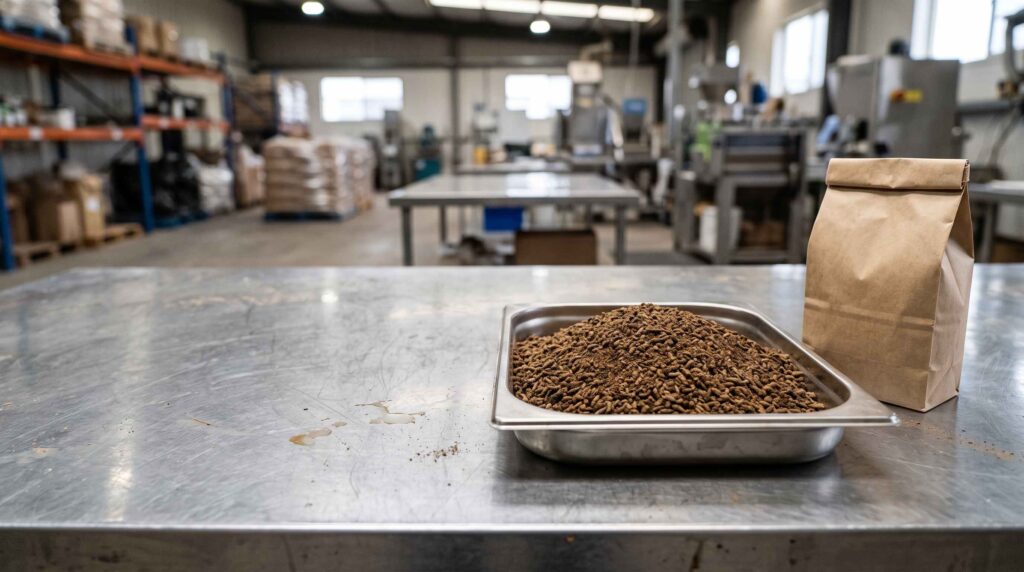
BSFL meal is a processed ingredient made from the larvae of the black soldier fly (Hermetia illucens). It is produced by stabilizing and drying harvested larvae, followed by grinding and, in some manufacturing systems, oil extraction. The resulting ingredient can supply protein, lipids, and other nutrients for animal-feed formulations.
Commercial interest in BSFL meal is closely linked to the development of alternative feed proteins, particularly in aquaculture, poultry, and pet food. However, the BSFL meal is not a single standardized commodity. Its nutritional composition, physical properties, processing history, and regulatory eligibility can vary significantly between manufacturers and product grades.
1. What BSFL Meal Is and How It Differs From Other Products
The BSFL meal is generally a ground ingredient produced from black soldier fly larvae. It differs from whole dried BSFL, which retain their recognizable larval form, and from BSFL oil, which is separated from the biomass during fat extraction. More extensively refined protein ingredients represent another product category with different manufacturing and specification requirements.
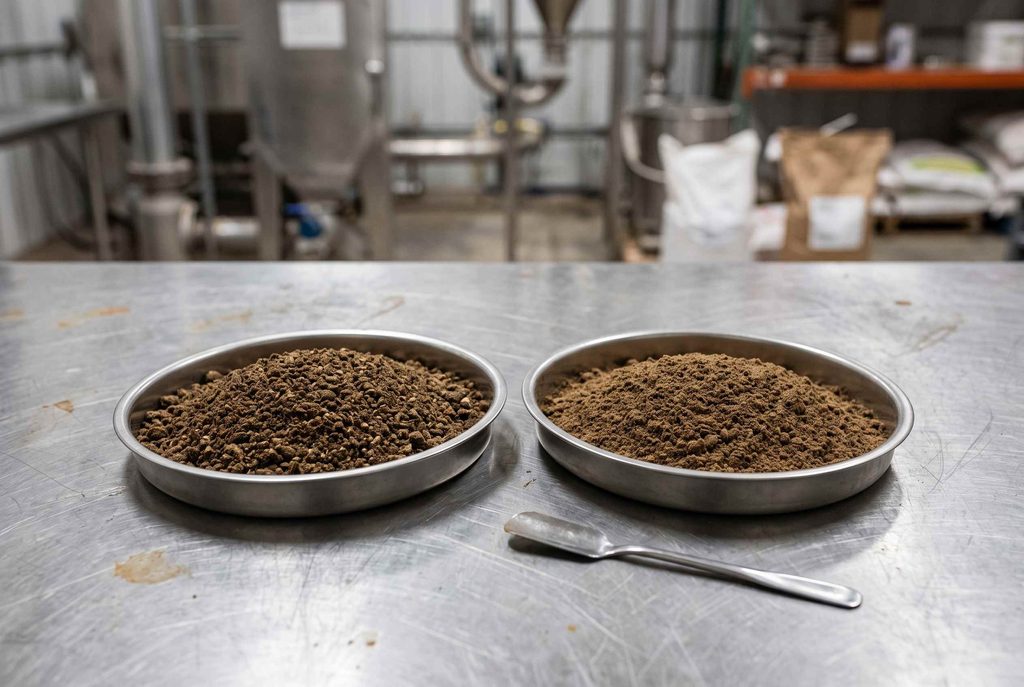
The distinction is commercially important because buyers may use the term “BSFL meal” to describe products with different fat contents. A full-fat meal retains most of the original larval oil, while partially defatted and defatted products undergo additional processing. Their protein concentration, energy value, and formulation characteristics can therefore differ.
Buyers should identify the actual product form before comparing specifications or prices. A quotation for a full-fat BSFL meal cannot be evaluated on the same basis as a quotation for a defatted meal without considering nutritional composition, processing costs, and intended application.
2. Raw Material and Rearing Conditions Shape the Ingredient
The quality of BSFL meal begins with the larvae entering the processing facility. Larval age, harvesting stage, rearing conditions, and substrate composition can influence biomass yield and nutrient characteristics. These upstream variables may affect the finished ingredient even when the same downstream equipment is used.
Substrate management is particularly important because black soldier fly larvae can grow on a range of organic materials, but not every biologically suitable material is legally permitted for feed production. Producers supplying regulated animal-feed markets must align substrate sourcing with applicable requirements and maintain appropriate traceability.
Commercial ingredient production, therefore, depends on more than the ability to grow larvae efficiently. Consistent input quality helps processors maintain predictable specifications, while controlled substrate sourcing supports safety, regulatory compliance, and buyer confidence.
3. Commercial BSFL Meal Production and Processing
A typical BSFL meal production process begins with larval harvesting and separation from residual substrate. The biomass is then prepared for stabilization, moisture reduction, and further processing. The sequence and equipment differ between manufacturers, but the objective is to convert perishable larvae into a stable ingredient suitable for storage and feed manufacturing.
Thermal treatment may be used to reduce microbiological risks, followed by drying to achieve a controlled moisture specification. Processing conditions can influence nutrient quality, product color, odor and energy consumption. Drying must therefore be managed as a validated manufacturing operation rather than simply a method of reducing weight.
After drying, larvae may be milled directly into full-fat meal or undergo oil extraction before or during subsequent processing. The resulting solids can then be ground, screened, and packaged according to the required product specification.
The overall production chain can be represented as:
The exact order of drying and oil extraction depends on the processing technology. This distinction matters when comparing suppliers because different production routes can produce ingredients with different nutritional and physical properties.
4. Full-Fat, Partially Defatted, and Defatted BSFL Meal
Fat content is one of the most important differences between commercial BSFL meal grades. Full-fat meal retains much of the original lipid fraction, making it relevant where both protein and energy contribute to formulation value. Its composition depends on the original larvae and the drying process.
Partially defatted meal undergoes some oil removal, while more extensively defatted products contain a lower residual fat fraction. Removing oil generally increases the relative concentration of protein and other nonfat components on a comparable moisture basis, although the actual result depends on extraction efficiency and processing losses.
Defatting also creates a separate oil stream that may have commercial value. However, it adds equipment, handling, and energy requirements. A higher protein percentage, therefore, does not automatically make defatted BSFL meal the most economical choice for every feed formulation.
Product form
Processing distinction
Commercial consideration
Full-fat BSFL meal
Dried and ground, without substantial oil extraction
Supplies both protein and lipids
Partially defatted BSFL meal
Some oil removed
Intermediate protein and fat profile
Defatted BSFL meal
More extensive oil removal
Higher relative protein concentration, lower residual fat
Refined BSFL protein ingredient
Additional separation or purification
Different specifications and processing economics
These are product categories, not universal regulatory grades. Individual suppliers may use different naming conventions, making the actual Certificate of Analysis more useful than the product label alone.
5. Nutritional Specifications and Testing Methods
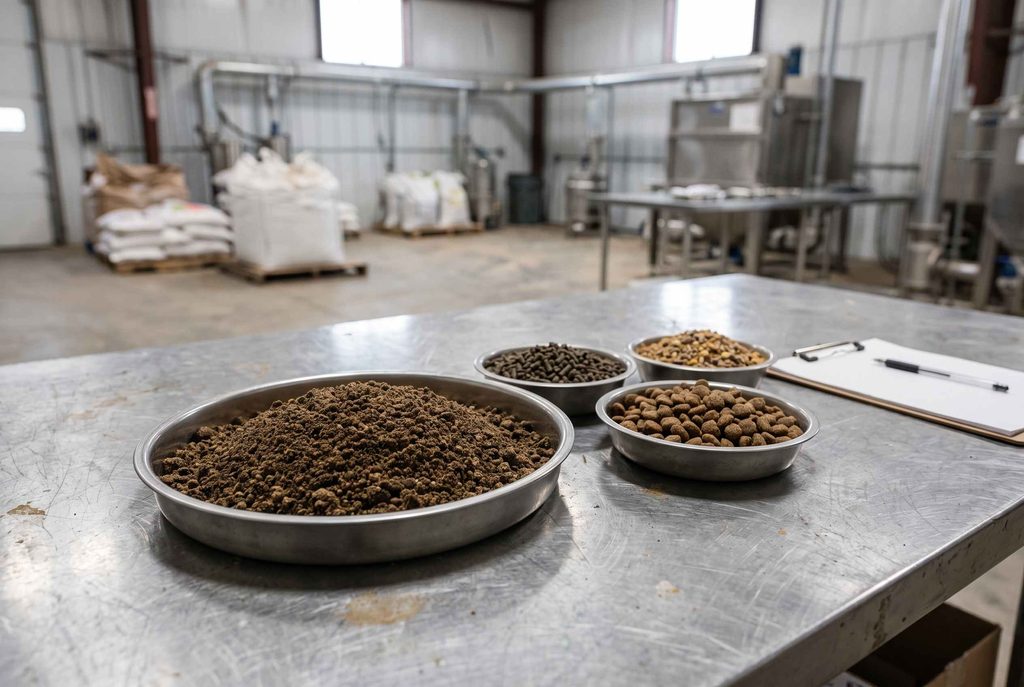
Commercial buyers typically evaluate BSFL meal through a combination of nutritional, physical, and safety specifications. Crude protein and crude fat are important, but neither parameter alone determines ingredient suitability. Amino acid composition, digestibility, ash, moisture, and mineral content can influence the nutritional value of the finished product.
Specifications should also identify the analytical basis. Results reported on an as-fed basis cannot be compared directly with dry-matter values without conversion. Crude protein is commonly estimated from measured nitrogen, and nitrogen associated with chitin and other nonprotein compounds can affect interpretation. The method and nitrogen-to-protein conversion factor should therefore be considered when comparing reported protein concentrations.
The following table summarizes common commercial evaluation parameters without assigning artificial industry-wide limits.
Parameter
Why buyers evaluate it
Crude protein
Initial indication of protein concentration
Amino acid profile
Assessment of nutritional suitability
Crude fat
Energy contribution and defatting level
Moisture
Storage stability and product consistency
Ash
Total mineral content and formulation impact
Calcium and phosphorus
Mineral balance in feed formulations
Fiber or chitin-related measures
Interpretation of composition and digestibility
Microbiological results
Product safety and process verification
Heavy metals and other contaminants
Compliance with applicable safety requirements
Particle size
Handling, mixing and manufacturing performance
There is no single crude-protein or crude-fat percentage that accurately describes every BSFL meal product. Buyers should request batch-specific values and confirm whether the results are reported on an as-fed or dry-matter basis.
6. Quality Control, Safety, and Batch Consistency
Quality control begins before larvae enter processing. Substrate selection, rearing conditions, harvesting hygiene, and transport to the processing facility can all influence the safety of the final ingredient. Downstream processing must then control relevant microbiological, chemical, and physical hazards.
Thermal stabilization, drying, and storage conditions should be validated for the product and manufacturing process. Low moisture can support storage stability, but it does not automatically establish that a product is free from microbiological hazards. Testing programs should reflect the intended application, applicable regulations, and the supplier’s risk assessment.
For commercial buyers, a Certificate of Analysis should identify the relevant batch and report agreed specifications using appropriate analytical methods. Supplier qualification may also involve reviewing manufacturing controls, traceability, packaging, shelf-life evidence, and the consistency of results across multiple production batches.
7. Aquafeed Applications and Formulation Requirements
Aquaculture is an important application area for BSFL meal because feed manufacturers are evaluating alternative protein ingredients for fish and shrimp diets. Research has investigated its use in partial replacement of conventional protein sources, including fishmeal, across different aquatic species.
Feeding outcomes depend on the animal species, inclusion level, product composition, and overall formulation. Full-fat and defatted meals may perform differently because their protein and lipid profiles are not identical. Processing conditions and digestibility also affect how the ingredient contributes to a complete diet.
A commercially suitable aquafeed ingredient must therefore meet more than a target crude-protein percentage. Feed manufacturers evaluate amino acids, digestibility, energy, palatability, manufacturing performance, price, and regulatory eligibility. Positive experimental results can support ingredient qualification, but they should not be interpreted as evidence that every formulation can use BSFL meal at the same inclusion level.
8. Poultry Feed and Livestock Applications
The BSFL meal has also attracted attention in poultry nutrition, where protein quality, energy contribution, and ingredient consistency are important formulation variables. Research has examined its use in diets for different poultry production stages, although commercially appropriate inclusion levels depend on the product and feeding objective.
For livestock feed manufacturers, the ingredient must compete with established materials on nutritional value and delivered cost. The choice between full-fat and defatted BSFL meal can affect energy balance, amino acid supply, and formulation economics.
Market access remains an additional consideration. Regulatory permission for insect-derived processed animal protein differs between jurisdictions and animal categories. Buyers should not assume that an ingredient accepted for aquaculture is automatically permitted for every livestock species or market.
9. Pet Food and Specialty Nutrition
Pet food creates a different commercial opportunity because ingredient selection can involve nutritional value, digestibility, palatability, traceability, and product positioning. BSFL-derived ingredients have attracted interest as alternative animal proteins, particularly in formulations seeking differentiated ingredient sources.
The suitability of BSFL meal depends on the intended animal, nutritional formulation, and applicable ingredient rules. Manufacturers may prefer different fat levels, particle sizes, or processing characteristics depending on whether the product is used in dry food, wet food, or specialty formulations.
Consumer-facing claims also require care. The use of an alternative protein does not, by itself, establish that a finished pet food is hypoallergenic or appropriate for animals with particular sensitivities. Such claims need evidence relevant to the specific formulation and intended market.
10. Pricing, Procurement, and Commercial Supply
Commercial BSFL meal pricing depends on more than the cost of producing larvae. Feedstock management, biological yield, drying energy, oil extraction, milling, quality assurance, packaging, and logistics all contribute to the cost of a saleable ingredient.
Full-fat and defatted products also have different economic boundaries. Defatting can create a marketable oil stream while adding processing costs, making the allocation of costs and revenues important when evaluating production economics.
Buyers should compare quotations using a consistent commercial basis. Product form, nutritional specification, moisture, quantity, packaging, delivery terms, and destination all affect the effective purchase price. A lower price per tonne does not necessarily provide better value if the ingredient delivers less usable nutrition or fails to meet formulation requirements.
Recurring procurement also requires dependable production capacity and batch consistency. A supplier capable of producing a small evaluation sample may not necessarily be able to deliver the same specifications across repeated commercial shipments.
11. Regulation and International Market Access
BSFL meal is subject to product- and destination-specific regulatory requirements. These can cover the insect species, permitted rearing substrates, manufacturing establishment, processing method, ingredient classification, intended animal species, and associated documentation.
In the European Union, processed animal protein from specified farmed insect species can be used under defined conditions in feed for aquaculture animals, poultry, and pigs. The regulatory framework also establishes requirements relating to processing, handling, traceability, and prevention of prohibited cross-contamination.
The United States operates through a different feed-ingredient regulatory system, and eligibility can depend on the precise ingredient definition and intended animal category. AAFCO ingredient definitions and state feed requirements should not be confused with universal federal authorization or automatic approval for every BSFL-derived product.
For international suppliers, the correct approach is to verify market access for the actual BSFL meal grade, manufacturing process, and intended use before commercial shipment. A product’s nutritional suitability does not replace regulatory eligibility.
IIR Analysis
The commercial development of BSFL meal depends on the ability of manufacturers to supply consistent, clearly differentiated ingredients rather than treating all processed black soldier fly biomass as one interchangeable product.
Full-fat and defatted meals serve different formulation requirements, while further refined protein ingredients create another level of processing and specification complexity. Buyers increasingly need to evaluate the complete nutritional profile, processing history, and quality documentation rather than relying on crude protein alone.
Aquafeed, poultry feed, and pet food provide important application opportunities, but each has distinct nutritional, commercial, and regulatory requirements. The strongest suppliers will be those able to connect repeatable production with transparent specifications, consistent quality, and reliable delivery.
Disclaimer: This article is for informational purposes only and does not constitute business, legal or investment advice. Always consult primary sources and qualified professionals.