Independent intelligence for the global insect industryISSUE 01 · 2026
BSFL Meal Quality: Key Parameters, Testing, and Buyer Red Flags
By IIR Editorial DeskOctober 10, 2026
BSFL meal quality depends on more than crude protein. This guide explains how commercial buyers assess batch testing, microbiological safety, contaminants, COAs, traceability and supplier warning signs.
This buyer’s guide examines how commercial buyers evaluate BSFL meal quality through raw-material controls, nutritional consistency, microbiological and chemical testing, batch documentation and practical supplier warning signs.
By IIR Editorial Desk · October 10, 2026 · Buyer Guides
BSFL meal quality is a critical consideration for commercial buyers sourcing black soldier fly larvae (Hermetia illucens) ingredients for aquafeed, poultry feed, pet food, and other permitted animal-nutrition applications. Although crude protein and fat content are commonly used to compare products, reliable quality assessment requires a broader understanding of raw-material control, processing conditions, microbiological safety, contaminants, and batch consistency.
A supplier may present an attractive nutritional specification while providing limited evidence of how the product was manufactured or tested. For procurement teams, quality evaluation should therefore extend beyond the advertised composition to include production traceability, validated controls, laboratory documentation, and the supplier’s ability to deliver repeatable results.
1. What Defines Commercial BSFL Meal Quality?
Commercial BSFL meal quality involves three connected dimensions: nutritional suitability, product safety, and manufacturing consistency. Nutritional suitability determines whether the ingredient can meet formulation requirements, while safety controls address microbiological, chemical, and physical hazards. Manufacturing consistency establishes whether those characteristics can be maintained across repeated shipments.
These dimensions should be evaluated together. A meal with high crude protein may still be unsuitable if it contains excessive contaminants, has poor storage stability, or lacks reliable batch documentation. Similarly, a safe product may not be commercially useful if its fat, ash, or amino acid composition varies beyond the buyer’s formulation tolerance.
Quality also depends on the intended application. Aquafeed, poultry feed, and pet food manufacturers may establish different acceptance criteria based on animal species, processing requirements, and applicable regulations. There is no universal BSFL meal quality grade that replaces product-specific specifications and buyer qualification.
2. Raw Materials and Substrate Control Come First
BSFL meal quality begins before the larvae are harvested. Black soldier fly larvae can grow on a variety of organic materials, but substrate composition and origin influence both nutritional characteristics and potential contamination risks.
Substrate control is particularly important for products entering regulated animal-feed markets. Producers need to confirm that rearing materials are permitted for the intended destination and application. Incoming material controls should address supplier identification, material consistency, storage conditions, and relevant contamination hazards.
A low-cost substrate does not automatically produce a commercially acceptable ingredient. Certain contaminants can transfer from rearing materials into larval biomass, and the extent of transfer depends on the substance and production conditions. Finished-product testing provides useful evidence, but it cannot substitute for a controlled substrate-sourcing program.
For buyers, an important question is whether the manufacturer can connect each finished batch to the corresponding production inputs. A supplier unable to explain its substrate controls or traceability procedures may present a higher qualification risk even when a sample meets the requested nutritional specification.
3. Nutritional Consistency Is More Important Than One High Result
Crude protein, crude fat, moisture, ash and amino acid composition are among the main nutritional parameters used to evaluate BSFL meal. However, an individual laboratory result provides only a snapshot of the tested material.
The first consideration is whether the product grade is clearly defined. Full-fat and defatted BSFL meal can have substantially different nutritional profiles, and differences in oil extraction may influence the relative concentrations of protein, fat and minerals. Buyers should avoid comparing products from different grades as though they were interchangeable.
The second consideration is analytical consistency. Protein values reported on an as-fed basis should not be compared directly with dry-matter values. Buyers should also understand the method used to estimate crude protein, because nitrogen associated with chitin and other nonprotein compounds can affect interpretation.
The third consideration is variation between batches. A supplier reporting an unusually high protein result in one sample may still struggle to maintain a consistent specification over time. Multiple recent COAs can help buyers assess whether the product’s nutritional profile is stable enough for recurring commercial use.
4. Moisture, Oxidation and Storage Stability
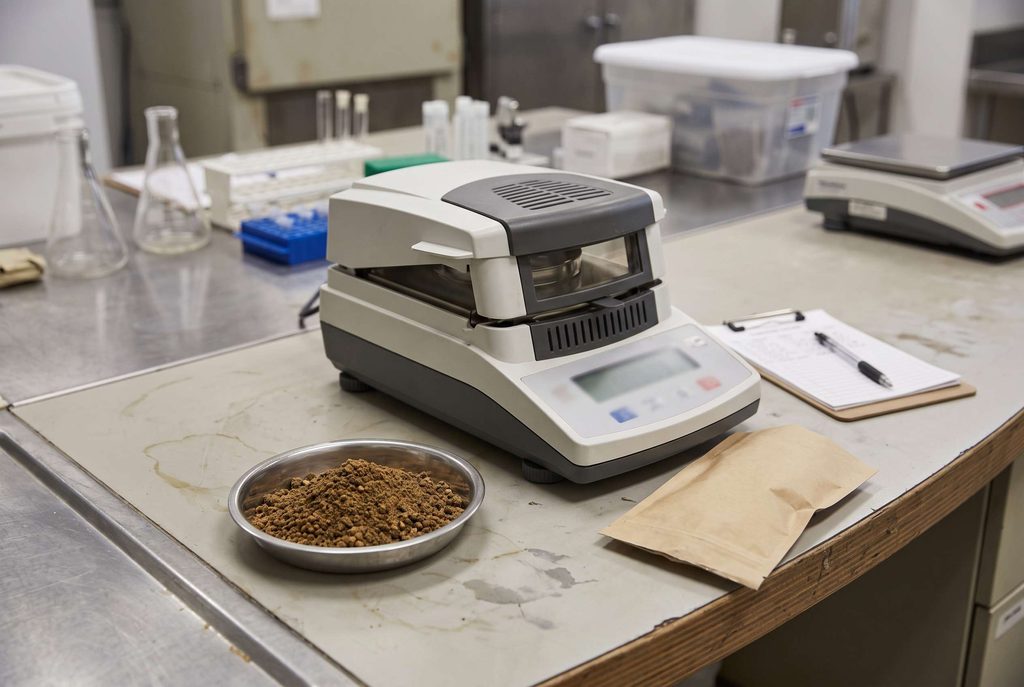
Moisture is an important quality parameter because it influences storage stability, shipping weight, and the concentration of nutrients in the finished ingredient. However, an acceptable moisture percentage alone does not establish that a BSFL meal is microbiologically safe or shelf-stable under all conditions.
Storage stability depends on the combination of moisture, water activity, processing history, packaging and storage environment. Buyers should distinguish moisture content from water activity, since the two measurements describe different properties and are not interchangeable.
Lipid stability is another concern, particularly for the full-fat BSFL meal. Exposure to oxygen, heat, and unsuitable storage conditions can contribute to oxidative deterioration. Where relevant, buyers may request evidence from peroxide value, acid value, or other validated lipid-quality measurements, depending on the product and agreed requirements.
Visual appearance and odor can provide useful warning signals, but they are not substitutes for analytical testing. A rancid odor, visible moisture damage, unusual clumping or deteriorated packaging should trigger further investigation rather than automatic acceptance based on an earlier COA.
5. Microbiological Testing and Process Validation
Microbiological quality is a central part of BSFL meal safety assessment. The relevant hazards depend on substrate conditions, harvesting hygiene, processing methods, equipment sanitation, and storage practices.
Commercial manufacturers may use thermal treatment, drying, and other controlled processing steps to reduce microbiological risks. These operations should be validated for the actual manufacturing process. Drying alone should not be assumed to eliminate pathogens, and low moisture does not guarantee that contamination cannot survive or be introduced after processing.
Microbiological testing may include Salmonella and other organisms or hygiene indicators required by the applicable regulatory framework or customer specification. Buyers should verify the testing method, sampling plan, laboratory capability and acceptance criteria rather than relying on a generic statement that the product has passed microbiological testing.
Process validation and finished-product testing serve different purposes. Validation provides evidence that a manufacturing control can achieve its intended result, while testing provides information about the sampled material. A robust quality system uses both approaches rather than treating a single negative laboratory result as proof of complete process control.
6. Heavy Metals, Pesticides, and Other Chemical Hazards
Chemical safety is another important consideration because black soldier fly larvae interact directly with their rearing substrates. Depending on the materials used, relevant hazards may include heavy metals, pesticide residues, veterinary-drug residues or other undesirable substances.
Cadmium, lead, arsenic and mercury are examples of contaminants that may require consideration in a feed-ingredient risk assessment. However, their behavior is not identical, and contamination risk cannot be determined from substrate origin alone. Buyers should assess the supplier’s actual materials, controls and testing results.
Applicable limits differ by jurisdiction, ingredient classification, and intended use. A supplier’s declaration of compliance should therefore identify the relevant standard rather than simply claiming that the product meets international requirements.
Testing should be risk-based and appropriate to the product. When chemical hazards are commercially significant, buyers may request accredited laboratory reports, clearly stated detection limits, and evidence that results correspond to the relevant production batch.
7. Physical Quality, Foreign Material and Particle Size
Physical quality can affect BSFL meal handling, storage and manufacturing performance. Relevant characteristics may include color, odor, texture, particle size, flowability and the presence of foreign material.
Color differences can result from processing conditions and ingredient composition, so darker or lighter meal is not automatically better. However, unexpected changes in appearance between batches may indicate variation in raw materials, heat treatment, or storage conditions, and should be investigated.
Foreign material presents a more direct quality concern. Residual substrate, packaging fragments, metal particles, or other unintended materials may indicate weaknesses in separation, cleaning, or downstream handling. Appropriate screening, magnets, metal detection or other controls should be selected according to the manufacturing risks.
Particle size also matters to commercial users. Excessively coarse or inconsistent material may create difficulties in feed mixing or downstream processing. Buyers should define an appropriate particle-size specification when it affects manufacturing performance rather than relying on a subjective description such as fine powder.
8. How to Review a BSFL Meal Certificate of Analysis
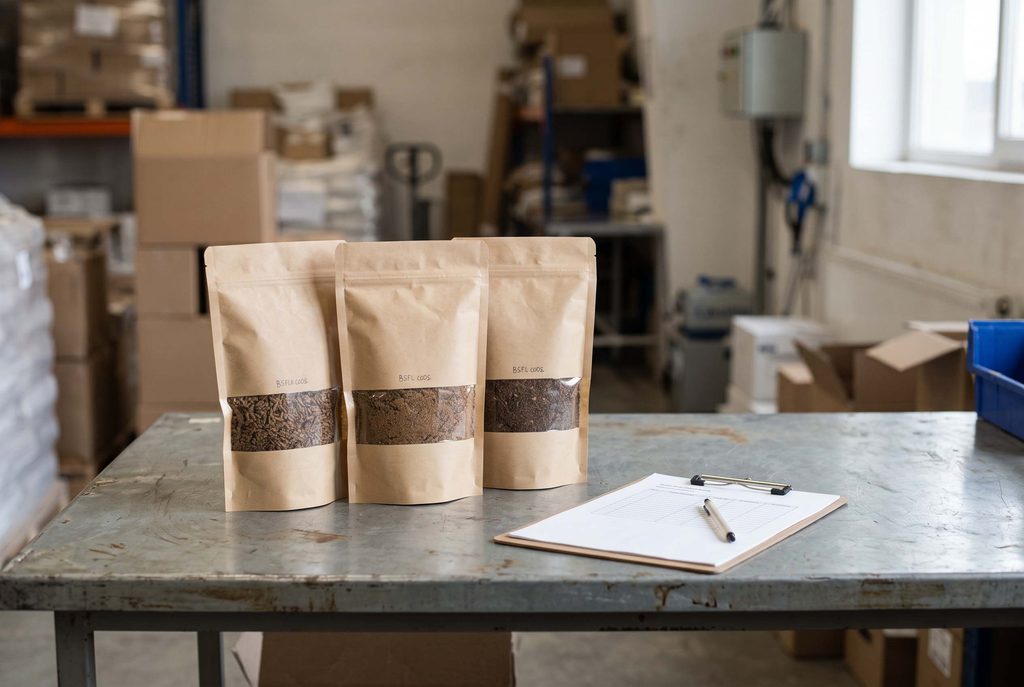
A Certificate of Analysis is an important purchasing document, but it should be evaluated as evidence for a defined batch rather than as a general guarantee of supplier quality. A COA normally identifies the product and batch, reports analytical results and provides information about testing dates, methods and the responsible laboratory.
Buyers should distinguish three types of information: a product specification, a typical nutritional analysis and actual batch results. A specification establishes the agreed acceptance criteria, while a typical analysis describes expected composition. Neither should be presented as though it were a laboratory result from the shipment being purchased.
The COA should also make the reporting basis clear. Protein, fat and other composition values may be expressed on an as-fed or dry-matter basis, and microbiological results require appropriate units and test methods. For contaminants, buyers may need to understand detection limits and whether results are reported as measured concentrations or below a stated analytical threshold.
Independent laboratory testing can provide additional confidence, particularly during initial supplier qualification or when discrepancies arise. However, independent testing does not eliminate the need to assess manufacturing controls, sampling representativeness and batch traceability.
9. Batch Consistency and Supplier Quality Systems
One acceptable sample does not demonstrate that a supplier can maintain BSFL meal quality across recurring shipments. Commercial qualification should include evidence of process consistency, documented quality procedures, and the ability to investigate deviations.
Buyers may request COAs from several recent production batches to assess variation in crude protein, fat, moisture, ash, and relevant safety parameters. The objective is not to demand identical values, which may be unrealistic for biological ingredients, but to determine whether the variation remains within agreed commercial limits.
A capable supplier should also maintain procedures for traceability, nonconforming products, corrective actions, equipment maintenance, and storage management. Depending on the intended market, additional documentation may be required to demonstrate compliance with applicable feed-safety rules.
For recurring procurement, these systems can reduce the risk of unexpected specification changes, rejected shipments, and manufacturing interruptions. Quality management becomes a commercial capability rather than merely a laboratory function.
10. Buyer Red Flags That Require Investigation
Certain supplier behaviors and product characteristics should prompt additional verification before a purchase is approved. These warning signs do not always prove that a product is unsafe or unsuitable, but they can indicate gaps in documentation, process control or commercial transparency.
Buyer red flag
Why it matters
Recommended action
Very high protein claim without a test method
Results may not be directly comparable
Request analytical method and reporting basis
Full-fat and defatted products described identically
Product grade may be unclear
Confirm the processing method and crude fat
COA without a batch number
Traceability cannot be established
Request batch-specific documentation
Repeated identical results across unrelated batches
May indicate typical values rather than actual testing
Verify original laboratory reports
No information on substrate sourcing
Upstream contamination risks may be poorly controlled
Request substrate-control procedures
Missing relevant microbiological testing
Safety evidence may be incomplete
Confirm required tests and acceptance criteria
No contaminant-control explanation
Chemical risks may not be adequately assessed
Request risk assessment and relevant test results
Unusual odor, moisture damage or foreign material
May indicate deterioration or handling problems
Hold the batch for investigation
Supplier refuses reasonable verification
Qualification confidence is reduced
Escalate review or consider alternatives
Major specification changes without explanation
Manufacturing consistency may be inadequate
Request deviation analysis and corrective action
A red flag should lead to a proportionate response. Some issues can be resolved through documentation or retesting, while others may justify shipment rejection or suspension of supplier approval. The decision should reflect the severity of the risk and the agreed purchasing requirements.
11. A Practical Quality Approval Workflow
A structured approval process helps procurement teams avoid making decisions based solely on price or marketing claims. The workflow should begin with product identification and intended use, followed by specification review, supplier qualification and batch verification.
Step 1 — Confirm product identity. Verify that the material is derived from Hermetia illucens and establish whether it is full-fat, partially defatted or defatted meal.
Step 2 — Define acceptance criteria. Agree on nutritional, physical, microbiological and chemical requirements appropriate to the intended application and destination market.
Step 4 — Verify samples and documentation. Review representative COAs and, where necessary, arrange independent testing or a trial using an appropriately sampled product.
Step 5 — Approve the commercial batch. Confirm that the batch meets agreed specifications and that the packaging, documentation and delivery conditions are acceptable.
Step 6 — Monitor recurring supply. Track results from subsequent shipments, investigate deviations and periodically reassess supplier performance.
This process does not guarantee the elimination of every risk, but it creates a consistent basis for supplier comparison and purchasing decisions. The objective is to establish evidence-based confidence before committing to repeat orders.
IIR Analysis
The central challenge in evaluating BSFL meal quality is distinguishing attractive nutritional claims from verified manufacturing performance. A high protein percentage may support a product’s commercial positioning, but it cannot compensate for weak substrate controls, inadequate safety testing or unreliable batch documentation.
For commercial buyers, quality assessment should operate at three levels: upstream risk control, finished-product verification and repeatable supplier performance. Each level addresses a different source of uncertainty, and none should be treated as a complete substitute for the others.
As BSFL-derived ingredients move into more demanding feed and pet-food supply chains, consistent specifications and credible quality systems will remain important conditions for commercial acceptance. Suppliers that can demonstrate traceable production, validated processing and dependable batch results are better positioned to support recurring procurement than those relying primarily on isolated laboratory values or broad quality claims.
Disclaimer: This article is for informational purposes only and does not constitute business, legal or investment advice. Always consult primary sources and qualified professionals.