Independent intelligence for the global insect industryISSUE 01 · 2026
Black Soldier Fly for Swine Feed: Commercial Use and Formulation Considerations
By IIR Editorial DeskNovember 7, 2026
Black soldier fly larvae are being evaluated as alternative protein and energy ingredients for pig diets. This analysis examines full-fat and defatted BSFL meals, digestible amino acids, mineral balance, piglet and grower-finisher applications, feed processing, safety, regulatory eligibility, and commercial economics.
Black soldier fly larvae offer a potential source of protein and energy for pig nutrition, but their commercial value depends on digestible amino acids, processing grade, mineral balance, animal performance, and the cost of complete-feed formulation.
By IIR Editorial Desk · November 7, 2026 · Market Intelligence
The use of black soldier fly for swine feed is attracting interest as feed manufacturers investigate alternative protein ingredients for pig nutrition. Black soldier fly larvae (BSFL), scientifically known as Hermetia illucens, can be processed into full-fat meal, partially defatted meal, defatted protein meal, and separated oil. These ingredients differ in protein concentration, lipid composition, mineral content, and manufacturing characteristics, making product form an important consideration when evaluating their suitability for commercial swine diets.
BSFL-derived ingredients have been studied as partial substitutes for conventional protein sources, including fishmeal and soybean meal, particularly in nursery and growing pig diets. However, nutritional value cannot be established through crude protein concentration alone. Feed formulators must evaluate digestible amino acids, energy contribution, fatty acid composition, calcium and phosphorus balance, processing stability, and animal performance. Commercial adoption also depends on regulatory eligibility, reliable ingredient specifications, and delivered cost.
1. Why Black Soldier Fly Larvae Are Relevant to Swine Nutrition
Commercial pig diets require reliable sources of digestible amino acids, energy, and minerals to support growth, feed efficiency, and animal health. Soybean meal remains a major protein ingredient in many swine production systems, while fishmeal and other specialty proteins may be included in selected nursery formulations. Black soldier fly larvae provide another potential source of protein and lipids, creating opportunities for ingredient diversification and partial substitution where their nutritional characteristics and commercial economics meet formulation requirements.
Interest in BSFL production also reflects efforts to develop alternative feed supply chains and utilize permitted organic materials as rearing substrates. However, environmental and economic outcomes depend on the actual production system, including substrate sourcing, energy consumption, processing technology, and transportation. Feed manufacturers should therefore evaluate BSFL meal as a defined commercial ingredient rather than assuming that all insect-derived proteins offer the same nutritional, environmental, or financial advantages.
2. Commercial BSFL Ingredient Forms and Processing Grades
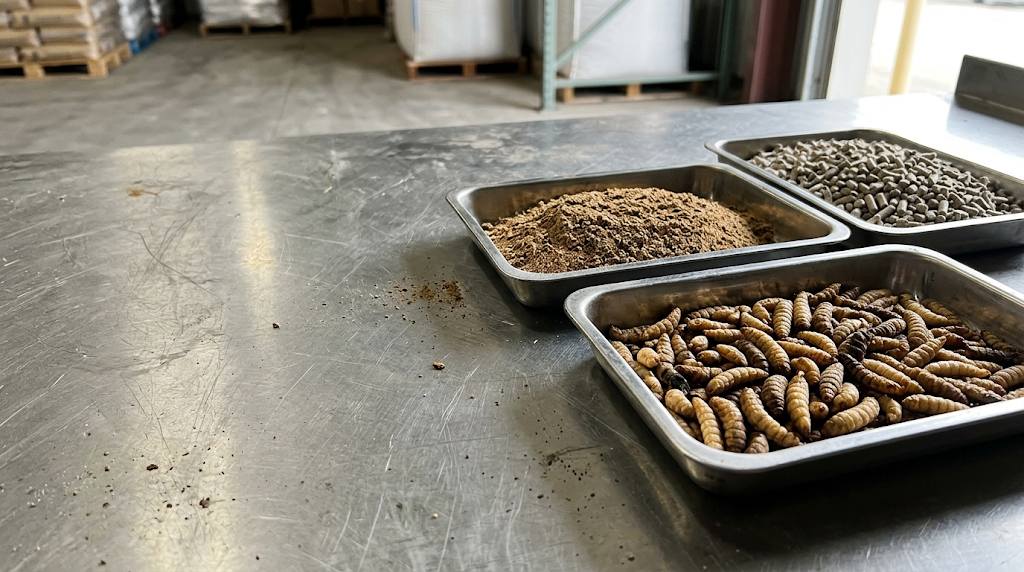
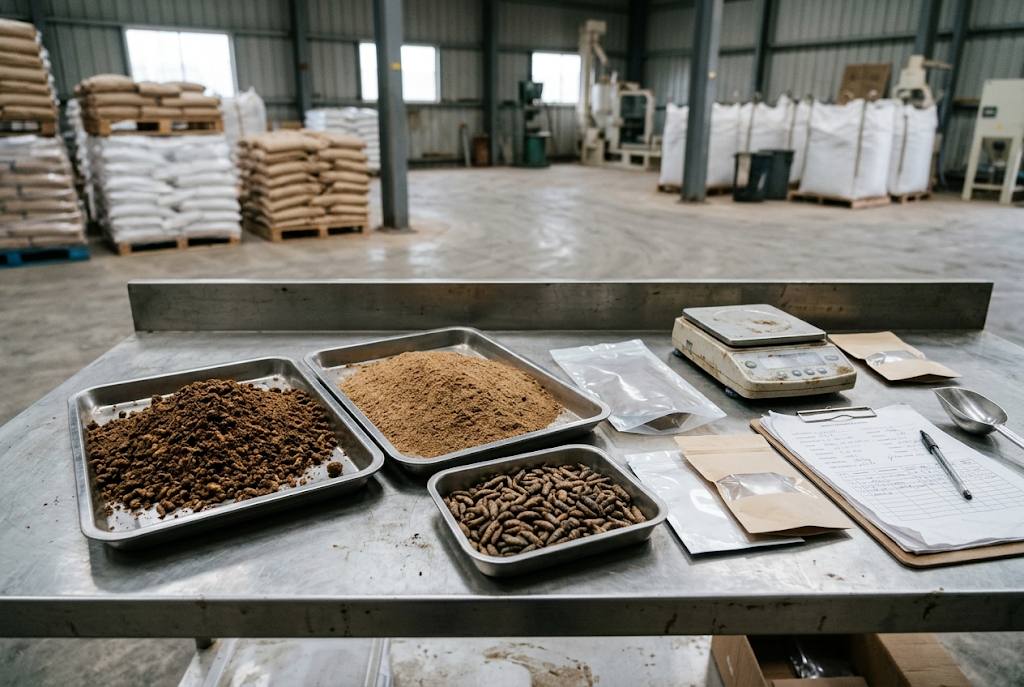
Black soldier fly larvae can be processed into several commercial ingredient forms. Whole dried larvae retain their recognizable structure, while full-fat meal is produced through drying and milling, with much of the original lipid fraction remaining. Partially defatted and defatted meals undergo additional fat removal, generally increasing the relative protein concentration and reducing the amount of lipid supplied. Separated BSFL oil is a distinct energy ingredient rather than a direct replacement for protein meal.
Product form
Main characteristics
Key swine feed considerations
Whole dried BSFL
Intact dried larvae containing protein and fat
Grinding, particle size, storage, handling
Full-fat BSFL meal
Protein and substantial retained lipids
Energy value, fatty acid profile, oxidation
Partially defatted BSFL meal
Intermediate protein and fat concentrations
Residual fat, consistency, processing method
Defatted BSFL meal
More concentrated protein fraction
Digestible amino acids, minerals, and energy adjustment
BSFL oil
Separated lipid ingredient
Fatty acid composition, energy, storage stability
These grades should not be treated as nutritionally interchangeable. Larval development, rearing substrates, harvesting conditions, drying, and extraction methods can substantially affect nutrient composition. Even products marketed under the same name may differ in protein, fat, ash, calcium, and amino acid values. Commercial buyers should request specifications and batch-specific analytical data for the exact grade being offered rather than relying on generic BSFL nutrient tables.
3. Protein Quality and Amino Acid Digestibility
Crude protein is an important initial indicator of BSFL meal composition, but it does not fully describe its nutritional value for pigs. Insect-derived ingredients contain chitin-associated and other non-protein nitrogen that can influence conventional nitrogen-based protein calculations. Swine diets are generally formulated around standardized ileal-digestible amino acids, particularly lysine, methionine, threonine, and tryptophan. A product with a high reported crude protein percentage may therefore provide a different amount of usable amino acids from soybean meal or fishmeal.
Digestibility values also depend on the insect ingredient’s processing grade and manufacturing conditions. Drying, fat extraction, and other treatments may affect amino acid availability, while differences in substrate and larval development can influence the composition of the finished product. Feed manufacturers should use reliable ingredient-specific digestibility data where available and apply conservative assumptions when such information is limited. Direct weight-for-weight substitution based on crude protein alone can produce nutritional imbalances and misleading economic comparisons.
4. Applications in Weaned Piglet Diets
Weaned piglets face nutritional challenges during the transition from milk to solid feed, making protein quality, digestibility, and feed intake particularly important. Nursery diets may contain specialized protein ingredients to support digestive adaptation and early growth. BSFL meal has been investigated as a potential component of piglet diets, with research examining growth performance, feed conversion, nutrient utilization, intestinal responses, and the effects of different inclusion levels. The results depend on the ingredient grade, dietary composition, animal age, and experimental conditions.
Commercial use requires careful evaluation of digestible amino acids, energy density, mineral balance, and palatability. A full-fat BSFL meal contributes additional lipids, while a defatted meal may provide a more concentrated protein fraction. Neither form should be introduced without adjusting the complete diet to account for its actual nutrient contribution. Findings from individual feeding studies should not be interpreted as universal inclusion recommendations; manufacturers should validate the specific ingredient through formulation analysis and, where appropriate, controlled nursery trials.
5. Applications in Grower-Finisher Pig Diets
Grower-finisher diets represent a large-volume market in which feed cost and feed conversion strongly influence production economics. BSFL meal may supply protein and energy, but it must compete with established ingredients such as soybean meal and other regionally available protein sources. Its commercial value depends on whether the complete diet can maintain acceptable growth rate, feed efficiency, carcass performance, and total production cost. A product that performs well nutritionally may still face adoption barriers if its delivered price is substantially higher than conventional alternatives.
Research involving BSFL meal in growing pigs has explored partial replacement of conventional protein ingredients under different dietary conditions. Outcomes vary with processing grade, inclusion level, nutrient balance, and study design. Feed manufacturers should compare nutritionally equivalent diets rather than substituting BSFL meal for soybean meal or fishmeal on an equal-weight basis. Commercial evaluation should include average daily gain, feed intake, feed conversion, and relevant carcass characteristics, together with the cost of the finished feed.
6. Fatty Acid Composition and Energy Contribution
Black soldier fly larvae contain a lipid fraction that can contribute dietary energy, particularly in whole dried and full-fat meal products. BSFL oil is often characterized by a relatively high proportion of saturated fatty acids, including lauric acid, although the actual profile varies with rearing substrates and processing conditions. This differs from the lipid composition of many conventional vegetable oils and some other insect ingredients. For swine nutrition, the relevant question is how the BSFL lipid fraction affects the energy and fatty acid balance of the complete diet.
A full-fat BSFL meal may reduce the need for some additional dietary fat, but it can also alter the fatty acid profile of the feed and potentially influence tissue fat composition. A defatted meal provides greater flexibility for adjusting the lipid fraction separately, although another energy source may be required. Feed manufacturers should compare fat concentration, fatty acid composition, oxidation stability, and appropriately determined energy values for the specific commercial product. Claims concerning functional effects of individual fatty acids should be distinguished from demonstrated production outcomes in pigs.
7. Calcium, Phosphorus, and Mineral Balance
BSFL meal can contain substantial mineral concentrations, with calcium and ash often receiving particular attention in feed formulation. These characteristics depend on larval development, rearing conditions, and processing methods. Compared with some conventional protein ingredients, certain BSFL products may contribute relatively high calcium levels, making mineral balance an important consideration when determining inclusion rates. Excessive or poorly balanced mineral contributions can affect the overall calcium-to-phosphorus ratio and the need for additional mineral supplementation.
Commercial feed manufacturers should request batch-specific analyses of calcium, phosphorus, ash, and other relevant minerals. Total phosphorus concentration should not automatically be treated as equivalent to available phosphorus, and the actual contribution of each ingredient must be considered in the complete formulation. Defatting can also change the relative concentrations of minerals by removing part of the lipid fraction. Buyers should therefore evaluate mineral specifications for the exact product grade rather than assuming that all BSFL meals have the same ash or calcium content.
8. Replacing Fishmeal and Soybean Meal With BSFL
Fishmeal replacement is frequently discussed in connection with BSFL because fishmeal may be used as a concentrated protein source in specialized nursery diets. BSFL meal can potentially replace part of the fishmeal contribution when the formulation is adjusted to maintain digestible amino acids, energy, and mineral balance. However, differences in protein digestibility, fat content, ash, calcium, and other nutrients mean that direct substitution on an equal-weight basis is not appropriate. The success of a replacement strategy must be evaluated through the performance of the complete diet.
Soybean meal replacement presents a different commercial challenge because soybean meal is widely available and supported by established nutrient databases and procurement systems. BSFL meal may serve as a complementary ingredient or partial substitute, but its economic competitiveness depends on delivered nutrient cost and the availability of consistent commercial volumes. Feed manufacturers should compare alternative formulations using equivalent nutritional specifications and monitor animal performance rather than relying on claims that insect protein can replace conventional protein sources without adjustment.
9. Feed Processing and Manufacturing Performance
Commercial BSFL ingredients must be compatible with the feed mill’s handling, mixing, and pelleting systems. Product characteristics such as moisture, particle size, bulk density, fat concentration, and flow behavior can affect manufacturing performance. A full-fat BSFL meal may behave differently from a defatted meal because of its higher lipid content, while drying and milling methods can influence ingredient uniformity. Feed manufacturers should assess whether the product can be incorporated consistently into existing production processes without creating handling or finished-feed quality problems.
Storage conditions are also important because moisture exposure, unsuitable temperatures, oxygen, and extended storage can affect ingredient quality. Full-fat products may require particular attention to lipid stability, while all BSFL meals should be evaluated for packaging integrity, shelf life, and appropriate storage conditions. Pilot manufacturing trials can help identify issues involving mixing uniformity, pellet quality, and handling before larger purchasing commitments are made. The objective is to confirm that the ingredient performs reliably in commercial feed production, not merely that it meets a laboratory nutrient specification.
10. Feed Safety, Contaminants and Quality Control
The safety of BSFL-derived ingredients depends on rearing substrates, production hygiene, harvesting, processing, storage, and transportation. Potential concerns include microbiological contamination, relevant chemical contaminants, foreign materials, and deterioration during storage. The appropriate testing program should reflect the actual production pathway and destination-market requirements. Feed manufacturers should evaluate substrate controls, process monitoring, traceability, and corrective-action procedures alongside laboratory results rather than assuming that insect ingredients are inherently safe because of their biological origin.
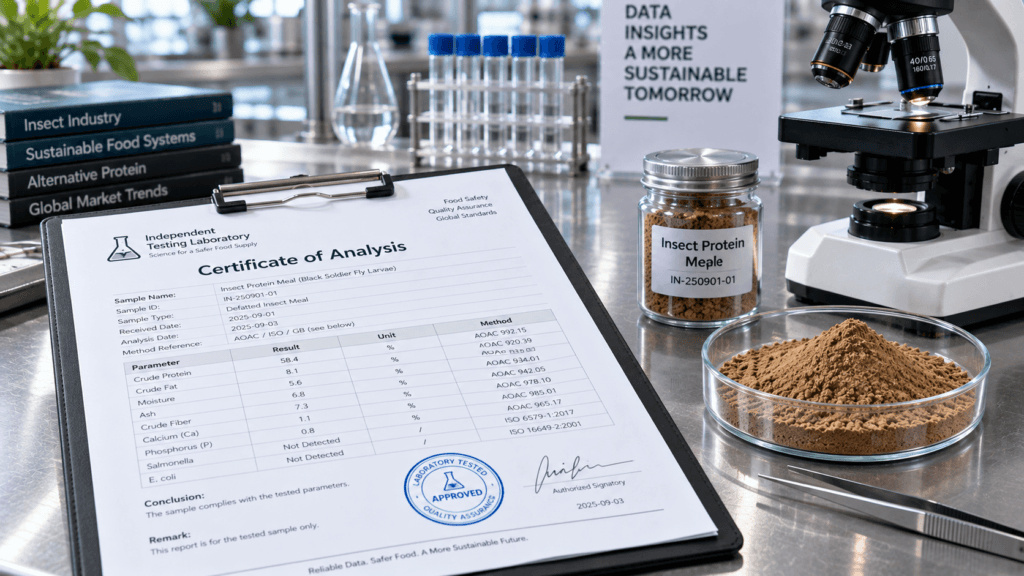
Commercial quality specifications should include moisture, crude protein, fat, ash, relevant minerals, and amino acid data, supported by risk-based safety testing. Full-fat products may require particular attention to oxidation stability, while defatted meals should be assessed for residual fat and extraction consistency. Batch-specific certificates of analysis should clearly identify the tested product, lot information, analytical methods, reporting units, and laboratory details. A favorable result from one sample does not establish long-term quality consistency, making historical batch data and reliable production controls important for repeat purchasing.
11. Economics of BSFL Meal in Commercial Swine Feed
The economics of BSFL meal depend on production costs, processing efficiency, nutrient composition, and the price of competing feed ingredients. Production expenses may include rearing substrates, labor, energy, harvesting, drying, fat extraction, quality assurance, packaging, and transportation. A defatted BSFL meal may have a higher price per metric ton because of additional processing, but it also generally contains a higher relative protein concentration. A full-fat meal contributes both protein and energy, so comparing the two grades solely by quoted price can be misleading.
A preliminary calculation can estimate the cost per kilogram of reported crude protein:
Cost per kg of crude protein =Ingredient price per kgCrude protein fraction
The following hypothetical example illustrates how two BSFL grades may differ:
Metric
Full-fat BSFL meal
Defatted BSFL meal
Illustrative price
$1,800/metric ton
$2,200/metric ton
Reported crude protein
45%
60%
Cost per kg of crude protein
$4.00
$3.67
Illustrative calculations only. These figures are not verified market prices or supplier quotations.
The defatted product has a lower calculated cost per kilogram of crude protein in this example, but that does not automatically make it more economical in a complete swine diet. Digestible amino acids, metabolizable energy, mineral contribution, additional oil requirements, processing performance, and animal outcomes must also be considered. A more meaningful comparison uses least-cost formulations that meet equivalent nutritional specifications and evaluates the resulting cost per unit of animal production.
12. Regulatory Eligibility for Swine Feed
Regulatory eligibility for BSFL-derived ingredients varies between jurisdictions and depends on the insect species, rearing substrates, processing method, ingredient form, and intended animal use. In the European Union, certain processed animal proteins derived from farmed insects may be used in pig and poultry feed under specified conditions. These requirements include controls relating to eligible insect species, production inputs, processing, and handling. Buyers should verify that the actual BSFL product and its production pathway meet the applicable framework rather than assuming that every insect-derived ingredient is automatically permitted.
In the United States and other markets, feed manufacturers must confirm the relevant ingredient status, permitted uses, labeling requirements, and any import restrictions before incorporating BSFL meal into commercial pig diets. Regulatory acceptance for aquaculture, poultry, or pet food does not automatically establish eligibility for swine feed. Importers and feed manufacturers should review ingredient identity, production documentation, and destination-market requirements before approving commercial purchases or introducing a new formulation.
13. Commercial Supply and Supplier Qualification
Reliable commercial use of BSFL meal requires suppliers to maintain consistent nutrient specifications and dependable delivery volumes. Feed manufacturers should evaluate production capacity, rearing inputs, processing controls, quality management systems, batch variation, and traceability. Changes in protein, fat, moisture, ash, calcium, and amino acid composition can affect formulation accuracy, particularly when the ingredient is used at meaningful inclusion levels. Historical batch analyses can help buyers determine whether a supplier can maintain stable product characteristics over time.
Supplier qualification should also address packaging, shelf life, transportation, storage conditions, and procedures for handling nonconforming material. A successful sample evaluation is only an initial step; repeat procurement requires measurable acceptance specifications, batch-specific documentation, and ongoing supplier performance monitoring. Producers seeking long-term feed mill customers should provide transparent technical data, realistic delivery commitments, and reliable quality documentation comparable to that expected for established commercial feed ingredients.
14. Barriers to Wider Commercial Adoption
Cost competitiveness remains a major barrier to broader BSFL use in swine feed. Conventional protein ingredients benefit from established production systems, large-scale supply chains, standardized nutrient databases, and mature procurement networks. BSFL producers must demonstrate that their products can deliver digestible nutrients at an acceptable cost while maintaining consistent specifications and sufficient production volume. Limited ingredient-specific digestibility data for some commercial grades can also make formulation decisions more difficult.
Other barriers include regulatory differences between markets, processing expenses, supply consistency, and the need for additional commercial feeding evidence. Sustainability claims may support market interest, but environmental performance depends on the actual rearing and processing system, including substrate sourcing, energy consumption, and transportation. Wider adoption will depend on reliable animal performance and commercial value rather than the alternative-protein positioning of BSFL alone.
15. Market Outlook for Black Soldier Fly in Swine Feed
Near-term opportunities for BSFL meal may be strongest in selected nursery and specialty swine formulations where its nutritional characteristics justify further evaluation. Broader adoption in grower-finisher diets will likely require more competitive production economics, stronger ingredient standardization, and dependable large-volume supply. Continued research into digestible amino acid values, energy contribution, mineral availability, processing effects, and commercial feeding performance will help determine where BSFL products can be used most effectively.
Market development will differ across regions according to conventional protein prices, regulatory eligibility, domestic BSFL production capacity, and feed manufacturing practices. Improvements in rearing efficiency, processing technology, quality control, and standardized nutrient data could strengthen the commercial position of BSFL ingredients over time. However, sustained adoption will be demonstrated through repeat purchasing, consistent batch quality, and verified performance in commercial pig production rather than production announcements alone.
IIR Analysis
The commercial opportunity for black soldier fly for swine feed depends on whether BSFL-derived ingredients can provide a predictable supply of digestible nutrients at a competitive cost. Full-fat and defatted meals have different formulation roles, particularly because their lipid, protein, and mineral contributions differ. Their value should therefore be assessed through amino acid digestibility, energy contribution, calcium and phosphorus balance, manufacturing performance, and finished-feed economics rather than crude protein concentration alone.
For BSFL producers, the priority is to establish consistent commercial grades, reliable analytical documentation, and scalable supply. For swine feed manufacturers, the purchasing decision should be based on nutritionally equivalent complete-feed comparisons and evidence from appropriate feeding and manufacturing trials. BSFL meal may become a useful component of selected pig diets, but broader adoption will depend on demonstrated performance, regulatory compliance, and cost competitiveness.
Disclaimer: This article is for informational purposes only and does not constitute business, legal or investment advice. Always consult primary sources and qualified professionals.