Austria's REPLOID has signed a nonbinding term sheet to potentially acquire U.S. insect farming company Chapul for approximately $12 million, with a 90-day due diligence period. The proposed transaction could support REPLOID's expansion into North America.
Austrian insect technology company REPLOID has signed a nonbinding term sheet for the potential acquisition of U.S.-based Chapul, outlining a proposed $12 million transaction and a 90-day due diligence period.
By IIR Editorial Desk · November 11, 2026 · Company Watch
The proposed Chapul acquisition could provide Austria’s REPLOID Group AG with a new route into the North American insect farming market. On November 10, 2026, REPLOID announced that it had signed a nonbinding term sheet regarding the potential acquisition of 100% of Chapul, LLC, a U.S.-based company involved in developing and operating insect farming facilities that convert organic residual materials into animal feed ingredients and fertilizer products.
According to REPLOID’s November 10 corporate announcement, the proposed acquisition consideration is approximately US$12 million, expected to be paid through a combination of newly issued REPLOID shares, cash, and warrants. The parties have agreed to a 90-day exclusivity period for due diligence, while completion remains subject to satisfactory investigations and relevant board approvals. The announcement does not constitute a completed acquisition, and the companies have not confirmed a definitive purchase agreement.
REPLOID Outlines a Potential $12 Million Transaction
The preliminary agreement covers the possible acquisition of Chapul in its entirety, but it does not establish that the transaction will proceed on the announced terms. REPLOID and Chapul must first complete the due diligence process and obtain the required corporate approvals before a binding transaction can advance toward closing. The proposed consideration includes equity-related instruments as well as cash, although the company has not disclosed the final proportion of each component or a definitive transaction timetable beyond the initial exclusivity period.
The distinction between an indicative transaction value and a completed purchase price is particularly important in the emerging insect farming industry. Corporate valuations may depend on production assets, intellectual property, existing customer relationships, operating liabilities, and the amount of additional capital required to expand facilities. REPLOID has not published sufficient transaction-specific financial information to independently assess the proposed valuation, Chapul’s current profitability, or the financial contribution an acquisition could make to the group.
Why REPLOID Is Exploring the U.S. Market
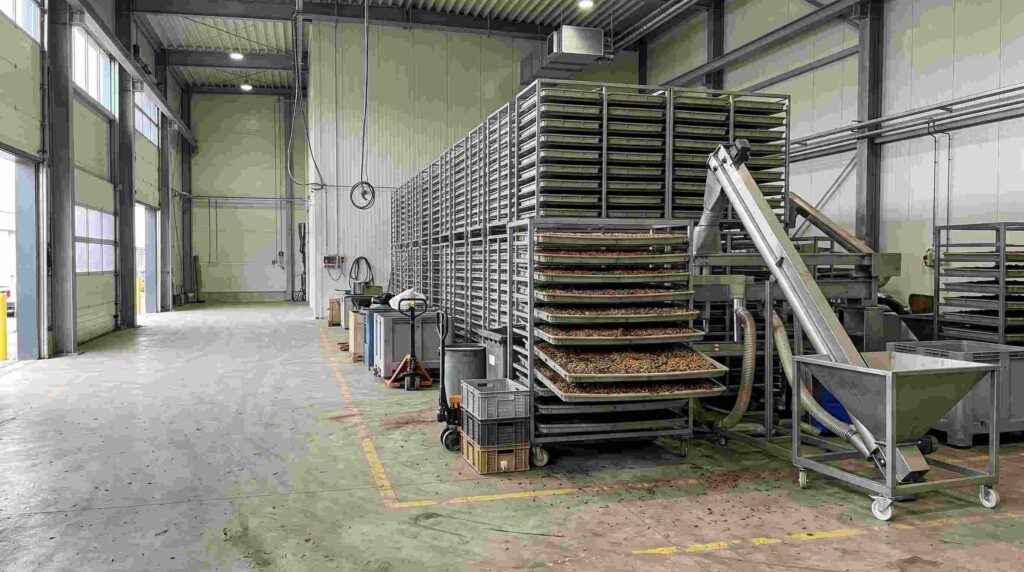
REPLOID has developed a business model centered on modular insect bioconversion facilities known as ReFarmUnits. These systems use black soldier fly larvae (Hermetia illucens) to process suitable organic by-products into insect biomass and residual materials that can be developed into commercial products. The company supplies and services these facilities while pursuing opportunities in animal feed ingredients and organic fertilizers. This model links waste recovery technology with multiple downstream agricultural markets rather than relying on a single protein product.
The United States represents a potential geographic expansion opportunity for REPLOID. Chapul operates within the same broad biological conversion sector and could offer local experience in designing, building, and operating insect farming facilities. REPLOID founder and CEO Philip Pauer identified North America as a strategic growth market in the company’s announcement. However, the statement did not identify specific Chapul facilities that would be transferred, confirm new U.S. investment commitments, or disclose binding customer contracts associated with the proposed acquisition.
Chapul Brings Experience in Insect-Based Waste Recovery
Chapul has positioned its business around converting organic residual materials into animal feed and nutrient-rich fertilizer through insect farming. Its activities include the development and operation of black soldier fly production facilities, placing the company within a commercial sector that depends on both reliable organic feedstock availability and demand for processed insect-derived products. This operating model is broadly aligned with REPLOID’s decentralized bioconversion strategy, although the two companies may differ in facility design, processing methods, customer relationships, and capital requirements.
The potential strategic fit extends beyond the biological ability of larvae to consume organic residues. Commercial insect facilities must secure suitable inputs, maintain stable rearing performance, manage harvesting and processing, and deliver consistent products to customers. Local permitting, infrastructure, processing economics, and market access can influence how successfully a facility operates. A transaction could potentially combine REPLOID’s technology platform with Chapul’s U.S. operating experience, but no integration plan or quantified cost savings have been confirmed in the public announcement.
Due Diligence Will Determine the Next Step
The next stage is a 90-day due diligence process conducted under the agreed exclusivity arrangement. Potential areas for review may include financial obligations, operational assets, intellectual property, environmental and regulatory compliance, commercial contracts, and the capital required for future expansion. These are typical transaction considerations rather than specific findings or requirements disclosed by REPLOID. The company has not announced that due diligence has been completed or that regulatory and corporate conditions have been satisfied.
A successful investigation would still not guarantee completion of the transaction. The parties would need to agree on definitive documentation, confirm financing and the structure of consideration, and obtain the relevant approvals. Conversely, the proposal could be revised, delayed, or abandoned if the parties cannot agree on final terms. For IIR’s coverage, the appropriate status remains a proposed acquisition rather than an announced takeover or completed entry into the American market.
IIR Analysis: What the Proposed Acquisition Means for Insect Farming
The proposed transaction illustrates how international insect companies may explore market expansion through existing local businesses instead of building every production facility and commercial relationship from the beginning. Acquisitions can potentially provide access to operating expertise, established infrastructure, local regulatory knowledge, and customer networks. However, those advantages depend on the actual quality of the acquired assets and the extent to which their operations can be integrated. The announcement alone does not establish that REPLOID would obtain a profitable U.S. business or immediately achieve commercial-scale production in North America.
The potential acquisition is also relevant to the broader black soldier fly industry, where commercial performance depends on converting production capacity into reliable deliveries of marketable ingredients. An insect facility’s value cannot be measured solely by its announced processing capacity or potential demand for alternative proteins. Feedstock procurement costs, biological yields, processing energy, product specifications, and recurring customer purchases all affect financial viability. These factors would be important in evaluating the commercial rationale for any cross-border consolidation.
From IIR’s perspective, the most meaningful indicators will emerge after the preliminary agreement. A definitive transaction could clarify the value assigned to Chapul’s assets, the balance of cash and securities in the purchase consideration, and REPLOID’s intended operating strategy in the United States. Until that information becomes available, the proposed $12 million figure should be understood as an indicative transaction value rather than evidence of a realized investment or an established benchmark for the valuation of U.S. insect farms.
What to Watch Next
The immediate milestone is the completion of the agreed 90-day exclusivity and due diligence period, followed by any announcement of binding transaction documents. Investors and industry participants will be watching for confirmation of the final purchase consideration, financing arrangements, required approvals, and an expected closing schedule. Any subsequent integration plan would also be relevant to understanding how REPLOID intends to develop Chapul’s facilities, technology, and commercial relationships.
For the wider insect industry, the significance of the proposal will depend less on the headline acquisition value and more on whether the companies can convert a potential transaction into sustainable production and recurring customer demand. Until a binding agreement and completed closing are confirmed, the development remains an important strategic signal rather than an accomplished market expansion.