Independent intelligence for the global insect industryISSUE 01 · 2026
Insect Protein for Swine Feed: Applications, Economics and Market Adoption
By IIR Editorial DeskNovember 7, 2026
Insect protein is being evaluated as an alternative ingredient for swine feed, particularly in nursery and specialized pig diets. This analysis examines major insect sources, digestible amino acids, fishmeal and soybean meal replacement, formulation economics, regulatory requirements, and the commercial outlook for insect-derived feed ingredients.
Insect-derived ingredients are attracting interest as alternative sources of protein and energy for pig diets. Their commercial potential depends on nutritional performance, ingredient consistency, regulatory eligibility, and the economics of complete-feed formulation.
By IIR Editorial Desk · November 7, 2026 · Market Intelligence
The use of insect protein for swine feed is gaining attention as feed manufacturers examine alternative protein sources for nursery, grower-finisher, and breeding-herd nutrition. Insect-derived meals can provide protein, lipids, and other nutrients, but their composition varies substantially by species, rearing conditions, processing technology, and product grade. Black soldier fly larvae (BSFL), yellow mealworms, and other insects have been investigated for their potential to supplement or partially replace conventional feed ingredients.
The commercial question is not simply whether insects contain useful protein. Swine nutrition requires predictable supplies of digestible amino acids, metabolizable energy, and balanced minerals at a cost that supports efficient animal production. For insect protein to move beyond experimental use, suppliers must demonstrate consistent ingredient quality while feed manufacturers establish reliable formulation values, acceptable animal performance, and compliance with applicable feed regulations.
1. Why Insect Protein Is Being Evaluated in Swine Nutrition
Swine feed production depends on large volumes of protein-rich ingredients, with soybean meal playing a central role in many commercial formulations. Fishmeal and other specialty proteins may also be used in selected nursery diets where digestibility and nutritional performance are important. Interest in insect-derived ingredients reflects efforts to diversify feed protein sources, reduce exposure to specific commodity supply constraints, and identify materials with useful nutritional characteristics. However, these objectives do not automatically make insect meal a commercially competitive replacement for established feed ingredients.
The relevance of insect protein also depends on regional production conditions and feed market structures. Insect producers may use permitted agricultural or food-processing by-products as rearing substrates, potentially creating additional pathways for resource utilization. Nevertheless, the environmental and economic performance of insect production depends on substrate availability, energy use, processing efficiency, drying requirements, and logistics. Feed manufacturers should therefore assess insect meals as specific commercial ingredients with measurable nutritional and financial value rather than relying on broad sustainability claims.
2. Major Insect Protein Sources for Swine Feed
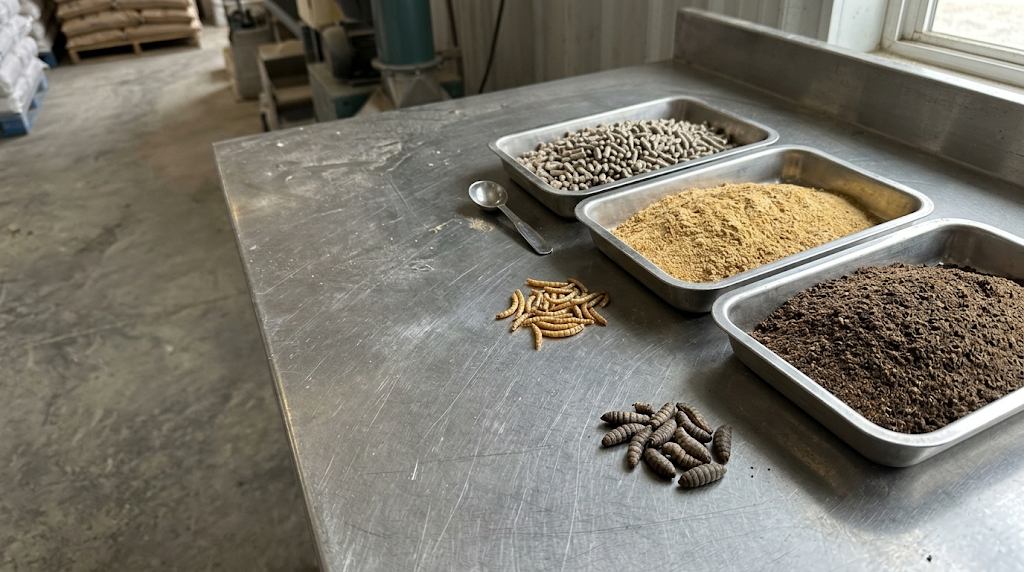
Several insect species have been investigated as potential protein sources for pig diets, although the depth of research, commercial availability, and regulatory status differ. Black soldier fly larvae (Hermetia illucens) and yellow mealworms (Tenebrio molitor) are among the most prominent candidates because they can be processed into commercially usable protein meals. Housefly larvae and crickets have also been studied in animal nutrition, but their suitability for a particular swine feed market must be evaluated independently.
Production economics, processing, regulatory status
These species should not be treated as nutritionally interchangeable. Protein concentration, amino acid composition, lipid profile, mineral content, and digestibility can vary with developmental stage and processing method. Even within the same insect species, full-fat and defatted meals may have different energy and protein contributions. Commercial buyers should compare the actual product specifications and available feeding evidence rather than applying generic nutrient values to all insect-derived ingredients.
3. Nutritional Value and Digestible Amino Acids
Insect meals can contain substantial crude protein, but crude protein alone is an incomplete measure of their value in swine diets. Conventional nitrogen-based protein estimates may include non-protein nitrogen associated with chitin and other insect components. Pig nutrition is generally formulated around standardized ileal-digestible amino acids, particularly lysine, methionine, threonine, and tryptophan. Consequently, two ingredients with similar crude protein concentrations may provide different amounts of usable amino acids, depending on their composition and digestibility.
Processing conditions can also influence nutritional value. Drying temperature, fat extraction, particle size, and other manufacturing variables may affect nutrient concentration and amino acid availability. Feed formulators should use reliable digestibility coefficients for the specific insect species and processing grade where available, while applying conservative assumptions when ingredient-specific data are limited. The practical objective is to formulate diets that meet the pig’s nutritional requirements without creating unnecessary nutrient excesses, deficiencies, or additional ingredient costs.
4. Applications in Weaned Piglet Diets
Weaned piglets represent an important area of insect protein research because the transition from milk to solid feed creates challenges involving feed intake, digestive adaptation, and growth performance. Nursery diets often contain highly digestible protein sources and carefully balanced amino acids to support animals during this sensitive period. Insect meals have been investigated as partial substitutes for conventional protein ingredients, with studies examining growth rate, feed conversion, nutrient digestibility, intestinal characteristics, and selected physiological responses.
The results of these studies depend on insect species, processing grade, inclusion level, weaning age, and the composition of the complete diet. Some experimental formulations have maintained acceptable performance under the conditions tested, but these findings do not establish a universal inclusion rate or guarantee a commercial advantage. Feed manufacturers must evaluate digestible amino acids, energy, mineral balance, palatability, and ingredient quality together. Before routine adoption, commercially relevant nursery trials may be necessary to confirm that a particular insect meal performs consistently in the intended production system.
5. Applications in Grower-Finisher Pig Diets
Grower-finisher production is highly sensitive to feed cost because animals consume substantial quantities of feed over the production cycle. Insect meal may contribute protein and energy, but it must compete with conventional ingredients that are widely available and supported by established nutritional databases. A successful formulation must maintain growth rate, feed conversion, and carcass performance while controlling total production expenses. For this reason, ingredient cost and nutrient availability are often more decisive than the general appeal of alternative protein sources.
Research involving insect meals in growing pigs has explored partial replacement of conventional protein ingredients under different dietary conditions. Performance outcomes vary according to the insect product, inclusion level, nutrient balance, and experimental design. Feed manufacturers should compare diets formulated to equivalent digestible amino acid and energy specifications rather than substituting ingredients on an equal-weight basis. Commercial evaluation should consider average daily gain, feed intake, feed efficiency, carcass characteristics, and the resulting cost per unit of production.
6. Potential Applications in Sow and Breeding-Herd Nutrition
Sow nutrition presents a different set of requirements because dietary priorities change across gestation, lactation, and reproductive cycles. Protein quality, amino acid balance, energy supply, and mineral nutrition influence maternal condition and reproductive performance. Insect-derived ingredients may offer an additional source of protein and lipids, but the evidence base for their routine commercial use in breeding herds is less established than for some other animal feeding applications.
Any evaluation of insect protein in sow diets should account for the intended reproductive stage, nutrient requirements, and available research evidence. Full-fat insect meals may contribute additional energy, while defatted products may provide a more concentrated protein fraction. However, nutritional composition alone cannot establish suitability for gestating or lactating animals. Commercial adoption would require appropriate feeding evidence, consistent product quality, and confirmation that the ingredient is legally eligible for the intended use.
7. Insect Meal as a Fishmeal and Soybean Meal Alternative
Fishmeal replacement is frequently discussed in connection with insect protein because fishmeal can provide concentrated, digestible protein in specialized animal diets. Certain insect meals may partially replace fishmeal in appropriately balanced nursery formulations, depending on amino acid availability, energy contribution, and animal performance. However, direct weight-for-weight substitution can alter the nutritional balance of the diet. Differences in protein digestibility, fat content, ash, calcium, and other nutrients must be addressed before a replacement strategy can be evaluated reliably.
Soybean meal replacement presents a different commercial challenge. Soybean meal benefits from large-scale global production, relatively standardized specifications, and established procurement networks. Insect protein must demonstrate competitive value through usable nutrient supply, consistent quality, and complete-feed economics rather than crude protein concentration alone. In many situations, insect meal may be more realistic as a complementary ingredient or partial replacement than as a major substitute for soybean meal. The appropriate role depends on conventional ingredient prices, the intended pig production stage, and the actual characteristics of the insect product.
8. Full-Fat and Defatted Insect Meals in Swine Formulation
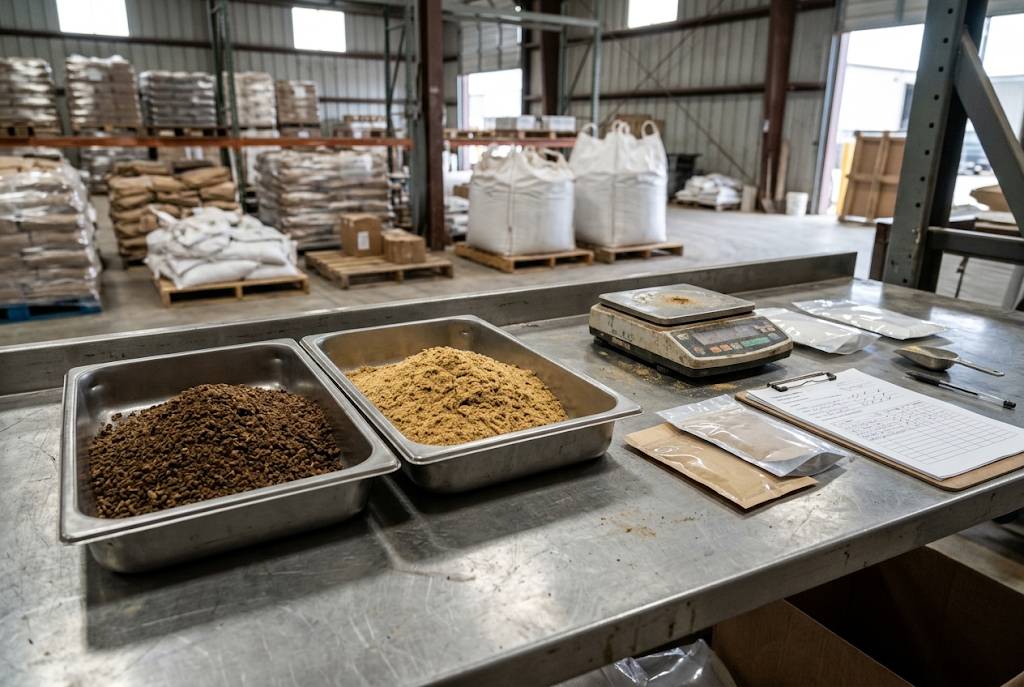
Commercial insect ingredients are often supplied as full-fat or defatted meals, and these grades can have substantially different nutritional roles. Full-fat meals retain more of the original lipid fraction, contributing both protein and energy to the diet. Defatted meals undergo oil removal, generally increasing the relative protein concentration while reducing fat content. Partially defatted products occupy an intermediate position, although their specifications vary with extraction technology and processing intensity.
Evaluation factor
Full-fat insect meal
Defatted insect meal
Relative protein concentration
Generally lower
Generally higher
Lipid contribution
Higher
Lower
Energy contribution
Often includes substantial lipid energy
More dependent on remaining nutrients
Key quality concern
Fat stability and oxidation
Residual fat and extraction consistency
Formulation consideration
Protein and energy balance
Digestible amino acids and added energy
Commercial comparison
Total nutrient value
Total nutrient value
A defatted meal should not automatically be considered superior because it has a higher protein percentage. The complete formulation may require additional oil or other energy ingredients, while a full-fat product may reduce some of those requirements. Buyers should compare digestible amino acids, metabolizable energy, fatty acid composition, minerals, processing quality, and delivered cost for the exact commercial grade. The best option depends on the nutrient requirements of the diet and the economics of supplying those nutrients.
9. Processing, Safety and Ingredient Quality
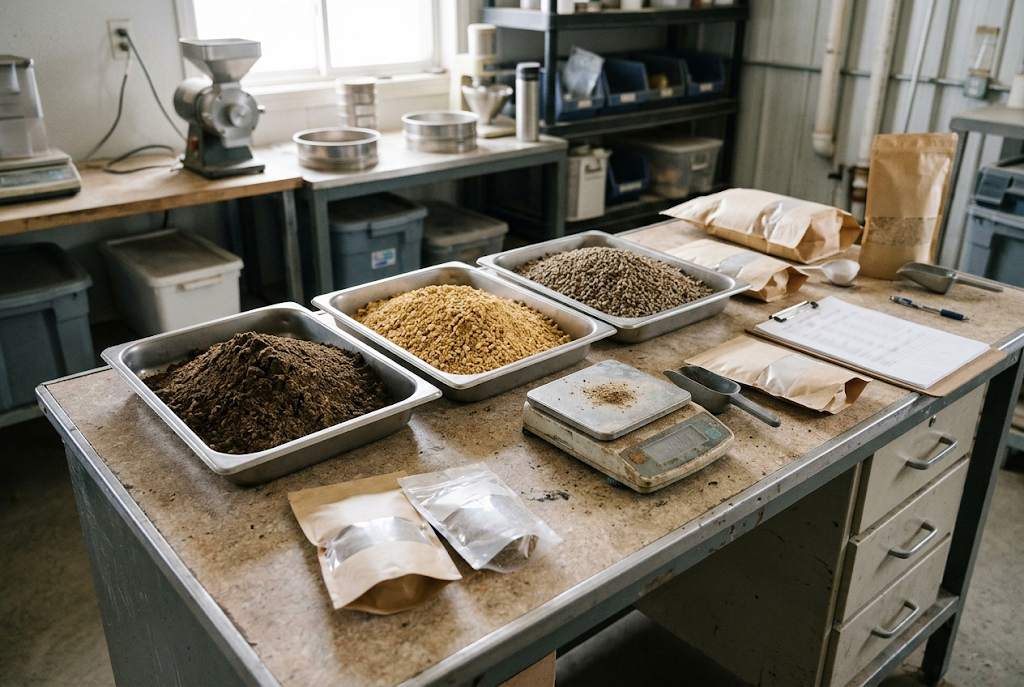
Insect meal safety and nutritional consistency depend on rearing substrates, production hygiene, harvesting, drying, milling, fat extraction, storage, and transportation. Potential hazards may include microbiological contamination, relevant chemical contaminants, foreign materials, and deterioration during storage. The appropriate control measures depend on the insect species, production pathway, processing method, and destination-market requirements. Feed manufacturers should evaluate the supplier’s preventive controls and traceability system alongside laboratory results rather than relying on a single certificate.
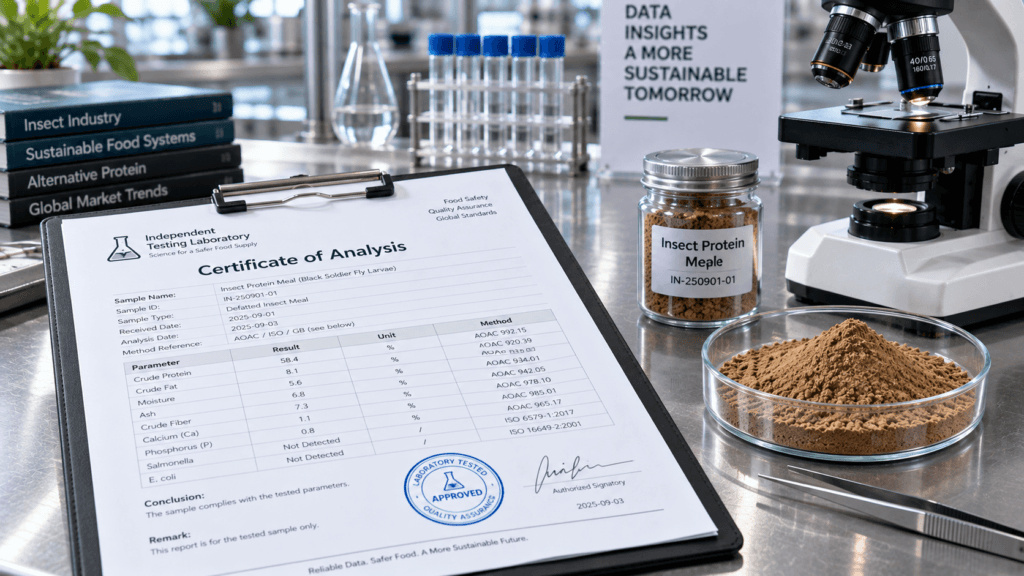
Commercial specifications should include moisture, crude protein, fat, ash, relevant minerals, and amino acid data, supported by risk-based safety testing. Full-fat products may require particular attention to oxidation stability, while defatted meals should be assessed for residual fat and processing consistency. Batch-specific certificates of analysis help buyers verify that delivered material meets the approved specification, but historical batch data and reliable production controls are also necessary. Consistency across repeated deliveries is especially important when insect meal becomes a routine component of commercial feed formulas.
10. Economics of Insect Protein in Swine Feed
The economics of insect protein depend on production costs, processing efficiency, nutrient composition, and the price of competing feed ingredients. Insect production expenses can include rearing substrates, labor, energy, harvesting, drying, fat extraction, quality assurance, packaging, and transportation. Drying requirements can be particularly important because freshly harvested larvae contain substantial moisture, while additional processing changes both the cost and nutritional characteristics of the finished ingredient. A high crude protein concentration does not necessarily translate into competitive feed economics if the delivered price remains substantially above conventional alternatives.
A preliminary comparison can calculate the cost per kilogram of reported crude protein:
Cost per kg of crude protein =Ingredient price per kgCrude protein fraction
The following hypothetical example illustrates how two insect meal grades can differ.
Metric
Full-fat insect meal
Defatted insect meal
Illustrative price
$1,800/metric ton
$2,200/metric ton
Reported crude protein
45%
60%
Cost per kg of crude protein
$4.00
$3.67
Illustrative calculations only. These are not verified market prices or supplier quotations.
The defatted product has a lower calculated cost per kilogram of crude protein in this example, but this does not establish that it produces a lower-cost swine diet. Digestible amino acids, metabolizable energy, mineral balance, additional oil requirements, and animal performance must also be considered. A more meaningful evaluation compares least-cost complete-feed formulations that meet equivalent nutritional specifications. Commercial feed manufacturers should assess both ingredient costs and the potential effects on feed conversion, growth performance, and total production economics.
11. Regulatory Requirements and Market Access
Regulatory eligibility for insect protein in swine feed differs between jurisdictions and may depend on the insect species, rearing substrates, processing method, ingredient form, and intended animal use. In the European Union, certain processed animal proteins derived from farmed insects may be used in pig and poultry feed under specified conditions. These requirements include controls relating to eligible species, production inputs, processing, and handling. Buyers should verify that the actual insect ingredient and its production pathway meet the applicable framework rather than assuming that every insect-derived product is automatically permitted.
In the United States and other markets, feed manufacturers must confirm the relevant ingredient status, permitted uses, labeling requirements, and any import restrictions before introducing insect meal into commercial pig diets. Authorization for aquaculture, poultry, or pet food does not automatically establish eligibility for swine feed. Regulatory review should therefore be conducted before supplier approval and commercial shipment planning, with appropriate documentation retained to support ingredient identity, traceability, and destination-market compliance.
12. Commercial Supply, Standardization and Procurement
Reliable commercial use requires insect protein suppliers to provide consistent specifications, dependable delivery volumes, and suitable technical documentation. Feed manufacturers should evaluate production capacity, processing controls, batch variation, quality management systems, and traceability. Variability in protein, fat, ash, calcium, and amino acid concentrations can affect formulation accuracy and require additional adjustments to the complete diet. Historical batch analyses may help buyers determine whether a supplier can maintain stable product characteristics across changes in rearing and processing conditions.
Procurement decisions should also account for packaging, shelf life, transportation, delivery terms, and procedures for handling nonconforming material. A successful laboratory sample or initial feeding trial does not establish that the supplier can consistently deliver the same ingredient at commercial scale. Buyers should develop measurable acceptance criteria and monitor supplier performance over time. Producers that can demonstrate stable quality, reliable documentation, and realistic delivery commitments will be better positioned to support long-term relationships with commercial feed manufacturers.
13. Barriers to Wider Commercial Adoption
Cost competitiveness remains one of the most significant barriers to broader insect protein adoption in swine feed. Conventional protein ingredients benefit from mature production systems, large-scale trading infrastructure, established nutrient databases, and extensive feeding experience. Insect producers must demonstrate that their products can supply digestible nutrients at an acceptable cost while maintaining reliable specifications and sufficient volume. Limited standardized digestibility data for some commercial insect grades can further complicate formulation decisions.
Regulatory differences, production capacity, processing expenses, and supply consistency also influence market development. Environmental positioning may create interest, but sustainability outcomes depend on actual substrate sourcing, energy consumption, processing efficiency, and logistics. Commercial buyers are likely to require stronger evidence of consistent animal performance and finished-feed economics before increasing insect meal inclusion across high-volume swine production systems.
14. Market Outlook for Insect Protein in Swine Feed
Near-term commercial opportunities may be strongest in selected nursery and specialty swine formulations where insect-derived ingredients can provide a clearly demonstrated nutritional or functional benefit. Broader adoption in grower-finisher diets will likely require lower production costs, stronger ingredient standardization, and dependable large-volume supply. Continued research into standardized ileal amino acid digestibility, energy values, processing effects, and commercial feeding performance will be important for translating experimental findings into practical formulation guidance.
Market development will also differ by region. Regulatory eligibility, conventional protein prices, domestic insect production capacity, and feed manufacturing practices will influence adoption. The most meaningful indicators of progress will be repeat commercial purchasing, consistent ingredient specifications, and verified performance in commercial pig production rather than production announcements or generalized claims about alternative protein markets.
IIR Analysis
The commercial potential of insect protein for swine feed depends on whether insect-derived meals can compete as defined nutritional ingredients rather than as a broad alternative-protein category. Different insect species and processing grades can have substantially different amino acid digestibility, energy contribution, mineral composition, and manufacturing characteristics. Feed manufacturers must therefore evaluate individual products using appropriate nutrient data and nutritionally balanced formulations rather than relying on crude protein concentration or generic insect meal specifications.
For insect producers, the central challenge is to convert biological production capacity into standardized, competitively priced feed ingredients with reliable analytical documentation and consistent supply. For swine feed manufacturers, the priority is to establish nutritional equivalence, animal performance, regulatory eligibility, and complete-feed economics. Wider adoption is most likely where these requirements can be demonstrated repeatedly under commercial conditions.
Disclaimer: This article is for informational purposes only and does not constitute business, legal or investment advice. Always consult primary sources and qualified professionals.