Independent intelligence for the global insect industryISSUE 01 · 2026
Insect Protein for Pet Food: Applications, Economics and Market Adoption
By IIR Editorial DeskNovember 1, 2026
Insect protein is emerging as an alternative ingredient for selected dog and cat food formulations. This analysis examines black soldier fly, mealworm and cricket ingredients, nutritional performance, palatability, allergy-related claims, production economics, regulatory requirements and commercial adoption.
Insect-derived ingredients are entering selected pet food markets, but commercial success depends on nutritional adequacy, palatability, ingredient consistency, regulatory compliance, and consumer acceptance—not protein content alone.
By IIR Editorial Desk · November 2, 2026 · Market Intelligence
The market for insect protein for pet food is developing as manufacturers explore additional protein sources for dog and cat diets. Black soldier fly larvae, yellow mealworms, crickets, and other insects can be processed into ingredients for dry kibble, wet food, treats, and specialized formulations. Their potential value extends beyond crude protein content to include digestible amino acids, fats, processing functionality, and product differentiation.
However, commercial adoption requires a different evaluation framework from that of livestock or aquaculture feed. Pet food manufacturers must consider nutritional adequacy for the target animal, palatability, ingredient safety, labeling requirements, consumer expectations, and the economics of finished products. Insect-derived ingredients may offer opportunities in selected categories, but their performance and market acceptance cannot be assumed across all species, product formats, or price segments.
1. What Is Insect Protein for Pet Food?
Insect protein for pet food refers to protein-containing ingredients derived from insects and incorporated into commercially formulated foods or treats for companion animals. These ingredients may include whole-insect meals, defatted insect meals, processed protein fractions, and other legally permitted insect-derived materials.
The term insect protein is broad. It does not necessarily mean a purified protein concentrate, and products marketed under this description may contain different proportions of protein, fat, minerals, and chitin-containing material.
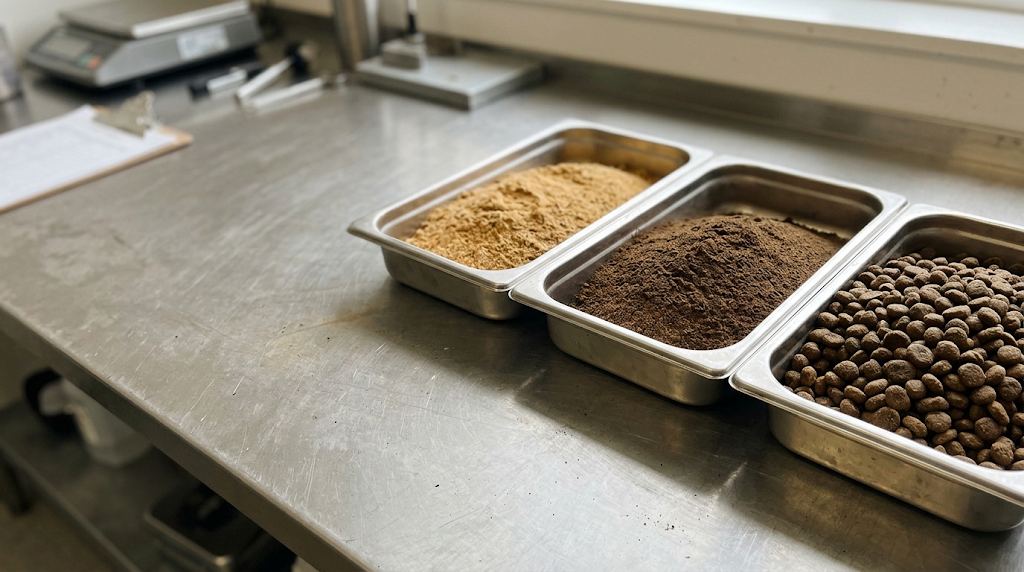
Commercial processing commonly involves insect rearing, harvesting, stabilization, drying, milling, and optional fat extraction. The resulting ingredients can differ substantially in their nutrient concentration, physical properties, and suitability for specific manufacturing processes.
For pet food formulators, the relevant question is not whether an ingredient comes from insects, but whether its verified nutritional characteristics support a safe, palatable, and appropriately formulated finished product.
2. Why Pet Food Manufacturers Are Exploring Insect Protein
Pet food manufacturers are evaluating insect-derived ingredients for several reasons, including ingredient diversification, product differentiation, nutritional functionality, and interest in alternative protein supply chains.
Conventional pet food formulations may use poultry meals, fish meals, meat by-product meals, plant proteins, and other ingredients. Insect-derived materials provide another potential option, although their nutritional and commercial value depends on the particular product grade.
Some brands position insect-based products around sustainability or alternative protein sourcing. Such claims require credible evidence because insect production does not automatically have a lower environmental impact in every system. Rearing inputs, energy consumption, processing, and transportation all influence the outcome.
Insect ingredients may also appeal to manufacturers developing limited-ingredient or novel-protein formulations. However, the term novel protein depends on the animal’s prior dietary exposure and the relevant clinical context; it should not be treated as a guarantee of reduced allergenicity.
The commercial opportunity is therefore linked to specific product needs rather than a universal replacement of conventional animal proteins.
3. Main Insect Protein Sources Used in Pet Food
Several insect species have attracted attention in pet food research and commercial development. Their nutrient profiles, processing options, supply characteristics, and regulatory eligibility differ.
Insect source
Common ingredient forms
Nutritional characteristics
Commercial considerations
Black soldier fly larvae (Hermetia illucens)
Full-fat meal, defatted meal, oil
Protein, lipids, variable calcium, and ash
Fat removal, mineral balance, scale, regulatory status
Protein, amino acids, fat, chitin-containing material
Species identity, processing, cost and availability
Other eligible insects
Species-specific processed ingredients
Variable nutrient profiles
Market authorization and reliable evidence
These are general characteristics, not fixed specifications. Actual nutrient values depend on rearing conditions, developmental stage, processing methods, and analytical procedures.
Black soldier fly larvae have attracted particular interest because of industrial-scale production efforts and the availability of multiple processed ingredient forms. Mealworms and crickets may offer different nutritional and commercial characteristics, but their suitability must be assessed independently.
A manufacturer should therefore compare specific commercial grades rather than treating all insect meals as nutritionally interchangeable.
4. Nutritional Value and Digestible Amino Acids
Protein quality is central to evaluating insect ingredients for dog and cat food. Both species require essential amino acids, but their nutritional requirements differ, and cats have particular dietary needs associated with their obligate carnivorous physiology.
Crude protein percentage alone is insufficient. Insect ingredients may contain chitin-associated and other non-protein nitrogen, which can influence conventional nitrogen-based protein calculations. Digestible amino acid availability is therefore more informative than reported crude protein concentration alone.
Processing can affect nutrient quality. Drying conditions, fat extraction, and other treatments may change protein concentration and digestibility, making ingredient-specific evidence important.
Pet food manufacturers must also ensure that complete diets meet the nutritional requirements of the intended species and life stage. This includes evaluating amino acid adequacy, energy, essential fatty acids, minerals, vitamins, and other relevant nutrients.
For cats, nutrients such as taurine require particular attention. An insect ingredient should not be assumed to provide all required nutrients simply because it has a high protein percentage.
Commercial formulation should use validated nutrient composition, appropriate digestibility information, and recognized nutritional adequacy standards for the destination market. The World Small Animal Veterinary Association provides nutritional guidance that emphasizes evaluating pet food manufacturers, nutritional expertise, and product quality rather than relying on ingredient lists or marketing claims alone.
5. Applications in Dog Food
Insect-derived ingredients can be used in selected dry dog foods, wet foods, treats, and specialized formulations where their nutritional and functional properties are suitable.
Dry kibble manufacturers must consider protein quality, fat contribution, ingredient particle size, extrusion behavior, and the palatability of the finished product. Insect meals may function as one component of a broader ingredient system rather than replacing all conventional protein sources.
In wet dog food, processing stability, flavor, texture, and product consistency become additional considerations. Treat manufacturers may have greater flexibility in ingredient positioning, although nutritional and labeling claims still require appropriate support.
Some insect-based dog foods are marketed as alternative or limited-ingredient protein products. Such positioning should be distinguished from clinically validated dietary management of adverse food reactions.
For commercial dog food manufacturers, successful adoption depends on nutritional adequacy, acceptable consumption, repeat purchasing, consistent ingredient supply, and a viable retail price.
6. Applications in Cat Food
Cat food presents distinct formulation challenges because cats have specific nutritional requirements that cannot be evaluated using dog food standards alone.
Insect meals may contribute protein and energy, but complete cat food formulations require careful attention to digestible amino acids, taurine, arachidonic acid, essential fatty acids, vitamins, and mineral balance.
The suitability of an insect ingredient depends on its processing grade and the composition of the complete diet. A high crude protein concentration does not establish that the ingredient can independently support feline nutritional requirements.
Palatability is also critical. Cats can be selective about food aroma, texture, and flavor, and acceptance of one insect-based formulation does not guarantee acceptance of another.
Manufacturers should validate finished-product nutritional adequacy and palatability for the intended feline life stage before making broad commercial claims.
7. Full-Fat and Defatted Insect Ingredients
The degree of fat removal affects how insect ingredients contribute protein and energy to pet food formulations.
Characteristic
Full-fat insect meal
Defatted insect meal
Protein concentration
Often lower due to retained lipids
Generally more concentrated
Fat contribution
Higher
Lower
Energy contribution
Includes substantial lipid energy
More protein-focused
Formulation flexibility
Protein and fat are supplied together
Dietary fats can be adjusted separately
Processing considerations
Oxidation and storage stability
Extraction consistency and protein quality
Commercial comparison
Combined protein and lipid value
Digestible protein value and processing cost
Full-fat insect meals may be useful where their lipid fraction contributes to energy and product characteristics. However, retained fat can limit flexibility when formulators need precise control over dietary fatty acids.
Defatted insect meals allow protein and added fats to be managed more independently. Their commercial value depends on residual fat, amino acid availability, processing quality, and delivered cost.
The appropriate grade should be selected through complete product formulation and manufacturing trials rather than crude protein percentage alone.
8. Palatability and Consumer Acceptance
Palatability is one of the most important factors in commercial pet food adoption. A nutritionally suitable product may still fail if dogs or cats do not consistently accept it.
Insect ingredients can influence aroma, flavor, texture, and the overall sensory characteristics of finished foods. These effects vary with insect species, processing method, inclusion level, and other formulation components.
Manufacturers may evaluate palatability through controlled feeding studies, preference testing, intake measurements, and repeat-consumption assessments. Results from one product format should not automatically be applied to another.
Consumer acceptance creates a separate commercial challenge. Pet owners may respond differently to insect-derived ingredients depending on product positioning, perceived benefits, brand trust, and price.
Clear ingredient descriptions and substantiated product claims can help manufacturers communicate the role of insect protein without overstating its nutritional or environmental advantages.
9. Insect Protein, Food Sensitivities and Allergy Claims
Insect protein is sometimes discussed as a potential alternative for pets with suspected adverse reactions to conventional food proteins. However, this topic requires careful distinction between ingredient novelty, food sensitivity, and clinically diagnosed food allergy.
An insect-derived protein may be unfamiliar to an individual animal, but that does not mean it is non-allergenic. Allergic reactions and potential cross-reactivity cannot be ruled out simply because the protein comes from insects.
Clinical assessment of adverse food reactions generally requires an appropriate veterinary diagnostic approach. Commercial pet food marketing should not substitute unsupported allergy claims for clinical evidence.
Manufacturers developing products for sensitive pets should consider ingredient purity, cross-contact controls, complete formulation, and the strength of the evidence supporting any specific claim.
The relevant commercial opportunity is the development of carefully formulated alternative-protein products, not a universal promise that insect protein prevents or resolves allergies.
10. Fishmeal and Conventional Protein Replacement
Insect-derived ingredients may be evaluated as partial replacements for fishmeal, poultry meal, or other protein sources used in pet food formulations.
The appropriate comparison depends on the nutritional and functional contribution of the ingredient being replaced. Fishmeal may provide protein, amino acids, minerals, and other characteristics that cannot necessarily be matched by insect meal on a weight-for-weight basis.
Insect meals also differ in their fatty acid composition. Replacing fish-derived ingredients with insect protein does not automatically replace long-chain omega-3 fatty acids such as EPA and DHA, which may require separate consideration in the complete formulation.
Similarly, replacing poultry-derived ingredients requires evaluation of digestible amino acids, fat contribution, palatability, processing behavior, and ingredient cost.
The strongest commercial assessment compares complete formulations that meet the same nutritional and product performance requirements.
11. Manufacturing and Product Formulation Considerations
Pet food manufacturing involves processing requirements that differ across dry kibble, wet food, treats, and other formats.
In extrusion-based dry food production, ingredient particle size, moisture, protein characteristics, fat concentration, and starch interactions can influence processing behavior and finished-product quality.
Wet food manufacturers must consider thermal processing, texture, product stability, and the interaction of insect ingredients with other components.
For treats, ingredient inclusion may be driven partly by flavor, product differentiation, or nutritional positioning, although manufacturing performance and applicable safety requirements remain important.
Commercial trials should evaluate processing consistency, finished-product appearance, nutrient retention, shelf life, and palatability.
A promising ingredient specification is only the starting point; manufacturers must verify performance in the intended finished-product format.
12. Commercial Economics of Insect Protein for Pet Food
The economics of insect-derived pet food ingredients depend on insect rearing costs, substrate availability, energy consumption, processing yields, fat extraction, quality assurance, transportation, and production scale.
Compared with high-volume livestock feed, certain pet food segments may offer greater flexibility for differentiated ingredients and premium product positioning. However, the ability to charge a premium depends on consumer demand, brand credibility, competitive alternatives, and repeat purchasing.
Ingredient price per metric ton is an incomplete measure of commercial value. Manufacturers should assess digestible nutrient contribution, processing performance, palatability, formulation requirements, and finished-product economics.
For example, a defatted insect meal may have a higher purchase price than a full-fat product but provide more concentrated protein. Whether that creates better value depends on the formulation and the cost of other ingredients needed to achieve the target nutrient profile.
Pet food manufacturers should also distinguish ingredient economics from retail pricing. A product with a high retail price does not necessarily provide higher margins after manufacturing, packaging, distribution, marketing, and retailer costs.
The relevant commercial question is whether insect-derived ingredients contribute enough nutritional, functional, or market value to justify their total cost.
13. Production Scale and Supply Reliability
Reliable commercial adoption requires suppliers capable of delivering consistent ingredient specifications at predictable volumes.
Insect production systems differ in rearing technology, permitted substrates, processing capacity, and product grades. These factors influence supply availability, batch variation, and delivered cost.
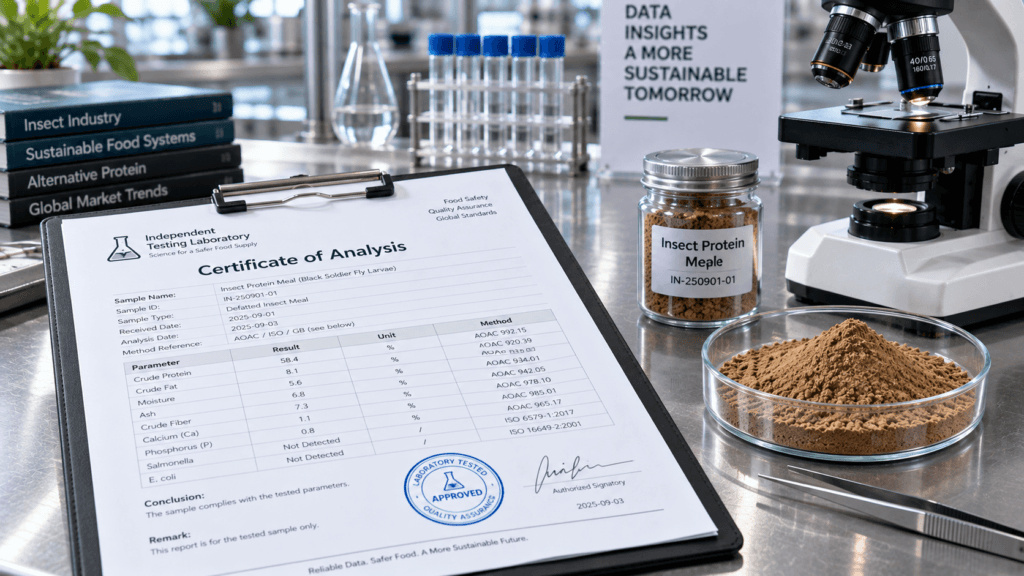
Pet food manufacturers should evaluate species identification, processing methods, nutrient specifications, traceability, laboratory documentation, and production capacity.
For full-fat ingredients, lipid stability and storage conditions may require particular attention. For defatted meals, residual fat, amino acid composition, and extraction consistency are important.
A single approved sample does not establish long-term supply reliability. Manufacturers should review historical batch data where available and establish contractual specifications for repeated deliveries.
14. Regulation, Labeling, and Ingredient Safety
The regulatory status of insect-derived pet food ingredients varies by destination market, insect species, processing method, and product classification.
Manufacturers must verify whether the intended insect ingredient is permitted for the target animal species and product category. Requirements may also apply to rearing substrates, processing controls, manufacturing, labeling, and importation.
In the European Union, certain insect-derived processed animal proteins may be used in pet food under applicable feed and animal by-product rules, subject to relevant conditions. Authorization in one jurisdiction does not establish eligibility in another.
In the United States, ingredient acceptability and labeling depend on the applicable regulatory framework, including the identity and intended use of the specific ingredient. Manufacturers should not assume that approval for one insect species or animal feed use extends automatically to all pet food applications. The U.S. Food and Drug Administration explains that pet food ingredients must meet applicable safety and regulatory requirements and that product labeling must be truthful.
Feed safety evaluation should address relevant microbiological and chemical hazards, processing controls, storage conditions, and product traceability.
Claims concerning nutritional adequacy, environmental benefits, food sensitivities, or other product attributes should be supported by appropriate evidence and comply with the rules of the destination market.
15. Commercial Market Adoption and Barriers
The commercial development of insect-based pet food is influenced by both supply-side and consumer-side factors.
On the supply side, manufacturers need consistent ingredients, reliable nutritional data, competitive processing costs, and sufficient production capacity. On the demand side, brands must establish product acceptance, trust, palatability, and a credible value proposition.
Premium and specialty pet food segments may provide opportunities for differentiated insect-based products. However, wider adoption depends on whether consumers continue purchasing these products after initial trial.
Other barriers include regulatory differences between markets, limited ingredient standardization, production costs, and uncertainty about the performance of specific insect-derived ingredients across product formats.
The market is therefore likely to develop unevenly across regions, species, product categories, and price segments rather than through immediate replacement of conventional pet food proteins.
16. Market Outlook for Insect Protein in Pet Food
Insect protein has the potential to become an established ingredient category within selected pet food applications, particularly where its nutritional characteristics, sourcing profile, or product positioning provide measurable value.
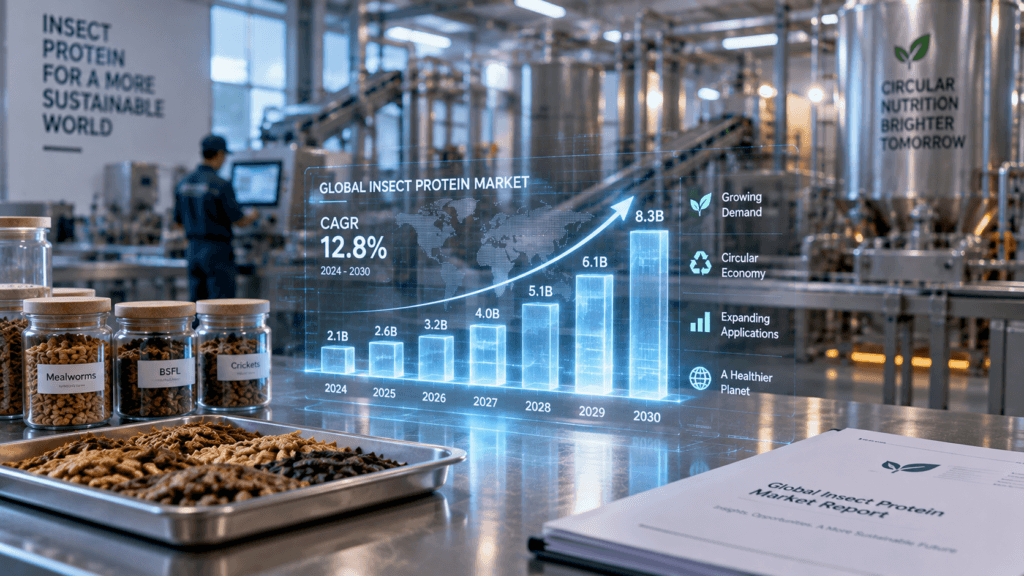
Black soldier fly larvae, mealworms, and crickets may serve different market needs because their nutritional profiles, processing options, and commercial economics differ.
Future adoption will depend on stronger ingredient standardization, reliable feeding and palatability evidence, production efficiency, regulatory clarity, and consumer acceptance.
For pet food manufacturers, the most promising opportunities are those where insect-derived ingredients can support a nutritionally adequate product with consistent quality, a credible market proposition, and sustainable commercial economics.
IIR Analysis
The market for insect protein for pet food should be evaluated differently from the broader insect protein feed industry.
In livestock and aquaculture feed, ingredient adoption is heavily influenced by feed conversion, nutrient efficiency, and production cost. In pet food, these factors remain important, but palatability, consumer trust, brand positioning, product claims, and retail economics introduce additional considerations.
Insect-derived ingredients may offer opportunities in alternative-protein and differentiated pet food formulations, but their success will depend on verified nutritional performance rather than broad claims about sustainability or allergenicity.
For manufacturers and ingredient suppliers, the strongest commercial strategy is to focus on species-specific nutrition, product-grade consistency, substantiated claims, regulatory eligibility, palatability, and finished-product profitability.
The long-term opportunity is not simply to replace conventional proteins. It is to develop insect-derived ingredients that meet clearly defined nutritional, functional, and commercial requirements within the pet food market.
Disclaimer: This article is for informational purposes only and does not constitute business, legal or investment advice. Always consult primary sources and qualified professionals.