Independent intelligence for the global insect industryISSUE 01 · 2026
Mealworms for Poultry Feed: Nutrition, Product Forms, and Commercial Use
By IIR Editorial DeskNovember 1, 2026
Yellow mealworm ingredients offer protein and lipid options for poultry feed, but their commercial value depends on digestible amino acids, processing grade, dietary performance, and cost. This analysis examines product forms, broiler and layer applications, formulation considerations, and supplier evaluation.
Yellow mealworm ingredients offer protein and lipid options for commercial poultry diets. Their nutritional and economic value depends on ingredient processing, amino acid digestibility, fatty acid composition, formulation performance, and consistent supply.
By IIR Editorial Desk · November 1, 2026 · Market Intelligence
The use of mealworms for poultry feed is attracting interest as feed manufacturers evaluate additional protein and lipid ingredients for broilers, laying hens, and other poultry production systems. Yellow mealworm larvae (Tenebrio molitor) can be processed into full-fat meals, partially defatted meals, and protein-rich defatted products, each offering different nutritional characteristics and formulation possibilities.
However, commercial suitability cannot be determined by crude protein concentration alone. Mealworm ingredients differ in digestible amino acids, residual fat, energy contribution, processing quality, and cost. Feed manufacturers must assess these factors alongside the requirements of the complete poultry diet, regulatory eligibility, and the reliability of commercial supply. Within the broader insect protein for poultry feed market, yellow mealworm ingredients represent one of several options for commercial poultry formulation.
1. What Are Mealworms for Poultry Feed?
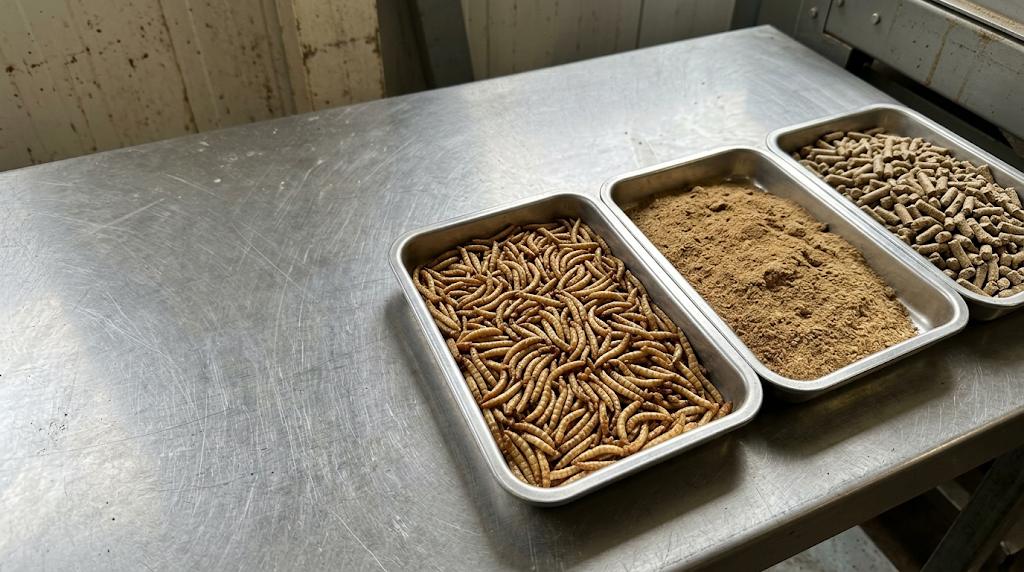
Mealworms used in poultry feed are generally the larvae of the yellow mealworm beetle, Tenebrio molitor. Commercial ingredients are produced through controlled rearing, harvesting, stabilization, drying, and, where required, milling or fat extraction. The resulting products may be incorporated into compound feed or supplied in whole dried form for certain direct-feeding applications.
The distinction between whole dried larvae and processed mealworm meal is important. Whole dried mealworms retain their recognizable insect form and are commonly associated with specialty poultry feeding and supplementary feeding markets. Processed meals are more suitable for industrial feed manufacturing, where particle size, nutrient specifications, and mixing consistency are important.
The term mealworm protein may refer to several different commercial products rather than a standardized protein concentrate. Buyers should therefore identify the insect species, processing method, residual fat content, and intended application before comparing offers.
2. Nutritional Value of Yellow Mealworm Ingredients
Yellow mealworms contain protein, lipids, minerals, and other components that may contribute to poultry nutrition. Their composition varies with rearing conditions, larval development, drying methods, and further processing. Defatting generally increases the reported protein concentration by removing part of the lipid fraction, although the resulting nutritional value must still be evaluated through digestibility and amino acid composition.
Mealworm meal may provide essential amino acids required for growth and egg production, but its amino acid profile is not identical to soybean meal, fishmeal, or other conventional protein ingredients. The formulation value of mealworm protein depends on how its digestible nutrients complement the rest of the diet.
Fat is another significant nutritional component, particularly in full-fat mealworm products. Yellow mealworms commonly contain substantial proportions of oleic and linoleic acids, although the precise fatty acid profile depends on production conditions. This characteristic distinguishes them from black soldier fly larvae, which often have a higher proportion of saturated fatty acids.
For commercial feed formulation, the relevant nutritional profile includes crude protein, digestible amino acids, metabolizable energy, crude fat, fatty acid composition, ash, moisture, and applicable safety indicators.
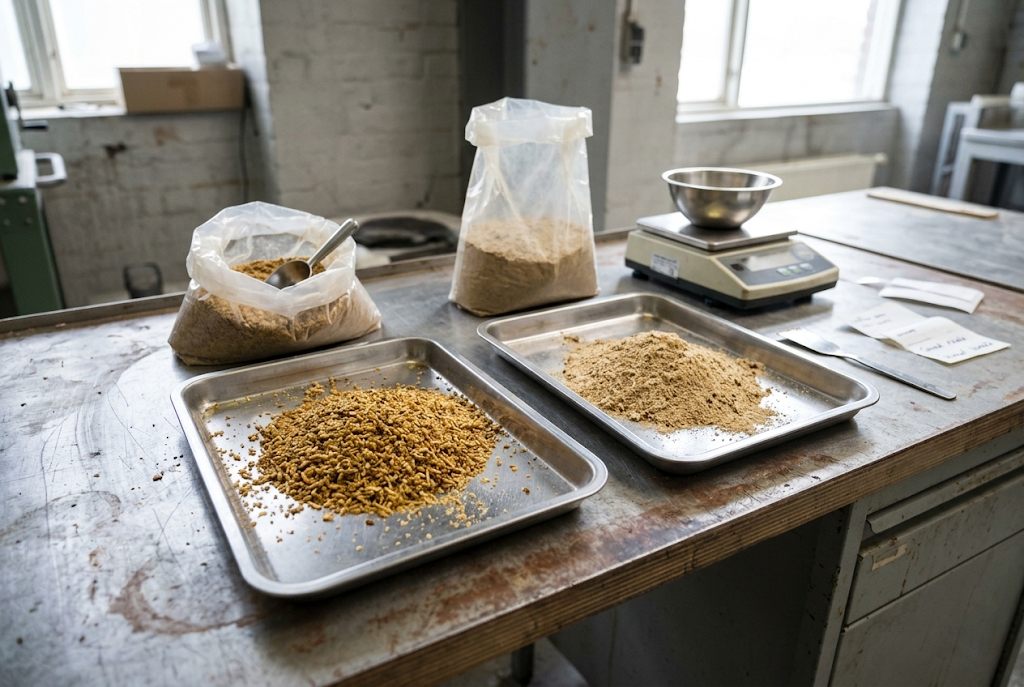
3. Full-Fat, Partially Defatted and Defatted Mealworm Meal
Commercial mealworm ingredients are available in several processed forms. The degree of fat removal affects nutrient concentration, energy contribution, handling characteristics, and the economic value of the finished product.
Partially defatted mealworm meal occupies an intermediate position, but the term does not establish a universal residual fat range. Its specification must be confirmed through analytical data.
Full-fat mealworm meal can be useful where its lipid fraction contributes energy to the finished diet. However, the higher fat concentration may limit formulation flexibility when other ingredients already provide sufficient energy or when the feed manufacturer requires tighter control over dietary fatty acids.
Defatted mealworm meal allows protein and added oils to be managed more independently. This can improve formulation flexibility, although fat extraction introduces additional processing requirements and costs. Two defatted products may also differ in protein quality, residual fat, and physical characteristics depending on their processing methods.
The appropriate grade should be selected through complete-diet formulation rather than by assuming that higher crude protein automatically indicates a better ingredient.
4. Protein Quality and Digestible Amino Acids
The nutritional value of mealworm meal depends on the concentration and availability of essential amino acids. Poultry diets must supply sufficient digestible lysine, methionine, threonine, and other amino acids according to bird species, age, and production objectives.
Crude protein alone is an incomplete indicator because conventional nitrogen-based protein calculations include nitrogen associated with chitin and other non-protein components. Consequently, a reported crude protein value should not be interpreted as an equivalent quantity of digestible true protein.
Digestibility may also vary with processing conditions, residual fat, particle size, and the characteristics of the diet. Excessive heat treatment or poorly controlled processing can affect nutrient quality, while different analytical methods may produce results that are not directly comparable.
Commercial formulators should prioritize ingredient-specific amino acid profiles and relevant digestibility evidence. When reliable digestibility coefficients are unavailable, conservative formulation assumptions and controlled feeding trials may be necessary before adopting the ingredient at scale.
5. Mealworm Lipids and Fatty Acid Composition
Yellow mealworm lipids are commonly characterized by substantial proportions of unsaturated fatty acids, particularly oleic and linoleic acids. Their precise composition can vary according to the insects’ diet, developmental stage, and processing conditions.
This fatty acid profile differs from that of black soldier fly larvae, which commonly contain more saturated fatty acids, including lauric acid. The difference matters when comparing insect ingredients because their lipid fractions may contribute differently to the energy and fatty acid composition of poultry diets.
Full-fat mealworm meal supplies both protein and lipid energy. Depending on the complete diet and inclusion level, this contribution may influence feed formulation and certain characteristics of poultry products. Such outcomes should be evaluated through relevant feeding evidence rather than assumed from the fatty acid profile alone.
The unsaturated lipid fraction also makes oxidative stability an important quality consideration. Drying, packaging, oxygen exposure, temperature, and storage duration can influence product condition. Buyers evaluating full-fat mealworm products should therefore consider appropriate lipid quality indicators alongside nutrient specifications.
6. Applications in Broiler Chicken Feed
Mealworm meal has been investigated as a partial replacement for conventional protein ingredients in broiler diets. Feeding studies have examined growth performance, feed intake, feed conversion, nutrient digestibility, and carcass characteristics under different experimental conditions. A 2024 study on low-fat mealworm meal found that higher inclusion levels adversely affected broiler growth performance and certain carcass characteristics under the tested conditions.
Results are not uniform. The performance of mealworm-containing diets depends on ingredient composition, processing grade, inclusion level, and whether the complete diet remains nutritionally balanced. A favorable result at one inclusion level does not establish that higher levels will produce the same outcome.
Full-fat mealworm meal may alter both protein and energy contributions, while defatted mealworm meal requires different adjustments to dietary fat and energy. These differences make weight-for-weight replacement an unreliable approach to commercial formulation.
For broiler feed manufacturers, the relevant assessment includes digestible amino acid supply, metabolizable energy, pellet performance, bird growth, feed efficiency, and total feed cost. Commercial adoption should be based on results obtained with comparable ingredient grades and production conditions.
7. Applications in Laying Hen Feed
Laying hen nutrition requires consistent nutrient supply over extended production periods. Diet formulation must support egg production, egg weight, shell quality, feed efficiency, and bird condition while maintaining appropriate protein, energy, and mineral balance.
Mealworm-derived ingredients may contribute protein and energy, but their inclusion must be evaluated against the requirements of the laying hen’s production stage. Full-fat products can alter dietary fatty acid composition, while defatted products provide greater flexibility for managing dietary oils separately.
Research has explored the effects of mealworm-derived ingredients on laying performance and egg characteristics. However, outcomes depend on the ingredient grade, inclusion level, feeding duration, and complete dietary formulation. Potential changes in egg composition should not be generalized across all mealworm products.
For commercial layer operations, the key question is whether a mealworm-containing diet can maintain acceptable egg output, egg quality, and feed efficiency at a competitive cost. Long-term feeding performance and reliable ingredient supply are particularly important.
8. Whole Dried Mealworms vs. Processed Mealworm Meal
Whole dried mealworms and processed mealworm meal are distinct commercial products serving different feeding and purchasing requirements.
Whole dried mealworms retain the intact appearance of the larvae and may be supplied for supplementary feeding, backyard poultry, or specialty poultry products where permitted. Their physical form can influence feeding behavior, presentation, packaging, and handling.
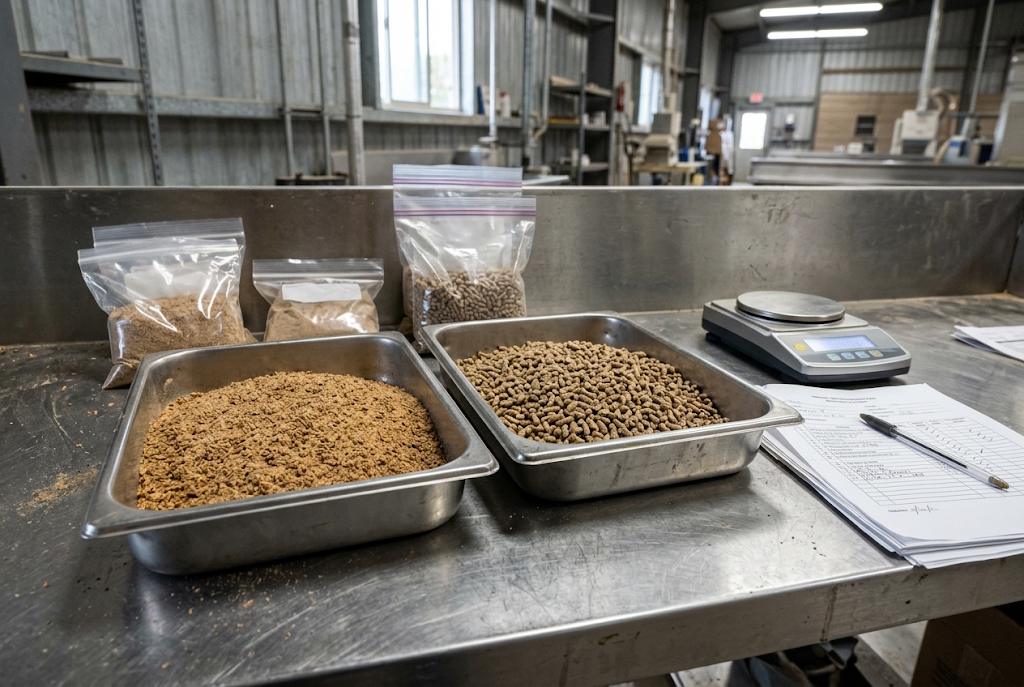
Processed mealworm meal is generally more suitable for industrial compound feed manufacturing because it can be incorporated into formulated diets with greater control over particle size and ingredient distribution. Full-fat and defatted meals also allow manufacturers to select different nutritional profiles.
These forms should not be compared solely by price per kilogram. Whole dried mealworms, full-fat meal, and defatted meal may have different moisture, fat, protein, processing, and packaging characteristics. Buyers should first define whether they require a direct-feeding product or a standardized compound-feed ingredient.
9. Mealworm Meal as a Conventional Protein Alternative
Mealworm meal may be evaluated as a partial substitute for soybean meal, fishmeal, or other protein sources used in poultry feed. However, its practical value depends on the nutrients being replaced and the cost of maintaining a balanced diet.
Soybean meal is an important conventional protein source in many commercial poultry formulations, making it a relevant economic benchmark. Fishmeal may be used in selected diets where its nutritional characteristics justify its cost, but it is not a universal component of poultry feed.
Replacing either ingredient by weight can change the complete diet’s digestible amino acid supply, energy, fat concentration, and mineral balance. Mealworm meal should therefore be evaluated through nutritional equivalence rather than a simple substitution percentage.
Different insect meals should also be assessed independently. Mealworm meal and black soldier fly larvae meal have distinct lipid and mineral characteristics, and their performance cannot be assumed to be identical at the same inclusion rate.
The most useful comparison is the contribution of each ingredient to a nutritionally adequate, cost-effective finished feed.
10. Formulation Considerations and Inclusion Limits
There is no universal inclusion rate for mealworm meal in poultry diets. Appropriate inclusion depends on the bird species, production stage, ingredient grade, nutritional targets, and the characteristics of the complete formulation.
Formulation Factor
Commercial Consideration
Recommended Evaluation
Digestible amino acids
Potential amino acid imbalance
Review ingredient-specific amino acid data
Metabolizable energy
Energy contribution varies by grade
Calculate complete-diet energy
Residual fat
Excess fat or altered lipid balance
Compare full-fat and defatted products
Fatty acid profile
Changes to dietary lipid composition
Review fatty acid analysis
Chitin-containing material
Potential effects on nutrient utilization
Assess relevant digestibility evidence
Moisture
Storage stability and shelf life
Define acceptance limits
Lipid oxidation
Deterioration of fat-containing ingredients
Apply appropriate quality testing
Particle size
Mixing uniformity and pellet performance
Conduct manufacturing trials
Batch consistency
Variation in formulation values
Monitor supplier specifications
Delivered cost
Poor economic competitiveness
Use least-cost formulation analysis
Published feeding trials can help identify inclusion levels worth investigating, but the findings should be interpreted within the conditions of each study. Commercial manufacturers should validate the selected product grade under relevant production conditions rather than applying a fixed percentage across different mealworm ingredients.
11. Processing Methods and Quality Control
Commercial mealworm ingredient production generally involves controlled rearing, harvesting, stabilization, drying, milling, and optional fat extraction. Each stage can influence the nutritional and physical properties of the final product.
Drying conditions affect moisture and storage stability, while fat extraction changes protein concentration, energy contribution, and residual lipid content. Milling influences particle size and mixing behavior. Processing consistency is therefore important for manufacturers that require repeatable ingredient performance.
Quality-control programs should address species identification, rearing substrate suitability, production traceability, microbiological hazards, relevant chemical contaminants, and batch variation. Fat-containing products may also require appropriate oxidation-related assessment.
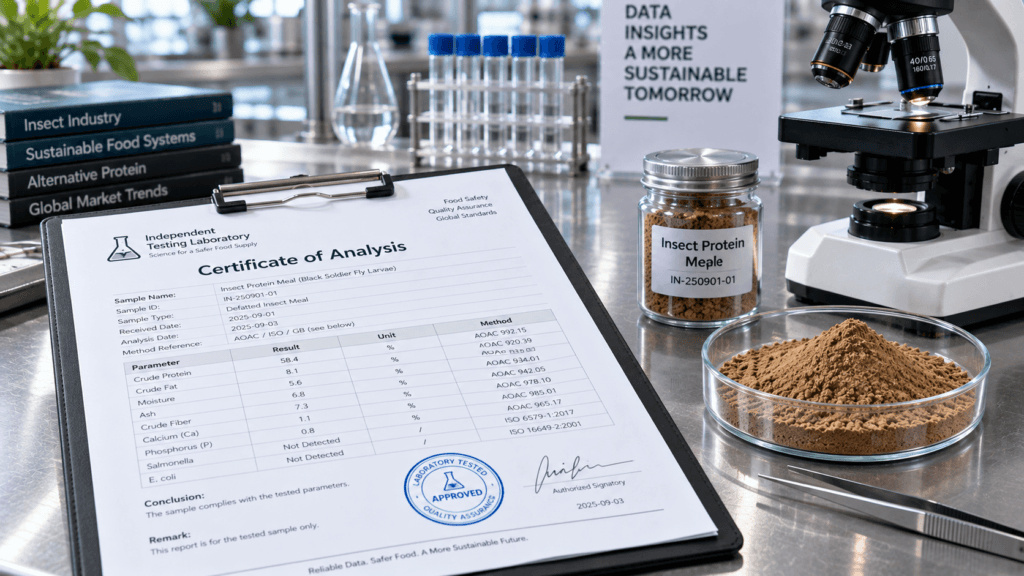
A certificate of analysis should correspond to the actual ingredient grade and production batch. Buyers should confirm analytical methods, sampling arrangements, and the laboratory’s suitability for the required tests rather than relying solely on a generic specification sheet.
12. Commercial Economics and Formulation Cost
The economics of using mealworms for poultry feed depend on rearing efficiency, substrate costs, energy requirements, harvesting, drying, fat extraction, production scale, and transportation.
Full-fat and defatted mealworm products may have different prices and nutritional contributions. Comparing them only by purchase price per metric ton can therefore produce misleading conclusions.
For preliminary screening, buyers may calculate the cost per kilogram of reported crude protein. However, this metric does not account for digestibility, essential amino acid balance, energy contribution, or the cost of other ingredients needed to complete the formulation.
Illustrative cost comparison — hypothetical figures, not market quotations
Metric
Ingredient A
Ingredient B
Product type
Full-fat mealworm meal
Defatted mealworm meal
Price per metric ton
$1,600
$2,000
Reported crude protein
45%
60%
Cost per kg of reported crude protein
$3.56
$3.33
The example shows why a higher-priced ingredient can appear more competitive when assessed by reported crude protein. It does not establish which product offers better value in a poultry diet. Digestible amino acids, metabolizable energy, lipid contribution, and formulation constraints may change the outcome.
In high-volume poultry production, conventional ingredients often establish demanding cost benchmarks. Mealworm meal may be technically suitable but commercially unattractive if the delivered cost increases the price of a nutritionally equivalent finished feed.
Specialty poultry feeds and differentiated production systems may offer additional opportunities, but commercial claims should still be supported by nutritional performance and credible purchasing economics.
13. Supplier Qualification and Commercial Sourcing
Commercial feed manufacturers require suppliers capable of maintaining consistent ingredient specifications across repeated shipments. A single acceptable sample does not establish long-term production reliability.
Supplier evaluation should cover insect species identity, processing grade, rearing inputs, nutrient composition, production capacity, batch traceability, and laboratory documentation. Full-fat and defatted products should have separate specifications because their residual fat, protein concentration, and handling requirements differ.
Buyers should also review packaging, shelf-life conditions, delivery lead times, and the supplier’s ability to manage significant changes in production or processing. Historical batch results can provide useful evidence of consistency where available.
Purchasing agreements should define relevant acceptance criteria, sampling procedures, documentation requirements, and arrangements for nonconforming material. These controls help reduce the risk of nutritional variation and production disruption.
14. Regulatory Eligibility and Feed Safety
The legal status of mealworm-derived poultry feed ingredients depends on the destination market, insect species, rearing substrates, processing method, and product classification.
In the European Union, certain processed insect proteins from eligible insect species may be used in poultry feed under specified conditions. However, this does not mean that every mealworm-derived product, production input, or processing pathway is automatically authorized. European Union rules permit certain processed insect proteins in poultry feed under specified conditions, subject to requirements covering eligible species, production inputs, and processing.
Other markets may apply different requirements for feed ingredients, manufacturing registration, importation, labeling, and permitted uses. Whole dried mealworms and processed mealworm meal may also be subject to different regulatory considerations depending on their intended application.
Feed safety evaluation should address relevant microbiological and chemical hazards, supported by appropriate production controls and testing. Suppliers and buyers should verify current market-specific requirements before introducing mealworm ingredients into a commercial poultry feed supply chain.
15. Commercial Outlook for Mealworms in Poultry Feed
Mealworm-derived ingredients have potential in selected poultry feed applications where their protein and lipid characteristics provide measurable nutritional value. Their future commercial role will depend on production efficiency, standardized ingredient grades, reliable nutritional data, and competitive delivered costs.
Full-fat and defatted mealworm meals may serve different formulation requirements, while whole dried mealworms may remain relevant to distinct direct-feeding and specialty markets. These applications should be evaluated separately because their purchasing criteria and economic structures differ.
For industrial feed manufacturers, broader adoption will require evidence that mealworm ingredients can maintain acceptable poultry performance and ingredient consistency under commercial production conditions.
IIR Analysis
The commercial potential of mealworms for poultry feed depends on matching Tenebrio molitor ingredients with the nutritional requirements and economic constraints of specific poultry production systems.
Compared with black soldier fly larvae, yellow mealworm ingredients have different lipid characteristics and may offer distinct formulation opportunities. However, these differences do not establish that either species is universally superior. Processing grade, digestible amino acids, energy contribution, feed safety, and delivered cost determine practical suitability.
For broiler and laying hen feed manufacturers, the strongest purchasing decisions will be based on verified ingredient specifications, complete-diet formulation, relevant feeding performance, regulatory eligibility, and reliable commercial supply.
Mealworm ingredients may support greater feed ingredient diversification, but their transition into recurring industrial purchasing will depend on measurable nutritional value and competitive finished-feed economics.
Disclaimer: This article is for informational purposes only and does not constitute business, legal or investment advice. Always consult primary sources and qualified professionals.