A fire at nextProtein's planned insect protein facility in Tunisia has intensified a dispute involving local residents, operating permits, and environmental concerns, raising questions about the company's industrial expansion.
A fire at nextProtein’s planned insect protein facility in Tunisia has deepened a dispute over industrial permits, environmental concerns, and community opposition, placing the company’s expansion plans under renewed scrutiny.
By IIR Editorial Desk · October 31, 2026 · Company Watch
The nextProtein factory fire in Menzel Bouzelfa, Tunisia, has intensified an industrial and regulatory dispute involving the Franco-Tunisian insect protein company. The October 21 incident damaged a facility being prepared for production, while the company’s separate, existing operation in Grombalia has faced an administrative suspension and questions over its operating authorization.
The developments followed weeks of local protests concerning the planned facility and its potential environmental impact. Residents have raised concerns about odors, water resources, and industrial activities near residential and agricultural areas. nextProtein has disputed allegations of environmental misconduct and challenged the administrative measures affecting its operations.
According to Webdo’s October 22 report on the incident, a fatal road incident occurred outside the contested Menzel Bouzelfa site before the fire. Investigations into the circumstances of the death and related events were subsequently reported.
The crisis is significant for a company seeking to expand commercial black soldier fly production in Tunisia, but the legal status of the facilities, environmental allegations, and responsibility for the fire require careful distinction.
nextProtein Factory Fire and the October 21 Incident
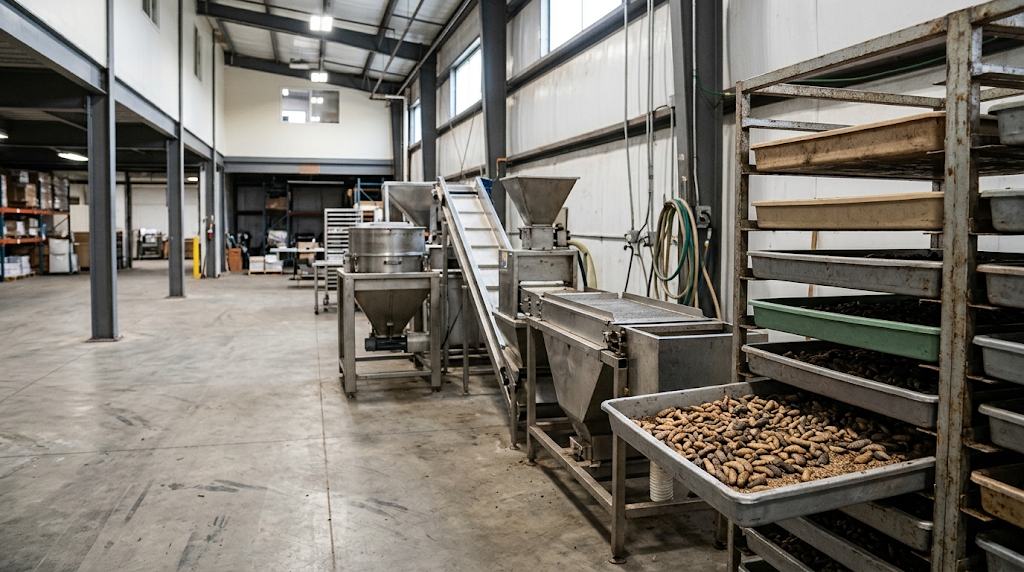
The fire occurred on October 21, 2026, at nextProtein’s Menzel Bouzelfa industrial site in Tunisia’s Nabeul governorate.
Local media reported that tensions escalated after a man died following a collision involving a vehicle near the facility. The death occurred amid protests against the project, which had already attracted substantial local opposition.
The fire followed later that evening, causing serious damage to the site.
In a subsequent public statement, nextProtein described the incident as an unlawful intrusion and an arson attack on its facility. The company said the site was still undergoing installation rather than operating as a completed commercial production plant.
These are important distinctions. Reports about the fire establish that the facility was damaged, but they do not independently resolve criminal responsibility or establish every circumstance surrounding the preceding fatal accident.
The company has also disputed claims that the Menzel Bouzelfa unit had already begun normal production. Its representatives have described the site as being prepared for processing operations, with insect rearing associated with its separate Grombalia facility.
As of October 31, publicly available information does not establish a final judicial determination of responsibility for the incident.
Operating Suspension Adds to Regulatory Uncertainty
The fire followed an administrative dispute involving nextProtein’s existing Grombalia operation.
Reports from Tunisian media indicate that an order signed on October 16 withdrew the facility’s existing operating authorization and called for further classification procedures. The company subsequently challenged the decision, questioning the basis and process used by regional authorities.
On October 21, employees from the Grombalia facility demonstrated outside the Nabeul governorate headquarters. The operation was reported to employ approximately 70 workers, making the dispute relevant to local employment as well as industrial investment.
The company has maintained that its activities were conducted under previously granted authorizations and has called for technical evaluations to establish the actual environmental conditions at its facilities.
Local residents and civil society representatives, meanwhile, have questioned whether existing regulatory classifications adequately reflect the potential impacts of large-scale insect processing and related operations.
These competing positions underscore the need to distinguish administrative decisions from technical findings.
A disputed permit classification does not, by itself, establish that every environmental allegation is accurate. Equally, possession of earlier operating approvals does not eliminate the need for continuing environmental oversight.
The ultimate legal position will depend on the relevant administrative procedures, technical evidence, and any subsequent judicial or regulatory decisions.
Environmental Concerns and Community Opposition
The controversy has focused on the potential effects of industrial insect production and organic material processing on surrounding communities.
Residents have expressed concerns about odors, waste handling, water contamination, and possible effects on nearby agricultural land.
These are relevant issues for black soldier fly facilities because production conditions, feedstock characteristics, storage practices, and residual material management can influence the surrounding operating environment.
However, the existence of an industrial activity does not establish that a specific facility has caused pollution or health problems.
A detailed October 29 investigation by Raseef22 examined claims made by residents, company representatives, and other participants. The report identified several unsupported or misleading assertions circulating during the dispute and emphasized the absence of sufficient independent evidence to resolve certain environmental allegations.
The investigation also noted that some claims about the company and the legal status of insect production were inconsistent with available records.
The central issue is therefore not whether black soldier fly farming is inherently safe or unsafe. It is whether the particular facilities operate under appropriate conditions and whether their actual impacts have been reliably measured.
Independent environmental assessments, accessible regulatory documents, and transparent reporting would provide a stronger basis for evaluating the competing claims.
Expansion Plans Face a Major Test
The dispute comes during an important period in nextProtein’s industrial development.
In November 2025, the company secured an €18 million financing package associated with plans to expand insect ingredient production in Tunisia. The funding was backed by investors including SWEN Capital Partners and British International Investment.
Its planned second production facility was designed to increase annual output capacity to approximately 12,000 metric tons of insect-derived ingredients, including about 2,500 metric tons of protein meal.
These figures represent previously announced production targets, not achieved annual output.
The project was intended to support wider commercialization of black soldier fly ingredients for aquaculture and other permitted animal nutrition applications.
The October events introduce uncertainty into that expansion strategy. Damage to an installation-stage facility may affect equipment, commissioning schedules, project budgets, and contractual planning, while restrictions on existing operations could create additional disruption.
However, the public information currently available does not establish the final financial cost of the incident, the amount of insured damage, or a revised production timetable.
Those questions will become important in determining the longer-term business consequences.
IIR Analysis: Regulatory Risk and Community Acceptance
The nextProtein crisis illustrates a commercial risk that cannot be evaluated through production technology or financing figures alone.
Industrial insect protein facilities depend on reliable biological production, suitable feedstocks, processing infrastructure, and customers. But they also depend on regulatory certainty, environmental management, and the ability to maintain workable relationships with surrounding communities.
For industrial operators, site selection therefore involves more than proximity to agricultural side streams or affordable infrastructure. It also requires attention to land use, wastewater handling, odor control, transportation, permitting conditions, and the concerns of local residents.
The technical dimension is particularly relevant. Existing black soldier fly odor research shows that feed composition and biological activity can influence volatile compounds associated with insect rearing. That research does not establish the cause of any alleged odor problem at nextProtein’s facilities, but it helps explain why environmental management deserves systematic assessment.
From IIR’s perspective, the broader business lesson is that investment readiness and operational readiness are not identical.
A company can secure financing, develop industrial equipment, and identify markets while still encountering delays related to regulatory decisions or community opposition.
Such risks can affect capital efficiency because major production investments may be committed before facilities achieve stable commercial output.
At the same time, local objections should not automatically be treated as evidence of unlawful industrial activity. Environmental claims require appropriate measurements, and companies should have access to fair and transparent regulatory processes.
A credible industrial development framework needs both elements: meaningful oversight of environmental risks and decisions grounded in verifiable evidence.
For investors and commercial buyers, the outcome of the nextProtein dispute may illustrate how permitting conditions, operational transparency, and social acceptance influence the reliability of insect ingredient supply.
What to Watch Next
Several developments will determine the future significance of the crisis.
The first is the outcome of administrative and legal proceedings concerning the Grombalia operation, including whether existing operating restrictions remain in place or are revised.
The second is the investigation into the October 21 events, including the fatal road incident and the fire at Menzel Bouzelfa.
Independent environmental findings and publication of relevant permit documentation could also help resolve disputed claims about the facilities.
For nextProtein’s commercial expansion, further announcements concerning equipment damage, revised commissioning schedules, financing, and customer supply arrangements will be particularly important.
The case demonstrates that industrial insect protein development involves more than achieving biological conversion at scale.
Long-term commercial viability also depends on regulatory clarity, environmental performance, operational continuity, and public confidence in the facilities that support production.