South Korea's Mealworm Nara has received farm-level safety certification for edible insect production, following an assessment covering 42 hygiene, feed, water, and contamination-control criteria.
South Korean insect farm Mealworm Nara has received production-stage HACCP safety certification, marking a reported national first for farm-level edible insect safety management and highlighting the growing importance of upstream production controls.
By IIR Editorial Desk · October 30, 2026 · Latest Coverage
Edible insect HACCP certification has reached a reported national milestone in South Korea after Mealworm Nara, an insect-breeding farm in Yeoju, received safety management certification for the production stage of edible insects. The recognition brings attention to hygiene, feedstock controls, and traceability before insects enter food manufacturing and processing.
Yeoju City announced the achievement on October 29, 2026, identifying Mealworm Nara as the country’s first farm to receive this production-stage certification under the newly extended edible insect safety management framework.
According to Seoul Economic Daily’s report on the certification, the certification was granted by the Korea Institute for Food Safety Management Accreditation. The review covers 42 criteria addressing breeding conditions, hygiene, feed, water, disease management, shipment procedures, and contamination prevention.
The announcement represents a development in farm-level safety management rather than a new authorization allowing all edible insects to enter every food market.
Edible Insect HACCP Extends Safety Controls to Farming
Hazard Analysis and Critical Control Points (HACCP) is a preventive food safety approach built around identifying relevant hazards and controlling them at appropriate stages of production.
In conventional food supply chains, HACCP systems are frequently associated with manufacturing and processing. However, important safety risks can also arise during the production of biological raw materials.
South Korea’s edible insect production-stage certification framework seeks to address that upstream dimension by applying structured safety management requirements to insect breeding and farm operations.
The system is described as a joint initiative involving the Ministry of Agriculture, Food and Rural Affairs, the Ministry of Food and Drug Safety, and the Korea Institute for Food Safety Management Accreditation.
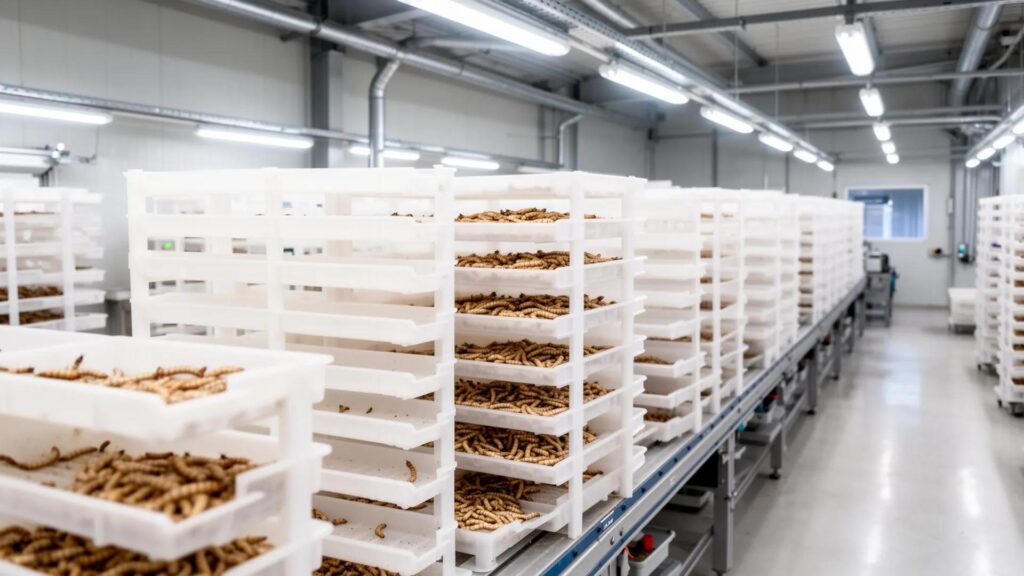
Mealworm Nara’s certification covers the management of facilities and operating procedures that influence the safety and consistency of edible insect production.
The 42 assessment criteria include breeding environments, sanitary practices, feed and water management, disease control, and shipment-stage procedures. They also address measures to prevent contamination involving pesticide residues, heavy metals, and microorganisms.
These areas are particularly relevant because risks introduced during insect rearing may not always be adequately addressed by inspecting finished products alone.
How Mealworm Nara Prepared for Certification
Mealworm Nara operates in Yeoju, a city in South Korea’s Gyeonggi Province.
Local authorities reported that the farm received support from the Yeoju Agricultural Technology Center through a 2026 pilot initiative focused on improving public awareness of the insect industry using educational and pet insects.
The farm subsequently made additional investments to improve hygiene management in its insect-rearing operations.
These measures included strengthening sanitation practices within breeding facilities and standardizing management procedures across different production stages.
The certification was therefore presented as the outcome of both local institutional support and the farm’s own investment in safety management.
Yeoju officials expect the example to help other insect producers better understand the requirements of production-stage safety systems.
However, the public announcement does not provide a complete technical audit report, individual laboratory measurements, or detailed information about the farm’s commercial production volumes.
The certification should consequently be understood within its stated scope rather than treated as proof of specific product specifications or export eligibility.
Why Farm-Level Certification Matters for Edible Insects
Edible insects present distinctive food safety management challenges because their biological development is closely linked to rearing inputs and environmental conditions.
Substrates, water, equipment, handling practices, and production hygiene can all influence the quality of harvested insects.
Depending on the species and production system, relevant hazards may include microbiological contamination, chemical residues, unsuitable feed materials, and failures in traceability.
A preventive management system can help operators identify these issues and establish procedures intended to reduce risks before final processing.
This is relevant to food manufacturers sourcing insects as ingredients. Downstream processing may include drying, heating, milling, or other operations, but those processes do not eliminate the need to control hazards originating earlier in production.
For buyers, farm-level certification can provide an additional indication that an operator has implemented structured safety procedures.
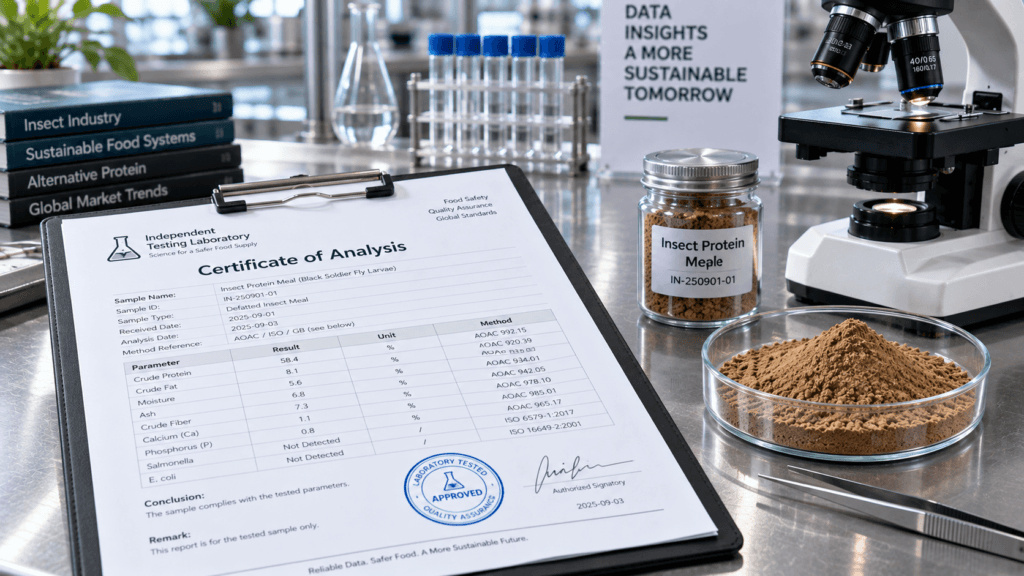
Nevertheless, certification alone does not replace batch-specific testing, appropriate documentation, or confirmation that the intended product is legally permitted in its destination market.
IIR Analysis: Certification, Traceability, and Buyer Confidence
The wider significance of Mealworm Nara’s achievement is that edible insect quality assurance is extending further upstream, toward the conditions under which insects are actually reared.
This is a relevant development for an industry seeking to move from relatively small-scale production toward more standardized food ingredient supply chains.
For commercial buyers, a supplier’s safety system should be evaluated as a connected process. Rearing inputs, hygiene controls, harvesting, processing, storage, and distribution all contribute to the quality of the final product.
A farm-level certification may strengthen confidence in the earliest stages of that process. However, it should not be treated as a substitute for product testing or processing controls.
The distinction is also relevant to the animal-feed sector. IIR’s existing guidance on mealworm meal quality explains how ingredient buyers assess batch specifications, microbiological testing, processing conditions, and documentation.
Although food and feed applications operate under different regulatory requirements, they share a practical challenge: suppliers need to show that raw material controls and finished-product verification work together.
From IIR’s perspective, the commercial value of a certification depends partly on whether buyers understand its scope.
A production-stage HACCP certificate may demonstrate that a farm has satisfied a particular management framework. It does not automatically certify every processed product, guarantee the absence of all contaminants, or establish compliance with unrelated overseas regulations.
This distinction becomes more important when companies use certifications in international sales materials.
Clear descriptions of the certified facility, covered activities, relevant product categories, and issuing body are more credible than broad claims that a supplier is universally approved for international markets.
The Korean example may encourage further development of farm-level safety systems, but wider adoption will depend on implementation requirements, costs, monitoring, and recognition by buyers and authorities.
What to Watch Next
The next development to monitor is whether additional South Korean edible insect farms adopt the same production-stage certification framework.
Information about inspection procedures, renewal requirements, and the practical costs of compliance would help producers assess the system’s commercial implications.
It will also be useful to examine whether food manufacturers begin placing greater emphasis on certified upstream insect suppliers when establishing procurement standards.
For Mealworm Nara, future disclosures about certified operations, product traceability, and commercial partnerships could provide further evidence of how the certification affects its business.
The broader lesson for the edible insect industry is that food safety begins before processing.
As commercial insect supply chains mature, preventive farm-level management, credible documentation, and product-specific verification are likely to become increasingly important to buyer confidence.