Independent intelligence for the global insect industryISSUE 01 · 2026
Mealworm Meal Quality: Key Parameters, Testing, and Buyer Red Flags
By IIR Editorial DeskOctober 19, 2026
Mealworm meal quality depends on controlled processing, ingredient safety and reliable batch documentation. This guide explains testing priorities, oxidation risks, COA checks and warning signs for commercial buyers.
This buyer’s guide examines how commercial buyers verify mealworm meal quality through processing controls, oxidation assessment, laboratory testing, batch documentation and supplier risk evaluation.
By IIR Editorial Desk · October 19, 2026 · Buyer Guides
Mealworm meal quality is an important consideration for commercial buyers sourcing insect-derived protein ingredients for aquafeed, poultry feed, pet food, and other permitted animal nutrition applications. Produced primarily from yellow mealworm larvae (Tenebrio molitor), mealworm meal can vary in nutritional composition, processing history, lipid stability, and microbiological condition. Consequently, a favorable protein percentage alone does not establish whether a product is suitable for recurring commercial supply.
For ingredient importers, feed manufacturers, and procurement teams, quality evaluation must extend from raw-material controls to finished-product testing and shipment verification. Full-fat mealworm meal presents particular lipid stability considerations, while defatted products introduce additional processing and extraction-related factors. Therefore, commercial buyers need a structured approach to identifying quality risks, interpreting Certificates of Analysis, and evaluating supplier reliability.
1. What Defines Commercial Mealworm Meal Quality?
Commercial mealworm meal quality involves three connected requirements: nutritional consistency, feed safety, and reliable manufacturing controls. Nutritional consistency helps ensure that the ingredient performs as expected in feed formulations. Safety controls address relevant biological, chemical, and physical hazards, while manufacturing reliability determines whether acceptable results can be maintained across production batches.
These requirements should not be evaluated independently. For example, a product may meet its crude protein specification while showing excessive moisture, unexpected odor, or inconsistent microbiological results. Similarly, a satisfactory laboratory report does not necessarily establish that the supplier operates a controlled and traceable production system.
A practical mealworm meal quality control program should begin with clearly defined acceptance criteria. These may cover product identity, grade, moisture, relevant nutritional parameters, microbiological requirements, chemical contaminants, and physical condition. However, the appropriate criteria depend on the intended animal species, destination market, and purchasing agreement.
Commercial buyers should distinguish a product’s typical nutritional composition from its actual batch quality. A supplier’s marketing specification describes expected characteristics, whereas batch-specific analytical results provide evidence about identified material.
2. Rearing Inputs and Raw-Material Traceability
Quality control begins before mealworm larvae enter processing. Rearing inputs, environmental conditions, harvesting practices, and separation procedures can influence the composition and safety of the harvested biomass.
Yellow mealworms may be raised on different feed materials, but a substrate’s biological suitability does not automatically establish its regulatory eligibility for animal-feed production. Therefore, suppliers should maintain appropriate controls over approved inputs, supplier qualification, receiving inspections, and material traceability.
Potential risks depend on the nature of the inputs and production environment. Relevant concerns may include undesirable chemical residues, heavy metals, foreign material, or other hazards identified through a documented risk assessment. In addition, changes in rearing inputs may contribute to nutritional variation between batches.
Commercial buyers should request an explanation of how the manufacturer approves and monitors feed substrates. This does not necessarily require disclosure of confidential formulations. Nevertheless, the supplier should be able to demonstrate that input materials are controlled, traceable, and suitable for the intended market.
A reliable traceability system should connect the finished meal to its production lot and relevant upstream records. Without this connection, investigating a quality deviation or conducting a targeted recall becomes considerably more difficult.
3. Processing Controls and Thermal Treatment
Mealworm meal production typically includes harvesting, stabilization, drying, milling, and packaging. Depending on the product grade, oil extraction may also be involved. Each operation can influence finished-product quality, and inadequate controls may create nutritional or safety problems.
Thermal treatment can contribute to microbiological risk reduction when suitable processing conditions have been validated. However, excessive heat exposure may reduce the availability of certain amino acids or otherwise affect ingredient characteristics. Consequently, the objective is to maintain an effective process rather than assume that higher temperatures always produce better-quality meal.
Drying also requires careful control. Insufficient dehydration can create storage problems, while unnecessarily severe processing may increase energy costs and affect product characteristics. Manufacturers should therefore establish operating limits appropriate to the material, equipment, and intended product.
For defatted mealworm meal, extraction introduces additional variables. Mechanical pressing, solvent extraction, and other methods can produce different residual fat levels and require different controls. Where processing aids or solvents are used, applicable residue requirements should be evaluated.
Buyers should assess whether the supplier monitors relevant process conditions, documents deviations, and prevents contamination after treatment. A finished-product COA is valuable, but it cannot replace evidence that critical manufacturing operations are consistently controlled.
4. Lipid Oxidation and Storage Stability
Mealworm meal oxidation deserves particular attention because mealworms naturally contain lipids, and some commercial meal grades retain substantial fat after processing. These lipids can undergo oxidative deterioration during manufacturing, storage, and transportation.
Oxidation may contribute to changes in odor, flavor, and product stability. However, visible appearance or smell alone cannot establish the extent of deterioration. Laboratory testing may be required when lipid stability is an important purchasing requirement or when a batch shows suspicious changes.
Peroxide value is commonly used to assess primary lipid oxidation products. Nevertheless, peroxide value alone does not provide a complete picture because these compounds can decompose as oxidation progresses. Depending on the product and testing program, additional indicators may be appropriate.
Defatted meal generally contains less residual lipid than full-fat meal, but it should not automatically be considered oxidation-free. The remaining fat can still deteriorate, particularly when processing, packaging, or storage conditions are unsuitable.
Buyers should review the product’s lipid content, storage instructions, packaging integrity, and available shelf-life evidence. In addition, long-distance shipping and warm warehouse conditions should be considered when assessing whether the ingredient will remain suitable through the intended use period.
5. Moisture, Water Activity, and Physical Deterioration
Moisture management is another important element of mealworm meal testing. Excessive moisture may contribute to caking, deterioration, and conditions that support microbial growth when other environmental factors permit.
However, moisture content and water activity measure different characteristics. Moisture describes the amount of water in the product, while water activity indicates how available that water is for microbial growth and certain reactions. Therefore, a moisture result alone cannot fully establish microbial stability.
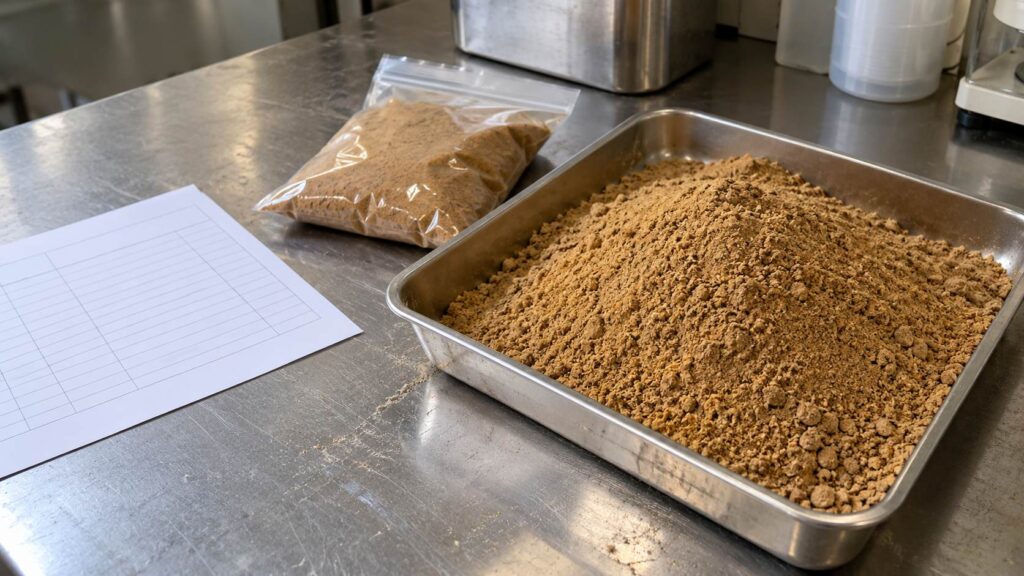
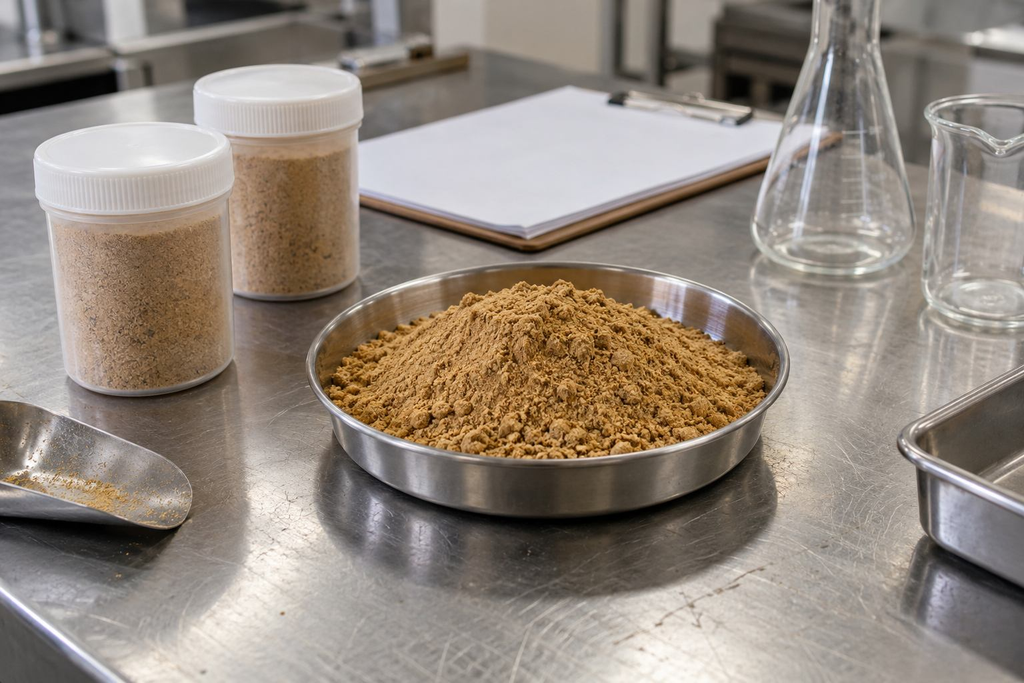
Buyers should also examine the physical condition of the meal. Unexpected clumping, discoloration, foreign material, or substantial changes in particle size may indicate handling problems or variations in processing. These observations do not automatically prove that a batch is unsafe, but they may justify further investigation.
Packaging should protect the ingredient from moisture exposure and contamination during transportation. Damaged bags, condensation, and unsuitable warehouse conditions can compromise a product even when its original manufacturing results were acceptable.
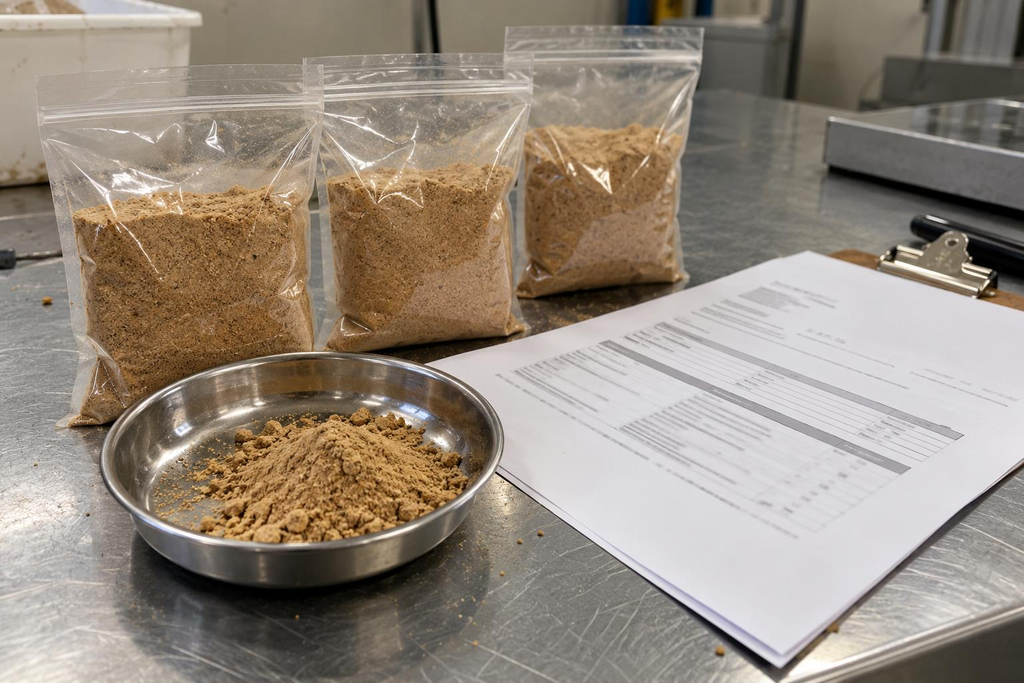
For recurring orders, buyers should compare the condition of incoming shipments with approved reference samples and agreed physical specifications.
6. Microbiological Testing and Manufacturing Hygiene
Microbiological safety is a fundamental consideration for mealworm meal intended for regulated animal-feed applications. Relevant hazards and indicator organisms should be identified through the applicable regulatory requirements and the manufacturer’s hazard analysis.
Depending on the product and market, microbiological testing may include Salmonella and other relevant organisms or indicators. Nevertheless, a negative result from one sample does not demonstrate that every part of a production lot is free from contamination. Sampling limitations must be considered when interpreting laboratory findings.
Validated processing and hygienic handling are therefore essential components of the safety system. Suppliers should monitor relevant treatment conditions, maintain suitable sanitation procedures, and manage the risk of recontamination after processing.
Post-treatment operations deserve particular attention. Cooling, milling, conveying, screening, and packaging may expose the ingredient to equipment or environmental contamination if preventive controls are inadequate.
In addition, manufacturers should have procedures for handling unsatisfactory microbiological results. These should address affected material, investigation, corrective actions, and appropriate release decisions rather than relying solely on repeated testing.
Commercial buyers should agree on microbiological acceptance criteria before shipment and verify that the supplier’s testing methods and sampling arrangements are suitable for the intended market.
7. Heavy Metals, Pesticides, and Chemical Contaminants
Mealworm meal contaminants should be evaluated through a risk-based approach that considers rearing inputs, production conditions, processing materials, and the destination market.
Potential chemical hazards may include relevant heavy metals, pesticide residues, or other undesirable substances. However, their occurrence and significance depend on the production system, and buyers should not assume that every contaminant is present in every insect-derived ingredient.
For example, certain substances may be introduced through rearing inputs or environmental exposure. Other concerns may arise from equipment, processing aids, or unsuitable storage materials. Therefore, the supplier’s hazard assessment should explain why particular contaminants are monitored and how associated risks are controlled.
Commercial buyers should review the analytical methods, reporting units, detection limits, and applicable acceptance criteria. A statement such as “heavy metals passed” provides limited information unless the actual parameters and results are available.
In addition, the applicable legal limits may differ between jurisdictions and animal-feed categories. Suppliers and importers should verify the relevant requirements rather than apply a single assumed global standard.
Where the risk profile warrants it, independent laboratory testing can provide additional assurance during supplier qualification or investigation of a disputed batch.
8. Ash, Chitin, and Unexpected Nutritional Variation
Nutritional variation can also signal quality-control problems, even when no immediate safety issue has been identified. Crude protein, fat, ash, and moisture may change with the larvae’s composition, processing conditions, or degree of oil removal.
Ash represents the mineral residue remaining after combustion. An elevated ash percentage does not automatically indicate contamination, particularly in products that have undergone defatting. However, unexplained changes in ash or individual mineral results may warrant a review of raw materials and manufacturing records.
Chitin is another component requiring careful interpretation. It contains nitrogen and can affect conventional crude protein calculations. Consequently, a high reported crude protein percentage should not be interpreted as proof of equivalent digestible protein or amino acid availability.
Buyers should focus on whether the supplier can maintain agreed nutritional ranges across recurring batches. If protein, fat, or ash results change significantly without an explained change in product grade, additional investigation may be appropriate.
For formulation-sensitive applications, historical analytical trends are often more informative than a single unusually favorable result.
9. How to Review a Mealworm Meal Certificate of Analysis
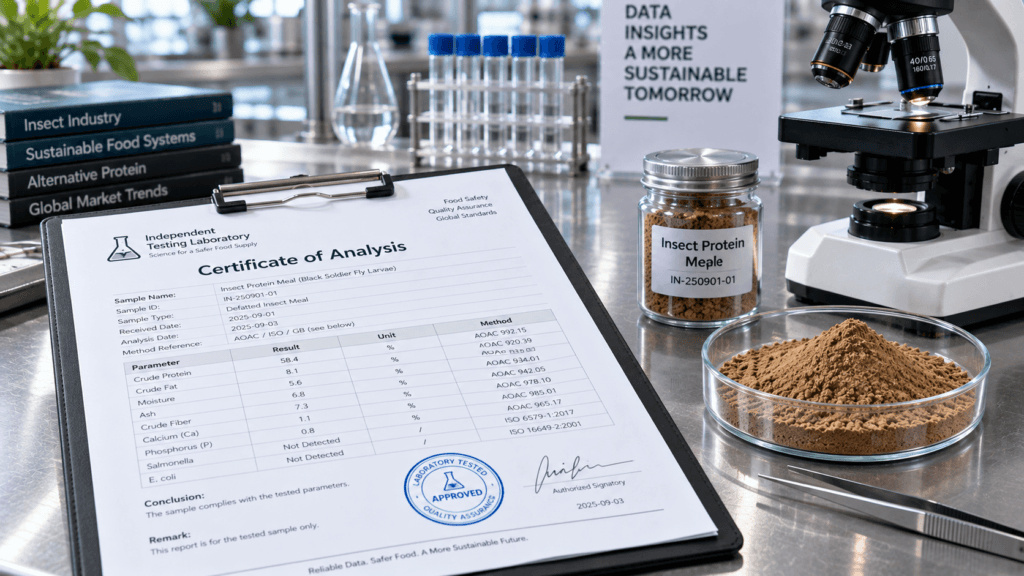
A Certificate of Analysis provides an important link between laboratory testing and commercial product release. However, a mealworm meal COA is useful only when the reported results can be associated with identifiable material and interpreted against the buyer’s requirements.
A credible COA should identify the product, production batch or lot, testing dates, relevant analytical parameters, reporting units, methods, and measured results. Depending on the purchasing agreement, it may also identify the laboratory, sampling details, and acceptance criteria.
Buyers should distinguish between typical product values and actual batch results. A generic specification sheet does not establish that the current shipment has been tested, while a laboratory report from an unrelated lot cannot demonstrate the condition of the material being purchased.
The analytical basis is equally important. Protein, fat, moisture, and ash may be reported on an as-fed or dry-matter basis. In addition, microbiological results may use different sample quantities, while chemical contaminant reports may include detection or quantification limits.
A buyer should investigate missing batch identification, unclear methods, inconsistent reporting units, or unexplained differences between the COA and the product specification. Where necessary, original laboratory records or representative independent testing can help resolve discrepancies.
The COA should support the supplier’s broader quality-management system rather than serve as its only evidence of control.
10. Batch Consistency and Supplier Quality Systems
A satisfactory sample does not necessarily establish reliable commercial production. Mealworm meal is derived from biological material, and variation can arise from rearing conditions, harvesting, drying, oil extraction, and other operations.
Therefore, commercial buyers should review multiple production batches rather than rely exclusively on a single sample. Historical results can help identify trends in protein, fat, moisture, ash, microbiological performance, and relevant contaminants.
A functioning quality system should include documented input controls, equipment maintenance, process monitoring, traceability, nonconforming-product procedures, and corrective actions. These systems help manufacturers detect problems and prevent unsuitable material from being released.
In addition, supplier transparency matters. A manufacturer should be able to explain how it investigates abnormal results, handles customer complaints, and implements corrective measures. Repeatedly issuing replacement laboratory reports without explaining discrepancies is not a substitute for effective quality management.
For long-term procurement, repeatable product quality and reliable documentation can be more commercially valuable than one exceptional nutritional analysis.
11. Buyer Red Flags That Require Investigation
Commercial buyers should distinguish between confirmed noncompliance and warning signs that require additional verification. Some problems may be resolved through documentation, while others may require a shipment hold, independent testing, or supplier disqualification.
Buyer red flag
Why it matters
Recommended action
Strong rancid or unusual odor
Possible lipid deterioration or other quality issue
Hold the material and investigate
Unexpected clumping or moisture
Possible storage or packaging problem
Check packaging, moisture, and water activity
COA without a batch number
Insufficient traceability
Request lot-specific documentation
Identical results across unrelated batches
Possible use of typical values rather than actual testing
Request original laboratory reports
Unexplained fat variation
Processing or grade inconsistency
Review production and extraction records
Unexplained ash increase
Potential raw-material or process change
Investigate mineral composition
Missing microbiological information
Safety verification may be incomplete
Review hazard controls and testing requirements
No substrate-control explanation
Upstream chemical risks may be unclear
Request a documented control summary
Unclear protein testing method
Supplier comparisons may be misleading
Verify analytical method and conversion factor
Damaged or unsuitable packaging
Increased contamination or moisture risk
Inspect shipment and assess affected lots
Unresolved regulatory status
Ingredient may not be permitted for the intended use
Verify eligibility before procurement
Repeated unexplained COA revisions
Documentation reliability is uncertain
Escalate supplier qualification review
A warning sign should trigger proportionate investigation. However, material that fails an applicable legal or contractual safety requirement should not be released merely because its nutritional specifications are attractive.
12. A Practical Mealworm Meal Quality Approval Workflow
A structured approval process helps commercial buyers assess mealworm meal consistently before accepting recurring shipments.
Step 1 — Confirm product identity. Verify the scientific species, full-fat or defatted grade, processing description, and intended application.
Step 2 — Define acceptance criteria. Establish agreed nutritional, microbiological, chemical, and physical requirements before procurement.
Step 6 — Make a documented release decision. Approve, hold, or reject material according to the applicable requirements and purchasing agreement.
Step 7 — Monitor ongoing performance. Compare subsequent batches, review deviations, and evaluate whether corrective actions have been effective.
This approach reduces dependence on isolated supplier claims and provides a clearer basis for long-term purchasing decisions.
IIR Analysis
The commercial challenge in evaluating mealworm meal quality is distinguishing a favorable nutritional specification from evidence of reliable manufacturing and product safety. A high crude protein percentage may support ingredient positioning, but it cannot independently establish lipid stability, microbiological control, contaminant compliance, or batch consistency.
For buyers, the strongest evaluation framework combines controlled rearing inputs, validated processing, and batch-specific verification. These elements address different risks and should function together rather than replace one another.
The distinction between full-fat and defatted mealworm meal is particularly important. Full-fat products require appropriate attention to lipid oxidation and storage stability, while defatted products introduce additional extraction-related variables. Nevertheless, both grades depend on consistent processing, traceability, and credible analytical documentation.
As commercial insect ingredients develop, suppliers capable of demonstrating transparent quality systems and repeatable batch performance will be better positioned to support industrial procurement. Ultimately, successful supplier qualification depends not on one attractive laboratory result, but on the ability to deliver safe, consistent, and application-appropriate mealworm meal over time.
Disclaimer: This article is for informational purposes only and does not constitute business, legal or investment advice. Always consult primary sources and qualified professionals.