Researchers have examined volatile compounds released during black soldier fly larvae production, highlighting the potential role of feed composition in odor management.
New research into volatile compounds released during black soldier fly larvae rearing highlights how feed composition and biological activity may influence odor management in insect production facilities.
By IIR Editorial Desk · October 18, 2026 · Latest Coverage
Researchers in South Korea have examined the volatile organic compounds released during black soldier fly larvae production, finding substantial differences between rearing systems containing larvae and those containing feed alone. The study also found that feed composition and larval development influenced the chemical profiles detected during the experimental period.
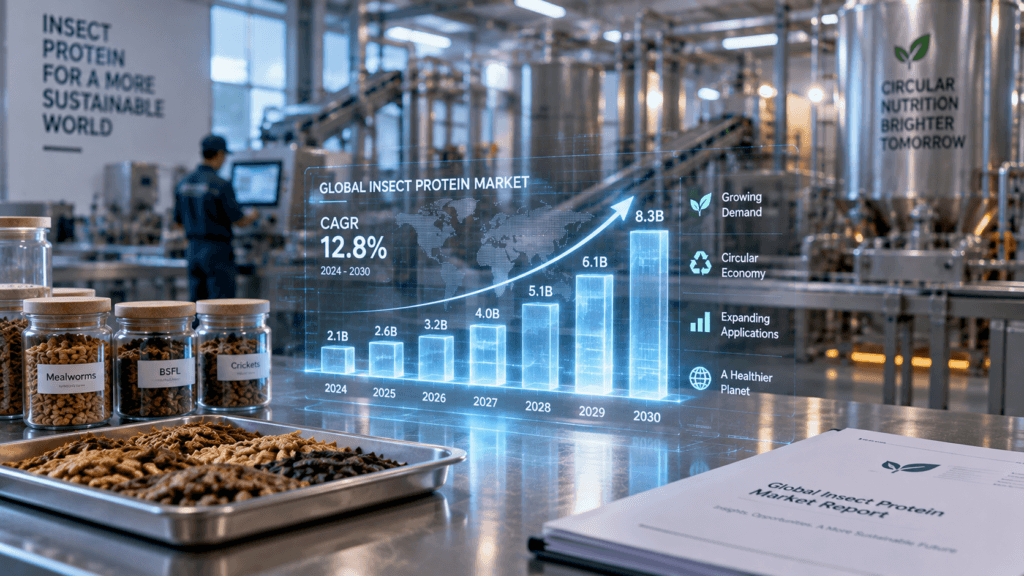
The findings add to growing research into the environmental and operational conditions associated with commercial insect farming. While black soldier fly larvae are widely investigated for converting suitable organic materials into valuable biomass, understanding emissions from rearing facilities remains important as production systems develop.
The study, titled TD–GC–MS Profiling of Volatile Organic Compounds and Potential Odor Relevance During Insect Protein Production, was reported in Food Chemistry: X. Researchers analyzed volatile emissions from black soldier fly larvae raised on three commercial animal feeds during a 15-day experimental period.
How the Researchers Examined Black Soldier Fly Odor
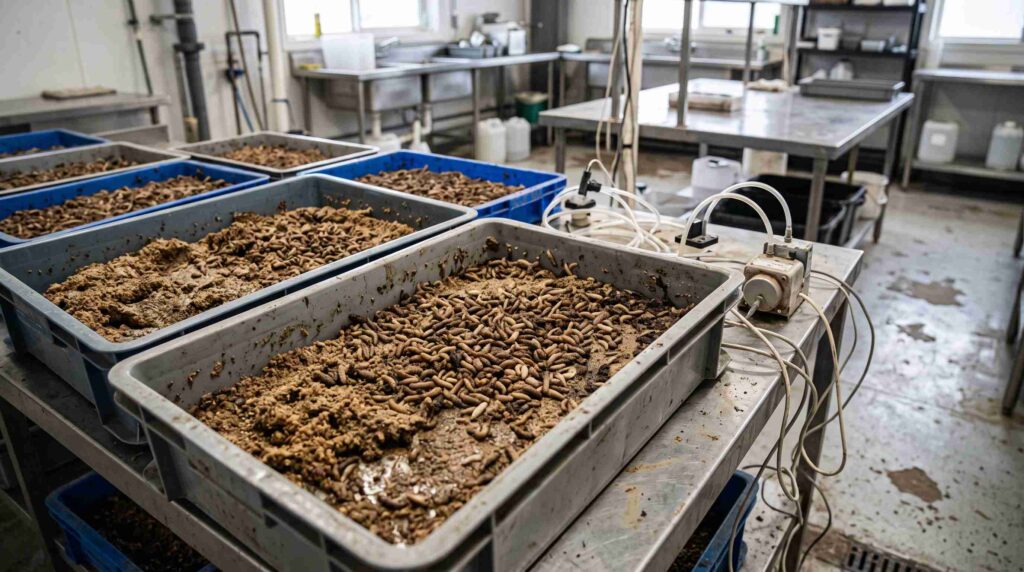
The research compared larvae raised on dog feed, fish feed, and pig feed under controlled conditions. Parallel containers containing feed without larvae were used to distinguish emissions associated with the rearing process from those generated by the feed materials alone.
Researchers collected volatile compounds at different stages of larval development and analyzed them using thermal desorption coupled with gas chromatography–mass spectrometry.
According to the reported results, the combined chromatographic signal from containers containing larvae was approximately 52 times higher than that measured in containers without larvae. This finding suggests that larval activity and associated biological processes made a substantial contribution to the detected volatile compounds.
The chemical profiles also varied with feed composition. The fish-feed treatment, which contained relatively high levels of protein, generated a greater diversity of tentatively identified odor-associated compounds than the pig-feed treatment.
Researchers identified volatile substances associated with sulfurous, fishy, and other potentially unpleasant odors. Their relative abundance also changed during the rearing cycle, suggesting that different stages of insect development may produce distinct chemical conditions.
However, detecting an odor-associated compound does not establish how strongly that compound would be perceived in an operating facility. Actual odor exposure depends on factors including concentration, ventilation, environmental conditions, and human sensory thresholds.
Why the Findings Matter for Insect Production
Commercial black soldier fly farming involves more than growing larvae efficiently. Facilities must also manage substrates, temperature, moisture, microbial activity, and other operating conditions that can affect production consistency.
Odor management may become an increasingly relevant consideration as insect facilities grow in size or operate near other commercial or residential activities. The research provides a scientific basis for further investigation into how substrate selection and rearing conditions influence volatile emissions.
Feedstock selection is particularly important because commercial operators must balance nutritional value, material availability, handling requirements, cost, and regulatory suitability. Understanding potential emissions adds another dimension to these decisions.
Nevertheless, the experiment does not establish that any particular feed type will necessarily cause odor problems at commercial scale. Industrial facilities differ substantially in substrate composition, airflow, production methods, and operating conditions.
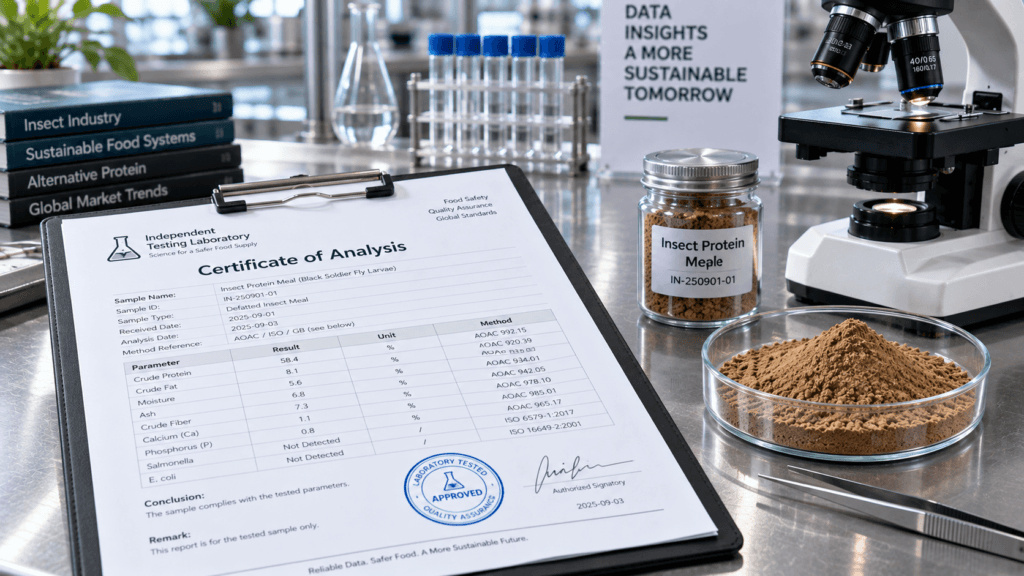
The study also does not demonstrate that volatile compounds detected during rearing remain present in finished insect ingredients. Harvesting, drying, extraction, and other processing operations may alter chemical profiles, making additional research necessary.
IIR Analysis: Odor Management and Commercial Scaling
The commercial significance of this research extends beyond identifying volatile compounds. As black soldier fly production moves toward larger facilities, odor management may become an increasingly important consideration in site selection, substrate handling, ventilation, and relationships with surrounding communities.
From an industry perspective, feedstock selection is not simply a nutritional or procurement decision. Different substrates can influence biological activity, operational complexity, and potentially the cost of environmental controls. Producers evaluating lower-cost organic feedstocks may therefore need to consider whether savings in raw material procurement are offset by additional handling or odor-management requirements.
This also raises a broader question for the economics of black soldier fly production: how should operators evaluate environmental management costs alongside larval growth rates and feed conversion performance?
The research suggests that these operating factors deserve greater attention, but it does not establish which substrates would produce the lowest odor-control costs at commercial scale. That remains an important question for future research and industrial validation.
What to Watch Next
Future research will need to connect volatile compounds measured during rearing with those detected in harvested larvae and processed insect ingredients.
Combining chemical analysis with sensory testing and measurements taken inside commercial production facilities could help determine whether particular compounds contribute to meaningful odor-management challenges.
Further work may also clarify whether different processing methods reduce or transform compounds associated with undesirable odors. These findings could eventually inform more consistent approaches to substrate assessment, production management, and finished ingredient quality.
For now, the study provides additional information about the chemistry of insect rearing rather than evidence of a newly established health hazard.
As the insect industry develops, understanding how feed composition, biological activity, and operating conditions interact may become increasingly relevant to producers seeking efficient and commercially sustainable black soldier fly systems.