Independent intelligence for the global insect industryISSUE 01 · 2026
Earthworm Market Demand: Feed, Pet Food, and Emerging Applications
By IIR Editorial DeskOctober 8, 2026
Earthworm market demand spans established live-worm markets, developing animal-feed applications and emerging processed ingredients. This analysis examines buyer requirements, product forms and the factors shaping recurring commercial demand.
This analysis examines earthworm market demand across live-worm markets, aquaculture, poultry feed, pet food and emerging processed ingredients, distinguishing established purchasing activity from research potential and developing commercial opportunities.
By IIR Editorial Desk · October 8, 2026 · Market Intelligence
The earthworm market demand landscape includes several distinct commercial markets, from live worms used in bait and animal feeding to processed earthworm biomass for aquaculture, poultry nutrition, and specialized pet products. These markets differ substantially in product form, purchasing behavior, quality requirements and commercial maturity.
Earthworms are annelids rather than insects, but they occupy an overlapping position within the alternative-protein and biological-resource economy. Their nutritional composition and ability to grow on suitable organic substrates have attracted research interest. However, technical suitability does not automatically establish a large or mature market for processed earthworm ingredients.
1. Earthworm Demand Covers Several Distinct Markets
Commercial demand for earthworms is not limited to animal feed ingredients. Live worms are sold into bait, vermiculture, breeding, and selected animal-feeding markets, while processed biomass can serve buyers seeking alternative nutritional materials. These channels have distinct purchasing patterns and should not be combined into a single undifferentiated market estimate.
Established live-worm businesses demonstrate that earthworms already have commercial value, but they do not prove equivalent demand for dried earthworms or earthworm meal. A buyer purchasing live breeding worms has different requirements from a feed manufacturer evaluating a standardized protein ingredient.
For market analysis, it is useful to separate three levels of development: established trade in live worms and traditional uses, developing applications in formulated animal nutrition, and emerging opportunities involving more specialized processed ingredients. This distinction helps prevent the size of one market from being incorrectly attributed to another.
2. Aquaculture Is an Important Feed Application
Aquaculture is one of the most relevant research-backed applications for earthworm-derived feed ingredients. Earthworms contain protein and amino acids that have encouraged investigation of their potential to replace a portion of conventional protein sources in fish diets.
Research on Eisenia fetida has examined its suitability as an alternative protein source in fish feed, including the influence of biological production, nutritional composition, and processing methods. The findings support the technical potential of earthworm meal, although performance depends on fish species, ingredient characteristics, and formulation.
Commercial demand remains a separate question. Feed manufacturers evaluate alternative ingredients according to nutritional performance, delivered price, availability, consistency, and regulatory eligibility. A promising feeding trial may justify further evaluation, but it does not establish recurring procurement at an industrial scale.
3. Poultry Feed Offers a Different Demand Pathway
Earthworms are part of the natural diet of many birds, and their use in poultry nutrition has attracted interest as a way to provide additional protein through fresh or processed biomass. Research has evaluated earthworm meal as a partial substitute for conventional feed ingredients in poultry diets.
A review of earthworms as an alternative protein source in poultry and fish farming examined feeding performance and identified potential applications while noting that economic and environmental benefits had not been fully evaluated. This distinction matters because biological feasibility and commercial competitiveness are not equivalent.
Large poultry-feed manufacturers generally operate within tightly controlled formulation and purchasing systems. Earthworm-derived ingredients would need to meet requirements for consistent composition, safety, cost, and supply volume. Smaller farms may have different purchasing incentives, particularly where vermiculture can be integrated with local agricultural operations.
4. Pet Food and Specialty Animal Nutrition
Pet food represents a potentially differentiated market for earthworm-derived products, but it should not be treated as an established large-scale ingredient category without supporting sales evidence. The relevant opportunities vary between companion animals, specialty pets, and animals whose natural feeding behavior includes earthworms.
Whole earthworms may be relevant to certain reptile, amphibian, fish, and bird-feeding applications, while processed products could be evaluated for more specialized formulations. Buyer requirements can include species identity, product size, cleanliness, palatability, moisture, and traceability.
The commercial opportunity also differs from mainstream pet-food protein markets. Ingredient suppliers cannot assume that consumer interest in insect-based pet food automatically transfers to earthworms. Earthworm-derived ingredients require their own evidence of acceptance, regulatory suitability, and repeat purchasing demand.
5. Live Worms and Dried Products Serve Different Buyers
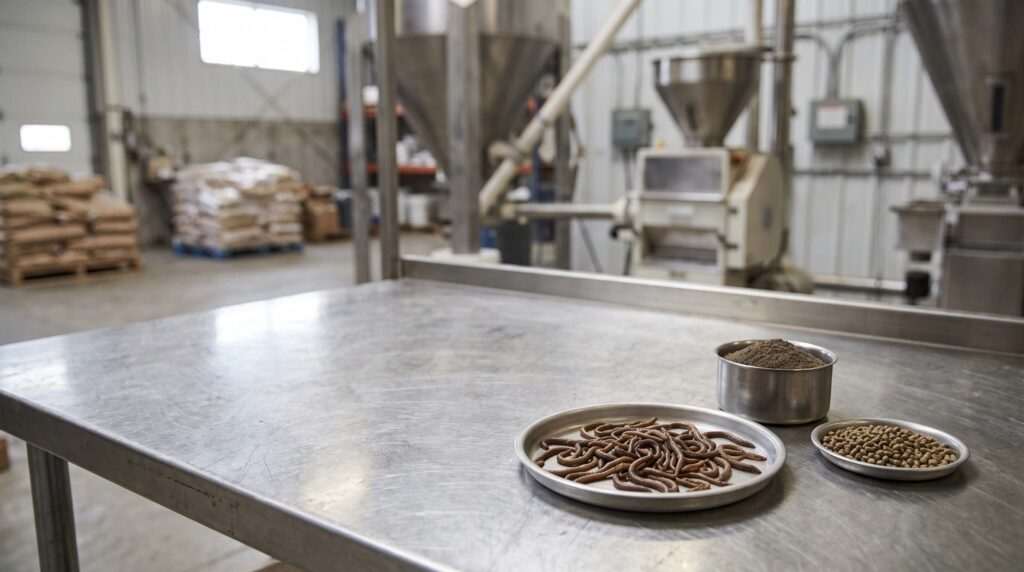
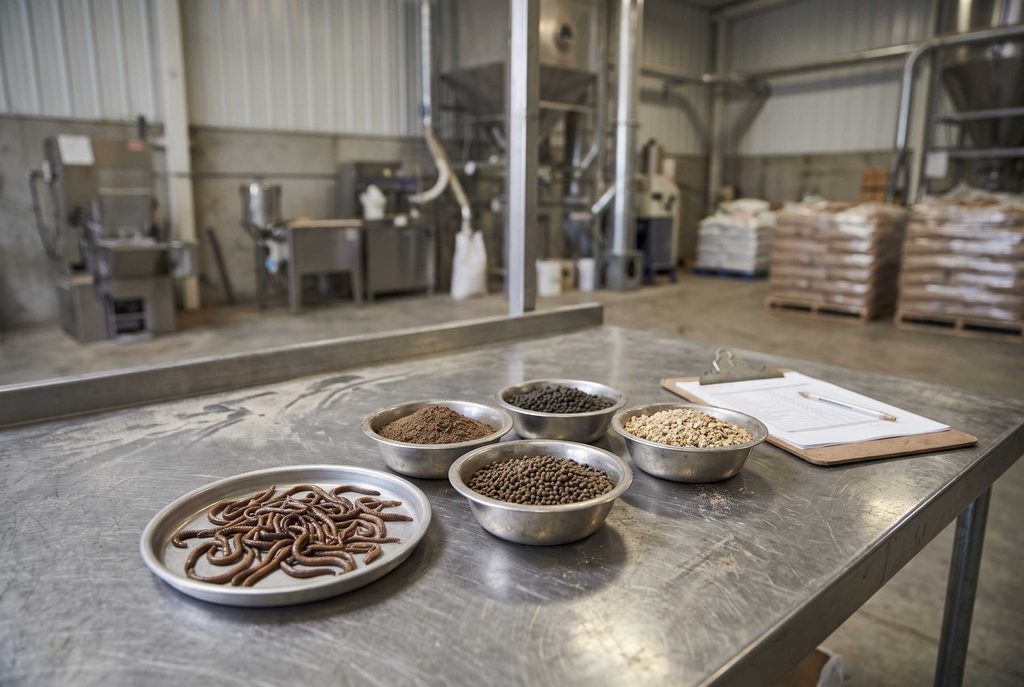
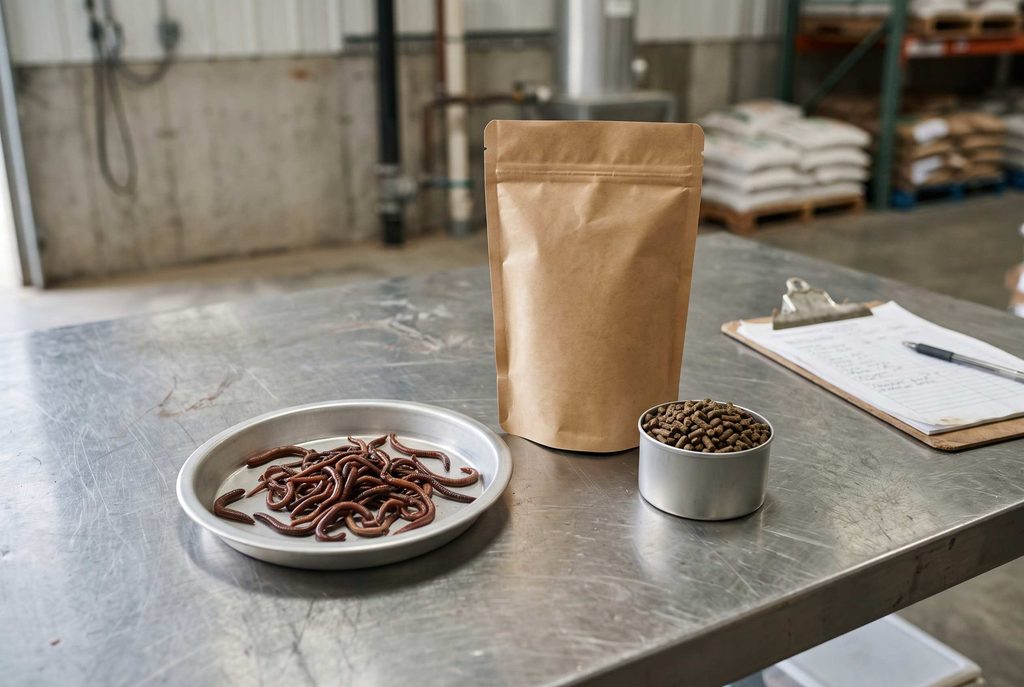
Product form is one of the most important variables in the earthworm market demand. Live worms are biological products requiring appropriate handling, storage, and transportation, while dried whole earthworms and earthworm meal are processed ingredients with different logistical and commercial characteristics.
Live-worm buyers may prioritize viability, species, size, and breeding performance. Buyers of dried whole earthworms may focus on appearance, moisture, cleanliness, and physical integrity. Earthworm meal buyers are more likely to evaluate nutritional composition, particle size, contaminants, and consistency between batches.
These distinctions affect the size of the addressable market. A supplier capable of producing live worms is not automatically equipped to serve industrial feed manufacturers, while a dried-ingredient producer may need additional processing, testing and documentation before entering commercial formulations.
6. Nutritional Performance and Price Shape Feed Demand
Earthworm-derived feed ingredients compete with established protein sources, including fishmeal, soybean meal and other animal- or plant-derived materials. Their commercial value depends on the contribution they make to a specific feed formulation rather than on crude protein content alone.
Digestibility, amino acid composition, inclusion level, palatability and processing characteristics can all influence performance. Buyers also consider the cost of delivering a usable quantity of nutrients, making price per kilogram only one part of the purchasing decision.
A feed ingredient may perform well in controlled trials but remain commercially unattractive if production or processing costs are too high. Conversely, locally integrated vermiculture systems may have opportunities where substrate availability, processing infrastructure and nearby buyers support a competitive supply model. These opportunities require case-specific economic evaluation rather than assumptions about universal cost advantages.
7. Quality and Substrate Control Influence Buyer Acceptance
Earthworms interact directly with their growing substrate, creating a close relationship between production conditions and finished-product safety. Their ability to accumulate certain contaminants is particularly relevant when biomass is intended for animal nutrition.
Research on the biological and nonbiological risks of earthworms in animal feed identifies heavy metals, pesticides, and microbial hazards as potential concerns associated with contaminated production environments. Controlled substrate sourcing and appropriate processing, therefore, become essential parts of commercial buyer qualification.
For dried whole earthworms and earthworm meal, buyers may request batch-specific information covering moisture, nutritional composition, ash, microbiological quality, and contaminants. Reliable documentation and traceability can help reduce purchasing uncertainty, but they must reflect actual testing and applicable product requirements.
8. Vermicompost Supports a Separate Agricultural Market
Vermicompost is an important commercial output of earthworm production, but its demand should be evaluated separately from demand for worm biomass. Agricultural and horticultural buyers purchase vermicompost for soil and crop applications, while animal-feed buyers evaluate earthworm-derived ingredients for nutritional purposes.
The two markets can nevertheless influence each other economically. A vermiculture business may generate revenue from both processed organic material and harvested worms, potentially improving the overall utilization of its production system.
This dual-output structure does not mean that growth in vermicompost demand automatically creates growth in earthworm meal demand. Each product requires its own customers, specifications, distribution channels and pricing model. The relationship is strongest at the production-economics level rather than as evidence of interchangeable market demand.
Beyond conventional animal nutrition, earthworm biomass has attracted interest in more specialized protein products, extracted compounds and other biological applications. Such opportunities could eventually create additional value from materials produced through controlled vermiculture.
Commercialization would require more than demonstrating that a useful compound can be extracted. Processors must establish reliable yields, suitable purity, consistent product characteristics, safety and regulatory access. Additional processing also creates costs that need to be justified by actual buyer willingness to pay.
For market intelligence purposes, these applications belong in the emerging category unless evidence demonstrates established commercial distribution and recurring procurement. Scientific publications, laboratory-scale processing and preliminary product development should not be presented as equivalent to an operating commercial market.
10. Regulation and Supply Reliability Determine Market Access
The commercial addressability of earthworm-derived ingredients depends partly on the regulatory framework of the destination market. Rules may differ according to species, processing method, intended animal, product classification and the materials used during production.
Earthworms should not automatically be treated as authorized farmed insects under regulations governing specified insect-derived feed ingredients. Their biological classification is different, and any proposed feed or pet-food application requires product-specific verification under the relevant jurisdiction.
Supply reliability is equally important. Commercial buyers need consistent quantities, predictable specifications, stable processing and dependable delivery schedules. A producer may be able to demonstrate nutritional suitability while still lacking the capacity or documentation needed to support recurring orders.
The commercial progression can therefore be described as:
Demand becomes commercially meaningful when buyers repeatedly purchase a qualified product, not simply when research indicates that the ingredient could be useful.
IIR Analysis
The earthworm market is best understood as a combination of established biological-product markets and developing processed-ingredient opportunities. Live worms already serve recognizable commercial purposes, while aquaculture and poultry nutrition provide important research-backed pathways for earthworm-derived protein.
Pet food and specialty animal nutrition may offer differentiated opportunities, but their commercial maturity should be assessed by product and buyer segment rather than inferred from the wider insect-protein market. More advanced extracted ingredients remain emerging applications unless repeatable commercial demand can be demonstrated.
The most important distinction is between existing trade, technically addressable applications and recurring industrial demand. These represent different stages of market development and should not be combined into a single market-size claim.
For earthworm-derived feed ingredients, future commercial progress will depend on standardized production, contaminant control, processing economics, regulatory access and dependable supply. The strongest opportunities are likely to emerge where these conditions align with a clearly defined buyer requirement rather than where biological potential alone appears attractive.
Disclaimer: This article is for informational purposes only and does not constitute business, legal or investment advice. Always consult primary sources and qualified professionals.