Independent intelligence for the global insect industryISSUE 01 · 2026
Housefly Larvae Market Demand: Feed, Pet Food, and Emerging Applications
By IIR Editorial DeskOctober 6, 2026
Housefly larvae market demand is developing around animal feed, resource-efficient protein production and selected higher-value applications. This analysis separates established commercial pathways from emerging opportunities.
This analysis examines where commercial demand for housefly larvae is developing, from aquafeed and livestock nutrition to pet food and emerging higher-value applications, while separating technical potential from recurring market demand.
By IIR Editorial Desk · October 6, 2026 · Market Intelligence
Commercial housefly larvae market demand is centered primarily on the ability of Musca domestica larvae to convert organic resources into nutrient-rich biomass for animal nutrition. This gives the species a different demand profile from insects whose markets are driven heavily by human food, specialty pet products, or direct consumer sales.
The opportunity is substantial, but the distinction between technical potential and realized demand is critical. Housefly larvae have been investigated across aquaculture, poultry, and other animal-production systems, yet successful feeding trials do not automatically translate into recurring industrial procurement. Commercial demand develops only when nutritional performance, price, regulatory access, product consistency, and reliable supply align.
1. Animal Feed Forms the Core Demand Opportunity
Animal nutrition provides the clearest commercial pathway for housefly larvae. The larvae contain protein and lipids that can be incorporated into feed products, and their ability to grow on suitable organic substrates makes it possible to produce feed ingredients from relatively low-value resources.
This combination explains much of the commercial interest in the species. Feed manufacturers are continuously evaluating ingredients according to nutritional performance, formulation cost, and supply reliability. Housefly-derived ingredients can become relevant when they provide an acceptable nutritional profile while fitting the economics and regulatory requirements of the target formulation.
The market should nevertheless be assessed by application rather than treating all animal feed as one demand category. Aquaculture, poultry, pigs, specialty animals, and pet food have different nutritional, regulatory, and commercial requirements.
2. Aquafeed Has One of the Strongest Research Foundations
Aquaculture is one of the most extensively studied applications for housefly larvae meal. Research has evaluated its potential as an alternative protein source in fish diets, including partial replacement of conventional ingredients such as fishmeal.
A 2025 comprehensive review of housefly larvae in aquaculture examined effects extending beyond basic protein replacement, including growth performance, immune response, digestive health, and product quality. The evidence supports aquafeed as an important technical demand pathway, although nutrient variability, processing, regulation, and commercial acceptance remain relevant constraints.
For ingredient suppliers, this means the opportunity cannot be defined simply by the amount of fishmeal consumed globally. A commercially addressable market exists only where housefly-derived ingredients meet the nutritional specifications, legal requirements, and delivery cost expectations of actual feed manufacturers.
3. Poultry and Pig Feed Expand the Addressable Market
Poultry and pig feed create another important potential market. In regions where insect-derived processed animal protein is legally permitted for these species, housefly larvae can compete for a position within a much larger compound-feed ecosystem.
The commercial requirements can be demanding. Large feed manufacturers typically require consistent nutrient specifications, predictable volumes, microbiological control, and pricing that works within established formulations. Housefly-derived ingredients, therefore, need to compete as standardized feed materials rather than as experimental alternatives.
Regulatory developments can materially change the addressable market. In the European Union, processed animal protein derived from permitted farmed insects can be used under specified conditions in feed for aquaculture animals, poultry, and pigs. This expands the potential feed market beyond the earlier aquaculture-focused regulatory framework.
4. Pet Food Represents a Different Commercial Segment
Pet food should be separated from livestock feed because purchasing criteria are different. Ingredient selection can be influenced by digestibility, palatability, product positioning, traceability, and consumer perception in addition to basic nutritional value.
Insect ingredients already have a commercial role in parts of the pet-food market, but this does not mean that demand for all insect species is equally mature. Housefly larvae should therefore be treated as a potential pet-food ingredient segment rather than assuming that broader consumer acceptance of insect protein automatically creates substantial demand for Musca domestica specifically.
For suppliers, pet food may offer opportunities for differentiated ingredients, but it can also impose tighter expectations around substrate control, processing, odor, consistency, and documentation. The product needs a clear commercial reason to be selected over established insect and conventional animal proteins.
5. Product Form Changes the Buyer Base
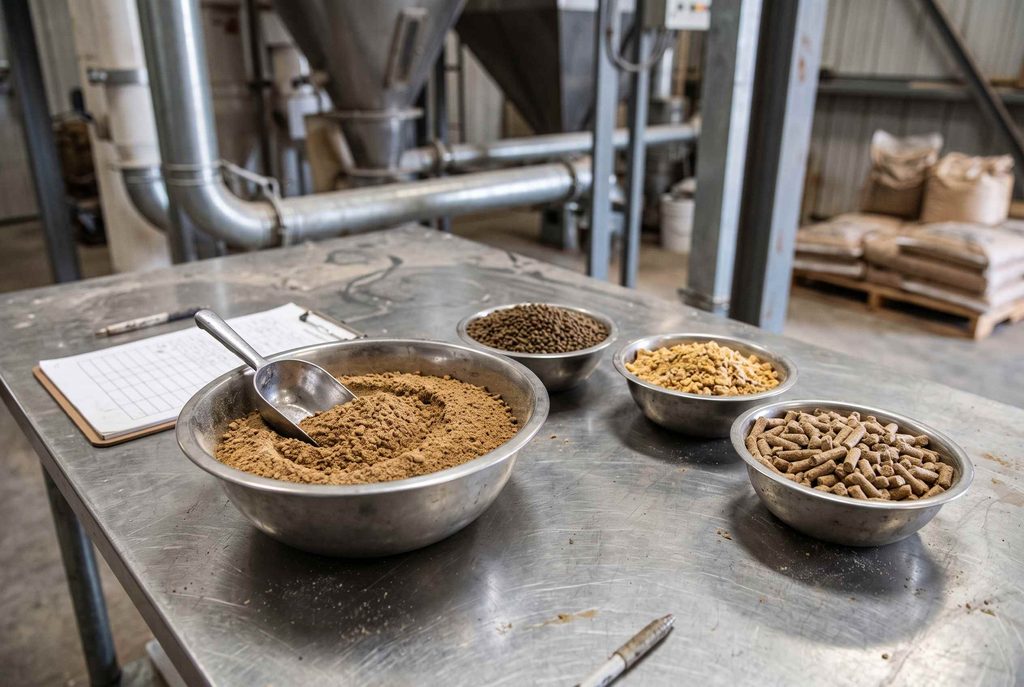
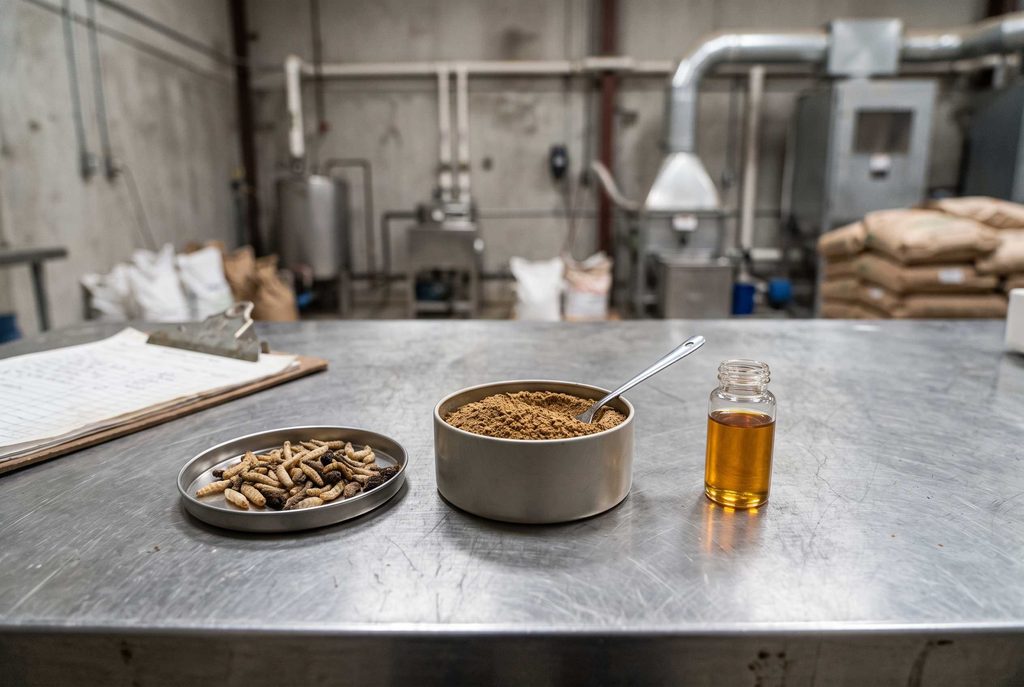
Housefly larvae can enter the market in several forms. Whole dried larvae may fit selected animal-feeding and specialty applications, while ground meal is more practical for incorporation into formulated feeds. Additional processing can create defatted material, lipid fractions, or more concentrated protein ingredients.
Each format changes the buyer base. Feed formulators may prioritize nutritional composition and processing consistency, while buyers of whole larvae may place greater emphasis on physical appearance and size. Further processed ingredients need to justify additional manufacturing costs through improved functionality, concentration, or access to higher-value markets.
Demand analysis should therefore focus not only on species but also on product form. One tonne of whole dried larvae and one tonne of standardized processed protein do not represent the same commercial market.
6. Price Must Be Evaluated Against Feed Performance
Housefly-derived ingredients ultimately compete with existing sources of protein and energy. Buyers can compare them with fishmeal, soybean-derived ingredients, poultry by-product meal, and other insect proteins according to the requirements of a particular formulation.
The relevant commercial metric is therefore not simply price per tonne. Nutrient concentration, digestibility, inclusion rate, processing characteristics, and performance all influence the effective value of an ingredient. A higher-priced material can remain commercially relevant if it delivers sufficient nutritional or functional value, while a low-priced ingredient can still be unattractive if composition or quality is inconsistent.
This makes feed performance central to market demand. Producers need to understand the economic role their ingredient performs within the buyer’s formulation rather than competing only on nominal price.
7. Substrate and Quality Influence Buyer Acceptance
The substrate advantage of housefly larvae can also create a market-access challenge. Larvae can utilize diverse organic materials, but commercial buyers and regulators may impose restrictions on what can enter the production system.
Substrate choice can influence larval composition and production performance, while contamination risks and traceability can affect whether the resulting ingredient is acceptable to downstream buyers. A low-cost substrate, therefore, has limited commercial value if it prevents the finished product from entering the intended market.
Quality consistency becomes increasingly important as demand moves from trials to recurring procurement. Buyers need predictable moisture, nutrient composition, microbiological quality, and other product-specific parameters. Standardization can therefore be as important to demand growth as biological production capacity.
8. Emerging Applications Could Expand the Value Chain
Housefly larvae contain more than protein. Lipids, chitin-related materials, and other biological components create potential pathways for further processing and higher-value product development.
These applications may improve whole-system economics by allowing processors to generate multiple products from the same biomass. A facility could theoretically separate oil, protein-rich fractions, and other materials rather than depending on a single feed ingredient for revenue.
However, these opportunities should remain classified as emerging unless recurring commercial procurement can be demonstrated. Laboratory extraction, promising functionality, or published research establishes technical potential, not market size. Additional processing also introduces capital, energy, purification, quality-control, and regulatory costs that must be justified by the value of the resulting product.
9. Regulation Determines Addressable Demand
Regulatory approval creates the boundary between theoretical application and legally addressable demand. The same housefly-derived ingredient may have access to one animal-feed market while being restricted in another jurisdiction or application.
The European framework illustrates this relationship clearly. Musca domestica is among the recognized farmed insect species for processed animal protein, while rules govern eligible substrates, production, and processing conditions. Current provisions allow insect-derived processed animal protein in feed for aquaculture animals, poultry, and pigs under specified conditions.
Regulation should therefore be considered part of market-demand analysis rather than a separate compliance issue. A technically suitable ingredient has no commercially addressable feed market where its species, substrate, production system, or intended application does not meet the relevant legal requirements.
10. Reliable Supply Converts Interest Into Recurring Demand
Buyer interest is not the same as recurring demand. Feed companies can test an alternative ingredient at a relatively small scale, but commercial adoption requires suppliers to deliver a consistent product repeatedly.
This creates a progression from technical potential to realized demand:
Housefly larvae already have a substantial technical research base. The harder commercial transition is moving through the remaining stages. Buyers need sufficient volume, predictable specifications, competitive economics, documentation, and confidence that supply will remain available after the initial trial.
For this reason, production capacity alone cannot measure market development. The more meaningful indicator is the amount of standardized housefly-derived ingredient that repeatedly enters commercial formulations.
IIR Analysis
Housefly larvae market demand currently has its strongest strategic foundation in animal feed, particularly where the species can combine acceptable nutritional performance with efficient organic-resource conversion. Aquafeed has a substantial research base, while poultry and pig feed can broaden the addressable market where regulations permit insect-derived processed animal protein.
Pet food represents a potentially higher-value but more demanding segment, and further processed proteins, lipids, and other fractions could eventually expand the commercial value chain. These opportunities should not yet be treated as equally mature demand categories.
The most useful framework for evaluating the market is therefore:
The future of the housefly larvae market will depend less on demonstrating that the larvae contain useful nutrients—the research base already supports that proposition—and more on whether producers can supply standardized ingredients at the required price, quality, and volume under commercially acceptable regulatory conditions.
Disclaimer: This article is for informational purposes only and does not constitute business, legal or investment advice. Always consult primary sources and qualified professionals.