Independent intelligence for the global insect industryISSUE 01 · 2026
Black Soldier Fly Supply Chain: From Rearing to Ingredient Distribution
By IIR Editorial DeskSeptember 23, 2026
The black soldier fly supply chain connects feedstock sourcing, insect rearing and processing with quality control, storage, logistics, international trade and ingredient distribution.
This analysis examines how black soldier fly ingredients move through the commercial supply chain, from feedstock sourcing and insect production to processing, quality release, storage, logistics and B2B distribution.
By IIR Editorial Desk · September 23, 2026 · Market Intelligence
The BSF Supply Chain Extends Beyond the Farm
The black soldier fly supply chain is often described primarily as a production system: suitable feedstocks are supplied to larvae, the insects grow, and the resulting biomass is converted into protein and other commercial products.
For industrial buyers, however, the chain extends much further.
Feedstock must reach production facilities in suitable condition. Larvae must be reared and harvested consistently. Biomass then needs to be stabilised, processed, tested, stored and transported before finished ingredients reach feed manufacturers, pet-food companies, distributors or other commercial customers.
Research examining the scale-up of insect protein production has highlighted this wider logistical challenge. Stable storage and transportation become increasingly important as production expands because insect biomass and processed ingredients must move through the supply chain without unacceptable quality deterioration.
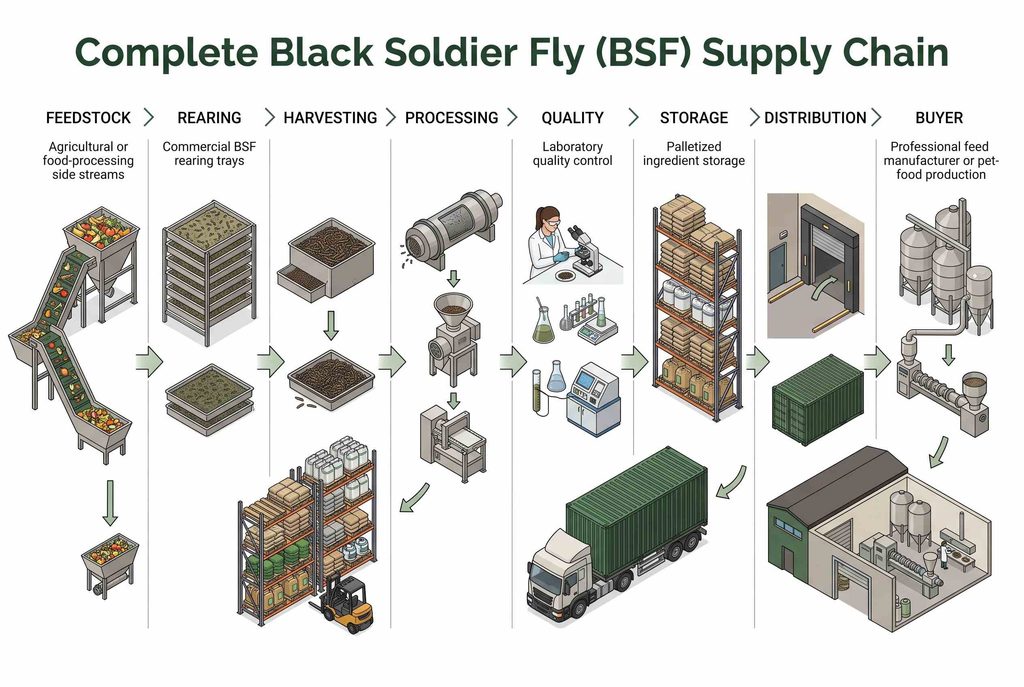
The commercial chain can therefore be understood as:
Each stage can influence product availability, cost, quality and the reliability of supply.
1. Feedstock Sourcing Starts the Supply Chain
The upstream BSF supply chain begins before larvae enter a rearing system.
Commercial producers require a sufficiently reliable flow of suitable substrates. Depending on the production model and applicable regulation, these materials may originate from agricultural or food-processing side streams and other permitted feed materials.
This creates a logistical relationship between feedstock suppliers and insect-production facilities.
Producers must consider not only the biological suitability of a substrate but also its availability, consistency, transport distance, storage requirements and regulatory status.
Location can therefore become strategically important.
A production facility positioned close to suitable feedstock sources may reduce the distance over which bulky, moisture-rich materials need to travel. Conversely, inconsistent or geographically dispersed feedstock supplies can add complexity before insect rearing even begins.
IPIFF has promoted insect farming as a potential link between local agricultural supply chains, with suitable side streams being converted into higher-value proteins and lipids.
For supply-chain analysis, this means that the first commercial question is not simply whether larvae can consume a material.
It is whether the producer can obtain a legal, consistent, and economically workable feedstock supply at the scale required.
2. Rearing Converts Inputs Into Insect Biomass
Once feedstock enters the production system, the supply chain moves into biological conversion.
BSF eggs or young larvae enter controlled production environments where temperature, moisture, feed availability, stocking density, and other variables affect development.
This stage determines how reliably upstream feedstock can be converted into harvestable insect biomass.
At commercial scale, production consistency becomes especially important because downstream processing and customer commitments depend on predictable material flow.
A processing line designed for significant throughput provides limited commercial value if biological production cannot supply sufficient biomass. Similarly, strong larval output can create bottlenecks if harvesting or processing infrastructure cannot handle the resulting volume.
The rearing stage therefore cannot be assessed independently from the rest of the supply chain.
3. Harvesting Connects Farming With Industrial Processing
At the targeted production stage, larvae must be harvested and separated from the remaining rearing material.
This represents an important transition.
Before harvesting, the system is primarily a biological production process. After harvesting, insect biomass increasingly enters an industrial ingredient-processing system.
Separation efficiency, production scheduling, and handling practices can influence how smoothly biomass moves into downstream operations.
The harvested larvae may then follow different processing routes depending on the intended commercial product.
At the same time, residual material from the rearing system may enter a separate frass or soil-input value chain where regulatory and commercial conditions permit.
The BSF supply chain therefore begins to branch rather than remaining a single linear production process.
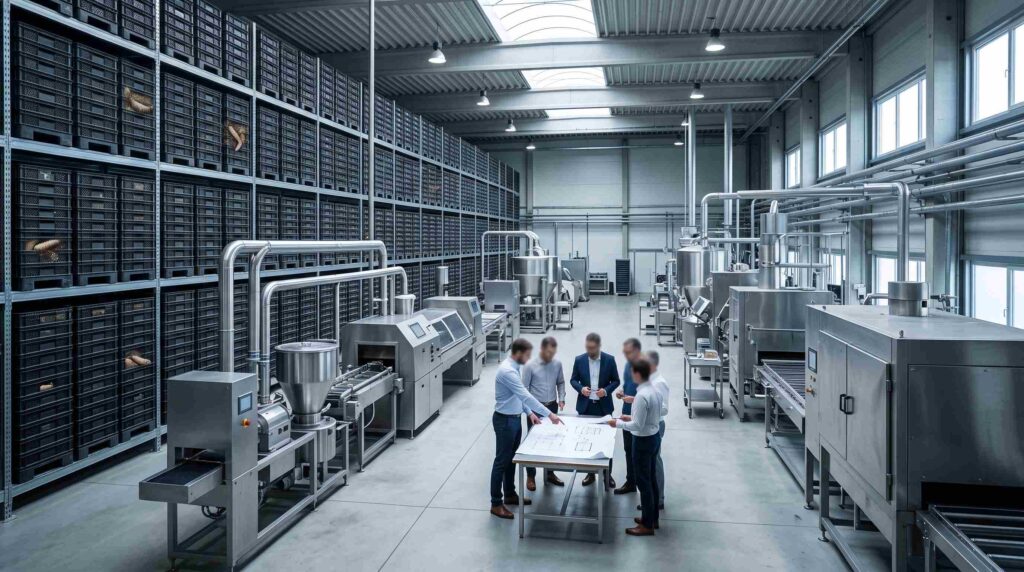
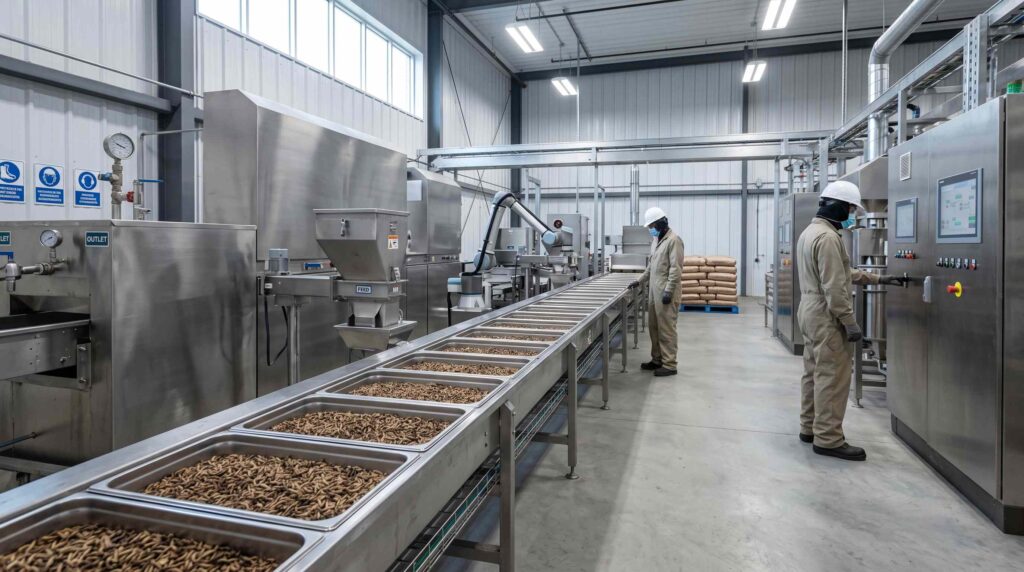
4. Processing Creates Different Ingredient Streams
Fresh insect biomass is not the final product for many B2B markets.
Larvae may undergo stabilisation, drying, milling, and lipid separation depending on the required ingredient.
This can create several commercial streams, including:
Whole dried larvae
Full-fat insect meal
Defatted or partially defatted protein meal
Insect oil
Frass or related soil products
These outputs do not necessarily share the same downstream supply chain.
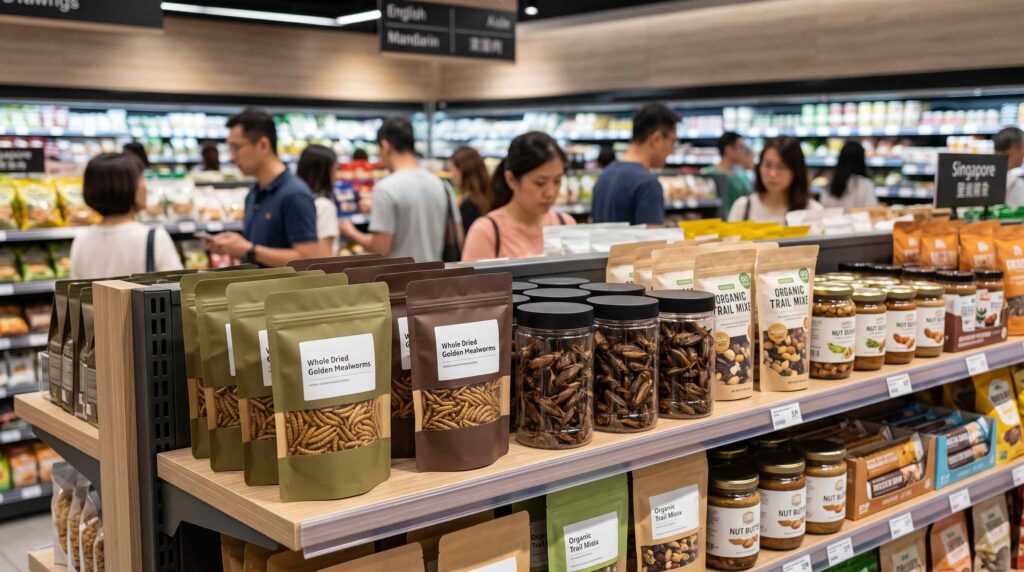
Whole dried insects may move toward pet, bird, or specialty-feed markets, while processed protein meals can enter feed-manufacturing supply chains. Oils may be sold as separate ingredients, and frass serves a different customer and regulatory environment.
This diversification matters because a single BSF facility can effectively participate in several supply chains simultaneously.
Processing decisions therefore influence not only product characteristics but also which customers, distributors, and geographic markets a producer can serve.
5. Quality Release Is a Commercial Gateway
Producing an ingredient does not automatically make it ready for commercial distribution.
Before a batch moves downstream, producers and buyers may require quality-control procedures appropriate to the product, application and market.
These can include checks relating to moisture, microbiological condition, nutritional composition, contaminants, traceability and other agreed specifications.
Documentation can become especially important in B2B transactions.
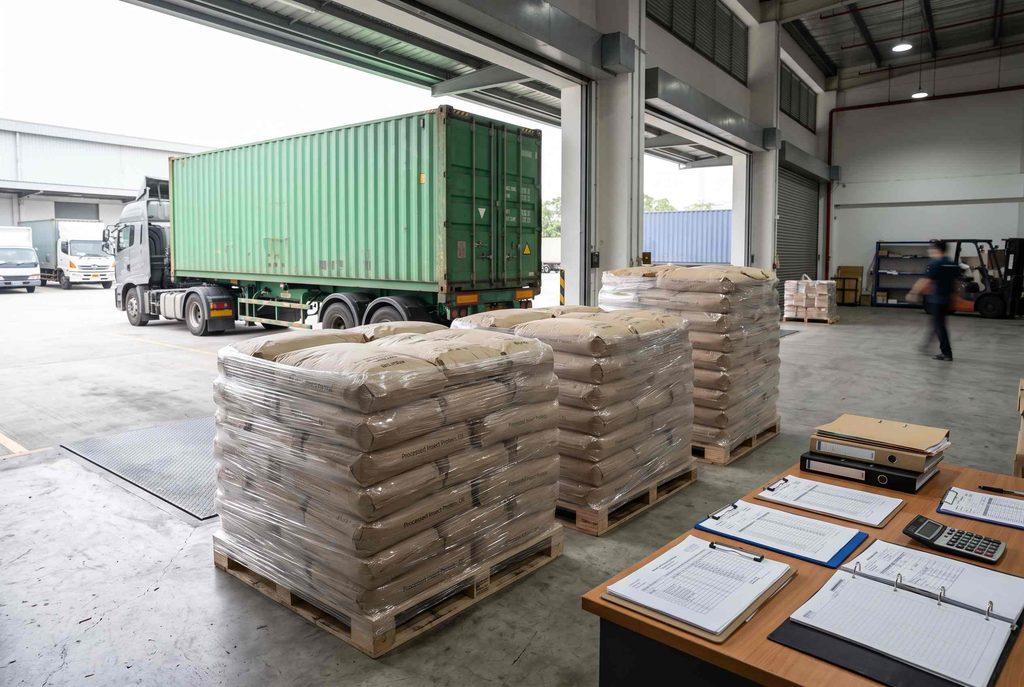
Buyers may request a Certificate of Analysis, batch information, product specifications, traceability records or other supporting documentation before accepting material.
Quality release therefore functions as a gateway between production and commercial distribution.
A facility may physically produce an ingredient, but the material does not become commercially interchangeable with another supplier’s product merely because both are described as “BSF protein.”
Specification consistency and documentation influence whether downstream buyers can integrate the ingredient into their own production systems.
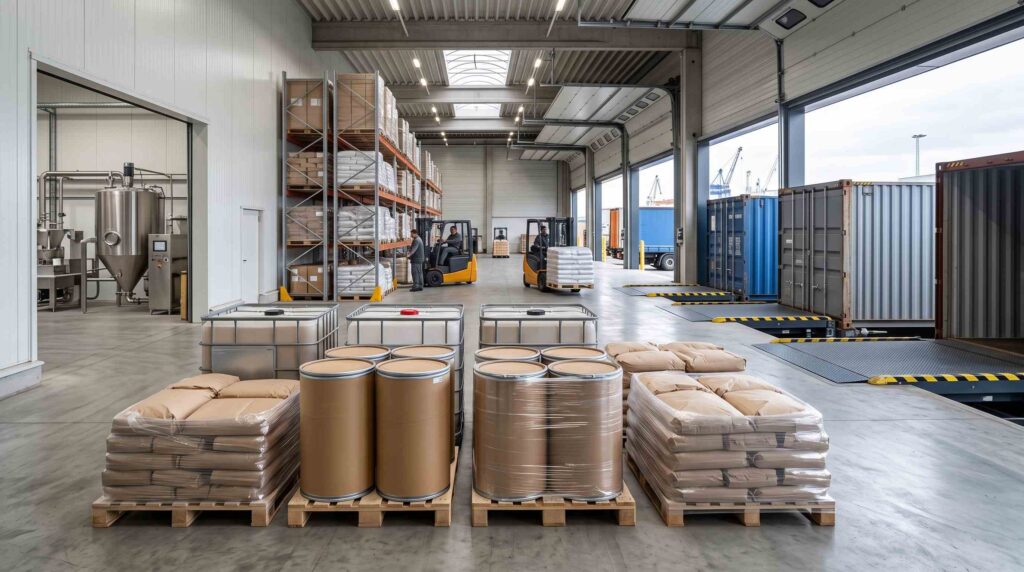
6. Storage and Packaging Protect Commercial Value
Once an ingredient has been produced and released, it may spend considerable time outside the production facility before reaching the final customer.
Storage and packaging therefore become part of supply-chain performance.
Moisture exposure, temperature, oxidation, contamination and inappropriate handling can affect product quality during storage and transport.
The challenge becomes more significant when products travel long distances or move through multiple warehouses and logistics providers.
Research on insect supply chains has specifically identified stabilisation, storage and transportation as important components of the logistics chain following insect production.
For suppliers, packaging therefore serves more than a marketing function.
It must help preserve the physical and chemical condition of the ingredient through the expected logistics cycle.
7. Logistics Can Reshape the Economics of BSF
The upstream and downstream sides of the supply chain have different logistical characteristics.
Feedstocks may contain substantial water and have relatively low economic value per unit of transported weight. This creates an incentive to locate production reasonably close to suitable material sources.
Processed insect ingredients can have very different characteristics.
Drying removes water and improves storage stability, making protein meal or dried larvae more practical to transport over longer distances. But drying itself requires processing capacity and energy.
This creates an important supply-chain transformation:
Bulky local feedstock enters the facility → concentrated commercial ingredients leave the facility.
The economics of the system therefore depend partly on where these transformations occur.
Efficient BSF supply chains need to balance access to feedstock with access to processing infrastructure, ports, transport networks and customers.
8. International Trade Adds Another Layer
Once BSF ingredients cross national borders, the supply chain becomes more complex.
Exporters and importers need to consider whether the product can legally enter the destination market, how it is classified, what documentation is required, and whether the intended end use is permitted.
Requirements can differ according to the product itself.
Whole dried larvae, insect protein meal, insect oil and other derived products may not necessarily follow identical regulatory or customs pathways in every jurisdiction.
The application also matters.
An ingredient intended for aquaculture, poultry feed, pet food, or another use may be subject to different market-access conditions.
International distribution therefore requires more than arranging freight.
Commercial suppliers need to align product → application → destination market → documentation before shipment.
For buyers, regulatory and documentation capability can be as important as production capacity when assessing an international supplier.
9. Distributors and Importers Connect Production With Smaller Buyers
Not every commercial buyer purchases directly from a large insect-production facility.
Distributors, importers, wholesalers and ingredient traders can occupy an important position between producers and downstream users.
They can consolidate demand, hold local inventory, manage smaller order quantities, and provide access to markets where an overseas producer may not maintain its own sales or logistics infrastructure.
This creates multiple possible commercial routes:
Producer → Large Industrial Buyer
or:
Producer → Importer / Distributor → Feed Manufacturer or Brand
The second model can be particularly relevant where customers require smaller volumes, local inventory, shorter delivery times, or domestic commercial support.
As insect ingredients become more internationally traded, distribution structure may therefore become an increasingly important part of market development.
10. Supply Chain Reliability Matters More Than Theoretical Capacity
Production capacity is important, but buyers ultimately depend on delivered supply.
A producer can announce substantial factory capacity while still facing constraints in feedstock availability, biological production, processing, quality release, storage, export documentation, or logistics.
Any one of these bottlenecks can reduce the amount of commercial product that reaches customers.
This is why supply-chain analysis needs to distinguish between:
Production capacity
and
Reliable delivered volume
The second measure incorporates more of the commercial reality.
For a B2B buyer, a smaller supplier capable of repeatedly delivering specification-compliant product may sometimes represent a more predictable supply source than a much larger facility still experiencing ramp-up or logistics constraints.
11. Traceability Becomes More Important as the Chain Expands
A short local supply chain may involve relatively few commercial parties.
International ingredient distribution can involve substantially more.
Feedstock suppliers, insect producers, processors, laboratories, warehouses, freight companies, exporters, importers, distributors and final buyers may all participate in moving a product from production to use.
As the number of participants increases, traceability becomes more important.
Batch identification and documentation allow companies to connect finished ingredients with production records, quality results and commercial shipments.
This becomes particularly relevant when buyers need to investigate a quality deviation, verify specifications or respond to regulatory requirements.
Supply-chain maturity therefore depends not only on physical logistics but also on the information that follows the product.
12. Where Supply Chain Bottlenecks Can Appear
The BSF supply chain can encounter constraints at almost every stage.
Upstream problems may include insufficient feedstock volume, variable substrate quality or transportation costs.
Production constraints can include biological variability or inadequate rearing throughput.
Processing bottlenecks may occur when drying or separation capacity cannot match larval production.
Downstream constraints can include laboratory release times, storage capacity, freight availability, import requirements, or insufficient customer demand.
These bottlenecks are interconnected.
Increasing rearing capacity without expanding downstream processing may simply move the constraint from one stage to another.
Similarly, increasing production without developing distribution channels can create inventory rather than sales.
Commercial scale therefore requires coordination across the chain rather than isolated optimization of the farm.
IIR Analysis
The black soldier fly industry is best understood as a network connecting biological production with industrial processing and ingredient markets.
Feedstock availability determines what enters the system. Rearing determines biomass production. Processing converts that biomass into commercially usable forms. Quality control and documentation determine whether batches can move downstream. Storage and logistics preserve those products, while importers, distributors, and buyers connect production with final demand.
This means the competitiveness of BSF ingredients cannot be evaluated from production technology alone.
As the industry scales, supply-chain performance will increasingly depend on the ability to coordinate:
Feedstock → Production → Processing → Quality → Logistics → Market Access → Distribution
Facilities that successfully manage those connections are better positioned to convert theoretical production capacity into reliable commercial supply.
Disclaimer: This article is for informational purposes only and does not constitute business, legal or investment advice. Always consult primary sources and qualified professionals.